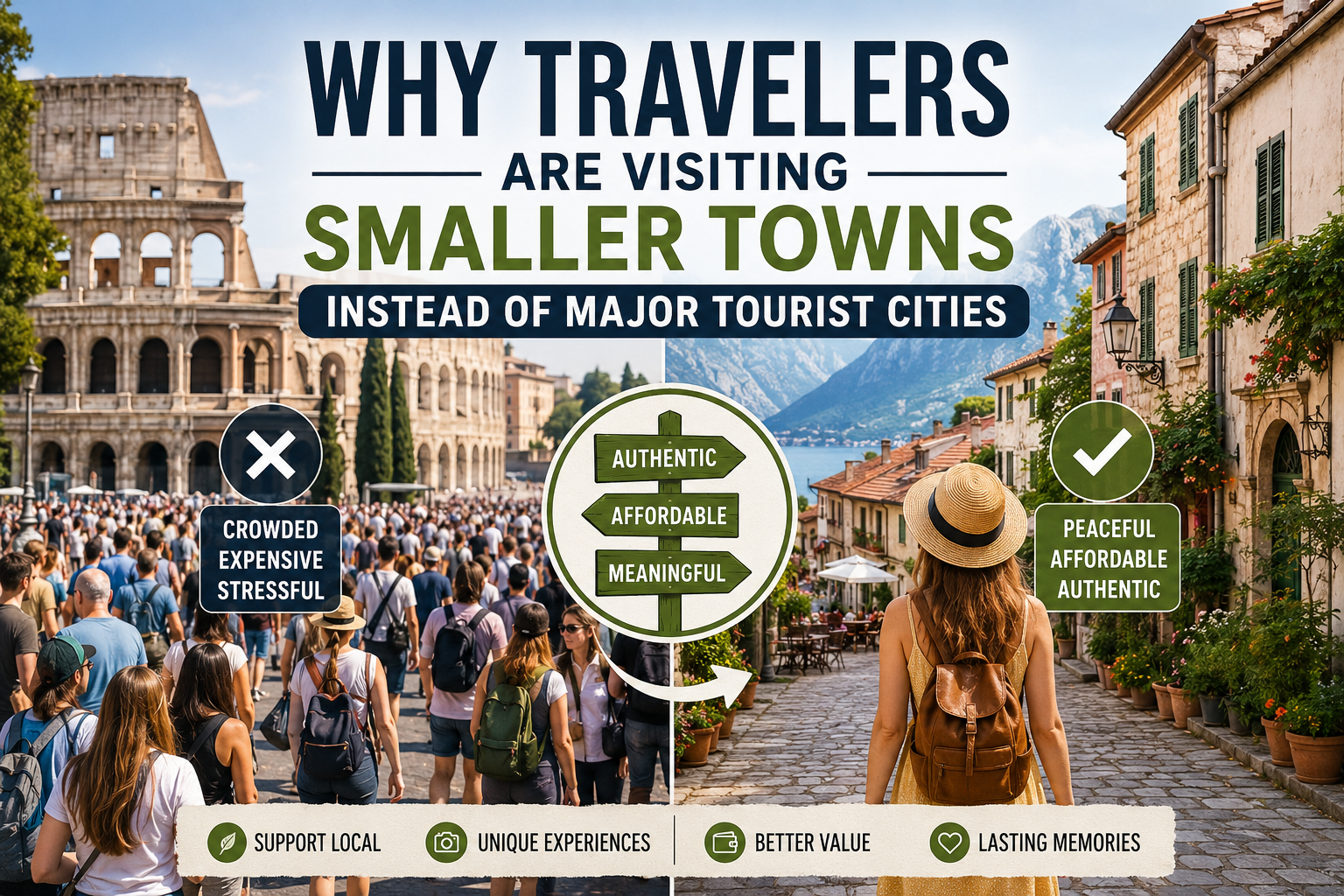
Why Visit Smaller Towns Instead of Major Tourist Cities
Small towns are often a better choice than famous cities if you want fewer crowds, calmer days and more local life, and they can also be easier on your budget. They are not better for everyone, though. Big cities win on museums, nightlife and easy transport. The smartest trips usually mix both: a few days in a famous city and a few days in a smaller place nearby.
This guide explains why more travellers are choosing smaller towns, how small towns and big cities really compare, which smaller places are often suggested as alternatives to famous cities, and how to plan this kind of trip if you are travelling from India, where visas and transport planning matter a lot.
Key takeaways
- Smaller towns usually mean fewer queues, quieter streets and more chances to meet local people, but fewer flights, trains and late-night options.
- Overtourism is real in some places. Venice, for example, has charged an entry fee to day visitors on selected days, and Hallstatt in Austria has been reported to receive thousands of visitors a day in a town of about 700 residents.
- A small town is often cheaper, but not always. A pretty village on a famous lake can cost as much as a city, so compare prices before you book.
- A good rule: stay in a small town and visit the big city as a day trip, or the other way around.
- If you are visiting Europe on a Schengen visa, you apply through the country where you will spend the most nights, so plan your base towns before you apply.
- Check transport first. Many small-town trips fail because the last bus or train leaves early.
Why some travellers are leaving the big tourist cities
Most popular cities were not built for today’s number of visitors. Queues for the main sights, high hotel prices and crowded streets can make a short trip tiring. Many travellers say they came home feeling they had seen the crowd more than the city.
Some cities have started to manage this. Venice, for example, introduced a daily access fee for day-trippers. Reports for 2026 say the fee applied on selected days between April and July, at 5 euros if paid at least four days ahead and 10 euros if paid closer to the visit, with exemptions such as overnight guests in registered accommodation and children under 14. Rules and dates can change, so check the official Venice website before you travel.
Small places can face the same pressure. A report from 2023 described Hallstatt in Austria as a town of just over 700 residents that can see up to 10,000 visitors a day in peak season, and residents there have protested about the crowds. The lesson is that small does not always mean quiet. Look at the season, the day of the week and the time of day.
What counts as a small town trip
A small town trip means choosing a smaller community, a village or a second-tier city instead of the most famous tourist hub. It does not mean going somewhere remote with no comforts. Many of these places have good hotels, restaurants and public transport, while keeping their local character.
Typical benefits include:
- Local food, markets and family-run restaurants
- Walkable centres
- Easier conversations with shop owners and hosts
- Lower pressure at attractions
Typical drawbacks include:
- Fewer direct flights and train links
- Shorter opening hours and seasonal closures
- Fewer big-name sights and less nightlife
For a deeper look at the idea, read our guide to secondary cities versus tourist hotspots.
Small towns vs major tourist cities
| Factor | Small town | Major tourist city |
|---|---|---|
| Crowds | Usually lighter, except in famous villages in peak season | Often heavy near major sights |
| Accommodation prices | Often lower, but check popular lake and beach towns | Often higher, especially in peak season |
| Local contact | Easier | Possible, but more tourist-focused |
| Transport | Fewer routes; check the last bus or train | Many routes and frequent service |
| Sights and museums | Fewer, but often more personal | Many, including world-famous ones |
| Nightlife | Limited | Wide choice |
| Pace | Slower | Faster |
This table shows general patterns. Always compare actual prices for your own dates, because a famous small town in July can cost more than a quiet city in March.
Which town instead of which city
These pairings are common suggestions. Each one trades big-city sights for a calmer base. We describe what the places are known for, not exact prices.
| If the famous city is… | A smaller alternative | What it is known for |
|---|---|---|
| Florence, Italy | Lucca | Tree-topped city walls you can walk or cycle, and a Tuscan feel |
| Paris, France | Annecy | Canals, an Alpine lake and mountain views |
| Prague, Czechia | Cesky Krumlov | A medieval old town in a bend of a river |
| Tokyo, Japan | Kanazawa | Historic districts and a famous garden, linked to Tokyo by bullet train |
| Da Nang or Ho Chi Minh City, Vietnam | Hoi An | A walkable old town known for food and lanterns |
Other smaller places that travellers often mention include Kotor in Montenegro, Gjirokaster in Albania, Sighisoara in Romania and Salento in Colombia. Treat these as ideas to research, not guaranteed quiet spots.
If you are choosing countries in Europe first, our list of the best countries to visit in Europe for first-time travellers will help. For Japan, see our Japan itineraries for 3 to 14 days, which show how to fit more than one place into a trip.
Is a small town really cheaper?
Often yes, but not always. Smaller places can have lower hotel and restaurant prices than the big city nearby. That is not true everywhere. Postcard-pretty villages in peak season can cost as much as a city, and a lack of choice can push prices up.
To check, use the same booking site and the same filters for both places, and compare the full price for your dates. Also add the cost of getting there. A train or bus fare to a small town can cancel out a lower hotel price, especially for a one-night stay. Our guide to shoulder season versus peak season shows how timing can change prices more than the choice of place.
Planning small-town trips from India
Small towns are often in countries that need a visa for Indian passport holders. A few points save time:
- Schengen visa: The fee for an adult is 90 euros, according to the German Federal Foreign Office (in effect since June 2024). You usually apply to the country where you will spend the most nights, so decide your main base before applying. Our step-by-step Schengen visa guide for Indians covers the process, and what to expect at the EES border system explains the new entry checks.
- Insurance and bookings: Keep your hotel bookings, travel insurance and train tickets organised, because small-town hotels may have strict check-in times.
- Food: Vegetarian options can be limited in small places. Check menus and shops in advance, and carry some snacks for travel days.
- Cash and cards: Some small businesses prefer cash or have card limits. Keep a small amount of local currency.
- Language: English may be less common. Download an offline translation app.
If you are combining several countries, our post on city-to-city travel on a multi-country trip covers transfers.
Transport: the make-or-break detail
Before you commit to a small town, check these:
- How do you get there from the nearest airport or major city, and how long does it take?
- When does the last bus or train leave, including on Sundays and holidays?
- If you arrive late at night, how will you reach your stay?
- Is luggage storage available if you arrive before check-in?
- If you have to change plans, what is your backup route?
Use the official rail and bus operator sites and a mapping app, and screenshot the timetable.
A simple way to combine a city and a town
If you only have a week, you do not have to choose. Spend a short time in the famous city for the sights you really want, then base yourself in a smaller town for the rest of the trip. This gives you the highlights and a calmer base, and it reduces the cost of expensive city hotels. Match the pair to your route, for example Florence with Lucca or Tokyo with Kanazawa. Slow travel works well here, and our guide on slow travel: what it is and how to plan it has more ideas.
Who benefits most from small towns
First-time travellers
A small town can feel easier than a huge city because everything is within walking distance. But transport planning is more important, so make sure you are comfortable with it.
Families and older travellers
Smaller places often mean quieter streets and shorter walking distances. Check for stairs, cobblestones and hills, which can be hard for some travellers.
Food lovers
Local markets and family-run restaurants are easier to find in smaller places. Ask locals what the town is known for.
Remote workers
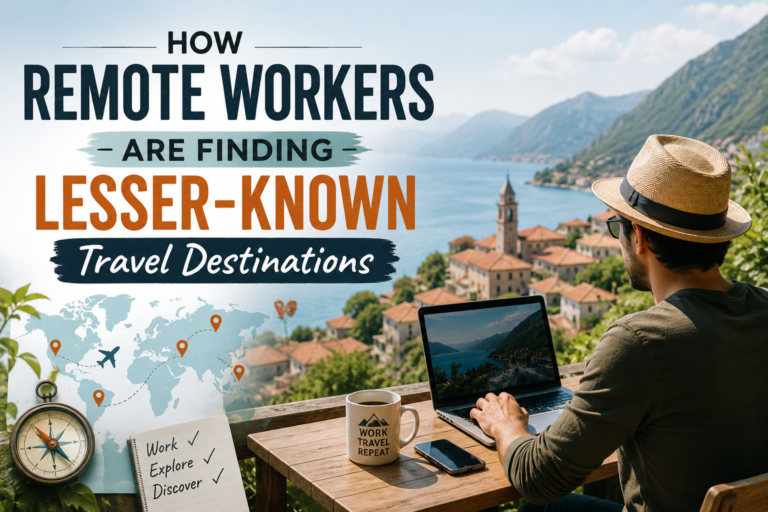
Some people choose smaller towns for long stays. You will need reliable internet and the right visa; see our guide to lesser-known destinations for remote workers.
How to travel in a small town without adding to the problem
- Stay overnight instead of only visiting for a few hours; overnight guests support local businesses more.
- Eat at local restaurants and buy from local shops.
- Visit early or late in the day if the town is popular.
- Follow local rules on noise, photography and private property.
- Do not block narrow streets or private entrances for photos.
Challenges to be ready for
Limited transport
Some small towns have few trains or buses. You may need a rental car or a taxi, which can add to the cost.
Seasonal closures
Some restaurants and attractions close in the off-season. Check opening hours before you go.
Fewer facilities
Large supermarkets, pharmacies and ATMs may be fewer. Carry essential medicines and some cash.
Less nightlife
If you want clubs and late-night restaurants, a big city will suit you better.
Frequently asked questions
Why are travellers choosing small towns over big cities?
Many want fewer crowds, a slower pace, more local contact and sometimes lower costs. Overcrowding and rising prices in famous cities add to this.
Are small towns cheaper than big cities?
Often, but not always. Compare actual prices for your dates, including transport to reach the town. Famous small towns can be expensive in peak season.
What are good small-town alternatives to famous cities?
Common suggestions include Lucca instead of Florence, Annecy instead of Paris, Cesky Krumlov instead of Prague, Kanazawa instead of Tokyo and Hoi An instead of larger Vietnamese cities.
Do I need a different visa to visit small towns in Europe?
No. A Schengen visa covers the Schengen area, but you normally apply through the country where you will spend the most nights. Check the rules of that country’s embassy or visa centre.
How many days should I spend in a small town?
Two to three nights is a good start for most towns. Stay longer if you want to relax, work or explore the surrounding area.
Final thoughts
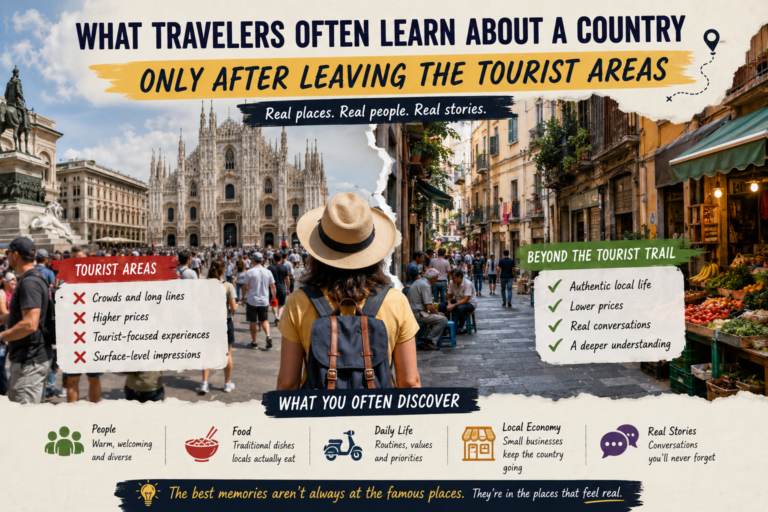
Small towns are not a replacement for great cities. They are a useful way to balance a trip, with calmer days, local food and lower pressure. Check transport, pick the right season, and mix a famous city with a smaller base. For more inspiration, read our guide on how to experience a country beyond the tourist trail.
How we checked these facts
We checked the Venice fee details and the Schengen visa fee in October 2026 using a travel news report and the German Federal Foreign Office. The Hallstatt figures come from a 2023 news report and may have changed. Descriptions of towns reflect general knowledge, and we have not included price or visitor numbers we could not verify. Check official tourism and visa sites before you book.
Sources
- German Federal Foreign Office: Adjustment of the fee for a Schengen visa
- Wego: Venice Access Fee 2026 (dates, prices, exemptions)
- Travel News: Hallstatt faces overtourism (October 2023)
Related Guides
- Secondary Cities vs Tourist Hotspots: Why Visit Smaller Cities
- Beyond the Tourist Trail: How to Experience a Country Like a Local
- Slow Travel: What It Is, Benefits and How to Plan a Slower Trip
- What Makes a Trip Memorable? Why Some Places Stay With You
Browse all of our Trip Planning guides.

Varinder Kaur is from Amritsar, India. She has traveled to well-known places across India, including Darjeeling, and to a few countries abroad, and shares travel experiences and practical tips for travelers through OpinionHook.




2 Comments
Comments are closed.