
How to Travel More While Working Full Time: Practical Tips
Yes, you can travel often while working a full-time job. You do not need to quit, freelance or save for years. What you need is a system: use weekends and public holidays smartly, save for travel on a schedule, book early, stay flexible on destinations and take shorter trips more often.
This guide is written for salaried people in India, where annual leave is limited and public holidays do much of the heavy lifting. It explains how to stretch your time off, fund your trips in rupees, handle work before you leave and avoid burning out.
Key takeaways
- Time is usually the bigger hurdle than money. Learn to work with the leave you have.
- Pair paid leave with public holidays and weekends to turn 1 to 3 leave days into long breaks.
- Treat travel like a savings goal: a fixed monthly amount into a separate account.
- Short trips count. A well-planned two or three day getaway can reset your head.
- Keep your destination list flexible so you can follow good fares and good seasons.
- Plan work handovers early so the trip is not interrupted by your inbox.
- Protect recovery time. Constant travel can lead to burnout too.
Why is it hard to travel with a full-time job?
The main problem is usually time, not money. Most people work long weeks, commute, manage family responsibilities and have limited annual leave. After a busy week, planning a trip feels like another task. Many people also think a trip needs two or three weeks, which makes it seem impossible.
The fix is to stop thinking only in big vacations. Once you count weekends, public holidays, a few leave days and the occasional remote-work day, you have far more windows than you thought.
How can you travel more with a full-time job?
The core idea: get the most from the time you already have, plan early and make travel a regular financial priority. Here are the strategies in order of impact.
1. Use public holidays and weekends together
Start with the holiday calendar. Many employers follow the state or central government list, but private companies often publish their own, so check your HR calendar first. As an example, the Central Government’s 2026 list of gazetted holidays (published by a government department) includes Good Friday on Friday 3 April, Buddha Purnima on Friday 1 May, Muharram on Friday 26 June, Gandhi Jayanti on Friday 2 October and Christmas on Friday 25 December, so those fall in three-day weekends with no leave at all. It also lists Dussehra on Tuesday 20 October and Guru Nanak’s Birthday on Tuesday 24 November, where taking the Monday off gives you four days in a row.
Here is how that maths works in general:
| Leave days used | What you can get | Example pattern |
|---|---|---|
| 0 | 3-day weekend | Holiday on a Friday or Monday |
| 1 | 4-day break | Holiday on a Tuesday or Thursday, take the day next to it |
| 2 | 5-day break | Holiday on a Wednesday, take Monday and Tuesday or Thursday and Friday |
| 5 | About 9 to 10 days | Leave across a full working week between two weekends, plus a holiday if one falls inside |
Restricted and optional holidays, and rules for how many you can take, depend on your employer. Check your policy.
2. Make short trips a habit
A three-day weekend is enough for a domestic city break, a hill station, a beach, a wildlife reserve, a road trip or a nearby international destination, depending on your flight time and visa rules. Many people skip these because they think a trip is only worth it if it is a week long. That mindset is usually the thing holding them back.
If you are considering a close international trip, check visa rules first. Our guide to visa-free countries for Indians in 2026 lists current options, but always confirm on an official government site before booking, since rules change.
3. Treat travel like a savings goal
Many people spend on travel only if money is left at the end of the month. Frequent travellers often do the opposite: they decide the amount first.
- Set up an automatic monthly transfer to a separate account just for travel.
- Put windfalls like bonuses or tax refunds partly into the travel fund.
- Cancel subscriptions you do not use.
- Pick a number you can keep up. For example, saving Rs 3,000 a month builds Rs 36,000 in a year before any interest.
Automatic transfers help because you do not have to decide each month. They also make future trips feel real. Our guide on travelling internationally on a tight budget has more ideas on stretching that money.
4. Book earlier and track prices
Last-minute fares tend to be more expensive, especially around long weekends and festivals when many people travel together. Booking flights and stays well ahead gives you more choice and lets you plan work around your trip. There is no single best day to book, so use tools rather than guesses. Google Flights lets you track a route or a specific flight, sends emails when prices change significantly and can track flexible dates. For a longer list of methods, see our post on finding cheap flights.
5. Keep a flexible destination list
Frequent travellers keep a short list of places, not a single dream destination. If one is expensive in your dates, another might be cheaper. That flexibility lets you take advantage of sales, shoulder seasons and lower-demand periods. Our guide to shoulder season costs explains when prices tend to drop. For ideas on affordable international options, see cheapest international trips.
How do you manage a 9 to 5 job around travel?
6. Plan work ahead
People who travel regularly do not vanish without notice. Before you leave:
- Finish priority tasks early.
- Tell your manager and colleagues the dates well in advance.
- Share a short handover note with key contacts and status updates.
- Schedule important meetings before you leave or after you return.
- Decide in advance whether you will check email, and tell people.
This reduces stress during the trip and the pile-up when you come back.
7. Do not overload the trip
Trying to see everything makes people exhausted. When your leave is limited, it is tempting to pack in five cities in seven days. A slower trip with one or two bases usually feels better. Read our guide on slow travel for how to plan it.
8. Use remote work if your employer allows it
If your company allows occasional remote work, you may be able to extend a trip with a couple of work-from-anywhere days, work from another city or add a day or two to a work trip. Always check your company policy first, and do not assume it is allowed. Time zones and reliable internet matter too. Our post on lesser-known destinations for remote workers covers places that suit this style.
How do you balance work and travel without burnout?
9. Protect recovery time
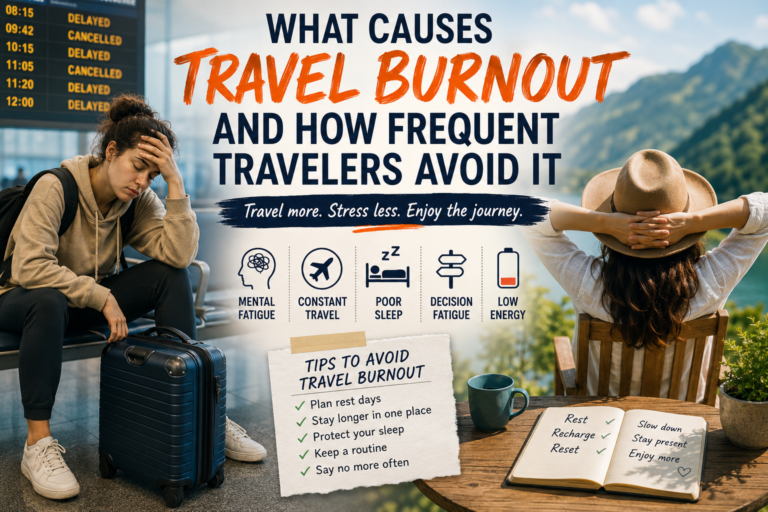
Not every weekend should involve travel. Constant movement can wear you out, and so can returning to work the same morning you land. Leave space for rest, family, exercise and your own projects. Many people who travel regularly build in a buffer day after getting home. Our article on travel burnout explains the warning signs.
10. Match the trip to your energy
After a demanding quarter, a quiet beach or hill stay may do you more good than a packed sightseeing plan. The best trip is the one that leaves you feeling better afterwards.
Practical travel hacks for working people
11. Pack light
Carry-on only saves time at the airport, avoids checked baggage fees on many airlines and removes the stress of lost luggage. Check your airline’s cabin baggage rules before you fly, because limits vary. Our guide to choosing a travel backpack can help.
12. Use rewards programmes carefully
Airline, hotel and credit card rewards can lower costs if you pay your bill in full each month. Interest charges can wipe out any benefit, so use them only if they suit how you already spend.
13. Use the right booking tools
Price tracking, flexible-date search and comparison sites save money. See our guides on flight booking hacks and hotel booking platforms.
A sample annual travel plan for an office worker
This is an example, not a rule. Adjust it to your leave balance and budget.
| Trip type | Duration | How often | Leave days used |
|---|---|---|---|
| Weekend getaway | 2 to 3 days | 4 times a year | Usually none |
| Long weekend | 3 to 4 days | 3 times a year | 0 to 1 each |
| Main vacation | 7 to 10 days | 1 to 2 times | Several, around a holiday |
| Work extension | 2 to 4 days | Once | Depends on policy |
Such a plan can add up to about 30 travel days across a year, most of them on weekends and holidays, so it does not eat your leave.
Start small
If travelling often feels out of reach, add one extra trip this year. Next year, add another. Many people build the habit with simple weekend trips, then grow their savings and planning skills. Open your calendar, find one long weekend and one possible getaway in the next six months, then book something.
Common mistakes that stop people from travelling more
- Waiting for the perfect time
- Assuming every trip needs a huge budget
- Ignoring long weekends
- Using leave randomly instead of next to holidays
- Booking late, when fares are higher
- Fixating on one expensive destination
The biggest obstacle is often mindset. People who travel often simply treat it as a priority.
How this guide was checked
The 2026 holiday dates were taken from the Central Government’s list of gazetted holidays for 2026 as published on a government department site. Your employer’s calendar may differ, and state holidays vary, so check your HR policy. The Google Flights price tracking description comes from Google’s own help page. The leave maths in the table is simple counting. Savings figures are examples, not recommendations, and the sample annual plan is an illustration, not research.
Frequently asked questions
How can I travel more while working full time?
Use weekends and public holidays together, save a fixed amount for travel each month, book early, keep your destinations flexible and take short trips. You do not need to rely only on one long annual vacation.
Can I really travel with a full-time job?
Yes. Many employees do it by planning ahead, using leave next to holidays, taking weekend trips and sometimes using remote work days where their employer allows it.
How many leave days should I save for travel?
There is no universal answer. A common approach is to reserve some leave for one main trip and use the rest to extend long weekends and holidays. Check how much leave you get and whether it carries over.
Is a weekend trip worth it?
Yes, if you keep the plan simple. A short trip gives you a change of scenery and a break without needing much leave. Choose a destination with easy transport so you spend time there, not on the road.
Do I need a big budget to travel often?
Not necessarily. Short, nearby trips and flexible dates can keep costs down. A small fixed monthly saving also helps. Compare real prices before you book.
Final thoughts
If you wonder how to manage travel with a 9 to 5 job, the answer is simpler than it seems. Use long weekends strategically, save for travel, book trips earlier, take advantage of public holidays, stay flexible with destinations and use remote work where possible.
The people who travel the most while employed are rarely the ones with unlimited freedom. They are the ones who plan ahead and make travel a regular part of life. Start by looking at your calendar today, then book something.
Sources
- List of Gazetted Holidays 2026 (Central Government offices, PDF)
- Google Travel Help: Track prices on Google Flights
Related Guides
- What to Pack for Two Weeks in Europe: A Practical Packing List
- Shoulder Season vs Peak Season: Crowds, Prices and Experience
- Multi-Country Trip Planning: How to Handle City-to-City Travel
- Why Some Destinations Disappoint in Person: Expectations vs Reality
Browse all of our Trip Planning guides.

Varinder Kaur is from Amritsar, India. She has traveled to well-known places across India, including Darjeeling, and to a few countries abroad, and shares travel experiences and practical tips for travelers through OpinionHook.





2 Comments
Comments are closed.