Slow Travel: What It Is, Benefits and How to Plan a Slower Trip
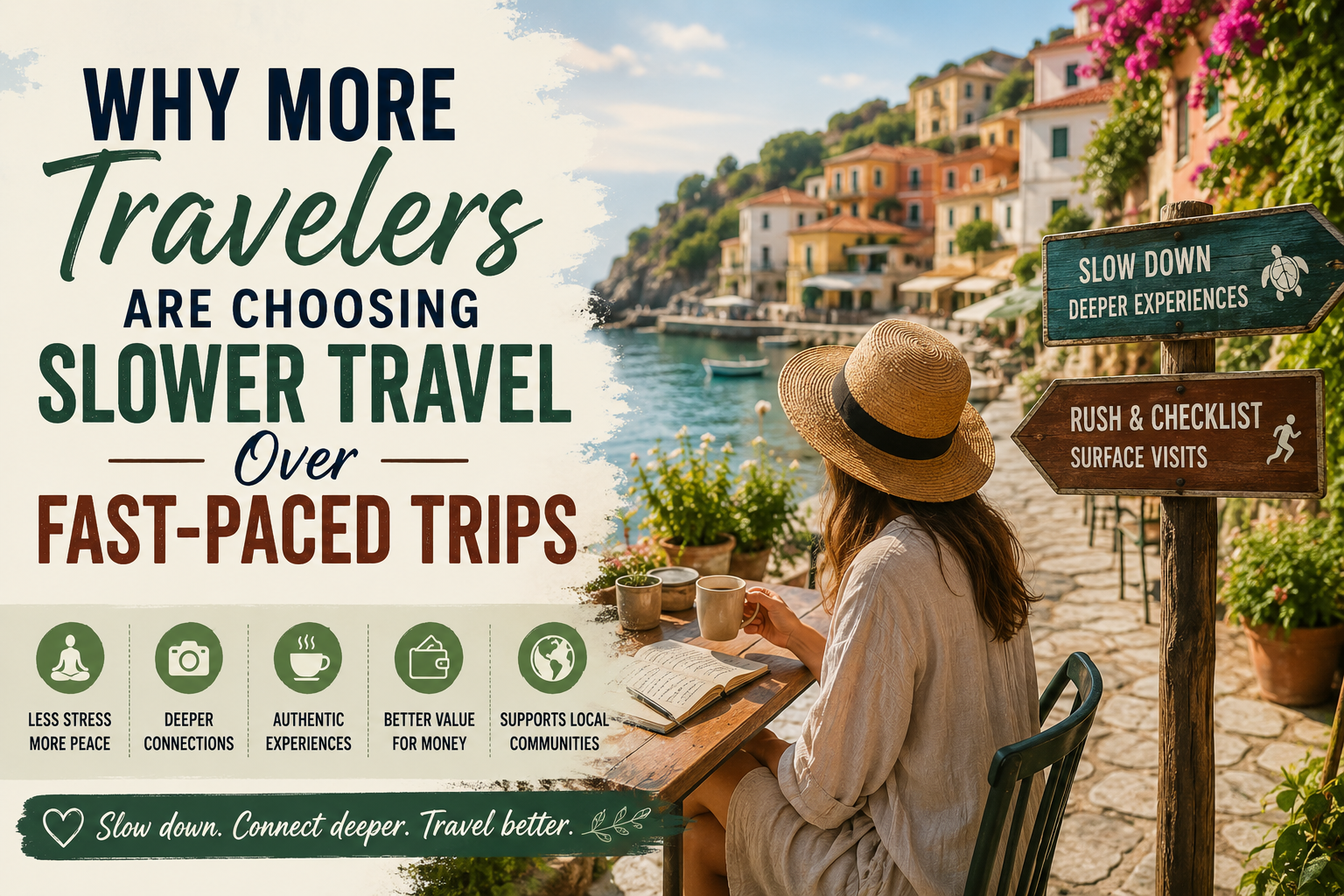
Slow travel means spending more time in fewer places so you can actually experience them. Instead of five cities in ten days, you might choose two. You travel by ground when you can, stay in local neighbourhoods, eat where residents eat and leave plenty of unplanned time. It is not about travelling less. It is about travelling differently, and it can work even if you only have a week or ten days of leave.
This guide explains what slow travel is, why it helps with stress, memories and sometimes costs, and how to plan it step by step. It is written with Indian travellers in mind, so you will find notes on short leave, Schengen visa limits and ideas that work for trips within India as well as abroad.
Key takeaways
- Slow travel puts quality ahead of quantity: fewer places, longer stays.
- It usually reduces stress and travel fatigue, because you pack, check out and transfer less often.
- It can lower transport spending, because every extra city adds another ticket and another transfer.
- You do not need months of leave. Even a 7-day trip can follow slow travel principles.
- A Schengen short-stay visa lets you stay up to 90 days within any 180-day period, so check the visa sticker dates before planning a long stay.
- Slow travel works within India too: one hill town, one beach village or one heritage city for a week.
- Start small: remove one destination from your next itinerary.
What is slow travel?
Slow travel is a way of travelling that favours depth over speed. Instead of trying to see everything, you try to understand one place: its daily rhythm, food, traditions and people.
The idea is inspired by the wider Slow Movement. Slow Food began in Italy in the 1980s, founded by Carlo Petrini, and grew out of a protest against fast food. The message was simple: quality matters more than speed. Travellers adapted that thought to tourism.
A slow traveller might spend ten days in one city rather than visiting five cities in ten days. The goal is not to tick attractions off a list. It is to experience a destination in a more meaningful way. If you want a direct comparison, read our article on slow travel vs fast travel for first-time travellers.
Why are more travellers choosing slow travel?
Many people are tired of itineraries that leave them exhausted. A familiar fast-travel pattern looks like this:
- Early morning flight
- A full day of sightseeing
- A late-night train
- A new city the next morning
- Repeat for several days
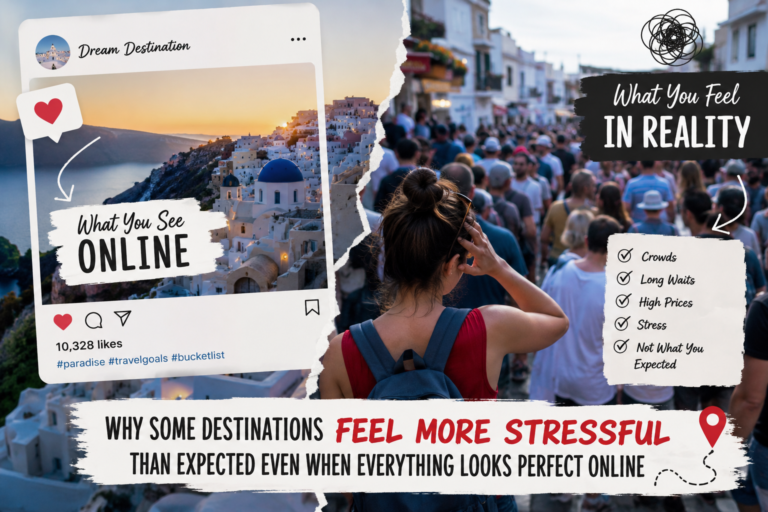
This lets you see a lot, but it also creates fatigue and a constant feeling of rushing. Social media adds pressure to tick off famous landmarks and photo spots, which can fill a trip with activity but few meaningful moments.
Slow travel changes the question from “How many places did I see?” to “How well did I experience this place?” Instead of queueing for five attractions in a day, you might spend an afternoon at a local cafe, wander a neighbourhood market or chat with a shopkeeper. These small moments often become the highlights. Our post on what makes a trip memorable explains why.
Slow travel vs fast travel: a quick comparison
| Slow travel | Fast-paced travel |
|---|---|
| Fewer destinations | Many destinations |
| Longer stays | Short stays |
| Less rushing and fatigue | Frequent packing and transfers |
| Deeper local experiences | More surface-level visits |
| Flexible schedule | Rigid schedule |
| Often lower transport spending | More transport spending |
| Focus on quality | Focus on quantity |
Neither style is wrong. Fast travel suits some people and some situations, such as a very short layover city or a first look at a country. But many travellers find that slower trips feel more satisfying.
What are the benefits of slow travel?
You understand a place better
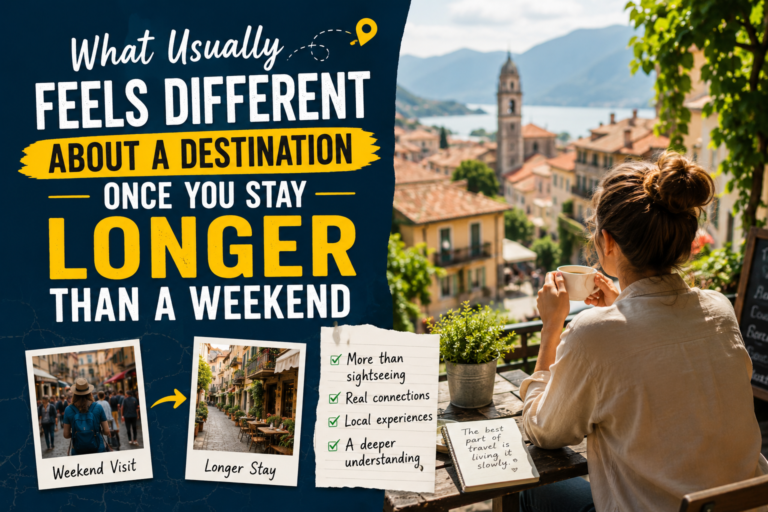
The biggest benefit is depth. When you stay longer, you notice details that rushed visitors miss. You learn local routines, find restaurants away from tourist areas, get familiar with neighbourhoods and experience the place a bit like a temporary resident.
You experience local culture more naturally
With only one day in a city, most people stay in the main tourist zones. With a week, behaviour changes. You are more likely to shop at local markets, use public transport, visit neighbourhood cafes, attend community events and explore quieter areas. Cities like Rome, Kyoto, Lisbon and Seville are often described as rewarding for slow stays because much of their character is in everyday life, not just in landmarks.
You feel less stressed
Every change of destination needs packing, transport, check-in, route planning and schedule management. Doing it every two or three days eats time and energy. Staying put removes much of that and leaves more room to enjoy the place. If you have ever come back from a holiday needing another holiday, you know the downside of constant motion. Our guide on travel burnout explains the warning signs.
You make better memories
Compare two evenings. In one, you spend twenty minutes at a famous attraction, take photos and leave. In another, you spend an evening at a neighbourhood restaurant, talking with the owner about regional food. Both are valuable. The second is more likely to stay with you. Slow travel creates more chances for that second kind of evening.
Can slow travel save money?
Often, yes, though it depends on where you go. Transport is usually one of the biggest costs of a trip. Every flight, train, bus or transfer adds money and time. When you cut the number of cities, you usually cut the number of tickets too.
| Fast-paced trip | Slow travel trip |
|---|---|
| 5 cities in 10 days | 2 cities in 10 days |
| Many train or bus tickets | Fewer transfers |
| Frequent hotel changes | Longer stays in one place |
| More daily logistics | Easier budget tracking |
Longer stays can also lead to discounts. Some rental platforms and extended-stay properties offer lower rates for weekly or monthly bookings, but not all do, so check the listing before you book. Our guide on saving money on accommodation explains where to look.
When you stay longer, you also tend to use local grocery stores, neighbourhood cafes and public transport instead of airport meals and tourist restaurants. That can lower your daily spending while giving you a more local experience. There are no guarantees, though. A long stay in an expensive city can still cost a lot, so set a budget in rupees before you go.
What does slow travel look like in practice?
These are examples of the style, not claims about any single traveller or about what “most” visitors do.
Tuscany, Italy
Rather than rushing between several Italian cities, you could rent a place in a small Tuscan town for a week. Days would revolve around local food, markets and countryside walks, with day trips to nearby towns.
Lisbon, Portugal
Lisbon works well as a base. You can stay for a week or more and explore surrounding towns by train or bus at a relaxed pace. Our article on why digital nomads stay longer in Portugal looks at why the city appeals to long-stay visitors.
Kyoto, Japan
Staying longer in Kyoto lets you see temples, traditional neighbourhoods and seasonal events without hurry. If Japan is on your list, start with our Japan itineraries to see how many days each plan needs.
Andalusia, Spain
Instead of one day each in Seville, Granada and Cordoba, you could spend more time in two of them and understand how the region’s history and culture fit together.
Slow travel closer to home
The same logic applies in India. A week in one hill town, one stretch of the coast or one heritage city often feels richer than touching four places in seven days. You can walk the same lanes twice, return to the same tea stall and learn which hour the market comes alive.
What does slow travel mean for sustainable tourism?
When you stay longer, you tend to spend money at more local businesses: restaurants, independent cafes, family-run guesthouses, local guides and neighbourhood shops. UN Tourism, the United Nations specialised agency for tourism (formerly known as UNWTO), says it promotes tourism for sustainable development, including protecting the environment and supporting economic development. Slow travel is not an official programme of that agency, but it fits those goals in spirit: fewer flights, fewer transfers and more local spending.
It also helps to avoid peak crowds. See our comparison of shoulder season vs peak season for ideas on when to go.
How does slow travel change your perspective?
When you are constantly moving, your attention goes to logistics: train timings, hotel check-ins, ticket slots. Slow travel clears much of that mental clutter. You focus on what is happening now. You notice how people live, how mornings and evenings differ, which shops open early, which streets get busy at noon.
After a few days in the same area, you start recognising places and faces. You might return to the same bakery each morning or chat with the owner of a small cafe. That repeated contact builds a sense of connection that is hard to get in a few hours. Many travellers describe this as the difference between seeing a place and understanding it.
Is slow travel better than fast tourism?
It depends on you. Slow travel is not better for everyone, but it solves common frustrations. Fast tourism can create a checklist mentality, with pressure to maximise every hour. The result can be decision fatigue, physical tiredness, less enjoyment and constant schedule pressure.
Slow travel flips the question from “What else can I fit in today?” to “What do I actually want to experience?” That small change can improve the whole trip.
How does slow travel help you avoid tourist traps?
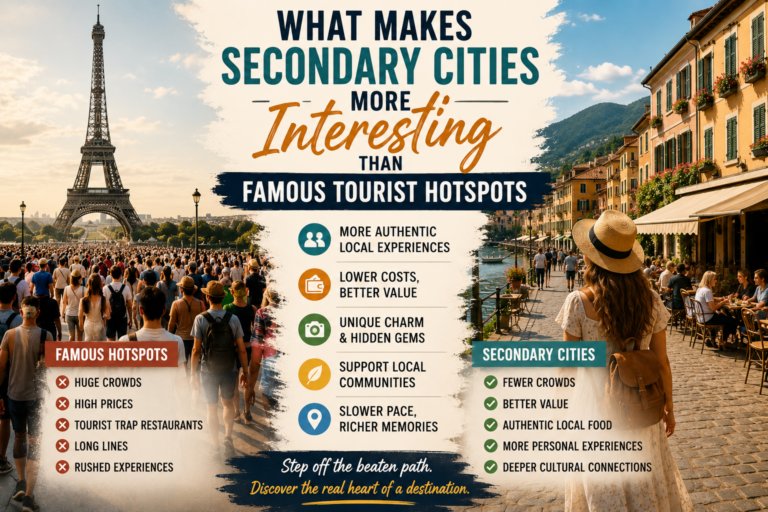
Popular landmarks are often worth seeing, but they can be overwhelming at peak times. Slow travellers still visit them, often at quieter hours, and spend the rest of their time beyond those zones. They explore neighbourhoods that are not on every blog, shop at local markets instead of souvenir stalls and eat where residents eat. Our guide on experiencing a country like a local has practical ideas.
How does slow travel help your mental well-being?
Modern life is already fast: work, family, notifications and deadlines. A fast-paced vacation can recreate that pressure, with you rushing between activities. Slow travel adds space. You can sit in a park, watch local life from a cafe terrace or eat a meal without checking the time. That kind of spaciousness is what many people hoped for when they booked the trip.
This is a general observation, not a medical claim. Slow travel is not a treatment for any condition, but a calmer pace often feels better than a packed one.
Experiences over attractions
Many travellers now value activities like cooking classes, food tours, community events and walking neighbourhoods. These take time. You cannot fully experience local culture if your schedule is packed from morning to night. Slow travel creates room for this, so you return with stories about people and moments rather than a list of attractions.
How did remote work and social media change travel?
Remote work has made slow travel easier for people whose jobs allow it. They can stay in a place for weeks, working during the day and exploring in the evening and on weekends. Cities like Lisbon, Valencia, Chiang Mai, Bali and Mexico City have been popular with remote workers partly because they suit longer stays. Our article on lesser-known destinations for remote workers lists more ideas. Rules about working remotely on a tourist visa differ by country, so check immigration rules before you plan a workation.
Social media has had a mixed effect. It encouraged fast tourism, with long lists of must-see spots. But it has also popularised longer stays, living like a local, mindful travel and cultural immersion. Seeing those posts makes more people question whether constant movement is the best way to travel.
How does slow travel improve food experiences?
Food is one of the easiest ways to connect with a place, yet rushed trips often reduce it to quick meals between sights. When you stay longer you can visit local markets, try family-run restaurants, learn about regional traditions and explore neighbourhood food scenes. A week in Naples gives you a very different food experience from a day trip. The same applies to Kyoto, Seville, Bangkok or Istanbul. Time lets food become part of the journey instead of a break from it.
How do you plan a slow trip, step by step?
- Pick a region, not a list. Choose one country or one region that interests you.
- Count your days honestly. Take the number of days and divide by at least three nights per base. For a 10-day trip, two bases is a good starting point; three is the upper limit.
- Choose your bases. Pick towns or neighbourhoods with good transport links, a market or high street and things to do nearby.
- Book accommodation with a kitchen or breakfast when possible. It helps you eat locally and manage costs.
- Plan day trips from your base, not new hotels every night.
- Fix only the essentials. Flights, first and last nights and anything that sells out. Leave the rest open.
- Keep one lighter day per week with no plans at all.
- Check visa limits. A Schengen short-stay visa allows up to 90 days within any 180-day period, but the stay on your visa sticker may be shorter. Check the dates on your visa. Longer stays need a different visa type.
For how to handle multi-city logistics, read our guide to multi-country trip planning. For the first time you stay in one place for longer, what changes after the first week is worth reading.
Slow travel tips for mindful explorers
Choose fewer destinations
The single most effective step is to cut your list. Fewer places lead to deeper experiences and less fatigue.
Stay in local neighbourhoods
Instead of booking next to the main attractions, consider residential areas where people live, shop and eat. Check the walk to transport and safety at night, especially if you are travelling alone.
Use public transport
Buses, trains, trams and metros show you daily life better than taxis or organised tours. Many cities offer multi-day transport passes.
Leave space in your schedule
Not every hour needs an activity. Some of the best travel memories are unplanned.
Return to places you enjoy
You do not have to see something new every day. Slow travellers often revisit a favourite cafe, park or neighbourhood, because familiarity can make the experience richer.
What mistakes do people make when trying slow travel?
Trying to do too much
The most common mistake is to fill a slow trip with activities. Slow travel needs flexibility.
Measuring success by attractions
A good trip is not defined by the number of landmarks you see.
Staying too busy
Some people leave home wanting rest, then schedule more than their normal week.
Ignoring local culture
Slow travel is not just staying longer. It means engaging with local customs, food and community, respectfully.
Forgetting about money and paperwork
A longer stay still needs a budget, insurance and valid documents. Check your passport validity and visa conditions well before you go. Our guide to first-time international travel tips has a checklist.
A sample slow itinerary for 10 days
This is a framework, not a fixed plan. It shows how the same ten days can look with slow travel principles.
| Days | Fast version | Slow version |
|---|---|---|
| Day 1 to 2 | City A: main sights, night train | Arrive in base 1, easy first day, one main sight |
| Day 3 to 4 | City B: quick tour | Base 1: one day trip, one free day |
| Day 5 to 6 | City C: highlights | Move to base 2 by an easy daytime train |
| Day 7 to 8 | City D: another transfer | Base 2: market, cooking class or long lunch |
| Day 9 to 10 | City E and rush to airport | Base 2: slow last day, relaxed departure |
Notice what changes: fewer packing days, daytime transfers instead of night trains, and a relaxed final day. That last point also helps your memory of the trip, since we tend to recall how experiences end.
Who is slow travel for, and when does it not fit?
Slow travel suits many people, but it is not perfect for every trip. Being honest about the limits helps you choose.
- It suits you if you feel tired after fast trips, enjoy food and local life, work remotely, travel with children or older family members, or have limited energy for constant packing.
- Fast travel may suit you if you have only a few days and want a first look at several places, or if you are visiting a country mainly for one specific event or sight.
- It may need a compromise if your leave is very short. In that case, pick one base city and do the rest as day trips.
- It needs extra planning if you plan a long stay abroad, because insurance, visas, money and bookings all last longer.
The point is not to follow a rule. It is to notice how you feel at the end of a trip and adjust the pace next time.
How can you try slow travel within India?
You do not need a passport to start. Domestic trips are a good way to test the style because transport, food and language are easier to manage.
- Choose one hill town, beach village or heritage city and stay for five to seven days instead of visiting several.
- Take a daytime train or bus between bases to see the landscape rather than flying everywhere.
- Stay in a homestay or a small guesthouse in a local neighbourhood and eat at nearby family-run places.
- Walk or use local transport for a few days in a row and let the routine settle.
- Keep one or two days free for weather, rest or something you hear about from a local.
This kind of trip also fits Indian long weekends. Our guide on travelling more while working full time shows how to link weekends and holidays into longer breaks.
A short checklist before you book a slow trip
- Have you cut your list of cities by at least one?
- Do you have at least three nights in each base?
- Are your transfers in daytime hours where possible?
- Do you have a budget in rupees, including local transport and food?
- Is your visa valid for the whole stay, and does your insurance match the length of your trip?
- Have you left at least one day with no plans?
If you can answer yes to most of these, your itinerary is already slower than the average.
How this guide was checked
The Slow Food origin was checked against a reference article on the movement, and UN Tourism’s mission and its 2024 name change against its own announcement. The Schengen 90/180 rule was checked on the European Commission’s home affairs site. The comparisons and examples are general illustrations and not survey results or statistics. Costs vary widely by destination, so compare real prices for your dates.
Frequently asked questions
Why are more travellers choosing slow travel?
Many people want less stress and more meaningful experiences. Spending longer in fewer places can feel more enjoyable than rushing through several cities.
What is the main purpose of slow travel?
To experience a destination more deeply. Instead of focusing on quantity, slow travel prioritises local culture, connection and a relaxed pace.
Is slow travel cheaper than fast travel?
Often, because you spend less on transport and sometimes get lower rates for longer stays. It is not guaranteed, so compare prices and set a budget.
Can slow travel work for a one-week trip?
Yes. Choose one base, take day trips, and leave free time. Even a short holiday can follow slow travel principles.
How long can an Indian passport holder stay in the Schengen area?
With a Schengen short-stay visa, up to 90 days within any 180-day period, but the exact stay allowed is on your visa. Longer stays need a different type of visa. Check with the embassy or consulate of the country you plan to stay in.
Final thoughts
Slow travel reflects a wider change in how people think about trips. For years, success meant fitting more into limited time. Many travellers now realise that meaningful experiences rarely happen when you are constantly rushing.
The next time you plan a trip, remove one destination from your itinerary and spend that extra time where you already are. You may end up seeing less. But there is a good chance you will experience much more.
Sources
- Slow Food (Wikipedia): origins and founder
- UN Tourism: UNWTO becomes UN Tourism (January 2024)
- European Commission, Home Affairs: Schengen short-stay calculator and 90/180 rule
Related Guides
- Itinerary vs Spontaneity: How Much Should You Plan a Trip?
- Shoulder Season vs Peak Season: Crowds, Prices and Experience
- Multi-Country Trip Planning: How to Handle City-to-City Travel
- Planning a Trip From Instagram and TikTok: Why It Often Backfires
Browse all of our Trip Planning guides.

Varinder Kaur is from Amritsar, India. She has traveled to well-known places across India, including Darjeeling, and to a few countries abroad, and shares travel experiences and practical tips for travelers through OpinionHook.


2 Comments
Comments are closed.