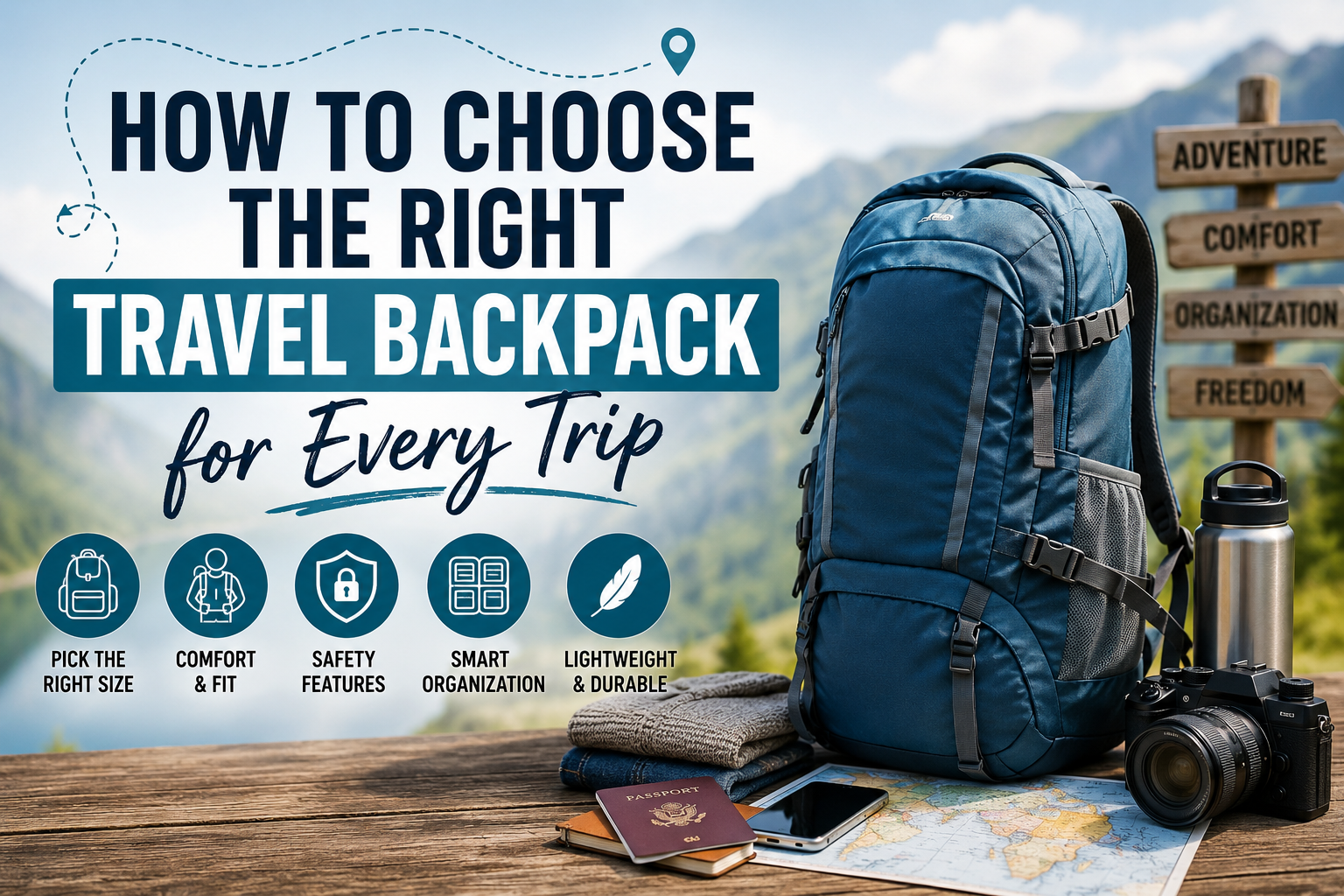
How to Choose the Right Travel Backpack for Every Trip
The right travel backpack is the one that fits your trip length, sits comfortably on your back for hours, and stays within your airline's cabin bag limit. For most trips of up to a week, that means a bag of roughly 30 to 45 litres. For longer trips, you move up in size, but packing lighter is usually a better answer than buying a bigger bag.
This guide explains how to choose by size, fit, features and material, with a checklist you can use in the shop or while comparing bags online. It also covers the cabin bag rules Indian travellers run into most often.
Key takeaways
- Pick the size from your trip length and your airline's cabin limit, not from how much stuff you own.
- Fit matters more than features. A bag that does not suit your torso length will hurt on the first long walk.
- Check your airline's cabin bag weight and size before you buy. Air India, for example, lists 7 kg and 55 x 40 x 20 cm for economy.
- A bag that opens like a suitcase (clamshell) is easier to pack than a top-loading bag.
- Pay for good zips, stitching and padding. Skip extra gadgets you will not use.
- Try the bag with weight in it before you buy, or buy from a seller with an easy return policy.
Why the choice matters more than it seems
A bad bag does not just look bad. It can strain your shoulders and back, make you slower in crowded stations and airports, and push you into paying baggage fees if it does not meet the cabin limit. A good one spreads the load across your hips and shoulders, protects your things and makes repacking quick.
Before you shop, answer these questions:
- How long will your trips usually be?
- Will you mostly fly, take trains, or walk between places?
- Do you carry a laptop, camera or other electronics?
- Will you travel in rain or in places with dust and mud?
- Is this your only bag or will you also use a small day bag?
Step 1: Pick the size
Litres tell you how much the bag holds. Use this table as a rough starting point. It is a rule of thumb, not an official standard, and your packing style changes the answer.
| Trip type | Rough size | Notes |
|---|---|---|
| Day trips | 15 to 25 litres | Enough for water, a jacket, a camera and a small first-aid kit |
| Weekend | 20 to 30 litres | Fits one change of clothes and a small laptop |
| 3 to 5 days | 30 to 40 litres | Usually fits a flight cabin limit if not overstuffed |
| One week | 35 to 45 litres | The sweet spot for many international trips |
| Long trips and trekking | 45 to 65 litres | Often needs to be checked in on flights |
Bigger is not better. A larger bag simply gets filled. If you are unsure, buy the smaller size and pack less.
Check the airline limit before you buy
Cabin bag rules differ between airlines and change from time to time. Air India's cabin baggage page lists one carry-on bag of up to 7 kg and 55 cm high, 40 cm long and 20 cm wide for economy, plus a personal item that fits under the seat. IndiGo has also reported similar limits for new bookings. A bag that is full to its 45-litre capacity can easily go over 7 kg, so weigh it at home. Always check the airline's own page for your fare and date.
For more on airport rules and security checks, see our guides on airport tips from frequent flyers and European airport security rules.
Step 2: Check the fit
Fit is the most overlooked part of buying a travel backpack. Look for:
- Torso length. Backpacks are made for different torso lengths. Measure yours from the bone at the base of your neck to the top of your hip bones, then check the maker's size chart.
- Padded, adjustable shoulder straps. They should not dig in or slip when you walk.
- A hip belt. For loads above a few kilograms, a hip belt moves weight from your shoulders to your hips. Small day bags may not need one.
- A chest strap. It keeps the shoulder straps from sliding off.
- A ventilated back panel. Helpful in warm weather, which many Indian travellers face on trips to South-East Asia.
Many brands sell men's and women's fits with different strap shapes and sizes. Try both and choose the one that feels better.
Step 3: Choose the opening style
- Top-loading bags open from the top like a sack. They are strong and simple, but you have to dig for things at the bottom.
- Clamshell or panel-loading bags open like a suitcase. They are easier to pack and find things in, and they suit most city and airport travel.
- Hybrid designs add a side or bottom zip for quick access.
Step 4: Look at organisation and security
Good organisation saves time at security checks and hostels. Useful features include a separate laptop sleeve, a pocket for your passport and boarding pass, a shoe or wet-clothes compartment, and compression straps.
For security, lockable zip pullers, a hidden pocket and a strong, cut-resistant fabric on the back panel are sensible. Anti-theft bags can help in crowded stations and markets, but they do not replace basic habits: keep your passport and cards on your body, not in an outer pocket.
Step 5: Check materials and weight
- Fabric. Look for water-resistant nylon or polyester with reinforced stitching, especially at the stress points near straps and zips.
- Zips. Large, smooth zips from a known maker usually last longer. Test them several times in the shop.
- Empty weight. A heavy bag uses up your weight allowance before you pack anything. Check the product page for the weight, and compare similar bags.
- Rain protection. A rain cover is useful, but it is no substitute for a water-resistant fabric if you travel in monsoon or wet regions.
Backpack or suitcase?
| Situation | Better choice |
|---|---|
| Lots of walking, stairs, cobbled streets | Backpack |
| Using buses, metro and trains | Backpack |
| Business trip with formal clothes | Suitcase |
| Family trip with kids and many bags | Suitcase or a mix |
| Trekking and hostels | Backpack |
You can also combine them: a small backpack for the cabin and a suitcase in the hold. Choose what suits your route rather than what looks right on social media.
A practical buying checklist
- Does it meet your airline's cabin limit when full?
- Does the harness adjust to your torso?
- Can you carry it with weight for 30 minutes without pain?
- Do the zips run smoothly and can they be locked?
- Is there an easy return or exchange policy?
- Will it last more than a few trips?
If you are packing for a longer journey, our two-week Europe packing list shows how to fit a fortnight into one carry-on-size bag, and first-time international travel tips covers the rest of what to prepare. For high-altitude treks, bags are a bigger decision. Our guide to the best trekking destinations will help you work out how much you need to carry.
Frequently asked questions
What size backpack is best for international travel?
For most trips of about a week, 35 to 45 litres is a good range. If you only fly with budget airlines that limit cabin bags, aim for the smaller end and weigh it when packed.
Is a backpack better than a suitcase?
It depends on the route. A backpack is easier if you walk a lot and use public transport. A suitcase is easier at airports and hotels and better for formal clothes.
Are anti-theft backpacks worth buying?
They can make pickpocketing harder in crowded places, but good habits matter more. Keep valuables close to your body and use lockable zips.
How heavy should a loaded travel backpack be?
Keep it as light as you comfortably can. Airline cabin limits are often lower than what you could physically carry, so pack, weigh the bag at home and adjust.
How long should a good travel backpack last?
With normal use and care, a well-made bag should last through many trips. Quality zips, stitching and padding matter more than the brand name.
How the facts in this guide were checked
The cabin baggage figures come from Air India's cabin baggage page and a Gulf News report on IndiGo's limits, both listed below. The size ranges in the table are general rules of thumb, not official standards. Airline limits change, so always check your airline's page before you fly.
Sources
Related Guides
- Best Hotel Booking Platforms Compared for 2026: Find the Right Deal for Your Trip
- Secondary Cities vs Tourist Hotspots: Why Visit Smaller Cities
- Slow Travel: What It Is, Benefits and How to Plan a Slower Trip
- First-Time International Travel Tips: What to Know Before You Go
Browse all of our Trip Planning guides.

Varinder Kaur is from Amritsar, India. She has traveled to well-known places across India, including Darjeeling, and to a few countries abroad, and shares travel experiences and practical tips for travelers through OpinionHook.


One Comment
Comments are closed.