
Best Countries to Visit in Europe for First-Time Travelers (2026 Complete Guide)
For most first-time visitors from India, the easiest countries in Europe are France, Italy, Spain, Portugal, the Netherlands, Switzerland, Austria and Germany. All eight are in the Schengen area, so one Schengen visa lets you move between them, and all have strong rail links, good tourist services and plenty of English signage in popular areas. The right choice depends on your budget, how many days you have and what you enjoy: history, food, mountains or beaches.
Europe has more than 40 countries, and the choice can feel heavy. This guide narrows it down. It compares eight beginner-friendly countries, gives sample itineraries for one to three weeks, explains the Schengen visa basics for Indian passport holders, and lists the mistakes that waste the most time and money on a first trip.
Key takeaways
- Pick two or three neighbouring countries for a first trip. More than that usually means more time at stations and airports than in cities.
- France, Italy and Spain are the classic first choices for sights, food and easy transport.
- Portugal is generally easier on the budget than Western Europe's priciest countries, and Switzerland is the most expensive of the eight. Compare real prices for your dates.
- All eight countries here are in the Schengen area. Indian passport holders need a Schengen visa for each, so apply to the country where you will spend the most nights.
- The Schengen visa fee for adults was set at 90 euros from June 2024, and fees are reviewed from time to time. Check the embassy or visa centre for the current figure.
- Book timed tickets for the big attractions, such as the Louvre, which recommends time-slot booking.
- Take trains for city-to-city trips under a few hours. They often beat flights once you add airport time.
Quick comparison of eight beginner-friendly countries
This table is a rough guide based on general travel patterns, not a price list. Costs change by city, season and how you travel.
| Country | Best for | Cost level (rough) | Ease of getting around | Suggested trip length |
|---|---|---|---|---|
| France | Landmarks, museums, food | Medium to high | Excellent rail network | 7 to 10 days |
| Italy | History, art, food, coast | Medium | Good rail links between big cities | 10 to 14 days |
| Spain | Beaches, cities, food | Medium | Good trains and flights | 8 to 12 days |
| Portugal | Value for money, coast, old towns | Lower than many Western European countries | Easy, compact | 7 to 10 days |
| Switzerland | Mountains, scenic trains | High | Excellent public transport | 5 to 8 days |
| Netherlands | Canals, museums, cycling | Medium to high | Short distances, easy transport | 4 to 7 days |
| Austria | Music, Alps, old cities | Medium | Good rail links | 6 to 9 days |
| Germany | Castles, history, road and rail trips | Medium | Good rail network | 8 to 12 days |
Why the choice of country matters
Your first European trip sets your idea of Europe for the next ones. If the first trip is rushed, you remember airports and platforms. If it is slow, you remember streets, meals and conversations. Many new travellers try to see five countries in ten days and spend a large share of it in transit. A better plan is two or at most three neighbouring countries, connected by train, with enough days in each to see the main sights and still rest.
Use these questions to narrow the list:
- How many days do you have? Under a week, pick one country or two close cities. Two weeks allows two or three countries.
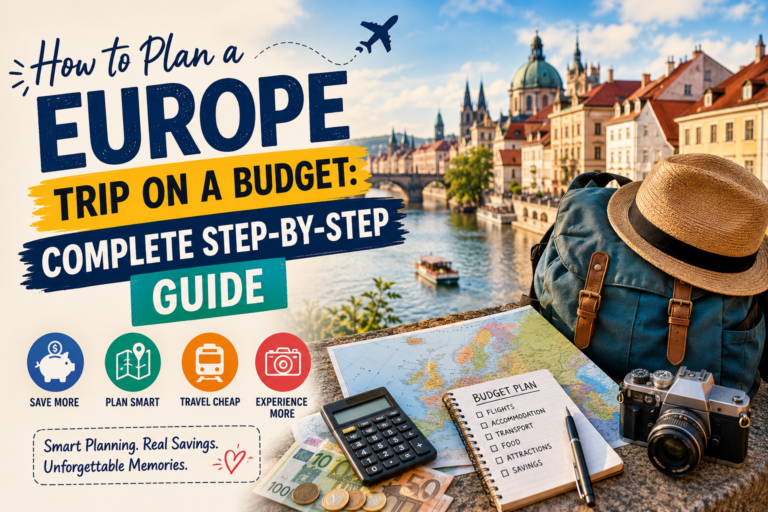
- What is your budget? Look at the cost of flights, stay and food together. Our guide on planning a Europe trip on a budget walks you through that.
- What do you like? History, mountains, beaches, food or cities. Choose by interest, not by what is trending.
- Can you get a visa in time? Check processing time and appointments before you book flights.
Are you a history lover, a nature person or on a tight budget?
- History and art: Italy, Greece and France have some of the best known historic sites in the world, from Roman ruins to royal palaces.
- Mountains and lakes: Switzerland and Austria are the usual picks, with Norway and Iceland as options for later trips.
- Tight budget: Portugal, Spain, Hungary, Poland and parts of Croatia are usually cheaper than the most expensive Western European cities. Always compare current prices.
- First time abroad: France, Italy, the Netherlands, Switzerland, Portugal and Spain are common choices because they have reliable transport and a lot of tourist support.
1. France
France gives you iconic sights, great food and good trains in one country, so one or two weeks go a long way without complicated planning.
Where to go
- Paris
- Nice and the French Riviera
- Lyon
- Bordeaux
- Strasbourg
- Mont Saint-Michel
- The Loire Valley
Why it suits a first trip
France has a large high-speed rail network, so moving between big cities is simple. Paris alone can fill a week: the Eiffel Tower, the Louvre, Notre-Dame, the Arc de Triomphe and a Seine cruise are the usual starting points. Outside Paris, you can see castles, vineyards, the Mediterranean coast and, in summer, the lavender fields of Provence.
Booking tip
The Louvre says on its official page that time-slot bookings are recommended, even for visitors with free entry, and lists a standard price of 32 euros for visitors from outside the European Economic Area at the time of checking. Prices and rules change, so confirm on the museum’s site. Booking early is wise in spring and summer, when queues are longest.
2. Italy
Italy suits first-time visitors because history, art, food and the coast are close together and the main cities are linked by train.
Where to go
- Rome
- Florence
- Venice
- Milan
- Naples
- The Amalfi Coast and Cinque Terre
What to see
The Colosseum, the Vatican Museums, St Peter’s Basilica, Florence Cathedral and the Leaning Tower of Pisa are the best known. Food varies by region: Rome is known for carbonara and cacio e pepe, Naples for pizza, and Venice for seafood and small bar snacks called cicchetti.
Practical notes
- Many historic centres limit vehicle access, so walking and public transport are usually faster than taxis.
- Venice has run a day-visitor access fee on selected peak days. In 2026 it applied between 3 April and 26 July at 5 euros if booked at least four days ahead, or 10 euros if booked later, and overnight guests in Venice were exempt, according to The Local Italy. Check the city’s official site for the next season’s dates. Source: The Local Italy.
3. Spain
Spain combines good weather, sightseeing and a relaxed pace, and many travellers find daily costs lower than in France or Switzerland.
Where to go
- Barcelona
- Madrid
- Seville
- Valencia
- Granada
- Malaga
Highlights
Barcelona has Gaudi’s architecture including the Sagrada Familia. Madrid has the Prado Museum, parks and lively squares. Granada is home to the Alhambra, a famous example of Moorish architecture. Seville has flamenco, old neighbourhoods and palaces.
Budget tip
Lunch is often the main meal in Spain, and many restaurants serve a fixed-price lunch menu that is usually better value than ordering dinner a la carte. Ask for the set menu, called the menu del dia.
4. Portugal
Portugal is one of the most popular first-time choices because it is compact, welcoming and generally gentler on the budget than much of Western Europe.
Where to go
- Lisbon
- Porto
- Sintra
- The Algarve (Faro and Lagos)
- Madeira
- The Douro Valley
What makes it stand out
Lisbon has colourful streets, trams and river views. Porto sits on a river and is known for port wine and its bridges. Sintra has palaces among green hills and is an easy trip from Lisbon. The Algarve has beaches and cliffs.
Practical tip
Buy a rechargeable public transport card in the main cities. It is usually cheaper and quicker than single tickets. Check the local operator’s website for the current card and fares.
5. Switzerland
Switzerland is worth it if mountain scenery, clean cities and punctual transport matter to you, but it is the most expensive country on this list, so plan the budget before you commit.
Where to go
- Zurich
- Lucerne
- Interlaken
- Zermatt
- Geneva
- Lauterbrunnen
What to do
Travellers go for panoramic train rides, Lake Lucerne, hikes in the Lauterbrunnen Valley, a trip to Jungfraujoch and a view of the Matterhorn near Zermatt. Even ordinary train journeys pass through valleys, lakes and mountains.
Money-saving tip
A Swiss Travel Pass can lower transport costs if you plan several long journeys in a short time. Add up the tickets you actually plan to buy and compare them with the pass price on the official Swiss rail pages before buying. Switzerland is in the Schengen area but not in the European Union, so check the visa and entry rules for it separately if you are applying for a Schengen visa.
6. The Netherlands
The Netherlands is small, easy to move around and well connected, so it is a good gentle start to Europe.
Where to go
- Amsterdam
- Rotterdam
- Utrecht
- The Hague
- Haarlem
- Giethoorn
- Kinderdijk
What to see
Amsterdam has canals, the Rijksmuseum, the Van Gogh Museum and the Anne Frank House. Rotterdam is known for modern architecture. Utrecht is calmer, with canals and an old centre. Giethoorn is known for canals where boats replace cars.
Practical tip
Check the national public transport website for how to pay for trains, trams, buses and metros. Many visitors use a transit card or a contactless bank card, which avoids buying single tickets. Make sure your card works abroad before you travel.
7. Austria
Austria offers Alpine scenery, elegant cities and classical music, and it works well in both summer and winter.
Where to go
- Vienna
- Salzburg
- Hallstatt
- Innsbruck
- Graz
Why people like it
Vienna has imperial palaces, coffee houses, museums and concerts. Salzburg, the birthplace of Mozart, has an old town and a hilltop fortress. Innsbruck sits among the Alps. Austria’s rail network connects easily to Germany, Switzerland and Italy.
8. Germany
Germany suits travellers who want castles, history, big cities and good transport in one trip.
Where to go
- Berlin: the Brandenburg Gate, remains of the Berlin Wall and museums
- Munich: Bavarian culture, beer halls and the Alps nearby
- Hamburg: a port city with a long maritime history
- Cologne: a Roman-founded city with a famous cathedral
- Neuschwanstein Castle: a hilltop castle in Bavaria
- The Black Forest: forests and small towns
Tip
If you plan many train journeys, compare single tickets with regional passes and rail passes on the operator’s own website before buying.
First-time Europe itineraries
The best plan depends on your days. Fewer places with more time is usually better than many places with less time.
| Trip length | Sample route | Why it works |
|---|---|---|
| 7 days | Paris and Amsterdam | Two big cities linked by a direct high-speed train, so you do not lose a day to flying. Check the journey time on the operator site |
| 10 days | Rome, Florence and Venice | A classic Italian first trip with rail links between the three cities |
| 2 weeks | Paris, Zurich, Milan and Venice | Mixes famous cities with Swiss mountains. Check train times and costs between each stop |
| 3 weeks | Lisbon, Madrid, Barcelona, Nice and Rome | A long loop with beach time, culture and food. Some legs may be cheaper by air, so compare |
Schengen visa basics for Indian travellers
Indian passport holders need a Schengen visa for short tourist trips to these countries. A few points to know:
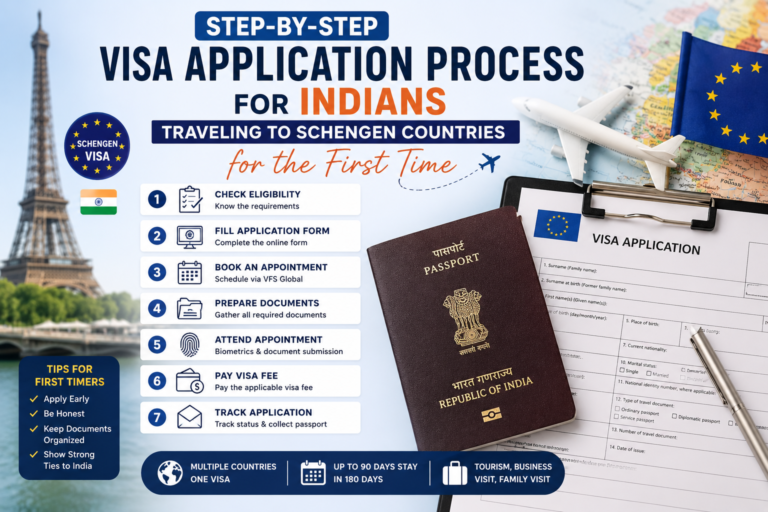
- Apply to the right country. The usual rule is to apply to the country where you will spend the most nights. If you spend equal time in two countries, apply to the one you enter first.
- Fee. The Italian embassy in Washington lists the adult Schengen visa fee as 90 euros from 11 June 2024, 45 euros for ages 6 to under 12, and no fee under 6, with fees reviewed every three months, so check the current fee on the embassy or visa centre page. Service charges at visa centres are extra.
- Documents. You usually need a valid passport, travel insurance, a booking plan, proof of funds and accommodation. Our step-by-step Schengen visa guide for Indians explains the process, and the passport validity rule is worth checking before you book.
- Border checks. Europe’s Entry/Exit System has been rolled out at Schengen borders. Our post on what Indian travellers should expect from EES covers what to expect at the airport.
Do not book non-refundable flights or hotels until you know your visa timeline. Use free-cancellation rooms and refundable tickets where possible.
What does a first Europe trip cost?
Costs vary a lot by country, season and style, and a fair average needs a current source, so here is a simple way to estimate yours.
| Cost item | How to estimate it | Ways to lower it |
|---|---|---|
| Flights from India | Check fares for your dates in a search tool and compare nearby airports | Fly in shoulder season, set fare alerts, consider flying into one city and out of another |
| Visa and insurance | Embassy or visa centre fee plus service charge, and an insurance quote | Apply early to avoid urgent fees |
| Stay | Price of a room in the central area, with taxes and city tax | Use hostels or guesthouses, or stay slightly outside the centre near a metro |
| Local transport | Rail passes or city cards if you will make many trips | Compare a pass with single tickets before buying |
| Food | A daily amount based on restaurant prices on a map app | Lunch menus, bakeries, supermarkets, kitchen stays |
| Attractions | Entry prices from official sites | Book timed tickets early, use free museum days where offered |
Shoulder seasons such as April to May and September to October often have better hotel rates, smaller crowds and pleasant weather, though weather varies by region. Our guide on shoulder season vs peak season explains the trade-offs.
Common mistakes first-time travellers make
Trying to see too many countries
Every check-out, airport transfer and train adds hours. Spend more days in fewer places.
Ignoring trains
For many city pairs, a train from city centre to city centre is faster than a flight once you add check-in, security and transfers. Check the real door-to-door time.
Booking too late
Flights, hotels and popular attractions get more expensive or sell out closer to your dates, especially in summer.
Packing too much
Cobbled streets, stairs and small hotel rooms make heavy bags a burden.
Skipping travel insurance
Schengen visa applications usually require it anyway, and it helps if flights are cancelled or you fall ill. Read what the policy covers.
Choosing a hotel far from transport
A cheaper room far from a station can cost you more in time and fares. Check the map before you book.
When to go: season by season
Europe is big, so weather differs by region, but these general patterns help you choose a month.
| Season | What it is like | Good to know |
|---|---|---|
| Spring (April to May) | Mild weather in much of the continent, flowers in bloom, smaller crowds than summer | Easter weeks are busy and prices can rise |
| Summer (June to August) | Long days and the best weather for beaches and mountains | Peak prices, big queues and heat in southern cities, so book early |
| Autumn (September to October) | Pleasant weather and thinner crowds in many places | Some mountain services close in late autumn |
| Winter (November to March) | Christmas markets, snow sports and low prices in many cities | Short days, cold weather and some seasonal closures |
Check a weather source for the exact city and month you plan to visit, because the south of Spain and the Alps can feel like different worlds in the same week.
Getting around Europe
- Trains. Best for city-to-city trips of a few hours. They run from central stations, and you avoid long airport queues. Book popular high-speed routes in advance, since fares usually rise closer to the date.
- Budget flights. Good for long distances, for example across the continent. Add baggage fees, airport transfers and the time to reach the airport. Read the cabin bag limit of the airline, as these are often stricter than on Indian airlines.
- Buses. Usually the cheapest option and useful where trains are slow or expensive, though journeys take longer.
- Local transport. Most big cities have metro, tram and bus networks. Check the city transport website for day passes, and compare them with single tickets before buying.
Money, phone and food tips for Indian travellers
- Cards and cash. Cards and contactless payments are widely accepted in most of Western Europe, but carry a small amount of local currency for small shops, public toilets and markets. Ask your bank about foreign transaction fees and use a card with low or no forex markup if you can.
- Currency. Many countries here use the euro. Switzerland uses the Swiss franc, so check before you go.
- Phone. Compare an international roaming pack from your Indian operator with a local or travel eSIM. Check that your phone supports eSIM before you buy.
- Vegetarian and Indian-style food. Large cities have Indian restaurants and plenty of vegetarian options, and supermarkets sell fruit, bread and ready meals. If you follow a strict diet, learn how to say it in the local language or keep a note on your phone, and ask about hidden meat stock or animal fat.
- Plug sockets. Most of continental Europe uses a different socket from India, so pack a travel adapter. Switzerland has its own socket type, so check which adapter you need.
Safety on a first trip
Most travellers have a trouble-free trip, but crowded places attract pickpockets in every country. Keep your passport and cards in a zipped inner pocket, carry only the cash you need, and keep a photo of your passport in your email. Save the local emergency number, which is 112 across the European Union and in many other European countries, and keep your insurance details handy.
Frequently asked questions
Which European country should I visit first?
France, Italy, Spain, Portugal and the Netherlands are common first choices because they combine easy transport, famous sights and plenty of places to stay. Choose according to your interests, budget and days.
What is the easiest European country for a beginner?
Portugal and the Netherlands are often called easy for beginners because they are compact and have good public transport and tourist services. France and Italy are also easy thanks to their rail links.
Is two weeks enough for Europe?
Two weeks is enough for two or three countries or regions when you travel by train and keep the moves short. Trying to cover more usually becomes tiring.
What is the cheapest country on this list?
Portugal is generally one of the better value options among the Western European countries here, and Switzerland is the most expensive. Prices change, so compare current costs for your dates and city.
Should I fly or take the train between European cities?
For journeys of a few hours, trains are often easier because they run from city centre to city centre and need less waiting. For long distances, a budget flight can be cheaper, but add baggage fees and airport transfers.
Do Indians need a visa for these countries?
Yes. Indian passport holders need a Schengen visa for short stays in all eight countries. Apply early and check the current rules on the embassy or visa centre site. See our list of visa-free countries for Indians if you want an easier first trip elsewhere.
Can I use one visa for several countries?
A valid multi-country Schengen visa generally lets you travel between participating countries during its validity, but you still apply through the country that is your main destination, and you may be asked for ID at borders.
How the facts in this guide were checked
The Schengen fee comes from an Italian embassy notice, the Louvre details from the museum’s official page, the Venice fee from The Local Italy, and the EES details from our own checked post. I removed the earlier daily budget and hotel price figures because they had no source. All visa, fee and ticket details change, so confirm them on the official site before you pay.
Sources
- Italian Embassy in Washington: Schengen visa fee update
- Louvre Museum: Hours and admission
- The Local Italy: Venice access fee in 2026
Related Guides
- How to Find Good Budget Hostels in Europe Without Getting Burned
- How to Plan a Europe Trip on a Budget: Complete Step-by-Step Guide
Browse all of our Europe Travel guides.

Varinder Kaur is from Amritsar, India. She has traveled to well-known places across India, including Darjeeling, and to a few countries abroad, and shares travel experiences and practical tips for travelers through OpinionHook.




One Comment
Comments are closed.