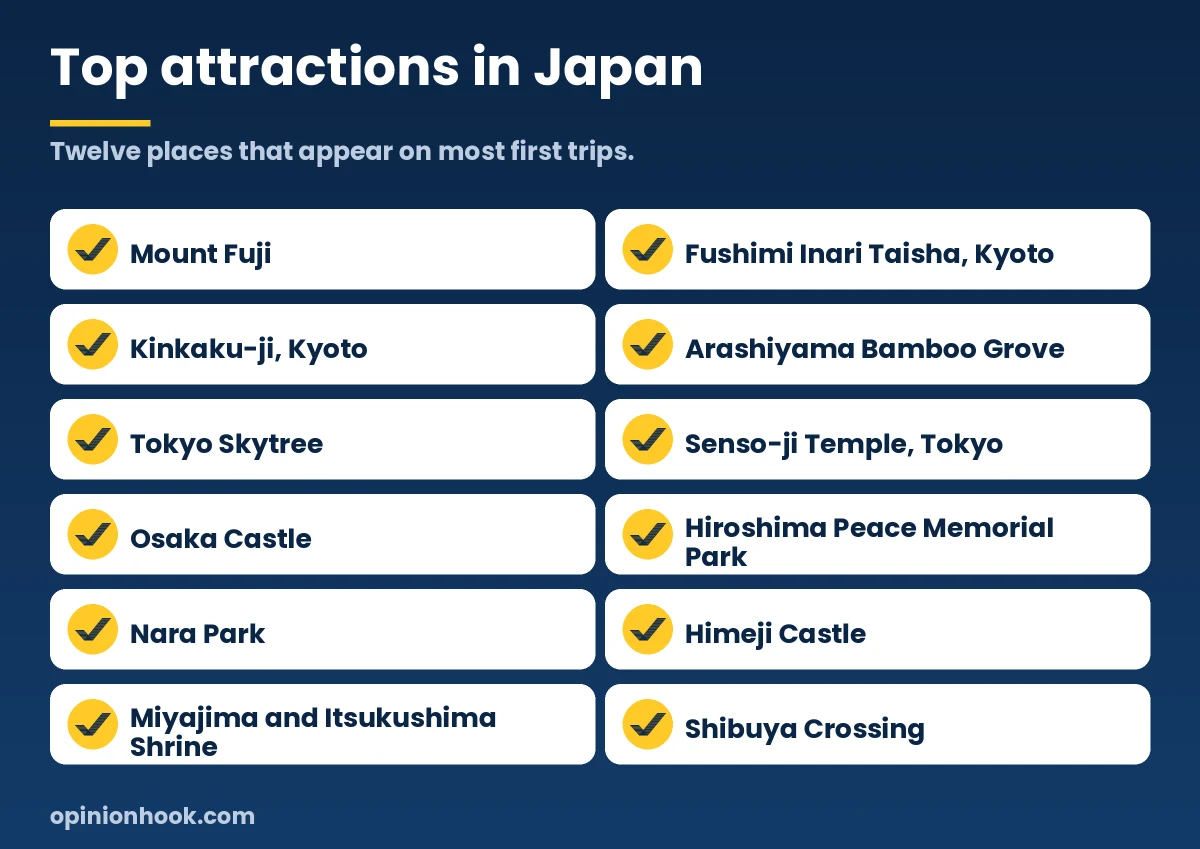
Japan Travel Guide 2026: Everything You Need to Plan Your Trip

The country attracts millions of visitors every year thanks to its exceptional safety, world-class public transportation, unique culture, incredible food, and stunning natural beauty. From ancient temples and historic castles to modern skyscrapers and peaceful countryside villages, Japan offers a remarkable blend of old and new.

Japan is one of the world’s most fascinating travel destinations, where centuries-old traditions exist alongside futuristic cities, high-speed trains, and cutting-edge technology. Whether you dream of walking beneath cherry blossoms in Kyoto, exploring the neon-lit streets of Tokyo, relaxing in a traditional hot spring, or climbing the iconic Mount Fuji, Japan offers unforgettable experiences for every type of traveler.

Planning a trip to Japan can feel overwhelming, especially for first-time visitors. Questions about visa requirements, transportation, travel costs, accommodation, cultural etiquette, and the best time to visit often arise before booking a flight. This comprehensive guide answers those questions and helps you plan your journey with confidence.

Whether you’re traveling solo, with family, on a honeymoon, or as a budget backpacker, this guide covers everything you need to know before visiting Japan.


Quick Facts About Japan

InformationDetails
Official NameJapan
Capital CityTokyo
CurrencyJapanese Yen (JPY)
LanguageJapanese
PopulationApproximately 123 million
Time ZoneJapan Standard Time (JST, UTC+9)
Calling Code+81
Driving SideLeft
Electricity100V, Type A & B plugs
Best SeasonsSpring and Autumn

Why Visit Japan?

Japan is unlike any other destination in the world. Few countries combine modern innovation, deep-rooted traditions, breathtaking landscapes, and exceptional hospitality so seamlessly. Whether you’re interested in history, food, nature, technology, or culture, Japan offers something memorable in every season.

A Perfect Blend of Tradition and Modernity

One of Japan’s greatest attractions is the contrast between its ancient heritage and cutting-edge innovation. In a single day, you can visit a centuries-old temple in the morning and explore a futuristic shopping district in the afternoon.

Historic cities like Kyoto preserve traditional wooden houses, tea ceremonies, and beautiful Zen gardens, while Tokyo showcases towering skyscrapers, robotic cafés, and some of the world’s busiest intersections.

This balance between history and progress makes Japan one of the most unique countries to explore.


One of the Safest Countries in the World

Safety is one of the biggest reasons travelers choose Japan.

Violent crime is relatively rare, public transportation is well organized, and cities remain active late into the night. Lost wallets and mobile phones are frequently returned to their owners, reflecting the country’s strong culture of honesty and respect.

Solo travelers, women travelers, and families often consider Japan one of the safest destinations in Asia.


Incredible Food Culture

Japanese cuisine extends far beyond sushi.

Every region offers local specialties, including:

Convenience stores also surprise many visitors with affordable, high-quality meals, making Japan an excellent destination for travelers on any budget.


Efficient Public Transportation

Japan’s transportation system is among the most efficient in the world.

The famous Shinkansen (bullet train) connects major cities quickly and comfortably, while extensive metro and rail networks make it easy to explore urban areas.

Visitors can travel from Tokyo to Kyoto in just a few hours without needing a car, making independent travel simple even for first-time tourists.


Beautiful Natural Landscapes

Although Japan is famous for its cities, nature is equally impressive.

Visitors can experience:

Each season offers a completely different travel experience.


Rich Cultural Heritage

Japan’s culture has evolved over thousands of years, creating traditions that remain deeply respected today.

Travelers can experience:

These experiences allow visitors to better understand Japan’s unique identity.


Exceptional Hospitality

Japanese hospitality, known as Omotenashi, focuses on anticipating guests’ needs and providing outstanding service without expecting anything in return.

Whether staying at a luxury hotel, dining at a small family restaurant, or shopping in a local store, visitors often notice the kindness, professionalism, and attention to detail that define customer service throughout the country.


A Destination for Every Type of Traveler

Japan appeals to a wide range of travelers, including:

Where Is Japan?

Japan is an island nation located in East Asia in the Pacific Ocean. It lies east of China, North Korea, South Korea, and Russia, and stretches over 3,000 kilometers (1,900 miles) from north to south. The country consists of more than 14,000 islands, although five main islands make up almost all of Japan’s land area.

Thanks to its unique geography, Japan offers a remarkable variety of landscapes. Visitors can experience snow-covered mountains in Hokkaido, bustling metropolitan cities like Tokyo and Osaka, peaceful bamboo forests in Kyoto, and tropical beaches in Okinawa—all within the same country.

Japan’s location along the Pacific Ring of Fire also means it has numerous volcanoes, natural hot springs (onsen), and occasional earthquakes. Despite this, Japan is highly prepared for natural disasters, with advanced infrastructure and strict building standards that make it one of the safest countries to visit.


The Five Main Islands of Japan

Although Japan has thousands of islands, most travelers spend their time on these five major islands.

Honshu

Honshu is Japan’s largest and most populated island. It is home to many of the country’s most famous destinations, including:

For first-time visitors, Honshu is usually the main focus of any itinerary because it combines history, modern cities, cultural attractions, and excellent transportation.


Hokkaido

Located in northern Japan, Hokkaido is famous for its natural beauty and outdoor adventures.

Highlights include:

Winter is the most popular season, attracting skiers and snowboarders from around the world.


Kyushu

Kyushu is known for volcanic landscapes, hot springs, delicious food, and historic cities.

Popular destinations include:

Travelers looking for authentic Japanese culture with fewer crowds often enjoy exploring Kyushu.


Shikoku

Shikoku is the smallest of Japan’s four main islands and is famous for its peaceful atmosphere and religious heritage.

Visitors come here for:

It is ideal for travelers seeking a quieter side of Japan.


Okinawa

Located in the far south, Okinawa has a subtropical climate that feels very different from mainland Japan.

Visitors enjoy:

Okinawa is an excellent destination for beach holidays and family vacations.


Regions of Japan

Japan is commonly divided into eight geographical regions, each offering unique attractions.
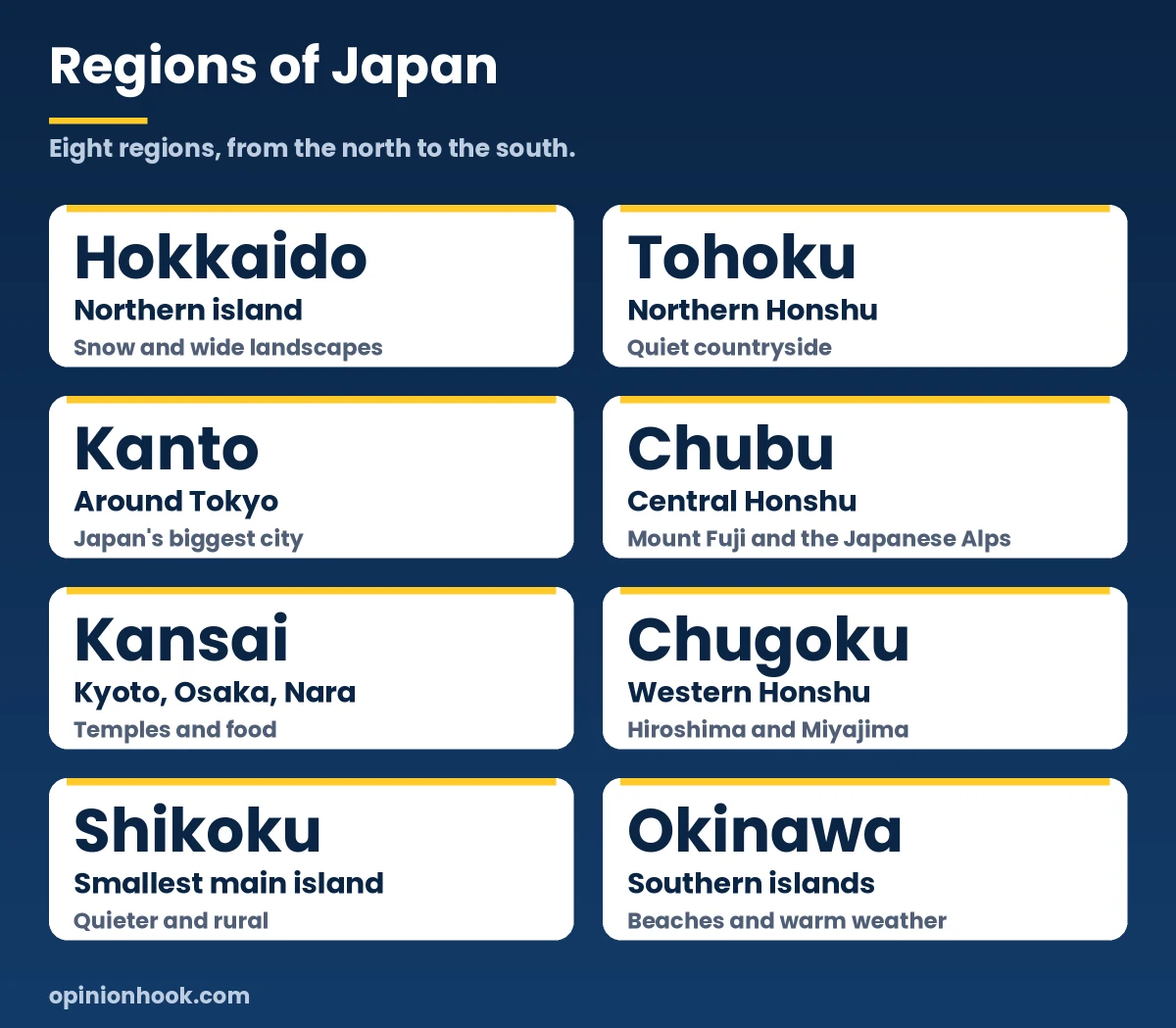
Hokkaido Region

Best for:


Tohoku Region

Known for:


Kanto Region

Home to Tokyo and one of the most visited regions in Japan.

Highlights include:

Ideal for first-time visitors who want a mix of city life, shopping, culture, and day trips.


Chubu Region

Located in central Japan, Chubu is known for dramatic mountain scenery and traditional villages.

Must-visit places include:


Kansai Region

The cultural heart of Japan.

Major attractions include:

This region is perfect for travelers interested in history, temples, food, and traditional Japanese culture.


Chugoku Region

Located in western Honshu, this region features:

It offers a combination of historical landmarks and beautiful landscapes.


Shikoku Region

Best known for:


Okinawa Region

Offers a tropical escape with:


Climate in Japan

Japan experiences four distinct seasons, making it a year-round destination. Each season offers different landscapes, festivals, and activities.

Spring (March to May)

Spring is considered one of the best times to visit Japan.

Average temperatures range from 10°C to 22°C, depending on the region.

Highlights include:

Because of its popularity, accommodation prices tend to increase during late March and early April.


Summer (June to August)

Summer brings warm temperatures and high humidity to much of Japan.

Average temperatures range between 25°C and 35°C.

This season is known for:

June also marks the rainy season in many parts of Japan, although Hokkaido is less affected.


Autumn (September to November)

Autumn is another excellent season for travel.

Temperatures become cooler, ranging from 15°C to 27°C, and landscapes transform with vibrant red, orange, and yellow foliage.

Popular activities include:

Many travelers consider autumn the most comfortable season for exploring Japan.


Winter (December to February)

Winter offers completely different experiences depending on where you travel.

Northern Japan receives heavy snowfall, while southern regions remain relatively mild.

Popular winter activities include:

If you enjoy winter sports or snowy landscapes, Hokkaido and the Japanese Alps are among the best destinations.


Best Time to Visit Japan

The best time depends on your travel goals.

No matter when you visit, Japan offers unique experiences in every season.


Japan Visa Requirements

One of the first questions travelers ask is whether they need a visa to enter Japan. The answer depends on your nationality, passport, the purpose of your visit, and the length of your stay.

Japan has visa exemption agreements with many countries, allowing eligible travelers to visit for short-term tourism without applying for a visa in advance. Travelers from countries that are not visa-exempt generally need to apply for a tourist visa before departure. The Japanese government has also expanded its eVisa system for eligible applicants in selected countries and regions.

Before booking flights or accommodation, always check the latest visa requirements on the official website of the Ministry of Foreign Affairs of Japan or your nearest Japanese embassy or consulate, as immigration policies can change.

Entry CategoryEligible Countries / RegionsPermitted StayApplication Method
Visa Exemption (Tourist)USA, Canada, UK, EU/EEA, Australia, New Zealand, Singapore, South Korea, Taiwan, Hong Kong, and 60+ others.90 Days (30 days for some regions)No visa required. Present passport at immigration upon arrival.
Japan eVisaEligible passport holders residing in USA, Canada, UK, Australia, Singapore, Taiwan, Brazil, South Africa, etc.90 Days (Single-entry)Online Portal. Apply via official Japanese eVisa system prior to flight.
Standard Tourist VisaIndia, China, Philippines, Vietnam, Indonesia, and all non-exempt nations.15–90 DaysEmbassy / VFS. Submit physical documents to Japanese embassy or authorized visa agency.

Check real-time visa exemption lists on the official Ministry of Foreign Affairs of Japan (MOFA) Portal.

Complete mandatory digital immigration and customs forms prior to arrival at the Official Visit Japan Web Portal.

Who Needs a Visa?

Japan generally falls into three categories:

Visa-Free Travelers

If your country has a visa exemption agreement with Japan, you may be able to enter for a short tourist stay without obtaining a visa beforehand, provided you meet the entry requirements. The permitted length of stay varies by nationality.

Travelers Who Need a Tourist Visa

Visitors from countries without visa-free access usually need to apply for a tourist visa before traveling. Applications are typically submitted through a Japanese embassy, consulate, or an authorized visa application center.

Travelers Eligible for Japan eVisa

Japan’s eVisa system allows eligible travelers residing in certain countries or regions to complete the visa process online. Eligibility depends on both nationality and place of residence, so always verify the latest list before applying.


Documents You May Need

Although requirements vary, travelers are commonly asked to provide:

Some applicants may need to submit additional supporting documents depending on their nationality or travel purpose.


Visa Processing Time

Processing times vary by country, season, and application volume.

In many locations, tourist visa applications are processed in approximately five working days after acceptance, although additional verification can extend this period. Applying several weeks before your departure is strongly recommended.


Visa Fees

Visa fees depend on your nationality and the location where you apply.

For example:

Because fees are updated periodically, always confirm the current amount before submitting your application.


Can You Extend a Tourist Visa?

Most short-term tourist stays are not intended for long-term residence or employment.

Extensions are generally limited and depend on Japanese immigration regulations and individual circumstances. Travelers should not assume that a tourist stay can be extended after arrival.


How Much Does a Trip to Japan Cost?

Japan has a reputation for being expensive, but that isn’t always true. Your budget depends largely on your travel style.

Budget Traveler

Ideal for backpackers and budget-conscious visitors.

Typical expenses include:

A carefully planned trip can be surprisingly affordable compared with many other developed countries.

Mid-Range Traveler

Suitable for most tourists.

This typically includes:

Luxury Traveler

Luxury travelers can enjoy:

Japan offers exceptional luxury experiences while maintaining its renowned hospitality.


Major Travel Expenses

Before planning your budget, consider the following categories:

Flights

International airfare often represents one of the largest expenses. Prices vary significantly depending on your departure country, season, and how early you book.

Booking several months in advance and avoiding peak travel periods can help reduce costs.


Accommodation

Japan offers accommodation for nearly every budget.

Options include:

Choosing accommodations near railway stations often saves both time and transportation costs.


Food

Japan caters to every budget.

Visitors can enjoy:

One of Japan’s strengths is that even affordable restaurants often provide excellent quality.


Transportation

Japan’s rail network is extensive and efficient.

Transportation options include:

The Japan Rail Pass can provide value for travelers making multiple long-distance train journeys, although it is not the cheapest option for every itinerary due to recent price increases. Calculate your expected routes before purchasing.


Money-Saving Tips

You don’t need to spend a fortune to enjoy Japan.

Consider these strategies:

Best Cities to Visit in Japan

Japan is home to hundreds of fascinating cities, but each offers a completely different travel experience. Some are famous for modern skyscrapers and shopping, while others are known for ancient temples, traditional culture, scenic landscapes, or world-famous cuisine. Whether you’re visiting Japan for the first time or planning a return trip, choosing the right cities can make your journey even more memorable. The Japan National Tourism Organization highlights destinations across the country, from Tokyo and Kyoto to Hokkaido and Okinawa, each with its own unique character.


Tokyo – The Heart of Modern Japan

Tokyo is Japan’s capital and one of the world’s most exciting cities. It seamlessly blends futuristic architecture, historic temples, world-class shopping, anime culture, Michelin-starred restaurants, and peaceful gardens.

Top Attractions

Best For

Recommended Stay

4–6 days

Don’t Miss

Watching the sunset from Tokyo Skytree before exploring the illuminated streets of Shibuya.

Read Next: Tokyo Travel Guide


Kyoto – Japan’s Cultural Capital

If Tokyo represents modern Japan, Kyoto represents its soul. Once the imperial capital for over 1,000 years, Kyoto is famous for its temples, shrines, bamboo forests, tea houses, geisha districts, and traditional wooden streets.

Top Attractions

Best For

Recommended Stay

3–4 days

Don’t Miss

Arriving early at Fushimi Inari to experience the iconic torii gates before the crowds.

Read Next: Kyoto Travel Guide


Osaka – Japan’s Food and Entertainment Capital

Osaka is energetic, welcoming, and famous for its incredible street food. The city offers a different atmosphere from Tokyo, with lively nightlife, modern attractions, and easy access to nearby destinations.

Top Attractions

Famous Foods

Best For

Recommended Stay

2–4 days

Read Next: Osaka Travel Guide


Hiroshima – A Symbol of Peace

Hiroshima is best known for its Peace Memorial Park and Museum, which commemorate the events of World War II. Today, it is a vibrant city that also serves as the gateway to Miyajima Island.

Top Attractions

Best For

Recommended Stay

2 days


Nara – Home of Japan’s Friendly Deer

Nara was Japan’s first permanent capital and remains one of the country’s most historically significant destinations.

Top Attractions

The free-roaming deer in Nara Park have become one of Japan’s most iconic attractions.

Recommended Stay

1 day


Sapporo – Gateway to Hokkaido

Sapporo is the largest city in Hokkaido and is famous for winter sports, seafood, and beautiful natural surroundings.

Top Attractions

Visit For

Recommended Stay

2–3 days


Hakone – Hot Springs and Mount Fuji Views

Hakone is one of Japan’s most popular destinations for relaxing in traditional hot springs while enjoying spectacular views of Mount Fuji.

Top Attractions

Best For

Recommended Stay

2 days


Okinawa – Japan’s Tropical Paradise

Okinawa offers a completely different side of Japan with crystal-clear waters, coral reefs, white-sand beaches, and a unique island culture rooted in the former Ryukyu Kingdom.

Top Attractions

Best For

Recommended Stay

4–5 days


Kanazawa – Japan’s Hidden Cultural Gem

Often called “Little Kyoto,” Kanazawa is famous for beautifully preserved samurai and geisha districts, one of Japan’s finest landscape gardens, and a thriving arts and crafts scene.

Highlights

Recommended Stay

2 days


Which Japanese City Should You Choose?

Travel StyleBest Destination
First-Time VisitorsTokyo + Kyoto
Budget TravelersOsaka
Food LoversOsaka + Fukuoka
Nature LoversHokkaido + Hakone
History EnthusiastsKyoto + Hiroshima + Nara
Beach VacationOkinawa
HoneymoonKyoto + Hakone
Winter SportsSapporo (Hokkaido)
Luxury TravelTokyo + Kyoto
Family TripTokyo + Osaka

Top Tourist Attractions in Japan

Japan is home to thousands of attractions, from UNESCO World Heritage Sites and ancient temples to futuristic observation decks and scenic national parks. Whether you’re interested in history, culture, nature, or modern entertainment, you’ll find unforgettable experiences across the country.


Mount Fuji (富士山)

Mount Fuji is Japan’s highest mountain at 3,776 meters (12,388 feet) and one of the country’s most recognizable landmarks. It is also a UNESCO World Heritage Site and a sacred symbol in Japanese culture.

Visitors can admire Mount Fuji from lakes, viewpoints, or nearby towns such as Hakone and Fujikawaguchiko. During the official climbing season (typically in summer), thousands of hikers ascend to the summit to watch the sunrise.

Highlights

Best Time to Visit

October–November for clear views or during the official climbing season for hikers (check current dates before planning).


Fushimi Inari Taisha (Kyoto)

Fushimi Inari Taisha is one of Japan’s most famous shrines, celebrated for its thousands of bright red torii gates that wind through the forested slopes of Mount Inari.

Dedicated to Inari, the Shinto deity of rice and prosperity, the shrine attracts millions of visitors each year.

Highlights

Travel Tip

Visit early in the morning or later in the evening to enjoy a quieter experience.


Kinkaku-ji (Golden Pavilion)

Officially known as Rokuon-ji, Kinkaku-ji is a Zen Buddhist temple in Kyoto covered with gold leaf on its upper floors.

Surrounded by landscaped gardens and a reflective pond, it is one of Japan’s most photographed landmarks.

Highlights


Arashiyama Bamboo Grove

The Arashiyama Bamboo Grove offers one of the most iconic walking experiences in Japan. Towering bamboo stalks create a peaceful atmosphere that attracts photographers and nature lovers from around the world.

Nearby attractions include:


Tokyo Skytree

Standing at 634 meters (2,080 feet), Tokyo Skytree is one of the tallest towers in the world.

Its observation decks provide spectacular panoramic views of Tokyo and, on clear days, even Mount Fuji.

Highlights


Senso-ji Temple

Located in Asakusa, Senso-ji is Tokyo’s oldest Buddhist temple and one of its most popular tourist attractions.

Visitors enter through the famous Kaminarimon (Thunder Gate) before exploring Nakamise Shopping Street, where traditional snacks and souvenirs are sold.

Don’t Miss


Osaka Castle

Originally built in the 16th century, Osaka Castle played a major role in Japan’s unification.

Today, visitors can explore the museum inside the castle and enjoy panoramic city views from the observation deck.

Spring is especially popular when cherry blossoms bloom around the castle grounds.


Hiroshima Peace Memorial Park

This park commemorates the victims of the atomic bombing of Hiroshima during World War II.

The park includes:

It serves as a powerful reminder of the importance of peace.


Nara Park

Nara Park is famous for its hundreds of freely roaming deer, considered sacred messengers in Japanese tradition.

The park is also home to:

Visitors can purchase special deer crackers sold throughout the park.


Himeji Castle

Known as Japan’s finest surviving feudal castle, Himeji Castle is another UNESCO World Heritage Site.

Unlike many castles that were rebuilt, Himeji retains much of its original architecture.

Why Visit?


Miyajima Island & Itsukushima Shrine

Located near Hiroshima, Miyajima Island is famous for the floating torii gate of Itsukushima Shrine.

At high tide, the gate appears to float on the sea, creating one of Japan’s most iconic views.

Visitors can also enjoy:


Shibuya Crossing

Often called the busiest pedestrian crossing in the world, Shibuya Crossing symbolizes modern Tokyo.

Nearby attractions include:


Universal Studios Japan

Located in Osaka, Universal Studios Japan is one of Asia’s most popular theme parks.

Major attractions include:

It is a great destination for families and movie fans.


Top Attractions at a Glance

AttractionCityBest For
Mount FujiYamanashi/ShizuokaNature & Hiking
Fushimi Inari ShrineKyotoCulture & Photography
Kinkaku-jiKyotoHistory
Arashiyama Bamboo GroveKyotoNature
Tokyo SkytreeTokyoCity Views
Senso-ji TempleTokyoHistory
Osaka CastleOsakaHistory
Hiroshima Peace Memorial ParkHiroshimaWorld History
Nara ParkNaraFamilies & Wildlife
Himeji CastleHimejiUNESCO Heritage
Miyajima IslandHiroshimaScenic Beauty
Universal Studios JapanOsakaFamilies & Entertainment

Japanese Food Guide: What to Eat in Japan

Japanese cuisine is one of the main reasons millions of travelers visit the country every year. While sushi is the most famous dish internationally, Japan’s food culture is incredibly diverse, with each region offering its own specialties, seasonal ingredients, and traditional cooking styles.

Whether you’re dining at a Michelin-starred restaurant, a family-run ramen shop, or a convenience store, you’ll find that quality and attention to detail are central to Japanese cuisine.


Sushi

Sushi is Japan’s most internationally recognized dish. It combines vinegared rice with fresh seafood, vegetables, or egg, and comes in many styles.

Popular Types of Sushi

Where to Try

Average Budget: Budget-friendly conveyor-belt sushi to premium omakase experiences.


Ramen

Ramen is one of Japan’s most beloved comfort foods. Every region has developed its own style, making it a must-try dish during your trip.

Popular Ramen Styles

Many ramen restaurants specialize in just one style perfected over decades.


Udon

Udon consists of thick wheat noodles served in a flavorful broth.

Popular variations include:

It’s an excellent choice for travelers looking for a lighter meal.


Soba

Soba noodles are made primarily from buckwheat flour and are popular throughout Japan.

They can be served:

Soba is often considered a healthier noodle option.


Tempura

Tempura features lightly battered seafood and vegetables fried until crispy.

Common ingredients include:

The batter is intentionally light to preserve the natural flavor of each ingredient.


Wagyu Beef

Wagyu is famous worldwide for its exceptional marbling and tenderness.

Well-known varieties include:

Although premium Wagyu can be expensive, many restaurants also offer affordable lunch sets.


Takoyaki

Originating in Osaka, Takoyaki are crispy batter balls filled with octopus.

They are typically topped with:

This is one of Japan’s most popular street foods.


Okonomiyaki

Often described as a Japanese savory pancake, Okonomiyaki is made with cabbage, batter, eggs, and a variety of fillings.

Popular choices include:

Osaka and Hiroshima each have their own distinctive versions.


Yakitori

Yakitori consists of grilled chicken skewers cooked over charcoal.

Popular cuts include:

Yakitori is commonly enjoyed at casual izakaya (Japanese pubs).


Japanese Curry

Unlike Indian curry, Japanese curry has a thicker consistency and a mildly sweet, savory flavor.

It is usually served with:

Japanese curry is popular with both locals and visitors.


Matcha Desserts

Japan is famous for desserts made from premium green tea.

Popular treats include:

Kyoto is one of the best places to enjoy authentic matcha products.


Must-Try Street Foods

While exploring Japanese cities, don’t miss these local favorites:

Food markets and festivals are excellent places to sample regional specialties.


Vegetarian Food in Japan

Vegetarian travelers can find suitable meals, especially in larger cities.

Common vegetarian options include:

When ordering, it’s helpful to confirm whether broths or sauces contain fish-based ingredients.


Halal Food

Japan has seen a growing number of halal-friendly restaurants, particularly in cities like Tokyo, Osaka, and Kyoto.

Travelers can also find:

Planning ahead can make dining easier, especially outside major tourist areas.


Japanese Dining Etiquette

Understanding a few customs will help you enjoy meals respectfully.

Before Eating

Many people say “Itadakimasu,” a phrase expressing gratitude before beginning a meal.

Chopsticks

Avoid:

Instead, place chopsticks on the provided rest when not in use.

Slurping Noodles

Unlike in many countries, gently slurping ramen or soba is generally acceptable in Japan and is often seen as a sign of enjoying the meal.

Tipping

Tipping is generally not expected in Japan. Excellent service is considered a normal part of hospitality, and leaving extra money may cause confusion.


Food Budget

Traveler TypeTypical Dining Style
BudgetConvenience stores, ramen shops, casual eateries
Mid-RangeMix of casual restaurants and local specialties
LuxuryFine dining, omakase sushi, premium Wagyu, kaiseki cuisine

Food Safety

Japan has high food safety standards, making it one of the easiest countries in the world to explore through local cuisine.

Travelers with food allergies should still inform restaurant staff about their dietary requirements, especially regarding seafood, soy, wheat, eggs, or nuts.

Transportation Guide: Getting Around Japan

Japan has one of the most advanced, reliable, and efficient public transportation systems in the world. Whether you’re traveling between major cities on a high-speed bullet train or navigating local neighborhoods by subway, getting around is generally safe, clean, and convenient.

For most international visitors, public transportation is the easiest and most cost-effective way to explore the country. Understanding the available options before your trip can save both time and money.


Japan Rail (JR) Network

The Japan Rail (JR) network connects almost every major city across the country and forms the backbone of long-distance travel.

JR operates:

If your itinerary includes cities like Tokyo, Kyoto, Osaka, Hiroshima, or Fukuoka, you’ll likely use JR services during your trip.


Shinkansen (Bullet Train)

The Shinkansen is one of Japan’s most iconic transportation systems. Known for its speed, comfort, and punctuality, it connects major cities in just a few hours.

Advantages

Popular routes include:

For many visitors, riding the Shinkansen is an experience in itself.


Is the Japan Rail Pass Worth It?

The Japan Rail Pass allows eligible international visitors to travel on many JR-operated trains for a fixed period.

However, after recent price changes, it is not automatically the best value for every traveler.

The pass may be worthwhile if you plan to take several long-distance train journeys in a short time. If you’re only visiting Tokyo and Kyoto, buying individual tickets or using regional passes may be more economical.

Expert Tip: Before purchasing a JR Pass, compare the total cost of your planned train journeys with the pass price using an official or reputable fare calculator.


Local Trains

Local trains are ideal for daily travel within cities and nearby suburbs.

They’re commonly used for:

Although signs are usually available in English, downloading an offline map or navigation app before your trip can make travel even easier.


Tokyo Metro

Tokyo has one of the world’s largest subway systems.

Despite its size, it’s relatively easy to use because:

Avoid rush hour if possible, as trains can become extremely crowded on weekdays.


Osaka Metro

Osaka’s metro system is smaller than Tokyo’s but still provides excellent access to major attractions such as:

It’s an affordable and efficient way to explore the city.


IC Cards (Suica, PASMO, ICOCA)

Rechargeable IC cards make travel much easier.

They can generally be used for:

Instead of buying individual tickets for every journey, you simply tap your card when entering and exiting stations.

Depending on the region, you’ll commonly encounter cards such as:

These cards are widely accepted across much of Japan, though there can be exceptions on certain transport systems.


Airport Transportation

Most international visitors arrive at airports such as:

From the airport, travelers can usually choose from:

Airport trains are often the fastest option for reaching city centers.


Buses

Buses are particularly useful in cities like Kyoto, where many attractions are not directly connected by rail.

Long-distance highway buses also connect major cities and can be a budget-friendly alternative to trains, especially on overnight routes.


Domestic Flights

Japan’s domestic flight network connects destinations that are far apart, such as:

Flying can save time when traveling between distant regions, especially if your itinerary includes Hokkaido or Okinawa.


Renting a Car

Renting a car is generally unnecessary in large cities because public transportation is excellent.

However, a rental car can be useful for exploring:

If you plan to drive, check whether you need an International Driving Permit (IDP) based on your home country’s agreement with Japan.


Taxis

Taxis in Japan are clean, safe, and reliable.

Keep in mind:


Walking

Many Japanese cities are highly walkable.

Popular areas such as:

are best explored on foot, allowing you to discover local shops, cafés, and hidden attractions.

Comfortable walking shoes are highly recommended.


Transportation Tips for First-Time Visitors


Which Transportation Option Is Best?

TransportationBest For
ShinkansenLong-distance travel between major cities
Local TrainsDaily travel within regions
Metro/SubwayExploring large cities
BusesBudget travel and areas without rail access
Domestic FlightsLong-distance travel to regions like Hokkaido or Okinawa
Rental CarRural areas and road trips
TaxiShort trips, late-night travel, or heavy luggage
WalkingHistoric districts and city centers

Sample Transportation Plan

If you’re following a classic first-time itinerary, your transport might look like this:

  1. Arrive at Haneda or Narita Airport.
  2. Take an airport train into Tokyo.
  3. Use the Tokyo Metro and JR lines to explore the city.
  4. Travel by Shinkansen to Kyoto.
  5. Take a local JR train to Osaka.
  6. Visit Nara as a day trip.
  7. Continue to Hiroshima or return to Tokyo for departure.

This route lets you experience Japan’s transport network while minimizing travel time.

Where to Stay in Japan: Accommodation Guide

Choosing the right accommodation can have a big impact on your Japan trip. From luxury hotels overlooking the Tokyo skyline to traditional ryokans in the countryside, Japan offers options for every travel style and budget.

Whether you’re a backpacker, family traveler, honeymooner, or business visitor, you’ll find clean, safe, and well-managed accommodation throughout the country.


Types of Accommodation in Japan

Hotels

Hotels are the most popular choice for international travelers.

You’ll find:

Hotels generally offer:

Best For


Business Hotels

Business hotels are unique to Japan and provide excellent value.

Rooms are usually compact but include everything needed for a comfortable stay.

Typical amenities include:

These hotels are commonly located near train stations, making them convenient for sightseeing.

Best For


Ryokan (Traditional Japanese Inns)

A ryokan offers one of the most authentic cultural experiences in Japan.

Guests typically sleep on futons laid over tatami mats and may enjoy:

Staying in a ryokan is highly recommended for at least one night, especially in places like Hakone, Kyoto, or Kinosaki Onsen.


Capsule Hotels

Capsule hotels feature small sleeping pods designed for short stays.

Despite their compact size, many offer:

They are clean, efficient, and an interesting experience for many visitors.

Best For


Hostels

Hostels are a great option for backpackers and travelers looking to meet people from around the world.

Many modern hostels in Japan offer:


Apartments and Vacation Rentals

Vacation rentals can be ideal for:

Advantages include:

Be sure to choose legally registered properties and review house rules before booking.


Luxury Hotels

Japan is home to many world-class luxury hotels.

Guests can expect:

Luxury hotels are particularly popular in Tokyo, Kyoto, and Osaka.


Best Areas to Stay in Tokyo

Shinjuku

Best for:


Shibuya

Ideal for:


Asakusa

Perfect for travelers interested in:


Ginza

Best for:


Ueno

Excellent for:


Best Areas to Stay in Kyoto

Gion

Ideal for experiencing traditional Kyoto.

Known for:


Kyoto Station Area

Perfect for:


Arashiyama

Best for:


Best Areas to Stay in Osaka

Namba

Perfect for:


Umeda

Excellent for:


Shin-Osaka

Best for travelers using the Shinkansen for onward journeys.


How Many Nights Should You Stay?

CityRecommended Stay
Tokyo4–5 Nights
Kyoto3 Nights
Osaka2–3 Nights
Hiroshima1–2 Nights
NaraDay Trip or 1 Night
Hakone1–2 Nights
Okinawa3–5 Nights

Booking Tips


Accommodation Budget Guide

Budget LevelTypical Options
BudgetHostels, capsule hotels, business hotels
Mid-RangeStandard hotels, vacation rentals
LuxuryFive-star hotels, premium ryokans, luxury resorts

Expert Tip

For a first visit to Japan, consider mixing accommodation styles. Spend most nights in a convenient hotel near a train station, then treat yourself to one night in a traditional ryokan with an onsen. This gives you both modern comfort and an authentic cultural experience.

Internet, SIM Cards, Money & Payments in Japan

Staying connected and managing your money efficiently are two of the most important parts of planning a trip to Japan. Fortunately, Japan offers reliable mobile networks, widespread internet access, and a secure banking system that makes travel relatively easy.

Whether you’re navigating Tokyo’s subway system, translating Japanese menus, or making cashless payments, having internet access and understanding local payment methods will make your trip much smoother.


Staying Connected in Japan

Most travelers choose one of four options:

The best choice depends on your phone, travel style, and the number of devices you need to connect.


eSIM

An eSIM is one of the easiest options for compatible smartphones because you can activate a mobile data plan digitally without replacing your physical SIM card.

Advantages

Best For


Physical SIM Card

Physical SIM cards remain a popular choice and are available at:

Many tourist SIMs focus on data services, while voice calling options may be more limited.

Best For


Pocket Wi-Fi

Pocket Wi-Fi is a portable wireless hotspot that allows multiple devices to connect to the internet.

Advantages

Considerations

Best For


Free Public Wi-Fi

Free Wi-Fi is available in many places, including:

While useful, coverage can vary, so many travelers still prefer their own mobile data connection.


Which Internet Option Is Best?

Travel StyleRecommended Option
Solo TravelereSIM
CoupleeSIM or SIM Card
FamilyPocket Wi-Fi
Business TravelereSIM
BackpackerSIM Card

Currency in Japan

Japan’s official currency is the Japanese Yen (JPY).

Banknotes are commonly issued in different denominations, and coins are frequently used for smaller purchases, vending machines, and public transport in some situations.

It’s a good idea to familiarize yourself with the yen before your trip so you can quickly estimate prices while shopping or dining.


Cash vs. Card

Japan has become increasingly cashless in recent years, especially in larger cities. However, cash is still useful, particularly at smaller businesses, local markets, rural attractions, and some traditional restaurants.

Credit and Debit Cards

Cards are widely accepted at:

Carry Some Cash

You may still need cash for:

A combination of card and cash is usually the most practical approach.


Using ATMs

ATMs are easy to find throughout Japan.

You’ll commonly find them at:

Before traveling, check with your bank about:

Using a debit card that supports international withdrawals can be convenient for accessing local currency.


Currency Exchange

Travelers have several options for exchanging money:

Compare exchange rates and fees before converting large amounts of money.


Mobile Payments

Japan supports several mobile payment systems, though international travelers often continue using contactless bank cards or digital wallets where accepted.

If you plan to rely on your smartphone for payments, confirm compatibility with your device and payment provider before your trip.


Is Tipping Expected?

Unlike many countries, tipping is generally not part of Japanese culture.

Restaurants, taxis, hotels, and other service providers typically include excellent service as part of the experience. Leaving extra money may cause confusion or be politely declined.


Budgeting Tips

Managing your budget is easier with a little planning.

Save Money by:


Common Tourist Expenses

When planning your budget, remember to account for:

Creating a daily budget before departure can help you avoid unexpected expenses.


Safety Tips for Money

Japan is considered one of the safest countries in the world, but sensible precautions are still recommended.


Quick Checklist

Before leaving for Japan, make sure you have:

Japanese Culture & Etiquette: Essential Tips for First-Time Visitors

One of the best parts of visiting Japan is experiencing its rich culture and traditions. Japanese society places a strong emphasis on respect, cleanliness, consideration for others, and harmony. Learning a few basic customs will help you feel more comfortable during your trip and show respect for local traditions.

The good news is that Japanese people generally understand that visitors may not know every custom. A polite attitude and willingness to learn go a long way.


Respect Is at the Heart of Japanese Culture

Respect influences many aspects of daily life in Japan—from greetings and public behavior to dining and transportation.

Simple gestures such as speaking quietly, waiting patiently in line, and keeping public spaces clean are appreciated.


Greeting People

Bowing is the traditional form of greeting in Japan.

As a visitor:

You don’t need to master formal bowing etiquette to make a good impression.


Removing Shoes

In many places, you’ll be expected to remove your shoes before entering.

Common locations include:

If slippers are provided, wear them indoors. You may also find separate slippers for restroom areas.


Using Chopsticks Correctly

Chopsticks are used for most Japanese meals.

Good Etiquette

Avoid

These actions are associated with funeral customs or are considered impolite.


Dining Etiquette

Japanese meals often begin with the phrase:

“Itadakimasu”

This expresses appreciation for the meal.

After eating, many people say:

“Gochisousama deshita”

This is a polite way to thank the host or restaurant for the meal.

As a visitor, saying these phrases is appreciated but not expected.


Slurping Noodles

Unlike in many countries, gently slurping ramen or soba noodles is generally acceptable in Japan.

Many people see it as a normal way to enjoy hot noodles, though it’s not a requirement.


Tipping

Japan does not have a tipping culture.

Excellent service is considered part of professional hospitality.

In most situations:

If you accidentally leave money behind, staff may try to return it.


Queueing

Japanese people are known for orderly lines.

Whether you’re:

Always join the end of the queue and wait patiently.


Public Transportation Etiquette

Japan’s trains are known for being quiet.

When using public transport:

Do

Avoid

Long-distance trains have different customs, and eating a packed meal is common on many Shinkansen services.


Trash and Recycling

Public trash bins are less common than in many countries.

Many people carry small bags for their waste until they find an appropriate disposal point.

If you buy food from a convenience store, you may be able to dispose of the packaging there.

Always separate recyclable items where required.


Smoking Rules

Japan has strict smoking regulations in many urban areas.

Smoking may only be allowed in designated smoking areas or specific indoor spaces.

Always look for signs before smoking.


Visiting Temples and Shrines

Japan’s temples and shrines are active places of worship.

Visitors should:

At some sites, you’ll see visitors purify their hands and mouth at a water pavilion before entering. This is optional for tourists but is part of traditional practice.


Onsen (Hot Spring) Etiquette

Hot springs are one of Japan’s most relaxing experiences.

Before entering:

Some onsen have rules regarding visible tattoos, while others welcome all visitors. Check the policy before visiting.


Photography Etiquette

Japan offers endless photo opportunities, but always respect privacy.

Avoid:

Some temples, museums, and historic buildings prohibit photography indoors.


Respect for Nature

When hiking or visiting parks:

Japan takes great pride in preserving its natural beauty.


Useful Japanese Phrases

Learning a few simple phrases can make your trip more enjoyable.

EnglishJapanese
HelloKonnichiwa
Thank YouArigatou Gozaimasu
Excuse MeSumimasen
YesHai
NoIie
PleaseOnegaishimasu
GoodbyeSayonara

Even using a few words politely is often appreciated.


Cultural Do’s and Don’ts

Do

Don’t


Expert Tip

You don’t need to know every Japanese custom before your trip. Showing patience, being polite, and observing how locals behave will help you navigate most situations with confidence and respect.

Safety Guide: Is Japan Safe for Tourists?

Japan is widely regarded as one of the safest countries in the world for travelers. Its low crime rates, clean public spaces, reliable transportation, and strong respect for rules make it an excellent destination for solo travelers, families, couples, and first-time international visitors.

While no destination is completely risk-free, taking a few common-sense precautions will help ensure a smooth and enjoyable trip.


Is Japan Safe?

For most visitors, the answer is yes.

Many travelers feel comfortable exploring cities during the day and evening thanks to:

Even in large cities like Tokyo and Osaka, it’s common to see people commuting late into the evening.


Safety Tips for Solo Travelers

Japan is a popular destination for solo travel because it’s easy to navigate and generally welcoming.

To make your trip even smoother:

Solo travel also gives you the flexibility to explore temples, cafés, museums, and neighborhoods at your own pace.


Safety for Women Travelers

Many women travel independently in Japan and report feeling comfortable using public transportation and exploring major tourist areas.

Helpful tips include:

Some train services operate women-only carriages during certain commuting periods. Check station signs if this is relevant to your journey.


Family Travel Safety

Japan is an excellent destination for families.

Parents will find:

Children should still be supervised in busy train stations and tourist attractions, as they can become crowded.


Common Tourist Scams

Japan experiences relatively few tourist scams compared with many destinations, but it’s still wise to stay alert.

Examples include:

To reduce risk:


Natural Disasters

Japan experiences natural events such as earthquakes, typhoons, and volcanic activity.

The country is highly prepared, with:

If you feel an earthquake:

During typhoon season, monitor weather forecasts and be prepared for possible transport delays.


Health and Medical Care

Japan has a modern healthcare system, and pharmacies are widely available in cities.

Before traveling:

If you have allergies or chronic medical conditions, keep important medical information accessible.


Emergency Numbers

Keep these important numbers handy during your trip:

ServiceNumber
Police110
Fire & Ambulance119

If you need assistance, hotel staff, tourist information centers, or station personnel can often help you contact emergency services.


Protecting Your Belongings

Although Japan is known for honesty, it’s still sensible to protect your valuables.

Tips include:


Staying Safe Online

Public Wi-Fi is available in many places, but avoid accessing sensitive accounts over unsecured networks unless you use a trusted connection or additional security measures.


Weather Safety

Depending on the season:

Checking the local weather forecast each morning can help you plan your activities.


Respect Local Rules

Following local laws and customs contributes to a safe and enjoyable trip.

Remember to:


Essential Safety Checklist

Before leaving your accommodation each day:


Expert Tip

Japan’s greatest safety advantage isn’t just its low crime rate—it’s the country’s culture of consideration for others. By being respectful, staying aware of your surroundings, and planning ahead, most visitors enjoy a safe and memorable journey.

Suggested Japan Itineraries: 3, 5, 7, 10 & 14 Days

One of the biggest challenges when planning a trip to Japan is deciding how many cities to visit. While it’s tempting to see everything, moving too frequently can leave you exhausted and reduce the time you spend enjoying each destination.

The itineraries below are designed for first-time international visitors who want a balanced mix of modern cities, historic landmarks, local food, and cultural experiences.


3-Day Japan Itinerary

Perfect For: Business travelers, stopovers, or travelers with limited time.

Day 1 – Tokyo Highlights

Visit:

Enjoy dinner in Shibuya before experiencing Tokyo’s vibrant nightlife.


Day 2 – Modern Tokyo

Explore:

Spend the evening enjoying city views from an observation deck.


Day 3 – Day Trip

Choose one:

Return to Tokyo for departure.


5-Day Japan Itinerary

Perfect For: First-time visitors.

Day 1

Arrive in Tokyo.

Explore Asakusa and Tokyo Skytree.


Day 2

Visit:


Day 3

Travel by Shinkansen to Kyoto.

Visit:


Day 4

Explore:


Day 5

Visit Nara in the morning before departing from Osaka or returning to Tokyo.


7-Day Japan Itinerary

Ideal For: Most international tourists.

Day 1

Tokyo


Day 2

Tokyo


Day 3

Day trip to Hakone or the Mount Fuji area.


Day 4

Travel to Kyoto.

Visit:


Day 5

Explore:


Day 6

Travel to Osaka.

Visit:


Day 7

Take a day trip to Nara before returning for your departure.


10-Day Japan Itinerary

Best For: Travelers wanting a deeper experience.

Days 1–3

Tokyo

Major attractions, museums, shopping, and local neighborhoods.


Day 4

Hakone

Stay in a traditional ryokan and relax in an onsen.


Days 5–6

Kyoto

Temples, shrines, gardens, and traditional districts.


Day 7

Nara

Visit Todaiji Temple and Nara Park.

Continue to Osaka.


Days 8–9

Osaka

Explore:


Day 10

Hiroshima and Miyajima Island.

Depart from Osaka or return to Tokyo depending on your flight.


14-Day Japan Itinerary

Perfect For: Travelers who want to experience several regions of Japan.

Days 1–4

Tokyo

Explore both famous attractions and lesser-known neighborhoods.


Day 5

Mount Fuji or Hakone.


Days 6–8

Kyoto

Spend time visiting temples, tea houses, bamboo forests, and local markets.


Days 9–10

Osaka

Enjoy food, shopping, and entertainment.


Day 11

Nara

Continue to Hiroshima.


Day 12


Hiroshima & Miyajima.

Days 13–14

Choose one:

Option A

Option B

Option C

Return for your international departure.


Which Itinerary Should You Choose?

Trip LengthRecommended Destinations
3 DaysTokyo
5 DaysTokyo + Kyoto + Nara
7 DaysTokyo + Kyoto + Osaka + Nara
10 DaysTokyo + Hakone + Kyoto + Osaka + Hiroshima
14 DaysTokyo + Hakone + Kyoto + Osaka + Hiroshima + Kanazawa/Hokkaido/Okinawa

Travel Tips for Planning Your Route


Mistakes to Avoid


Expert Recommendation

For most first-time visitors, the 7-day itinerary offers the best balance. It includes Japan’s modern capital (Tokyo), historic heart (Kyoto), vibrant food scene (Osaka), and cultural highlights (Nara) without feeling overly rushed.

Travelers with more time can expand to Hakone, Hiroshima, or Hokkaido depending on their interests.

Japan Packing List: What to Pack for Your Trip

Packing for Japan depends on the season, your itinerary, and the activities you plan to enjoy. Whether you’re visiting bustling cities, relaxing in a traditional ryokan, hiking near Mount Fuji, or skiing in Hokkaido, a well-planned packing list will help you travel comfortably.

Essential Travel Documents

Before leaving home, make sure you have:

Keep digital copies stored securely in cloud storage or on your phone.


Clothing

Japan experiences four distinct seasons, so pack according to the weather.

Spring

Summer

Autumn

Winter


Electronics

Don’t forget:


Health Essentials

Carry a small travel kit containing:

If you take prescription medication, bring enough for your trip and keep it in its original packaging where possible.


Money

Bring:


Day Bag Essentials

While sightseeing, carry:


Optional Items

Depending on your travel style:

Frequently Asked Questions (FAQs)

Is Japan expensive for tourists?

Japan can suit a range of budgets. Costs depend on your travel style, accommodation, transportation choices, and dining preferences.

What is the best month to visit Japan?

Spring (for cherry blossoms) and autumn (for colorful foliage) are generally considered the most popular seasons.

How many days are enough for Japan?

A 7–10 day trip is a good starting point for first-time visitors.

Do I need cash in Japan?

Cards are widely accepted in many places, but carrying some cash is still recommended, especially for smaller businesses and rural areas.

Is Japan safe for solo travelers?

Yes. Japan is widely regarded as one of the safest destinations for solo travelers.

Can I drink tap water in Japan?

Tap water is generally safe to drink in most parts of Japan.

Do people speak English in Japan?

English is spoken in many tourist areas, though proficiency varies. Learning a few basic Japanese phrases can be helpful.

Is tipping required?

No. Tipping is generally not expected in Japan.

What currency is used?

The official currency is the Japanese Yen (JPY).

What is Japan famous for?

Japan is known for:
Cherry blossoms
Mount Fuji
Sushi
Anime
Technology
Temples
Bullet trains
Traditional culture

Can I use my mobile phone in Japan?

Yes, provided your phone is compatible with local networks. Many travelers use an eSIM, tourist SIM, or Pocket Wi-Fi.

What’s the best way to travel between cities?

The Shinkansen (bullet train) is one of the fastest and most convenient ways to travel between many major cities.

Is Japan suitable for families?

Yes. Japan offers many family-friendly attractions, parks, museums, and theme parks.

What’s the best city for first-time visitors?

Tokyo and Kyoto are often recommended as the best combination for a first visit.

Can vegetarians find food in Japan?

Yes, especially in larger cities, though it’s a good idea to check ingredients, as some broths contain fish.

Is Japan good for honeymoon trips?

Yes. Destinations such as Kyoto, Hakone, and Okinawa are especially popular with couples.

Can I visit Mount Fuji?

Yes. You can admire it from many viewpoints year-round, while climbing is generally limited to the official climbing season.

Should I buy a Japan Rail Pass?

It depends on your itinerary. Compare your planned train journeys with the pass cost before purchasing.

Is Japan suitable for budget travelers?

Yes. Budget accommodation, affordable restaurants, and free attractions make it possible to travel economically.

What’s one thing every visitor should know?

Respect local customs, be patient, and enjoy the experience. Japanese hospitality and culture are among the country’s greatest attractions.

Conclusion

Japan is a destination that offers something for every traveler. From the fast-paced streets of Tokyo to the peaceful temples of Kyoto, from snow-covered mountains in Hokkaido to the tropical beaches of Okinawa, every region has its own unique charm.

Whether you’re visiting for a few days or planning a longer journey, careful preparation will help you make the most of your experience. Understanding transportation, accommodation, cultural etiquette, budgeting, and seasonal travel will allow you to explore with confidence.

As you continue planning, consider exploring our detailed destination guides, city itineraries, transportation tips, food recommendations, and travel planning resources to create an unforgettable Japan adventure.

Official Resources to Link

Use these as references for information that changes over time:

quick links

Destinations

Legal

© 2026 OpinionHook.com — Publishing honest perspectives.