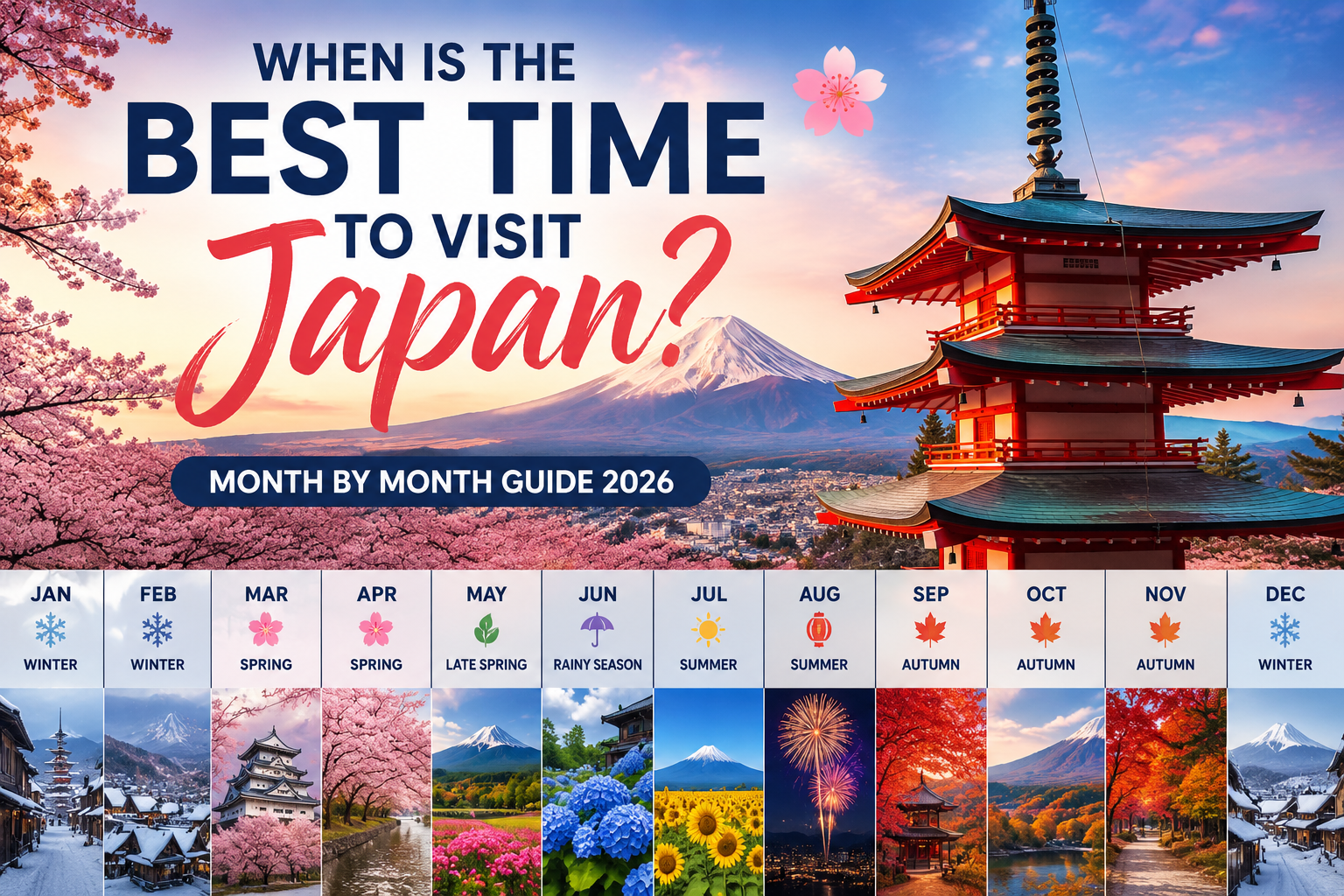
When Is the Best Time to Visit Japan? Month-by-Month Guide (2026)
For most first-time visitors from India, the best time to visit Japan is spring (late March to early April for cherry blossoms) or autumn (late October to early December for red leaves, depending on the region). Weather is comfortable, sightseeing is easy and the scenery is at its best. The trade-off is crowds and higher prices. If you want lower prices and fewer people, consider early June, September, early December or late January, and accept some rain, heat or cold.
The right month really depends on what you want to see, how much you want to spend and how well you handle heat, cold and crowds. This guide goes season by season and then month by month, explains the big holiday weeks to avoid, and adds practical points for Indian travellers, such as the visa, booking early and the humid summer.
Key takeaways
- Spring (March to May) is the classic choice for cherry blossoms, but the busiest and most expensive time for hotels.
- Autumn (October to November) has comfortable weather and red leaves. Colour peaks in Kyoto and Tokyo around late November to early December, and earlier in the north and in the mountains.
- Winter suits skiing, snow festivals and hot springs. January and early December are generally quieter outside the New Year week.
- Summer (June to August) is hot and humid. June is the rainy season in most of Japan, but it can be quieter. Hokkaido and mountain areas are cooler.
- Avoid Golden Week (late April to early May), Obon (mid-August) and the New Year period if you want lower prices and thinner crowds.
- Indian citizens need a visa for tourism in Japan, so apply several weeks before you book non-refundable tickets. See our Japan tourist visa guide.
- Cherry blossom and leaf dates change every year. Check a current forecast before you fix dates.
Japan seasons at a glance
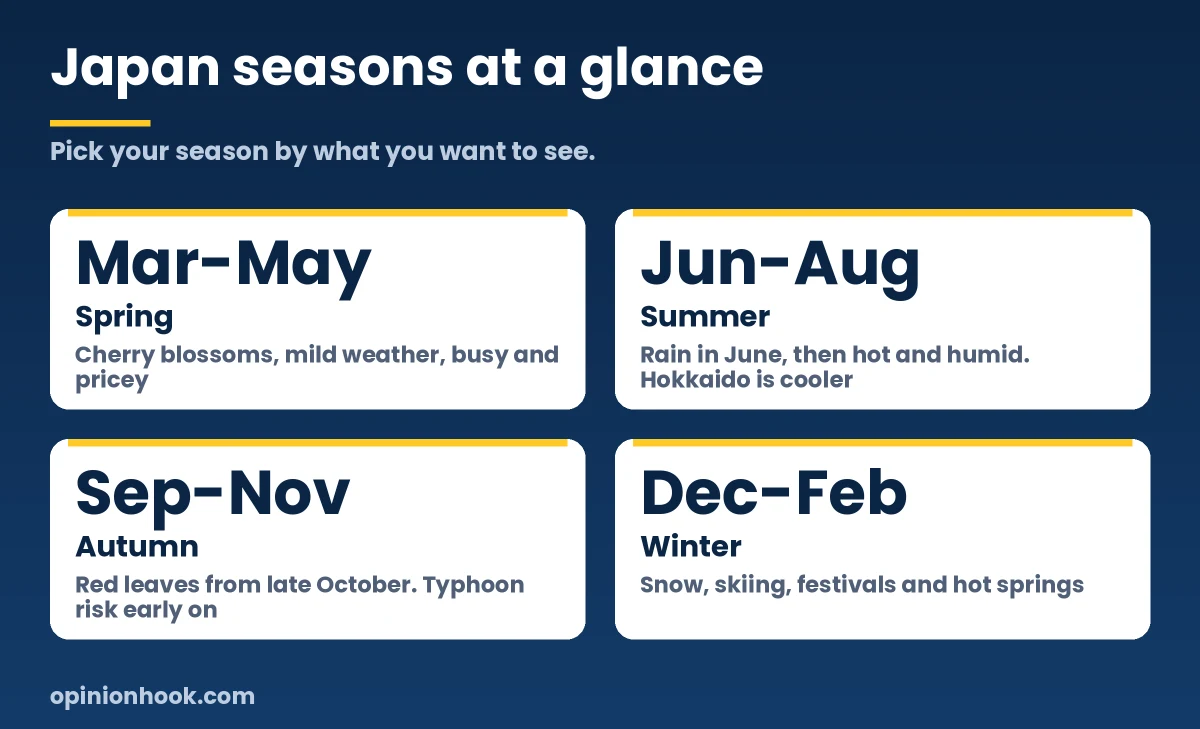
| Season | Months | What to expect | Best for |
|---|---|---|---|
| Spring | March to May | Mild weather, cherry blossoms, busy cities | Blossoms, gardens, first-time sightseeing |
| Summer | June to August | Rainy season in June and July in most regions, then hot and humid | Festivals, fireworks, mountains, Hokkaido, beaches |
| Autumn | September to November | Typhoon risk early on, then cool and clear days with red leaves | Autumn colours, hiking, food |
| Winter | December to February | Cold and mostly dry in Tokyo, heavy snow on the Sea of Japan side and in Hokkaido | Skiing, snow festivals, hot springs, illuminations |
Japan stretches a long way from north to south, so conditions differ widely. Hokkaido can be deep in snow while Okinawa is mild. Always check the weather for the exact regions on your route.
How to choose your month
Ask yourself four questions.
- What do I most want to see? Cherry blossoms point to spring. Red leaves point to late autumn. Snow points to winter. Festivals point to summer.
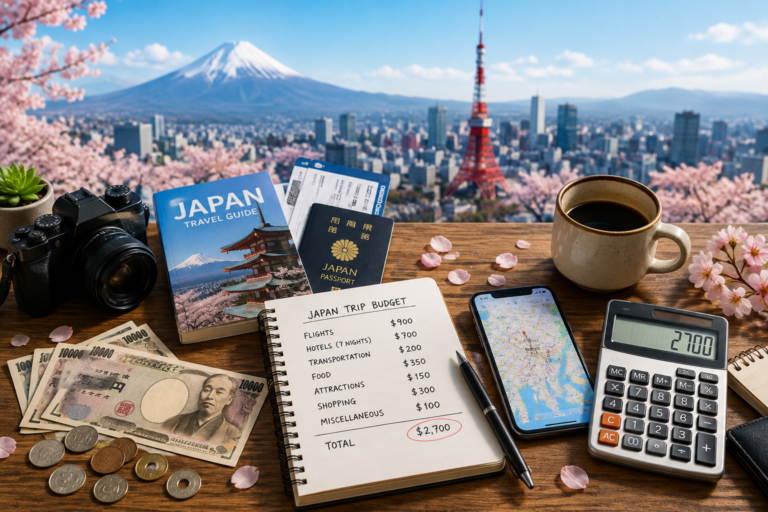
- How much can I spend? Prices for flights and hotels rise during blossom season, Golden Week, Obon and the New Year week. Our Japan trip budget guide shows how to build a realistic budget.
- How do I handle weather? Summers are humid. Winters are cold. If you dislike heat, avoid July and August in the cities.
- When can I travel? Many Indian families travel during the May to June school holidays and around Diwali. These periods can raise fares from India, so compare dates before you commit.
Month by month
The notes below describe general patterns. Weather, bloom dates and prices change every year, so use them to shortlist months, then check current forecasts.
January: cold, dry cities and snow country
Tokyo and the Pacific side are cold and mostly dry, while the Sea of Japan side and Hokkaido get heavy snow. Ski resorts such as Niseko in Hokkaido and Hakuba in Nagano are well known for snow. Many shops, restaurants and sights close for the first few days of the New Year, and travel is busy at that time. After the first week, cities are usually quieter. Winter illuminations continue in some places.
Crowds and prices: Busy in the New Year week, quieter afterwards.
February: snow festivals
The Sapporo Snow Festival is held in early February and is among Japan’s best known winter events, with large snow and ice sculptures. In Nagano, the Jigokudani Snow Monkey Park is a popular winter visit. Outdoor hot springs are at their best in the cold. Plum blossoms begin to appear toward the end of the month in some areas.
Crowds and prices: Busier around Sapporo during the festival, calmer in most other places.
March: spring begins
Temperatures become more comfortable, especially in central Japan. Cherry blossoms usually start in the south and move north, with Tokyo and Kyoto typically blooming in late March to early April. For example, the Japan Meteorological Corporation’s forecast released on 12 March 2026 put Tokyo’s first flowering at 19 March and full bloom at 27 March, and Kyoto’s full bloom at 1 April, according to Time Out Tokyo. Forecasts are updated regularly. Japanese school spring holidays also make late March busy.
Crowds and prices: Rising through the month, high at the end.
April: peak spring
Blossoms spread north as the month goes on, so you can still catch them in the north in April when the south has finished. Weather is generally pleasant for walking. Hotels in Kyoto and Tokyo are often fully booked early, so book early. Golden Week begins near the end of April.
Crowds and prices: Very high, especially in Kyoto and Tokyo.
May: green and pleasant after Golden Week
The first days of May are part of Golden Week, a run of national holidays when domestic travel peaks and prices are high. After it ends, crowds usually ease while the weather stays good for gardens, temples and walks. Hotels are easier to find than in April.
Crowds and prices: Very high in Golden Week, moderate afterwards.
June: the rainy season (tsuyu)
Most of Japan has a rainy season from around June into July. Hokkaido generally does not have a distinct one. It is humid, with showers rather than constant rain. Hydrangeas bloom in places like Kamakura, and gardens look fresh. Many attractions are less crowded and hotel rates are often lower. Carry a compact umbrella and quick-dry clothes.
Crowds and prices: Usually lower than spring and autumn.
July: festival month
The rainy season ends in many regions during July and the weather turns hot and humid. Kyoto’s Gion Matsuri takes place through July, and fireworks festivals, such as the Sumidagawa fireworks in Tokyo, are held in summer. Mountain areas such as the Japanese Alps and Kamikochi are cooler for hiking. The Yamanashi-side Yoshida trail of Mount Fuji opens for climbers on 1 July in 2026 according to the official climbing site, and a 4,000 yen fee applied. Check the official Fuji climbing site for current rules and dates.
Crowds and prices: Moderate to high, rising toward the school holidays.
August: hot, humid and Obon
August is typically the hottest and most humid month in the cities. Obon, around mid-August, is a major holiday when many people travel, so trains and hotels can be full and prices rise. Hokkaido and mountain regions stay cooler. Typhoons become more likely from late summer, so keep a flexible plan.
Crowds and prices: High around Obon.
September: typhoons and the end of summer
Early September is still hot and humid. It is part of typhoon season, so watch forecasts and leave buffer days, especially for flights and outdoor plans. By late September, it gets cooler and crowds are thinner after the summer holidays. Silver Week, a group of holidays in September, can be busy for domestic travel in some years.
Crowds and prices: Often lower, except around holiday weekends.
October: pleasant weather and early colour
Weather is cool and clear in much of Japan, and humidity drops. Leaves start changing in the mountains and in northern regions first, while Tokyo and Kyoto are usually still green. It is a good month for Nikko, hiking and food festivals.
Crowds and prices: Moderate.
November: the red-leaf peak in the main cities
Autumn colour in the major cities generally peaks from late November into early December. Famous spots in Kyoto, such as Arashiyama, and Tokyo gardens become crowded and hotels fill up, especially on weekends and around the long weekend in late November. Autumn colours tend to last for a couple of weeks at each spot, so you have some flexibility, but check forecasts.
Crowds and prices: High at famous colour spots.
December: lights and the year-end rush
Early December can still have autumn leaves in Kyoto. Illuminations light up Tokyo, Osaka and other cities. Snow begins in the north and ski season starts. From around 29 December to 3 January, many Japanese people travel, shops and sights may close and prices rise, so book early or avoid these dates.
Crowds and prices: Moderate early in the month, high at year end.
Quick guide to the busiest holiday weeks
| Period | Roughly when | What changes |
|---|---|---|
| Cherry blossom peak | Late March to early April | Crowds in Kyoto and Tokyo, hotels hard to find |
| Golden Week | Late April to early May | Crowds, high prices, trains and sights full |
| Obon | Mid-August | Domestic travel peaks, hotels and trains busy |
| Silver Week | Around September, some years | Busy domestic travel, usually a minor issue |
| Autumn leaves | Late November to early December in main cities | Crowded sights, high hotel prices |
| Year end and New Year | About 29 December to 3 January | Many closures, busy shrines, higher prices |
Zooming Japan describes Golden Week as one of the most crowded times of the year, and advises booking accommodation and domestic transport well in advance during these periods. Dates change each year, so check a current holiday calendar. Source: Zooming Japan: Peak travel seasons in Japan.
Best time for specific goals
Cherry blossoms
Aim for late March to early April for Tokyo, Kyoto and Osaka, and later in April for the north. Bloom dates shift each year with winter and spring temperatures, so keep your dates flexible if you can, and book hotels with free cancellation. Check the latest forecast from the Japan Meteorological Corporation or another reputable source before booking non-refundable items.
Autumn leaves
Plan for October in the north and mountains, and late November to early December in Kyoto and Tokyo.
Low prices and fewer crowds
Compare January after the New Year week, early June, September and early December. Each has a trade-off: cold, rain, typhoons or an early-winter chill. Our guide on shoulder season vs peak season explains the trade-offs, and our cheap flight tips can help with fares from India.
Snow and skiing
Choose January to February for powder and snow festivals. Book mountain stays early.
Summer festivals and mountains
July and August for fireworks and festivals. Choose Hokkaido or the mountains if you want cooler air.
Best months for Tokyo and Kyoto
- Tokyo: Late March to early April for blossoms, and from mid-November to early December for autumn colour. For fewer crowds, try late May or October.
- Kyoto: Early April and late November are the most beautiful and the most crowded. Late May and October are quieter.
Not sure how many days you need? Use our Japan itineraries for 3 to 14 days and best places to visit in Japan for first-timers to plan routes.
Practical tips for Indian travellers
- Visa. Indian citizens need a tourist visa. Apply through the Embassy of Japan in India or an authorised agency such as VFS, and confirm the current requirements on the Ministry of Foreign Affairs of Japan website. Do not buy non-refundable tickets before your visa is approved. Our Japan visa guide covers documents and timing.
- Food. Vegetarian travellers should read our Japanese food guide, since many dishes use fish stock.
- Getting around. Compare a rail pass with individual tickets for your route before buying. See our guide to getting around Japan.
- Where to stay. Book early for spring and autumn. See where to stay in Japan.
- Phone and money. Read our guide to SIM cards, internet and payments. Keep some yen in cash for small shops.
- Etiquette. A little preparation goes a long way. See Japanese culture and etiquette.
What to pack by season
Packing right keeps you comfortable and avoids buying things at tourist prices.
| Season | What to carry |
|---|---|
| Spring | Light layers, a thin jacket for cool evenings, comfortable walking shoes, a small umbrella |
| Summer | Breathable and quick-dry clothes, sunscreen, a hat, a small towel for sweat, a compact umbrella, a refillable water bottle |
| Autumn | Layers that you can add or remove, a light waterproof jacket, walking shoes |
| Winter | Thermal innerwear, a warm coat, gloves, a hat, warm socks, and waterproof boots if you plan to visit snow areas |
Walking is a big part of any Japan trip, so shoes matter more than anything else on this list. Our two-week packing list for Europe shows how to pack light with mix-and-match clothes, and the same method works for Japan. If you are buying a bag for the trip, see how to choose a travel backpack.
Typhoons, heat and cold: staying safe
- Typhoons. They are most likely from late summer to early autumn. The Japan Meteorological Agency publishes typhoon information through its website. If a typhoon is forecast, flights and trains can be cancelled, so keep spare days and buy travel insurance that covers delays.
- Heat. In July and August, drink water often, avoid long outdoor walks in the afternoon, and plan indoor activities in the middle of the day.
- Cold and snow. In winter, check road and train updates before travelling to snow regions. Allow extra time between connections.
- Earthquakes. Japan is an earthquake-prone country. Learn what your hotel advises and keep your phone charged. Read the safety points in our Japan safety guide.
A simple way to pick your dates
- Choose your main goal: blossoms, colours, snow, festivals or the lowest price.
- Pick two or three possible windows of one to two weeks each.
- Check fares from your Indian departure city for each window, and check a few hotel prices in Tokyo and Kyoto.
- Check your visa timeline. Many travellers need several weeks, so count backwards from your travel date.
- Book flexible hotels first, then flights once the visa and leave dates are certain.
- Keep one or two free days in your plan for weather changes.
Sample season-based ideas for a first trip
- Spring, 10 days: Tokyo, Kyoto and Osaka, with a day trip to Nara. Book hotels early and keep a flexible day in case blossoms arrive early or late.
- Late autumn, 10 days: Tokyo, Nikko or Hakone, Kyoto and Osaka, timing Kyoto for the leaves. Check colour forecasts before you fix the Kyoto nights.
- Winter, 8 to 10 days: Tokyo plus a snow region such as Nagano or Hokkaido, with onsen stays. Allow extra time for snow delays.
- Budget-friendly June, 7 to 10 days: Tokyo and Kyoto with museums, gardens and indoor food spots planned for wet days.
Each of these can be adjusted to your days using our 3 to 14 day itineraries.
Frequently asked questions
When is the best time to go to Japan?
Spring and autumn suit most people. Choose spring for cherry blossoms and autumn for red leaves, then book early because both are busy.
Which month is the cheapest to visit Japan?
There is no single cheapest month for every route, but periods outside the big holiday weeks, such as January after New Year, early June, September and early December, are usually calmer. Check fares and hotel rates for your dates.
Is Japan worth visiting in the rainy season?
Yes, for many people. June can be less crowded, and gardens look fresh. Expect showers and humidity, and keep indoor options for wet days.
How many days are enough for a first trip to Japan?
Ten to fourteen days lets you see Tokyo, Kyoto, Osaka and a few day trips without rushing. A week works for two cities. Our Japan itineraries will help you plan.
Do Indians need a visa for Japan?
Yes. Indian citizens need a visa for tourism. Check the Embassy of Japan in India or the Ministry of Foreign Affairs of Japan for the current rules.
Is Japan safe for tourists?
Japan is widely considered safe for visitors, but you should still take normal care. Our Japan safety guide covers practical points.
How the facts in this guide were checked
The Mount Fuji climbing season and fee come from the official Yamanashi climbing site, and the 2026 cherry blossom forecast example comes from Time Out Tokyo. Holiday-period notes come from Zooming Japan and the general seasonal pattern is standard travel knowledge. I removed the earlier temperature figures, star ratings and booking-window numbers because I could not source them. Weather and dates change every year, so check forecasts before you fly.
Sources
- Official Mt. Fuji climbing website: Yamanashi notice
- Time Out Tokyo: Japan cherry blossom forecast 2026
- Zooming Japan: Peak travel seasons in Japan
Related Guides
- Best Places to Visit in Japan for First-Time Travelers (2026 Guide)
- Getting Around Japan: A Transportation Guide for Tourists
- Japanese Food Guide: What to Eat, Dining Etiquette and Food Safety
- Japan Tourist Visa Guide (2026): Requirements, Documents and Fees
Browse all of our Japan Travel guides.

Varinder Kaur is from Amritsar, India. She has traveled to well-known places across India, including Darjeeling, and to a few countries abroad, and shares travel experiences and practical tips for travelers through OpinionHook.




4 Comments
Comments are closed.