
Getting Around Japan: A Transportation Guide for Tourists
This guide is part of our Japan Travel Guide. Prices, rules and opening details can change, so confirm important details with the official provider before you book.
Transportation Guide: Getting Around Japan
Japan has one of the most advanced, reliable, and efficient public transportation systems in the world. Whether you’re traveling between major cities on a high-speed bullet train or navigating local neighborhoods by subway, getting around is generally safe, clean, and convenient.
For most international visitors, public transportation is the easiest and most cost-effective way to explore the country. Understanding the available options before your trip can save both time and money.
Japan Rail (JR) Network
The Japan Rail (JR) network connects almost every major city across the country and forms the backbone of long-distance travel. If your itinerary includes cities like Tokyo, Kyoto, Osaka, Hiroshima, or Fukuoka, you’ll likely use JR services during your trip.
JR Operates:
- Shinkansen (Bullet Trains)
- Limited Express Trains
- Express Trains
- Local Trains
- Airport Trains
Shinkansen (Bullet Train)
The Shinkansen is one of Japan’s most iconic transportation systems. Known for its speed, comfort, and punctuality, it connects major cities in just a few hours. For many visitors, riding the Shinkansen is an experience in itself.
Advantages
- Fast & Reliable
- Comfortable Seating
- Clean Facilities
- Spacious Luggage Areas
- Frequent Departures
Popular Routes
- Tokyo Kyoto
- Tokyo Osaka
- Tokyo Hiroshima
- Osaka Fukuoka
Is the Japan Rail Pass Worth It?
The Japan Rail Pass allows eligible international visitors to travel on many JR-operated trains for a fixed period. However, after recent price changes, it is not automatically the best value for every traveler.
The pass may be worthwhile if you plan to take several long-distance train journeys in a short time. If you’re only visiting Tokyo and Kyoto, buying individual tickets or using regional passes may be more economical.
Expert Tip: Before purchasing a JR Pass, compare the total cost of your planned train journeys with the pass price using an official or reputable fare calculator.Local Trains
Local trains are ideal for daily travel within cities and nearby suburbs. Commonly used for sightseeing, commuting, day trips, shopping, and visiting local attractions.
Tip: Downloading an offline map or navigation app before your trip makes travel seamless.Tokyo Metro
Tokyo has one of the world’s largest subway systems. Despite its size, it’s easy to navigate with English signs, color-coded routes, multilingual announcements, and English ticket machines.
Avoid Rush Hour: Try to avoid weekday peak hours as trains become extremely crowded.Osaka Metro
Smaller than Tokyo’s system but provides excellent, affordable access to major attractions including Dotonbori, Osaka Castle, Umeda, Namba, and Universal Studios Japan (via connecting trains).
IC Cards (Suica, PASMO, ICOCA)
Rechargeable IC cards make travel effortless. Simply tap your card when entering and exiting stations instead of buying individual tickets.
Usable For:
- Trains
- Subways
- Buses
- Vending Machines
- Convenience Stores
- Selected Taxis
Common Regional Cards
- Suica
- PASMO
- ICOCA
Airport Transportation
Most international visitors arrive at Narita Airport (Tokyo), Haneda Airport (Tokyo), or Kansai Airport (Osaka).
Transfer Options
- Airport Express Trains
- Limousine Buses
- Taxis
- Rental Cars
- Shared Shuttles
Fastest Option: Airport express trains are generally the quickest route to city centers.
Buses
Buses are particularly useful in cities like Kyoto, where many attractions are not directly connected by rail.
Long-distance highway buses also connect major cities and offer a budget-friendly alternative to trains, especially on overnight routes.
Domestic Flights
Japan’s domestic flight network connects far-apart destinations, saving time when traveling between distant regions like Hokkaido or Okinawa.
Key Flight Routes
- Tokyo ↔ Sapporo
- Tokyo ↔ Okinawa
- Osaka ↔ Ishigaki
Renting a Car
Unnecessary in large cities due to excellent public transit, but ideal for exploring rural areas, national parks, mountain regions, and scenic coastal routes.
Requirement: Check if you need an International Driving Permit (IDP) before your trip.Taxis
Clean, safe, and highly reliable with professional drivers. While more expensive than public transit, many taxis now accept credit cards and mobile payments (though carrying cash is recommended).
Walking
Many Japanese cities are highly walkable. Historic and lively districts are best explored on foot to discover hidden shops and local cafés.
Best Walkable Districts
- Gion (Kyoto)
- Asakusa (Tokyo)
- Dotonbori (Osaka)
Tip: Comfortable walking shoes are highly recommended!
Transportation Tips for First-Time Visitors
- Download offline maps before arriving.
- Carry some cash for smaller stations or local buses.
- Avoid peak commuting hours when possible.
- Allow extra time for transfers in large stations.
- Reserve seats on long-distance trains during busy travel seasons.
- Keep your luggage compact when using public transportation.
Which Transportation Option Is Best?
| Transportation | Best For |
|---|---|
| Shinkansen | Long-distance travel between major cities |
| Local Trains | Daily travel within regions |
| Metro / Subway | Exploring large cities |
| Buses | Budget travel and areas without rail access |
| Domestic Flights | Long-distance travel to regions like Hokkaido or Okinawa |
| Rental Car | Rural areas and road trips |
| Taxi | Short trips, late-night travel, or heavy luggage |
| Walking | Historic districts and city centers |
Sample Transportation Plan
If you’re following a classic first-time itinerary, your transport plan might look like this:
1 Arrive at Haneda or Narita Airport. 2 Take an airport train into Tokyo. 3 Use the Tokyo Metro and JR lines to explore the city. 4 Travel by Shinkansen to Kyoto. 5 Take a local JR train to Osaka. 6 Visit Nara as a day trip. 7 Continue to Hiroshima or return to Tokyo for departure.This route lets you experience Japan’s transport network while minimizing travel time.
Keep Planning Your Japan Trip
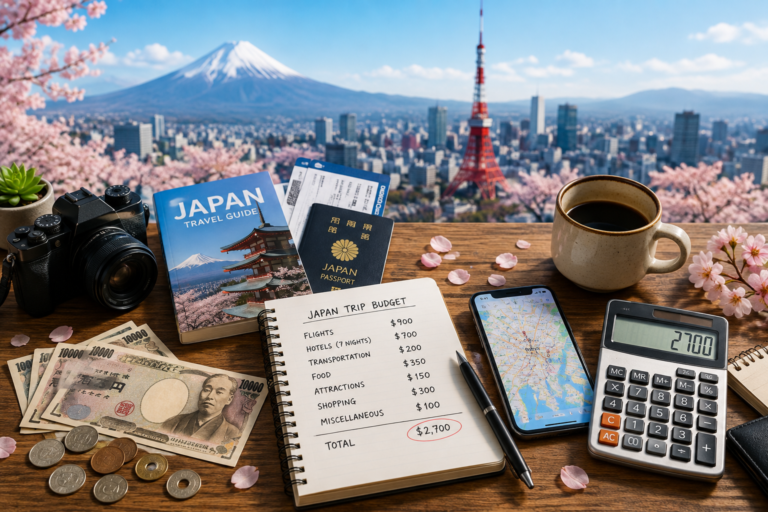
Return to the full Japan Travel Guide, or read our Japan trip budget guide and best time to visit Japan.
Related Guides
- Is Japan Safe for Tourists? A Practical Safety Guide
- Japanese Culture and Etiquette for Tourists
- Japan Itineraries: 3, 5, 7, 10 and 14 Days, Plus a Packing List
- Japan SIM Cards, Internet, Currency and Payments: A Traveller Guide
Browse all of our Japan Travel guides.

Varinder Kaur is from Amritsar, India. She has traveled to well-known places across India, including Darjeeling, and to a few countries abroad, and shares travel experiences and practical tips for travelers through OpinionHook.




One Comment
Comments are closed.