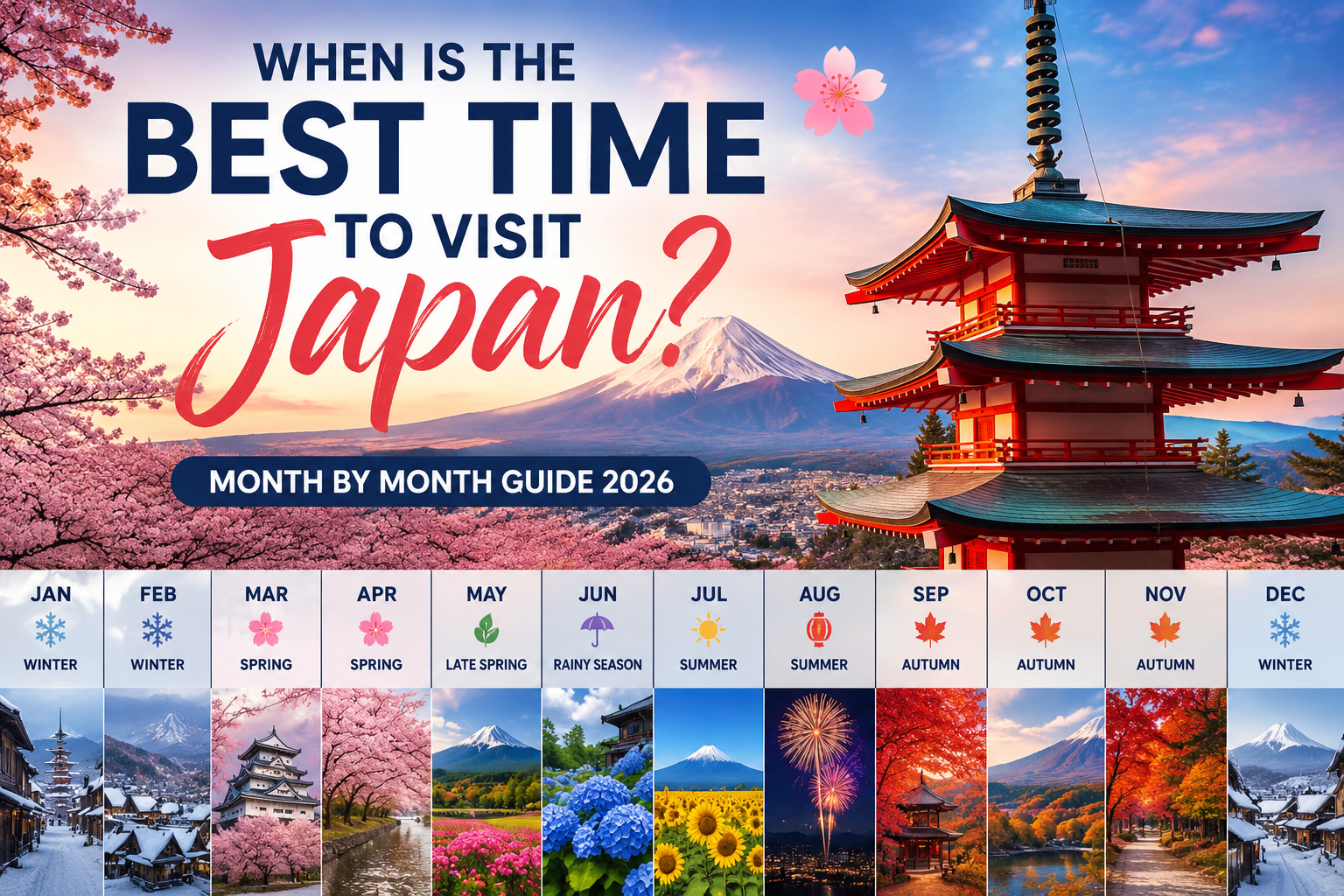
When Is the Best Time to Visit Japan? Month-by-Month Guide (2026)
Planning a trip to Japan but unsure when to go? The best time to visit Japan depends on what you want to experience. Some travelers visit for cherry blossoms in spring, while others prefer colorful autumn leaves, exciting winter festivals, or lower travel costs during the off-season. Weather, crowds, seasonal events, and flight prices change throughout the year, making the timing of your trip an important decision.
For Indian travelers, Japan has become one of the most popular international destinations thanks to improved connectivity, a simplified visa process for eligible applicants, and growing interest in Japanese culture, food, shopping, and nature. Whether you’re visiting Tokyo for the first time, exploring Kyoto’s historic temples, or skiing in Hokkaido, choosing the right season can help you enjoy a smoother and more memorable trip.
This Japan travel guide 2026 explains Japan’s weather month by month, highlights seasonal events, estimates crowd levels, and shares practical travel tips to help you decide when to visit.
Key Takeaways
- Spring (March-May) is the best time to visit Japan for cherry blossoms and pleasant weather.
- Autumn (October-November) offers colorful foliage, comfortable temperatures, and fewer rainy days.
- Winter is ideal for skiing, snow festivals, and budget-friendly airfare outside holiday weeks.
- Summer brings festivals, fireworks, and mountain hiking but also hot and humid weather.
- Budget travelers can often find lower hotel and flight prices during January, June, and early December.
- The best month depends on your travel goals, budget, and preferred activities.
Japan Seasons at a Glance
| Season | Months | Weather | Best For |
|---|---|---|---|
| Spring | March-May | Mild and pleasant | Cherry blossoms, sightseeing |
| Summer | June-August | Warm, humid, rainy early season | Festivals, beaches, hiking |
| Autumn | September-November | Cool and comfortable | Fall colors, photography |
| Winter | December-February | Cold, snowy in northern Japan | Skiing, snow festivals, hot springs |
Why Choosing the Right Time to Visit Japan Matters
The best time to travel to Japan isn’t the same for every traveler. Your ideal travel month depends on your budget, interests, and the places you plan to visit.
Japan stretches over 3,000 kilometers from north to south, so weather conditions vary significantly between regions. While Hokkaido may receive heavy snowfall, Okinawa can still enjoy mild beach weather during the same period.
Seasonality also affects airfare, hotel rates, and tourist crowds. Visiting during peak seasons such as cherry blossom season or autumn foliage often means paying higher prices and booking accommodations months in advance. On the other hand, traveling during quieter months can help you save money while still enjoying many of Japan’s attractions.
Understanding these seasonal differences helps you plan a trip that matches both your expectations and your budget.
Which Season Is the Best Time to Visit Japan?
For most travelers, spring (March to May) offers the best overall experience. Comfortable temperatures, blooming cherry blossoms, and numerous cultural festivals create ideal sightseeing conditions.
However, every season has something unique to offer.
- Spring is perfect for nature lovers and first-time visitors.
- Summer attracts festival enthusiasts and mountain hikers.
- Autumn provides pleasant weather and spectacular fall colors.
- Winter appeals to skiers, snowboarders, and travelers seeking fewer crowds.
Instead of asking “When is the best time to go to Japan?”, it’s more helpful to ask, “What do I want to experience in Japan?”
January – Best for Snow, Ski Resorts, and Budget Travelers
Weather
January is one of the coldest months in Japan. Tokyo experiences average temperatures between 36°F and 50°F (2°C to 10°C), while northern regions like Hokkaido receive heavy snowfall.
Why Visit in January?
If you enjoy winter scenery, January offers excellent conditions for skiing and snowboarding. Resorts such as Niseko and Hakuba are internationally recognized for their powder snow.
Major cities become quieter after New Year’s celebrations, allowing visitors to explore attractions with shorter waiting times.
Many airlines also reduce fares after the holiday season, making January one of the better months for finding affordable flights.
Things to Do
- Visit ski resorts in Hokkaido and Nagano
- Relax in traditional hot spring towns such as Hakone
- Explore Tokyo without peak-season crowds
- Experience winter illuminations that continue into January
Crowd Level
Low to moderate after the first week.
Budget Rating
★★★★★
February – Best for Snow Festivals
Weather
Winter continues across most of Japan, although daylight gradually increases.
Why Visit in February?
February is famous for the Sapporo Snow Festival, one of Japan’s largest winter events. Massive snow sculptures, ice displays, and evening light shows attract visitors from around the world.
Ski conditions remain excellent throughout northern Japan.
Travel costs outside festival areas often remain reasonable compared to spring.
Things to Do
- Attend the Sapporo Snow Festival
- Visit Jigokudani Snow Monkey Park in Nagano
- Enjoy winter seafood in Hokkaido
- Relax in outdoor onsen surrounded by snow
Crowd Level
Moderate in Hokkaido, low elsewhere.
Budget Rating
★★★★☆
March – Best Time to Visit Japan for Cherry Blossoms Begins
Weather
March marks the beginning of spring. Temperatures become much more comfortable, especially in central Japan.
Why Visit in March?
Cherry blossom season usually begins in southern Japan during late March before gradually moving north.
Although bloom dates change slightly every year, organizations such as the Japan Meteorological Corporation publish annual blossom forecasts that help travelers plan their trips.
Parks, rivers, and castles become popular gathering places for hanami (flower viewing) picnics.
Things to Do
- Visit Ueno Park in Tokyo
- Walk through Kyoto’s historic streets
- Enjoy traditional hanami celebrations
- Explore Osaka Castle Park
Crowd Level
High near the end of March.
Budget Rating
★★★☆☆
What Makes Cherry Blossom Season So Special?
Cherry blossom season represents one of Japan’s most celebrated natural events. For only one to two weeks, thousands of cherry trees bloom across the country, creating pink and white landscapes that attract millions of visitors each year.
The tradition of hanami, which means flower viewing, dates back centuries. Families, friends, and coworkers gather in parks to enjoy seasonal food under blooming trees. Popular viewing spots include Tokyo’s Ueno Park, Kyoto’s Maruyama Park, and Osaka Castle Park.
If seeing cherry blossoms is your top priority, book flights and hotels at least four to six months in advance. Peak bloom periods are among the busiest travel weeks of the year.
Practical Tip: Use the annual cherry blossom forecast from the Japan Meteorological Corporation before finalizing your itinerary. Bloom dates vary slightly depending on winter temperatures.
April – The Most Popular Month to Visit Japan
Weather
April offers some of the year’s most comfortable weather. Average temperatures range between 50°F and 68°F (10°C to 20°C) in many major cities.
Why Visit in April?
For many travelers, April is the best month to visit Japan. Cherry blossoms reach full bloom across much of central Japan, while parks, gardens, and temples look their most beautiful.
The pleasant weather also makes walking tours, cultural attractions, and day trips much more enjoyable.
Keep in mind that Golden Week, which begins in late April and continues into early May, can significantly increase domestic travel and hotel prices.
Things to Do
- Visit Kyoto’s temples surrounded by spring flowers
- Explore Mount Fuji viewpoints
- Cruise beneath cherry blossoms
- Experience traditional spring festivals
Crowd Level
Very High
Budget Rating
★★☆☆☆
May – Excellent Weather with Fewer Crowds
Weather
May remains warm, sunny, and relatively dry across most of Japan.
Why Visit in May?
After Golden Week ends, crowds begin to decrease while temperatures remain ideal for sightseeing.
This is one of the best months for exploring gardens, national parks, and historic neighborhoods without the heavy congestion seen in April.
Many experienced travelers consider late May one of Japan’s best-kept travel secrets because it combines excellent weather with improved hotel availability.
Things to Do
- Visit Arashiyama Bamboo Grove
- Explore Nara Park
- Walk scenic hiking trails
- Enjoy seasonal Japanese cuisine
Crowd Level
Moderate
Budget Rating
★★★★☆
June – Rainy Season Begins
Weather
June marks the start of the rainy season (Tsuyu) across much of Japan, although Hokkaido generally avoids prolonged rainfall.
Humidity increases, but temperatures remain comfortable compared to midsummer.
Is June a Good Time to Visit Japan?
Yes, especially for travelers looking to save money.
Although occasional rain showers are common, they rarely last all day. Tourist attractions become noticeably less crowded, and many hotels lower their rates during this period.
Gardens, temples, and hydrangea flowers are especially beautiful after rainfall, making June surprisingly rewarding for photographers.
Things to Do
- Visit hydrangea gardens in Kamakura
- Explore indoor museums and cultural centers
- Experience traditional tea houses
- Enjoy lower accommodation prices
Crowd Level
Low
Budget Rating
★★★★★
July – Best for Summer Festivals and Fireworks
Weather
July is warm and humid across most of Japan. Average daytime temperatures range from 77°F to 90°F (25°C to 32°C). The rainy season usually ends by mid-July in many regions, giving way to sunny days.
Why Visit in July?
July is one of the best months to experience Japan’s traditional summer festivals. Cities come alive with colorful parades, food stalls, fireworks, and locals dressed in yukata. Although the weather can feel hot, the festive atmosphere makes it a rewarding time to visit.
Mountain destinations such as the Japanese Alps offer cooler temperatures, making them ideal for hiking.
Things to Do
- Watch the Gion Matsuri in Kyoto
- Attend the Sumidagawa Fireworks Festival in Tokyo
- Hike in Kamikochi or the Japanese Alps
- Visit beaches in Okinawa
Crowd Level
Moderate to High
Budget Rating
★★★☆☆
August – Best for Festivals, Hiking, and Beaches
Weather
August is typically the hottest month of the year. Temperatures often exceed 90°F (32°C) in cities like Tokyo, Osaka, and Kyoto, with high humidity.
Is August a Good Time to Visit Japan?
Yes, if you enjoy festivals, outdoor events, and summer vacations. However, prepare for hot weather and larger crowds during the Obon holiday, when many Japanese residents travel across the country.
Mountain resorts, northern Japan, and Hokkaido remain noticeably cooler than major cities.
Things to Do
- Climb Mount Fuji during the official climbing season
- Visit Hokkaido for pleasant weather
- Enjoy beach vacations in Okinawa
- Experience local Bon Odori festivals
Crowd Level
High during Obon
Budget Rating
★★★☆☆
September – Best for Lower Prices After Summer
Weather
Early September remains warm and humid, while late September becomes much cooler. It is also part of Japan’s typhoon season, so travelers should monitor weather forecasts before departure.
Why Visit in September?
Once summer vacations end, tourist crowds decrease significantly. Hotels often become more affordable, making September attractive for budget-conscious travelers. Gardens and parks also become quieter compared to spring and summer.
Things to Do
- Explore Tokyo museums
- Visit Kyoto temples with fewer tourists
- Enjoy seasonal Japanese cuisine
- Take scenic train journeys
Crowd Level
Low to Moderate
Budget Rating
★★★★☆
October – One of the Best Months to Visit Japan
Weather
October brings cool temperatures, lower humidity, and clear skies across much of Japan. Average temperatures range between 57°F and 72°F (14°C to 22°C).
Why Visit in October?
Many travelers consider October one of the best times to travel to Japan because it combines comfortable weather with beautiful autumn scenery.
National parks begin showing colorful fall foliage, and sightseeing becomes much more enjoyable.
Things to Do
- Visit Nikko National Park
- Explore Kyoto gardens
- Enjoy seasonal food festivals
- Walk historic districts without summer heat
Crowd Level
Moderate
Budget Rating
★★★★☆
November – Best Time to Visit Japan for Autumn Colors
Weather
November offers crisp air, sunny skies, and comfortable temperatures throughout most of the country.
Why Visit in November?
Autumn leaves reach their peak across many popular destinations. Maple trees create spectacular landscapes around temples, gardens, and mountain trails.
Unlike spring, autumn colors generally last longer, giving travelers greater flexibility when planning their itineraries.
Things to Do
- Visit Arashiyama in Kyoto
- Explore Tokyo’s Rikugien Garden
- Take scenic train rides
- Photograph autumn foliage
Crowd Level
High at popular foliage spots
Budget Rating
★★★☆☆
December – Best for Winter Lights and Holiday Travel
Weather
Winter returns to Japan in December. Northern regions begin receiving heavy snowfall, while Tokyo remains cool but generally dry.
Why Visit in December?
Early December is one of the most underrated times to visit Japan. Holiday illuminations decorate shopping districts, hotels, and parks across major cities.
Hotel prices often remain reasonable until the Christmas and New Year holidays.
Things to Do
- Visit winter illumination events
- Shop in Tokyo and Osaka
- Relax in hot springs
- Start ski season in Hokkaido
Crowd Level
Low early, High during holidays
Budget Rating
★★★★☆
Which Is the Best Month to Visit Tokyo?
October and November are generally the best months to visit Tokyo. Pleasant weather, colorful parks, and lower humidity make sightseeing comfortable.
March and April are also excellent for cherry blossoms, although accommodation prices and crowds increase significantly.
If you’re looking to save money, consider January or June when hotels and flights are usually more affordable.
Which Is the Best Month to Visit Kyoto?
April and November are the best months for Kyoto.
Spring brings cherry blossoms around famous temples and gardens, while November offers breathtaking autumn foliage. Travelers seeking fewer crowds should consider late May or early October for a more relaxed experience.
Best Time to Visit Japan for Cherry Blossoms
If cherry blossoms are your priority, plan your trip between late March and early April for Tokyo, Kyoto, and Osaka. Bloom dates vary each year depending on weather conditions, so check forecasts from the Japan Meteorological Corporation before booking.
Reserve flights and hotels at least four to six months in advance because this is Japan’s busiest travel season.
Best Time to Visit Japan for Cheap Flights
The most affordable periods are usually:
- Mid-January (after New Year holidays)
- June (rainy season)
- Early December (before holiday travel)
Flying mid-week and booking two to four months in advance can also help reduce airfare. Compare prices across multiple airlines and consider flying into Osaka if fares to Tokyo are higher.
Best Time to Visit Japan to Avoid Crowds
If you prefer a quieter experience, travel during:
- Late January
- June
- September (after school holidays)
- Early December
Avoid Golden Week (late April to early May), Obon (mid-August), and the New Year holiday period, when transportation and accommodations become especially busy.
Travel Tips for Indian Travelers Visiting Japan in 2026
Planning ahead can make your first trip much smoother. Here are a few practical tips:
- Apply for your visa well before departure and check the latest requirements through the Embassy of Japan or VFS Global.
- Purchase an eSIM or local SIM card for reliable internet access.
- Carry a credit card, but keep some Japanese Yen in cash for smaller shops and local transportation.
- Download useful apps such as Google Maps, Google Translate, and Japan Travel by NAVITIME.
- If you’re visiting multiple cities, compare transportation costs before purchasing a rail pass. For some itineraries, individual tickets may be more economical than a nationwide pass.
- Pack according to the season. Comfortable walking shoes are essential year-round.
Planning your itinerary? Once you’ve chosen the best travel season, compare flight prices and hotel rates several months in advance. Booking early gives you a better choice of accommodations, especially during spring and autumn.
People Also Ask
When is the best time to go to Japan?
The best time depends on your travel goals. Spring (March to May) is ideal for cherry blossoms, while autumn (October and November) offers pleasant weather and colorful foliage. Winter is perfect for skiing, and summer is best for festivals and mountain adventures.
Which month is the cheapest to visit Japan?
January, June, and early December usually offer lower airfare and hotel prices because they fall outside the peak travel seasons. Booking in advance and traveling on weekdays can help reduce costs even further.
Is Japan worth visiting during the rainy season?
Yes. June has fewer tourists, lower hotel rates, and beautiful hydrangea gardens. While occasional rain is expected, it rarely lasts all day, allowing plenty of time for sightseeing and indoor attractions.
How many days are enough for a first trip to Japan?
A 10 to 14-day itinerary gives first-time visitors enough time to explore Tokyo, Kyoto, Osaka, and nearby attractions without feeling rushed. Shorter trips of 7 days can still cover two major cities comfortably.
What is the best season for first-time visitors?
Spring and autumn are the easiest seasons for first-time travelers because the weather is mild, public transportation operates smoothly, and outdoor attractions are at their best.
Conclusion
The best time to visit Japan depends on what you want from your trip. If seeing cherry blossoms is your dream, plan for late March or early April. For pleasant weather and stunning autumn colors, October and November are excellent choices. Travelers looking to save money should consider January, June, or early December, when flights and hotels are often more affordable.
No matter when you visit, Japan offers a unique mix of history, technology, nature, and culture that makes every season memorable. By matching your travel dates with your interests and budget, you’ll enjoy a more rewarding experience from the moment you arrive.
If you’re planning your 2026 Japan trip, start comparing flights, accommodations, and visa requirements as early as possible. Booking in advance not only helps you secure better prices but also gives you more choices during popular travel seasons.
Frequently Asked Questions
1. What is the overall best time to visit Japan?
For most travelers, spring (March to May) and autumn (October to November) offer the best combination of pleasant weather, seasonal scenery, and sightseeing opportunities.
2. Which city should I visit first in Japan?
Tokyo is the best starting point for first-time visitors because it combines modern attractions, historic sites, shopping, and excellent transportation connections.
3. Does Japan experience all four seasons?
Yes. Japan has four distinct seasons, and each offers unique experiences, from cherry blossoms in spring to snow festivals in winter.
4. Is Japan expensive for Indian travelers?
Japan can fit different budgets. Careful planning, early bookings, affordable accommodations, and regional transportation passes can make the trip much more cost-effective.
5. How early should I book flights for Japan?
For spring and autumn travel, booking three to six months in advance generally provides better prices and a wider selection of flights and hotels.

Ravinder Kaur is the founder of OpinionHook, an independent travel publication established in 2023. She oversees editorial standards, destination research, travel planning resources, and content quality across the website. OpinionHook focuses on publishing practical travel guides, itineraries, budgeting advice, and destination resources designed to help travelers make informed travel decisions.