Why you should Always Book Shoulder Season — And What It Actually Costs
Summary
Most travelers spend weeks hunting for flight discounts, hotel promo codes, and travel deals. Then they book during the busiest time of the year and wonder why everything still feels expensive.
Here’s the reality: the biggest travel savings often have nothing to do with coupon codes or secret booking websites.
They come from choosing the right travel dates.
This is where shoulder season becomes incredibly valuable.
Shoulder season sits between peak season and off-season. It offers lower prices, smaller crowds, better availability, and often better overall travel experiences. Yet many travelers ignore it because they focus only on summer vacations or major holiday periods.
If you’re trying to save money on travel booking while still enjoying good weather and a great experience, shoulder season may be the smartest travel strategy available.
This guide explains what shoulder season actually is, how much money it can save, and why experienced travelers often prefer it over peak season.
Key Takeaways
- Shoulder season falls between peak and off-season travel periods.
- Flights and hotels often cost 20% to 50% less than peak season rates.
- Popular attractions are usually less crowded.
- Weather is often more comfortable than peak summer conditions.
- Availability for hotels, tours, and transportation is generally better.
- Shoulder season can provide one of the best balances between cost and experience.
- Flexible travel dates often lead to the largest savings.
- Many experienced travelers deliberately avoid peak season altogether.
What Is Shoulder Season in Travel?
Shoulder season is the period between a destination’s busiest tourist season and its quietest season.
For example:
- Europe often has shoulder seasons during April-May and September-October.
- Caribbean destinations commonly have shoulder periods between winter high season and hurricane season.
- Southeast Asia often experiences shoulder seasons before and after monsoon periods.
The exact timing depends on the destination.
The key idea is simple: visitor numbers begin to decrease after peak season or gradually increase before it.
This creates a sweet spot where prices drop while weather conditions often remain attractive.
That is why many travel professionals recommend shoulder season travel whenever possible.
Why Does Shoulder Season Cost Less?
Travel suppliers use demand-based pricing.
When millions of people want to travel during summer holidays, Christmas, New Year’s, or school breaks, airlines and hotels know they can charge more.
When demand decreases, prices often follow.
A hotel room that costs $250 per night during peak summer may drop to $150 or even $120 during shoulder season.
The room hasn’t changed.
The location hasn’t changed.
The experience is often nearly identical.
The difference is demand.
This is one of the simplest explanations behind shoulder season travel costs.
Shoulder Season vs Peak Season Prices: What Is the Real Difference?
The biggest reason travelers choose shoulder season is savings.
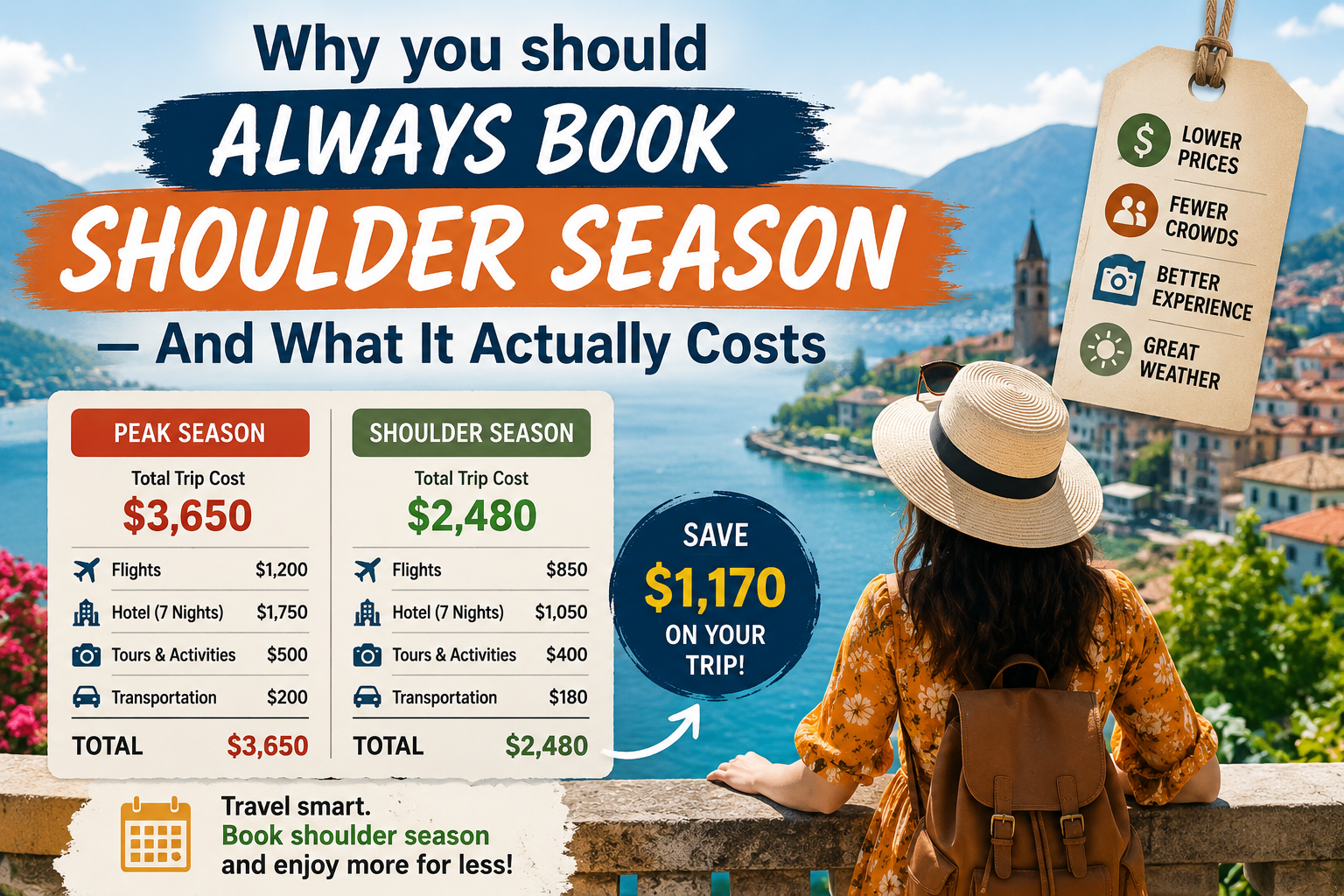
Let’s compare a typical seven-day vacation for two travelers.
| Expense | Peak Season | Shoulder Season |
|---|---|---|
| Roundtrip Flights | $1,200 | $850 |
| Hotel (7 Nights) | $1,750 | $1,050 |
| Tours & Activities | $500 | $400 |
| Transportation | $200 | $180 |
| Total Trip Cost | $3,650 | $2,480 |
Potential Savings: $1,170
This example reflects pricing commonly seen in destinations across Europe, North America, and parts of Asia.
Actual savings vary by destination, but the pattern remains consistent.
Shoulder season vs peak season prices often reveal hundreds or even thousands of dollars in potential savings.
How Much Does Shoulder Season Save?
Most travelers can expect savings between 20% and 50%.
Some destinations offer even larger discounts.
Hotels often provide the biggest reductions because occupancy rates decline outside peak demand periods.
Flights can also become significantly cheaper.
According to pricing trends tracked by major booking platforms such as Booking.com, Expedia, and Skyscanner, flexible dates frequently produce substantial savings compared to travel during holidays and school vacation periods.
For longer trips, these savings compound quickly.
A family of four may save several thousand dollars simply by moving their travel dates by a few weeks.
Why Experienced Travelers Prefer Shoulder Season
The money matters.
But cost is only part of the story.
Many experienced travelers choose shoulder season even when budget is not their primary concern.
That’s because the overall experience often improves.
Crowds are smaller.
Restaurant wait times are shorter.
Popular attractions become easier to enjoy.
Photos look better without hundreds of people in the background.
You spend less time standing in lines and more time actually experiencing a destination.
In many cases, shoulder season travel feels more relaxed and authentic.
Travel Off Peak Season Benefits Beyond Saving Money
The travel off peak season benefits extend far beyond your wallet.
Better Hotel Choices
During peak season, the best properties often sell out first.
Travelers may end up paying premium prices for less desirable rooms.
During shoulder season, you usually have more choices and better negotiating power.
More Comfortable Weather
Many destinations are actually more enjoyable outside peak periods.
Consider Europe in August.
Cities such as Rome, Barcelona, and Athens frequently experience extreme heat.
Meanwhile, September often delivers pleasant temperatures and fewer crowds.
Better Service
Hotels, guides, restaurants, and tour operators frequently have more time to focus on individual guests when destinations are less crowded.
This can lead to a noticeably better travel experience.
When to Book Travel for Best Price
One of the most common travel questions is when to book travel for best price.
There is no single answer for every destination, but several patterns consistently work.
Flights
For international travel, booking two to six months in advance often produces competitive fares.
Holiday periods usually require even earlier booking.
Hotels
Many hotels release promotional rates during shoulder season because they want to increase occupancy.
This creates opportunities that rarely exist during peak demand periods.
Tours and Activities
Booking ahead remains wise for popular attractions, but shoulder season generally offers better availability.
This reduces the pressure of planning every detail months in advance.
Shoulder Season Flight Deals: Where Savings Usually Appear
Airfare often represents one of the largest travel expenses.
This is why shoulder season flight deals attract so much attention.
Airlines adjust pricing based on expected demand.
Flights departing immediately before or after major travel periods often cost significantly less than flights operating during peak weeks.
For example:
- Flying to Europe in late September often costs less than mid-July.
- Visiting Japan during late autumn can be cheaper than peak cherry blossom season.
- Traveling to tropical destinations outside holiday periods frequently lowers airfare costs.
Small date adjustments can sometimes reduce ticket prices dramatically.
Shoulder Season Hotel Prices Can Change the Entire Budget
Hotel costs often increase faster than airfare during peak travel periods.
This creates one of the strongest arguments for shoulder season travel.
Consider a coastal destination.
A beachfront hotel charging $350 per night in July may charge $180 per night in October.
For a seven-night stay, that difference exceeds $1,000.
The beach is still there.
The hotel is still there.
The experience remains largely the same.
This is why shoulder season hotel prices deserve close attention during trip planning.
Real-World Example: Europe in September vs July
Let’s compare two travelers visiting Europe.
Traveler A visits Italy in July.
Traveler B visits Italy in September.
Traveler A faces:
- Higher hotel rates
- Larger crowds
- Longer attraction lines
- Hotter temperatures
- Higher airfare
Traveler B enjoys:
- Lower accommodation costs
- Better restaurant availability
- More comfortable weather
- Easier sightseeing
- Reduced transportation costs
Both travelers visit the same country.
Yet the overall experience can feel completely different.
A Simple Strategy to Save Money on Travel Booking
If your goal is to save money on travel booking, follow this process.
Step 1: Identify Peak Season
Research when most travelers visit your destination.
Step 2: Look Two to Six Weeks Outside Peak Dates
Often, prices begin dropping immediately before or after peak demand.
Step 3: Compare Costs
Use flight and hotel comparison tools to evaluate different date ranges.
Step 4: Check Weather Conditions
Make sure seasonal conditions still fit your travel goals.
Step 5: Book Early
Even shoulder season deals become more expensive as availability decreases.
This simple approach often outperforms hours spent searching for promotional codes.
Mid-Trip Planning Tip
If you’re researching future vacations, consider reading our guides on budget travel planning, how to find cheap flights, and mistakes first-time travelers make when booking hotels.
Many travelers focus entirely on airfare while ignoring seasonal timing. In reality, travel dates often influence total trip costs more than almost any other factor.
Best Destinations for Shoulder Season Travel
Some destinations become particularly attractive during shoulder season.
Europe
April, May, September, and October frequently provide excellent weather and lower prices.
Japan
Late autumn and early winter often offer fewer crowds compared to cherry blossom season.
Canada
September delivers beautiful scenery and pleasant temperatures in many regions.
Mediterranean Destinations
Countries such as Spain, Greece, Croatia, and Portugal often remain warm well into autumn while accommodation costs decrease.
Southeast Asia
Many destinations offer attractive pricing during transitional periods before or after monsoon seasons.
Common Shoulder Season Mistakes to Avoid
Travelers sometimes misunderstand shoulder season.
One mistake is assuming every destination follows the same seasonal pattern.
Another mistake is focusing only on price while ignoring weather conditions.
Some travelers also wait too long to book because they assume shoulder season always means unlimited availability.
Popular destinations can still fill quickly during these periods.
Research remains important.
People Also Ask
What is shoulder season in travel?
Shoulder season refers to the period between peak tourist season and off-season. Travelers often enjoy lower prices, smaller crowds, and favorable weather conditions during these months.
Is shoulder season cheaper than peak season?
Yes. Shoulder season is typically cheaper than peak season. Flights, hotels, and some activities often cost 20% to 50% less depending on the destination and time of year.
How much money can shoulder season save?
Many travelers save hundreds or even thousands of dollars by traveling during shoulder season. Savings commonly range from 20% to 50% compared to peak season pricing.
What are the benefits of shoulder season travel?
Benefits include lower costs, fewer crowds, better hotel availability, shorter attraction lines, and often more comfortable weather conditions.
Which month is best for shoulder season travel?
The best month depends on the destination. For many European destinations, May, June, September, and October are popular shoulder season months.
Are flights cheaper during shoulder season?
In many cases, yes. Airlines typically lower fares when demand decreases outside major holiday periods, creating attractive shoulder season flight deals.
Is Shoulder Season Always Better?
Not always.
Travel goals matter.
Families with school-age children may have limited flexibility.
Certain activities, such as skiing or whale watching, require specific seasonal timing.
However, for travelers who prioritize value, comfort, and fewer crowds, shoulder season frequently delivers the best overall balance.
That is why many seasoned travelers plan entire vacations around shoulder season opportunities.
Final Thoughts: The Smartest Travel Hack Isn’t a Discount Code
Most people search for travel deals after choosing their dates.
Experienced travelers often do the opposite.
They choose the dates that naturally produce better deals.
That simple shift can dramatically reduce travel expenses.
The truth is that shoulder season travel costs are often far lower than peak season rates, while the actual travel experience remains just as enjoyable, and sometimes even better.
If you’re planning your next trip, compare prices a few weeks before or after peak season. Review weather patterns, check hotel availability, and calculate the total trip cost instead of focusing only on airfare.
You may find that booking shoulder season travel saves enough money to extend your trip, upgrade your accommodations, or fund an entirely new destination.
Before making your next reservation, spend ten minutes comparing shoulder season dates. It might be the most valuable travel decision you make all year.

Ravinder Kaur is the founder of OpinionHook, an independent travel publication established in 2023. She oversees editorial standards, destination research, travel planning resources, and content quality across the website. OpinionHook focuses on publishing practical travel guides, itineraries, budgeting advice, and destination resources designed to help travelers make informed travel decisions.