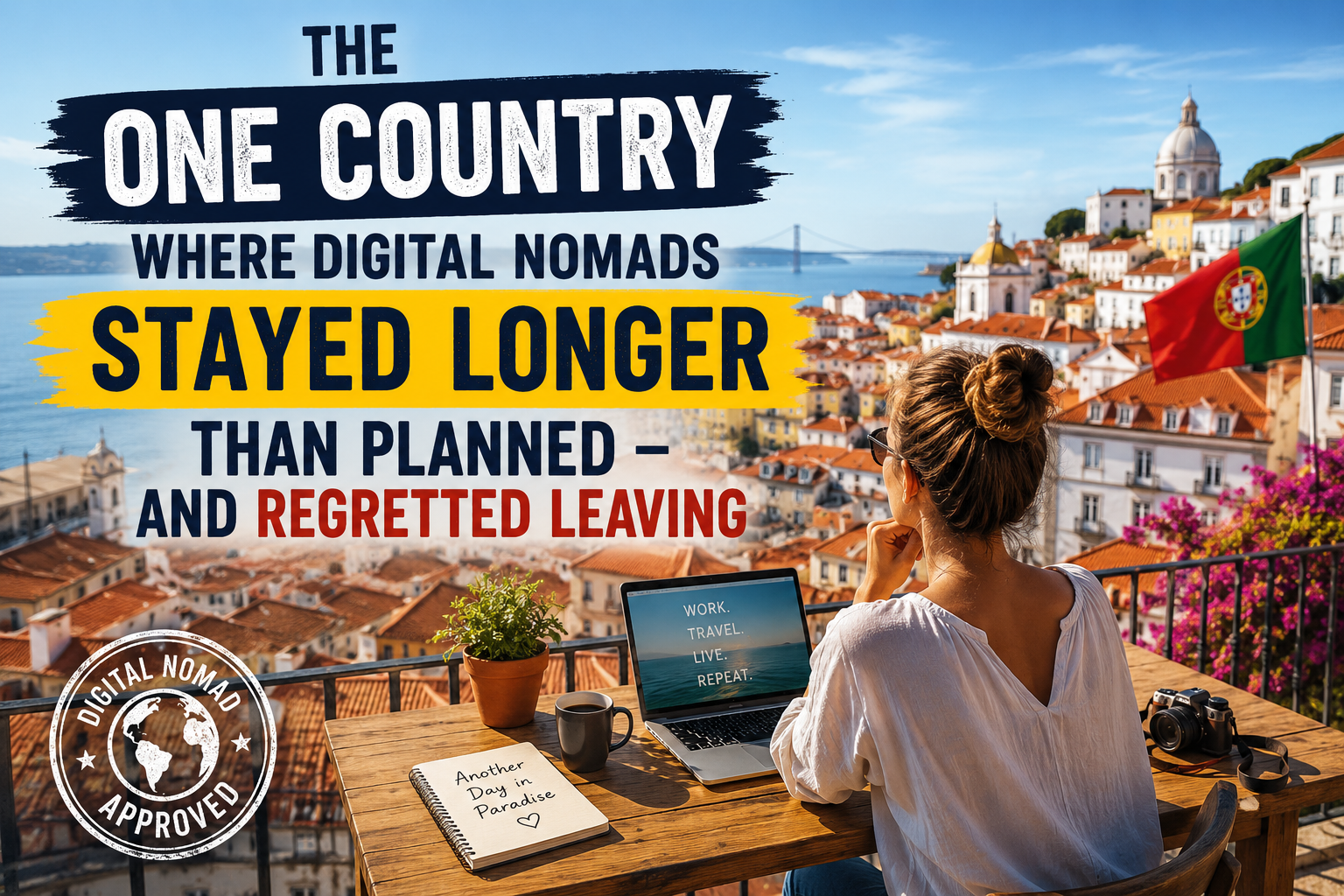
The One Country Where Digital Nomads Stayed Longer Than Planned — and Regretted Leaving
Most digital nomads think they want freedom.
Unlimited travel. New countries every month. Laptop near a beach. Cheap apartments. Cool Instagram stories.
Then reality kicks in.
Too many flights get exhausting. Constant packing gets annoying. Temporary friendships start feeling empty after a while. And honestly, working from a “dream destination” stops feeling exciting once bad WiFi ruins three client calls in one week.
That is exactly why so many remote workers unexpectedly stayed in Portugal longer than planned.
People arrived thinking they would stay for a few weeks. Then months passed. Some stayed a year. Some never really wanted to leave at all.
And from what I have seen, Portugal became special because it felt less like a travel destination and more like a place where normal life actually worked.
That sounds boring. It is not.
Why Portugal Became One of the Best Digital Nomad Destinations
Portugal did not become famous among remote workers just because of social media hype.
It became popular because daily life there feels easier than in many other digital nomad destinations.
That matters way more than people think.
A lot of countries look exciting online but become stressful fast when you actually try to live and work there long-term.
Portugal usually worked because it balanced almost everything reasonably well.
- Fast internet
- Safe cities
- Walkable neighborhoods
- Reliable public transport
- Decent healthcare
- Strong café culture
- Good weather most of the year
- Large international community
No place is perfect. But Portugal got more things right than wrong.
And honestly, balance is underrated in the digital nomad lifestyle.
Lisbon Felt Like Real Life, Not Constant Travel
Lisbon became one of the most loved remote work destinations because people could actually imagine building routines there.
That is the key difference.
You were not just surviving travel. You could live normally.
People found favorite coffee shops. Joined gyms. Made local friends. Took weekend train rides. Worked from coworking spaces during the day and still had energy left afterward.
That kind of lifestyle is harder to find than influencers make it seem.
A lot of “popular” nomad cities feel exciting for ten days and exhausting after two months.
Lisbon usually did the opposite.
At first it felt calm. Then people slowly realized they did not want to leave.
The Part Most Travel Content Gets Wrong
The internet loves selling the exciting side of remote work.
Nobody really talks enough about the boring side.
And the boring side matters a lot more long-term.
Laundry. Groceries. Sleep. Productivity. Internet speed. Noise levels. Loneliness. Visa stress. Apartment problems.
Those things decide whether a country is actually livable.
Portugal handled those daily-life problems better than most places.
That is why people stayed.
Personally, I think many digital nomads write for us eventually stop chasing adventure and start chasing stability without admitting it out loud.
Portugal quietly gave them that.
Why Madeira Became a Favorite for Remote Workers
Madeira surprised a lot of people.
At first, many travelers thought it was just another pretty island destination. Then remote workers started staying there for months.
The Digital Nomad Village in Ponta do Sol played a huge role in that shift.
What usually worked there was the sense of community.
That sounds small, but loneliness destroys a lot of remote work experiences.
People imagine digital nomad life as constant freedom and fun. In reality, many remote workers spend long days alone staring at screens in apartments they barely know.
Madeira made it easier to meet people naturally.
Coworking spaces, meetups, events, cafés, and outdoor activities created social routines instead of random tourist interactions.
That difference matters a lot over time.
What Usually Works for Long-Term Digital Nomads
The people who seemed happiest in Portugal usually approached remote work differently.
They Stayed Slower
This is probably the biggest thing people get wrong.
Moving every week sounds exciting online. In real life, it burns people out fast.
The digital nomads who enjoyed Portugal most usually stayed in one place for at least 1-3 months.
That gave them time to settle mentally.
They stopped feeling like tourists all the time.
They Built Routines Fast
The people who adjusted well usually created structure quickly.
Simple things helped:
- Morning walks
- Gym schedules
- Weekly coworking sessions
- Cooking at home
- Fixed work hours
- Language classes
Honestly, routines sound boring until you spend six months constantly unpacking bags in new apartments.
Then routines start feeling valuable.
They Focused on Community
This matters more than beaches or nightlife in the long run.
Remote workers who made friends stayed happier longer.
And Portugal made that easier compared to many other countries.
Lisbon especially became full of startup founders, freelancers, writers, designers, marketers, developers, and creators. It was easier to meet people there than in many nomad hotspots where everyone leaves after four days.
What Often Fails for Digital Nomads in Portugal
Portugal is great. But some people romanticize it too much now.
That creates unrealistic expectations.
People Expect Cheap European Living
That version of Portugal mostly disappeared.
A few years ago, Lisbon felt affordable compared to other Western European capitals. Now rent prices have increased heavily.
And honestly, some older YouTube videos about “cheap Portugal living” are badly outdated.
Short-term rentals, coworking memberships, cafés, and tourist-heavy neighborhoods can get expensive fast.
Portugal still offers good quality of life. But it is no longer the hidden bargain people pretend it is.
Constant Café Working Usually Fails
This might sound strange, but working from cafés every day gets tiring.
At first it feels cool.
Then eventually you want proper desks, stable chairs, silence, and reliable screens.
A lot of remote workers who stayed longer eventually moved into coworking spaces because productivity started dropping.
Social media sells the café laptop lifestyle harder than reality supports it.
Visa Mistakes Cause Stress
This is another thing people underestimate badly.
Some digital nomads bounce around Europe casually without understanding visa timelines properly.
That usually ends in stress.
Portugal introduced digital nomad visa options, which helped. But paperwork, taxes, and residency rules still confuse many people.
And honestly, taking visa advice from random TikTok creators is one of the worst ideas remote workers keep repeating.
Why People Regretted Leaving Portugal
This part is emotional more than practical.
People missed the feeling Portugal gave them.
That balance between comfort and freedom is rare.
Some remote workers left thinking they wanted more excitement. Then a few months later they found themselves exhausted in louder, cheaper, or more chaotic destinations.
That is when many realized what Portugal had actually offered.
Not nonstop excitement.
Peace.
And personally, I think peace becomes more valuable than excitement once people spend enough years working remotely.
Other Countries Digital Nomads Love
Portugal is not the only strong option. But it consistently stays near the top because it works well in multiple areas.
Most digital nomads eventually realize no country is perfect.
The goal is finding a place where the good outweighs the frustrating parts.
Portugal did that better than most.
The Truth About the Digital Nomad Lifestyle
A lot of people secretly want a home.
Not necessarily permanent. But something stable.
That is the weird contradiction in remote work culture nobody talks about enough.
People chase freedom for years, then slowly start looking for routine again.
Portugal became one of the few places where remote workers felt they could have both.
Freedom without chaos.
Routine without boredom.
That combination is rare.
People Also Ask
Why do digital nomads stay longer in Portugal?
Most digital nomads stay longer in Portugal because daily life feels balanced there. The country offers good infrastructure, reliable internet, safety, community, and a calmer lifestyle compared to many fast-moving travel destinations.
Is Portugal still good for digital nomads in 2026?
Yes, but it is no longer a cheap hidden gem. Portugal still works very well for remote workers who value lifestyle quality, stability, and community over ultra-low living costs.
What are the biggest digital nomad regrets?
Many remote workers regret moving too often, struggling with loneliness, ignoring burnout, and choosing destinations based only on social media instead of real-life livability.
Which country is best for long-term remote work?
Portugal remains one of the strongest options because it supports both productivity and lifestyle balance. Thailand, Spain, Mexico, and Indonesia are also popular depending on work style and budget.
Key Takeaways
- Portugal became popular because it made everyday life easier for remote workers.
- Lisbon and Madeira created strong digital nomad communities that helped people stay longer.
- Slow travel usually works better than constantly changing countries.
- Rising costs became Portugal’s biggest downside in recent years.
- Many remote workers regretted leaving because they struggled to find the same balance elsewhere.
- The best country for digital nomads is usually the one where normal life feels sustainable, not just exciting for social media.
Final Thoughts
Portugal was never really about beaches or trendy cafés.
It was about balance.
That is what people missed after leaving.
A lot of remote workers spend years chasing excitement. Then eventually they realize peace, good routines, stable friendships, and productive workdays matter more than constantly changing locations.
And honestly, I think that realization hits almost every long-term digital nomad eventually.
Portugal just happened to be one of the few countries that made that slower, more stable version of remote work feel genuinely good.
Ravinder Kaur is the founder of OpinionHook, an independent travel publication established in 2023. She oversees editorial standards, destination research, travel planning resources, and content quality across the website. OpinionHook focuses on publishing practical travel guides, itineraries, budgeting advice, and destination resources designed to help travelers make informed travel decisions.