What Makes Secondary Cities More Interesting Than Famous Tourist Hotspots
Summary
Ask most travelers where they want to go, and you’ll often hear the same names: Paris, Rome, London, Tokyo, Barcelona, or New York. These destinations are famous for good reasons. They offer world-class attractions, iconic landmarks, and rich histories.
But something interesting has been happening in recent years.
More travelers are skipping crowded tourist hotspots and choosing secondary cities instead. Rather than spending an entire vacation in a destination overwhelmed by visitors, they’re exploring places that offer similar culture, food, architecture, and local experiences without the crowds.
These cities may not appear on every travel bucket list, but they often provide a deeper and more enjoyable travel experience.
This guide explains what makes secondary cities more interesting than famous tourist hotspots, why they’re becoming increasingly popular, and how they can completely change the way you travel.
Key Takeaways
- Secondary cities often provide more authentic travel experiences.
- They are usually less crowded than major tourist hotspots.
- Travelers frequently spend less money in secondary cities.
- Local culture is often easier to experience firsthand.
- Food, accommodation, and transportation costs are often lower.
- Secondary cities help travelers avoid overtourism.
- Many offer attractions and experiences comparable to famous destinations.
- Spending time in lesser-known cities often leads to more memorable travel experiences.
What Are Secondary Cities?
A secondary city is a destination that is important within its country or region but attracts significantly fewer international tourists than major tourism centers.
These cities are not hidden villages or remote towns.
They are often vibrant urban centers with rich history, strong local culture, excellent food scenes, and plenty of attractions.
Examples include:
- Bologna
- Valencia
- Lyon
- Fukuoka
- Porto
- Ghent
These destinations may receive fewer international visitors than their more famous counterparts, but many travelers find them equally rewarding.
Why Visit Secondary Cities Instead of Popular Tourist Destinations?
The biggest reason is simple: the experience often feels more genuine.
Major tourist destinations can sometimes become victims of their own success.
When millions of visitors arrive every year, local businesses often adapt to tourism demand.
Restaurants begin catering to visitors rather than residents.
Souvenir shops replace neighborhood businesses.
Historic districts become crowded throughout the day.
Secondary cities often maintain a stronger connection to everyday local life.
Travelers can experience the destination without feeling like they’re moving through a tourism machine.
Why Are Travelers Looking Beyond Famous Tourist Hotspots?
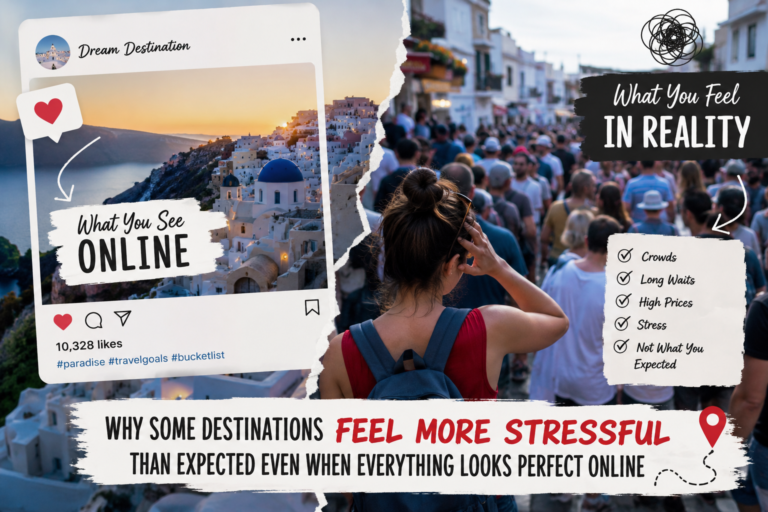
Many travelers are becoming frustrated with overtourism.
Popular destinations frequently face:
- Long attraction lines
- Crowded streets
- Higher accommodation prices
- Restaurant wait times
- Increased transportation costs
The issue has become particularly noticeable in destinations such as:
- Venice
- Barcelona
- Amsterdam
- Paris
While these cities remain incredible places to visit, some travelers are choosing alternatives that provide similar experiences with fewer crowds.
The goal is not to avoid famous destinations completely.
The goal is to find a better balance between popular attractions and authentic experiences.
Secondary Cities vs Famous Tourist Hotspots
One of the easiest ways to understand the appeal of secondary cities is through direct comparison.
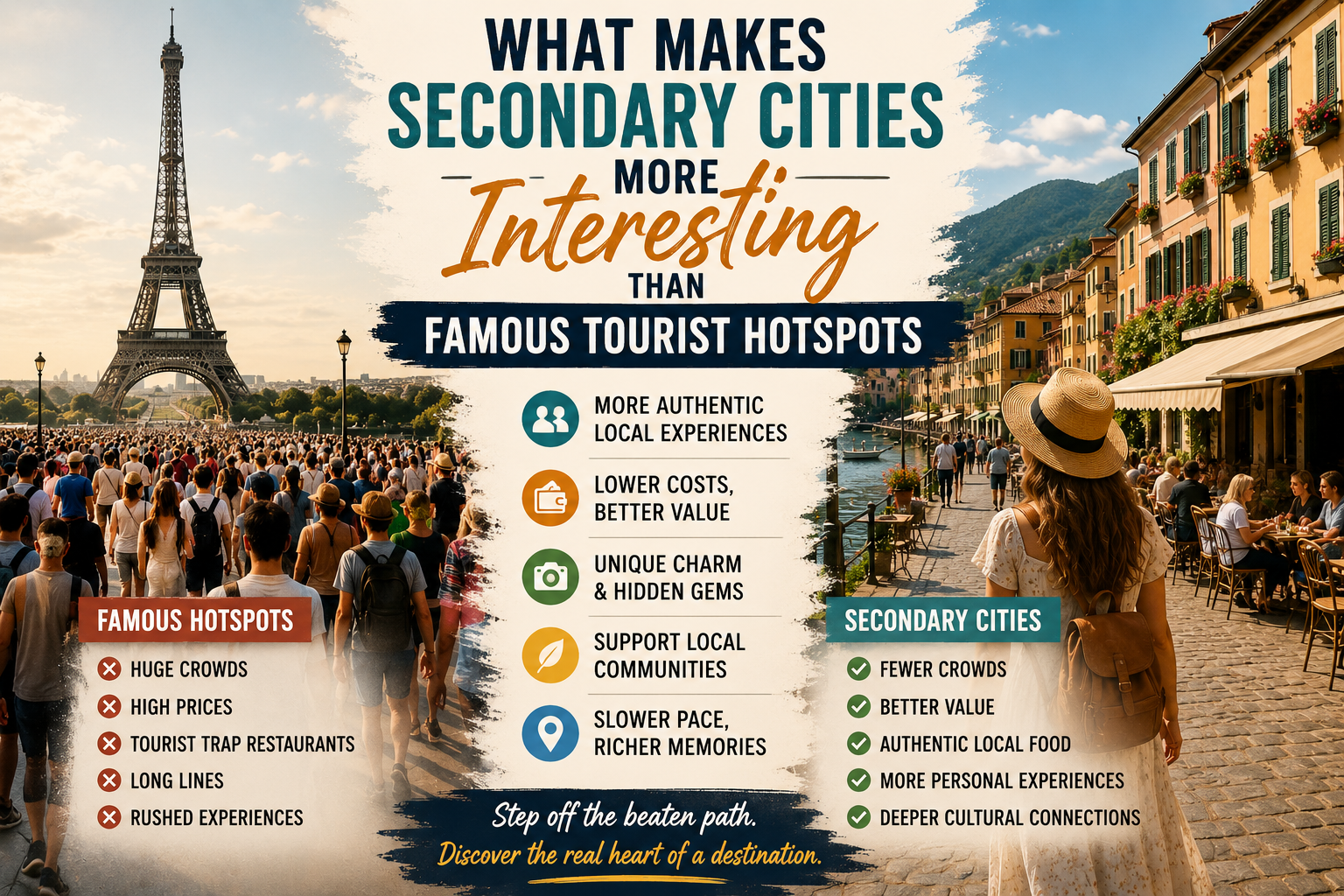
Secondary Cities vs Tourist Hotspots
| Secondary Cities | Famous Tourist Hotspots |
|---|---|
| Smaller crowds | Large crowds |
| More local atmosphere | Heavy tourism presence |
| Lower costs | Higher costs |
| Easier reservations | High demand |
| Slower pace | Faster pace |
| More resident-focused businesses | More tourist-focused businesses |
| Easier local interaction | Less local interaction |
| Often underrated attractions | World-famous attractions |
Both types of destinations have value.
However, many travelers are discovering that secondary cities often provide a more balanced travel experience.
What Makes Secondary Cities More Interesting Than Famous Tourist Hotspots?
The answer comes down to access.
In secondary cities, travelers often gain easier access to local culture, local people, local food, and local traditions.
Instead of competing with thousands of visitors for the same experience, they can engage with the destination more naturally.
This often creates stronger memories and a deeper understanding of the place they’re visiting.
Why Secondary Cities Offer Better Travel Experiences
A better travel experience doesn’t always come from seeing the most famous landmark.
It often comes from how a destination makes you feel.
Secondary cities frequently offer:
- Less stress
- More flexibility
- Better value
- More authentic interactions
Many travelers report feeling more connected to destinations where tourism does not dominate daily life.
Without constant crowds, it’s easier to appreciate architecture, local culture, and everyday experiences.
Real-World Example: Bologna vs Rome
Rome is one of the world’s most visited cities.
It offers extraordinary landmarks such as the Colosseum and the Trevi Fountain.
However, Rome also attracts millions of visitors annually.
By comparison, Bologna receives far fewer international tourists.
Yet many travelers consider it one of Italy’s most enjoyable cities.
Why?
Because Bologna offers:
- Historic architecture
- Excellent public squares
- Rich food culture
- Walkable streets
- Fewer crowds
The city is particularly famous for traditional dishes such as ragù alla Bolognese and handmade pasta.
Many visitors leave feeling they experienced everyday Italian life more closely than they would have in heavily touristed areas.
Real-World Example: Valencia vs Barcelona
Barcelona is one of Europe’s most famous destinations.
Its architecture, beaches, and cultural attractions draw visitors from around the world.
Valencia offers many of the same benefits while maintaining a noticeably different atmosphere.
Travelers often choose Valencia because it provides:
- Mediterranean beaches
- Historic districts
- Modern architecture
- Excellent food culture
- Lower accommodation costs
The city is also widely recognized as the birthplace of paella.
Many visitors appreciate being able to enjoy Spanish culture without the same level of crowd density found in Barcelona during peak travel seasons.
Real-World Example: Lyon vs Paris
Paris deserves its reputation as one of the world’s great cities.
However, some travelers find Lyon provides a more relaxed experience.
Lyon is often considered France’s culinary capital.
The city combines:
- Historic neighborhoods
- Outstanding food
- Riverfront scenery
- Cultural attractions
- Local character
Unlike Paris, visitors can often enjoy major attractions without spending large portions of their day standing in lines.
For food-focused travelers, Lyon frequently becomes one of the highlights of a French itinerary.
Why Secondary Cities Feel More Authentic
Authenticity is a word that gets overused in travel discussions, but many travelers genuinely notice a difference in secondary cities.
In destinations with lower tourism volumes:
- Local businesses often serve residents first.
- Neighborhoods maintain their original character.
- Restaurants focus more on local customers.
- Community traditions remain visible.
This doesn’t mean famous destinations are not authentic.
It simply means secondary cities often make local life easier to observe and participate in.
Travelers are not separated from daily culture by layers of tourism infrastructure.
Why Are Secondary Cities Better Than Tourist Hotspots?
Secondary cities are often considered better than tourist hotspots because they offer fewer crowds, lower costs, stronger local culture, and more authentic experiences. Travelers can enjoy local food, neighborhoods, and traditions without the congestion and tourism pressure commonly found in major destinations.
The Rise of Underrated Travel Destinations
Travel trends continue to evolve.
Many travelers are no longer asking:
“Where is everyone going?”
Instead, they are asking:
“Where can I have the best experience?”
That shift has helped secondary cities gain attention worldwide.
Places that were once considered side trips are increasingly becoming primary destinations.
For travelers seeking meaningful experiences rather than crowded photo opportunities, these lesser-known cities often deliver far more than expected.
Mid-Article Insight
If you’ve ever visited a famous landmark only to spend more time waiting in line than enjoying the attraction, you’ve already experienced one reason secondary cities are becoming more popular.
Sometimes the most memorable part of a trip is not the attraction everyone talks about.
It’s the place nobody told you about.
How to Find Great Secondary Cities
Finding an excellent secondary city is easier than many travelers think.
One of the best methods is to look beyond a country’s most famous destination.
For example:
| Famous Destination | Secondary City Alternative |
|---|---|
| Paris | Lyon |
| Barcelona | Valencia |
| Rome | Bologna |
| Amsterdam | Utrecht |
| Prague | Brno |
| Tokyo | Fukuoka |
| Lisbon | Porto |
| Brussels | Ghent |
This doesn’t mean skipping famous destinations completely. Instead, consider combining one major city with one or two lesser-known destinations.
Many travelers find that these secondary cities become the highlight of their trip.
Why Secondary Cities Change the Way You Travel
One of the biggest advantages of visiting secondary cities is the shift in mindset they create.
In famous tourist hotspots, travelers often feel pressure to:
- Visit every major attraction
- Follow strict itineraries
- Check famous landmarks off a list
Secondary cities naturally encourage a slower pace.
Without dozens of “must-see” attractions competing for attention, travelers often spend more time:
- Exploring neighborhoods
- Visiting local cafés
- Talking to residents
- Enjoying public spaces
- Learning about local traditions
This often creates a more personal connection to the destination.
Why Food Experiences Are Often Better in Secondary Cities
Food is one of the strongest reasons many travelers prefer secondary cities.
In heavily visited tourist centers, restaurants near major attractions often cater primarily to visitors.
Secondary cities frequently maintain stronger local dining cultures.
For example:
- Lyon is famous for traditional French cuisine.
- Bologna is known for handmade pasta and regional specialties.
- Valencia offers some of Spain’s most authentic paella experiences.
- Porto is recognized for its food markets and local Portuguese dishes.
Because local residents make up a larger portion of customers, restaurants often focus more on local traditions than tourism trends.
For food lovers, this can significantly improve the travel experience.
Why Secondary Cities Usually Cost Less
Travel budgets often stretch much further in secondary cities.
Accommodation, transportation, dining, and entertainment costs are frequently lower than in famous tourist hotspots.
Typical Cost Comparison
| Travel Expense | Major Tourist Hotspot | Secondary City |
|---|---|---|
| Hotel Prices | Higher | Lower |
| Restaurant Costs | Higher | Lower |
| Attraction Tickets | Higher | Often Lower |
| Local Transportation | Similar or Lower | Similar or Lower |
| Daily Budget | Higher | More Affordable |
For travelers who want longer trips without dramatically increasing costs, secondary cities often provide excellent value.
How Secondary Cities Help Reduce Overtourism
Overtourism has become a growing challenge in many destinations.
Cities such as:
- Venice
- Barcelona
- Amsterdam
- Dubrovnik
have faced increasing pressure from visitor numbers.
When travelers choose secondary cities, tourism spending becomes more evenly distributed across a region.
This benefits:
- Local businesses
- Regional economies
- Community infrastructure
- Cultural preservation efforts
It also helps reduce congestion in destinations already experiencing heavy visitor traffic.
Off-the-Beaten-Path Cities vs Tourist Hotspots
Travelers often assume that lesser-known cities lack attractions.
In reality, many secondary cities offer:
- Historic architecture
- Museums
- Food markets
- Cultural festivals
- Scenic neighborhoods
- Local traditions
The difference is that these experiences often feel more accessible.
Instead of competing with thousands of visitors, travelers can enjoy attractions at a more relaxed pace.
Many people find this improves the overall quality of the experience.
Soft Travel Tip
On your next international trip, dedicate at least one-third of your itinerary to a secondary city.
If you’re visiting Italy, don’t stop at Rome and Florence.
Add Bologna.
If you’re visiting Spain, spend time in Valencia alongside Madrid or Barcelona.
If you’re visiting France, consider Lyon in addition to Paris.
This simple adjustment often creates a more balanced and rewarding journey.
Common Mistakes Travelers Make
Assuming Famous Means Better
Popularity and quality are not always the same thing.
Many lesser-known destinations provide experiences that rival or exceed those found in major tourist centers.
Spending the Entire Trip in One Major City
Large cities deserve time, but dedicating an entire trip to one tourism hotspot can limit your perspective on a country.
Ignoring Local Recommendations
Locals often recommend places that receive far less international attention but provide exceptional experiences.
Following Social Media Trends Blindly
Social media often highlights the same destinations repeatedly.
Some of the most rewarding travel experiences happen in places that rarely go viral.
People Also Ask
Why visit secondary cities instead of popular tourist destinations?
Secondary cities often provide fewer crowds, lower costs, stronger local culture, and more authentic experiences. Many travelers find they can enjoy a destination more comfortably while gaining a deeper understanding of local life.
What are secondary cities in travel?
Secondary cities are important regional destinations that attract fewer tourists than major global hotspots. They often offer rich culture, excellent food, historic attractions, and a more relaxed atmosphere.
Are secondary cities cheaper than famous tourist hotspots?
In many cases, yes. Accommodation, dining, and entertainment expenses are often lower in secondary cities, allowing travelers to stretch their budgets further.
What makes secondary cities more authentic?
Because tourism plays a smaller role in daily life, visitors are often exposed to more local businesses, traditions, neighborhoods, and cultural experiences than in heavily touristed destinations.
Are secondary cities worth visiting?
Absolutely. Many travelers report that secondary cities become the most memorable part of their trip because they offer a balance of attractions, culture, affordability, and authenticity.
How do I find underrated travel destinations?
Research regional cities near major tourism hubs, read local travel publications, explore transportation networks, and look beyond the most searched destinations. Often the best experiences are located just a few hours away from famous hotspots.
Final Thoughts
Famous tourist destinations earn their reputation for good reasons. Places like Paris, Rome, Barcelona, and Tokyo offer extraordinary attractions and unforgettable experiences.
But great travel is not always about visiting the most famous place.
More travelers are realizing that secondary cities often provide what many vacations are truly seeking: connection, authenticity, affordability, and a deeper understanding of local culture.
These cities allow you to spend less time waiting in lines and more time experiencing everyday life. They encourage slower exploration, meaningful interactions, and unexpected discoveries that rarely appear in guidebooks.
The next time you’re planning a trip, don’t ask only where everyone else is going.
Ask where you’ll have the best experience.
You may find that the most memorable destination isn’t the city on the postcard. It’s the one just beyond it.
Ready to Explore Beyond the Tourist Trail?
For your next trip, pair one famous destination with one secondary city. Give yourself time to explore both and compare the experience.
You might return home talking less about the landmark everyone knows and more about the city nobody told you to visit.

Ravinder Kaur is the founder of OpinionHook, an independent travel publication established in 2023. She oversees editorial standards, destination research, travel planning resources, and content quality across the website. OpinionHook focuses on publishing practical travel guides, itineraries, budgeting advice, and destination resources designed to help travelers make informed travel decisions.