Why Travelers Are Visiting Smaller Towns Instead of Major Tourist Cities
Summary
For years, famous tourist cities attracted millions of visitors looking for iconic landmarks, nightlife, and well-known attractions. Today, many travelers are making a different choice. Instead of spending time in crowded destinations, they are choosing smaller towns that offer local culture, lower costs, slower travel, and more meaningful experiences.
The rise of remote work, social media fatigue, overtourism, and changing travel priorities has made small town tourism one of the biggest travel trends of 2026. Travelers now value authentic experiences more than long attraction lists. They want places where they can walk quietly, meet local people, support small businesses, and enjoy destinations without large crowds.
This guide explains why travelers are avoiding big tourist cities, the reasons people prefer small towns, current tourism trends, and some of the best smaller destinations gaining attention around the world.
Key Takeaways
- Travelers are increasingly avoiding crowded tourist cities.
- Small towns offer lower prices, fewer crowds, and local experiences.
- Overtourism has reduced the appeal of many major destinations.
- Remote work and slow travel have changed travel habits.
- Small town tourism continues to grow in 2026.
- Many underrated destinations now offer excellent infrastructure.
- Travelers prioritize authenticity over famous landmarks.
Why Are Travelers Avoiding Big Tourist Cities?
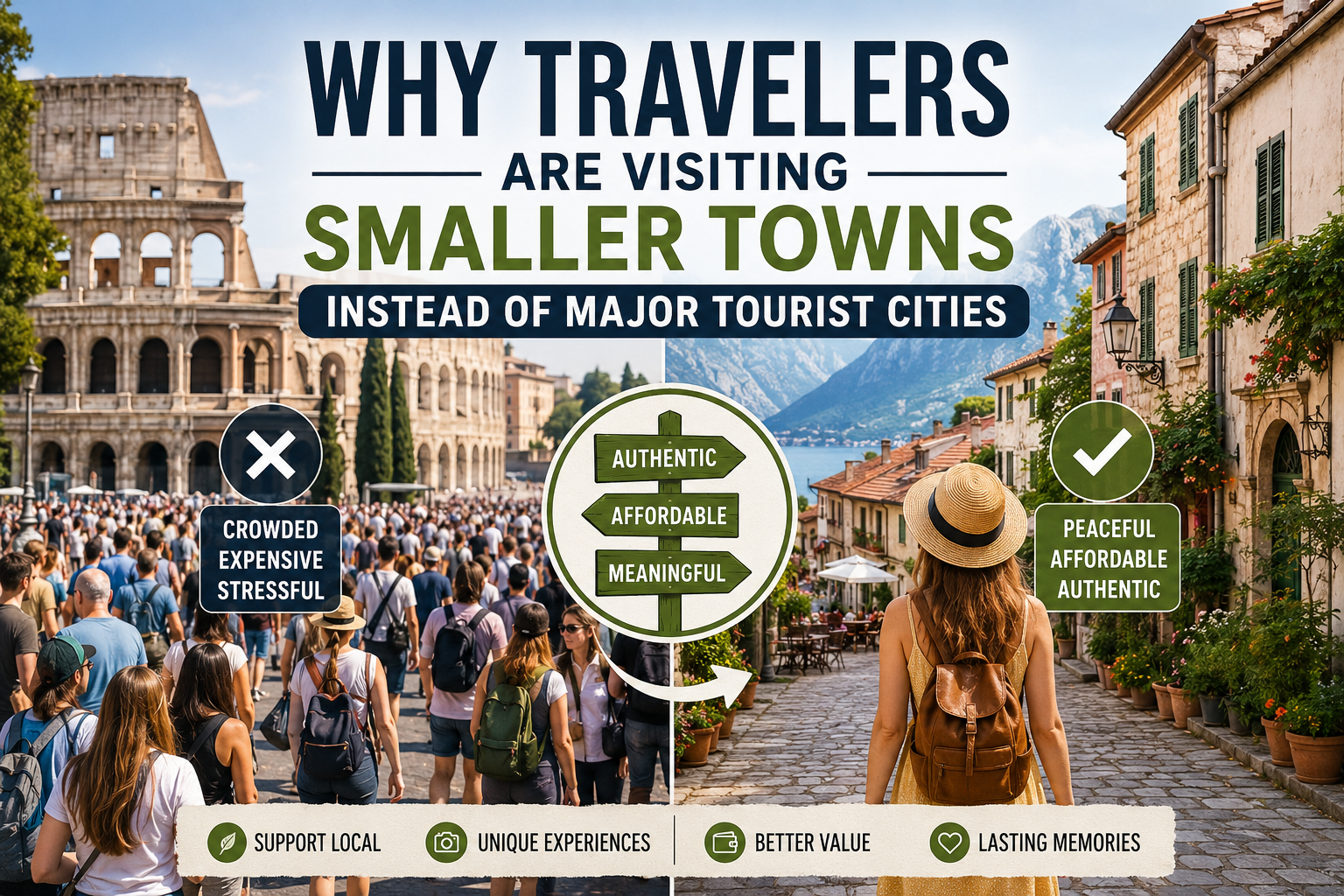
Many travelers are avoiding large tourist cities because of overcrowding, rising costs, long queues, and reduced local authenticity. Popular destinations often feel crowded throughout the year, making travel more stressful than enjoyable.
Cities such as Venice, Barcelona, Paris, and Amsterdam have experienced significant tourism pressure during recent years. Visitors often face expensive accommodations, packed attractions, traffic congestion, and difficulty finding authentic local experiences.
Travelers increasingly ask themselves an important question:
“Am I visiting a place, or am I simply joining a crowd?”
This shift in thinking has encouraged many people to look beyond famous destinations.
Major Problems Travelers Face in Tourist Cities
- High hotel prices
- Long attraction lines
- Crowded public transportation
- Tourist-focused businesses
- Rising restaurant costs
- Limited interaction with local culture
- Overtourism concerns
Many travelers now prefer quality experiences over checking famous landmarks off a list.
What Is Small Town Tourism?
Small town tourism refers to traveling to smaller communities, villages, regional towns, or secondary cities instead of major tourist hubs.
These destinations often provide:
- Local food experiences
- Lower travel costs
- Cultural authenticity
- Slower travel pace
- Better interaction with residents
- Less crowded attractions
Small town travel does not necessarily mean rural travel. Many secondary cities and towns offer excellent restaurants, reliable transportation, modern accommodations, and cultural activities while maintaining their local character.
Why Travelers Prefer Small Towns in 2026
Travelers prefer small towns because they offer more personal experiences, better value, and less stress.
Several travel trends have contributed to this change.
1. Overtourism Has Become a Global Problem
Overtourism affects many major destinations.
Popular locations often receive millions of visitors every year, putting pressure on local communities and infrastructure. Residents in several major tourist cities have raised concerns about housing costs, congestion, and environmental impact.
Travelers increasingly want to avoid contributing to these issues.
Choosing smaller towns allows visitors to support local economies while reducing pressure on heavily visited destinations.
2. Travelers Want Authentic Experiences
Modern travelers increasingly value authenticity.
Instead of visiting international chain restaurants and crowded attractions, many travelers want to:
- Eat where locals eat.
- Attend community events.
- Learn local traditions.
- Support family-owned businesses.
A small town often provides these opportunities naturally.
For example, visitors to smaller towns in Italy frequently experience local markets, family-run restaurants, and traditional festivals that may feel harder to find in highly visited cities.
3. Social Media Has Changed Travel Behavior
Ten years ago, social media pushed travelers toward famous landmarks.
Today, travel creators increasingly share lesser-known destinations, hidden towns, and quiet locations. Audiences often respond positively because these places appear more authentic and accessible.
Many travelers now search for:
- Hidden destinations
- Underrated towns
- Quiet vacation spots
- Off-the-beaten-path travel destinations
This shift has helped smaller communities gain international attention.
Small Town Tourism Trends in 2026
Small town tourism continues to grow because travelers prioritize experience over popularity.
Several trends are driving this movement.
Remote Work and Digital Nomads
Remote work has changed travel completely.
People no longer need to stay only in major cities. Reliable internet connections have allowed travelers to spend weeks or months in smaller towns.
Places such as:
- Madeira, Portugal
- Bansko, Bulgaria
- Chiang Rai, Thailand
- San Cristóbal de las Casas, Mexico
have become popular among remote workers.
Slow Travel Movement
Slow travel encourages people to spend more time in fewer destinations.
Instead of visiting five cities in seven days, travelers stay longer and experience local life.
Small towns naturally support slow travel because they encourage walking, community interaction, and relaxed schedules.
Sustainable Tourism
Environmental concerns also influence travel decisions.
Smaller destinations often promote:
- Local businesses
- Regional food
- Public transportation
- Reduced overcrowding
Travelers increasingly consider sustainability when planning trips.
Small Towns vs Tourist Cities
| Factor | Small Towns | Major Tourist Cities |
|---|---|---|
| Accommodation Costs | Lower | Higher |
| Crowds | Low | High |
| Local Experiences | Strong | Moderate |
| Transportation | Simple | Busy |
| Restaurant Prices | Affordable | Expensive |
| Stress Levels | Lower | Higher |
| Authentic Culture | High | Sometimes limited |
| Pace of Travel | Relaxed | Fast |
This comparison explains why many travelers choose small towns instead of tourist cities.
Best Small Towns Instead of Crowded Cities
Many travelers look for alternatives to famous destinations. Several smaller towns provide similar experiences with fewer visitors.
Hallstatt Instead of Vienna Crowds
Although Austria’s capital remains popular, many visitors enjoy spending time in Hallstatt for its lakeside setting and mountain views.
Lucca Instead of Florence Crowds
Lucca offers historic walls, cycling routes, and traditional Tuscan experiences without some of the crowds found in larger Italian cities.
Annecy Instead of Paris Rush
Annecy combines canals, mountain scenery, and local markets while offering a slower pace than large urban destinations.
Hoi An Instead of Larger Southeast Asian Cities
Hoi An has become one of Asia’s favorite smaller destinations because of its walkable streets, local food, and cultural heritage.
Český Krumlov Instead of Prague Crowds
This Czech town attracts travelers looking for history, architecture, and fewer tourists.
Off-the-Beaten-Path Travel Destinations Becoming Popular
Many underrated small towns are gaining attention because travelers actively search for unique experiences.
Examples include:
- Kotor, Montenegro
- Gjirokastër, Albania
- Sighișoara, Romania
- Salento, Colombia
- Kanazawa, Japan
These destinations provide cultural experiences, local traditions, and smaller visitor numbers compared to nearby tourist hotspots.
Practical Travel Tip
When planning your next trip, search for secondary cities located one to three hours from a famous destination. These places often offer lower prices and more authentic experiences.
For example:
- Instead of Paris, consider Annecy.
- Instead of Rome, consider Lucca.
- Instead of Tokyo, consider Kanazawa.
This approach helps travelers experience the country beyond its most famous locations.
Why Small Town Travel Feels More Personal
Small town travel often creates stronger memories because travelers interact directly with local communities.
Visitors may:
- Meet restaurant owners.
- Attend local festivals.
- Visit neighborhood markets.
- Learn regional traditions.
- Support independent businesses.
These experiences often become the most memorable part of a trip.
Many travelers return home remembering conversations, meals, and local experiences rather than crowded attractions.
Why Younger Travelers Are Choosing Small Towns
Younger travelers, especially Millennials and Gen Z, are changing travel habits worldwide. Many people in these age groups value experiences more than famous landmarks.
Instead of spending large amounts of money on luxury hotels in major cities, they often prioritize:
- Local experiences
- Food culture
- Nature
- Affordable accommodations
- Longer trips
- Flexible travel plans
Social platforms have also influenced this shift. Travelers increasingly share hidden cafés, quiet beaches, local markets, and small communities rather than only famous attractions.
A traveler visiting a small town may spend time with local business owners, attend cultural events, or explore areas that receive little international attention. These experiences often feel more meaningful than standing in long lines at crowded attractions.
Why Families Prefer Small Town Destinations
Families often choose small towns because they offer safer environments, lower costs, and less stressful travel experiences.
Large cities can involve:
- Heavy traffic
- Expensive hotels
- Crowded attractions
- Long waiting times
- Higher daily expenses
Small towns frequently provide:
- Open spaces
- Walkable areas
- Family-owned accommodations
- Local parks
- Lower restaurant costs
- Relaxed schedules
Parents can enjoy slower travel while children have more room to explore safely.
Are Small Towns Cheaper Than Major Tourist Cities?
Yes. In most cases, small towns offer lower travel costs compared to major tourist cities.
Accommodation, dining, transportation, and activities often cost less outside large tourism hubs.
Average Travel Cost Comparison
| Expense | Major Tourist City | Small Town |
|---|---|---|
| Hotel per night | High | Moderate |
| Restaurant meals | Expensive | Affordable |
| Local transportation | Higher | Lower |
| Attraction tickets | Expensive | Lower |
| Parking | Costly | Often free |
| Daily budget | Higher | Lower |
This affordability allows travelers to stay longer or visit multiple destinations within the same budget.
What Are the Challenges of Small Town Travel?
Small towns offer many advantages, but travelers should understand some limitations.
Limited Transportation
Some smaller destinations have fewer train or flight connections. Travelers may need buses, rental cars, or longer transfers.
Fewer Luxury Hotels
Luxury accommodation options can be limited in certain towns. Boutique hotels and guesthouses are often more common.
Seasonal Businesses
Some businesses may close during off-seasons, especially in smaller tourism markets.
Limited Nightlife
Travelers looking for nightlife, major events, or extensive entertainment options may prefer larger cities.
Despite these limitations, many travelers consider the benefits worth the tradeoff.
How to Choose the Right Small Town for Your Trip
Selecting the right destination depends on your travel goals.
For Culture
- Lucca, Italy
- Kanazawa, Japan
- Gjirokastër, Albania
For Nature
- Hallstatt, Austria
- Kotor, Montenegro
- Queenstown, New Zealand
For Budget Travel
- Salento, Colombia
- Bansko, Bulgaria
- Hoi An, Vietnam
For Remote Work
- Madeira, Portugal
- Chiang Rai, Thailand
- Medellín’s smaller neighboring towns
Before booking, research:
- Transportation options
- Internet availability
- Local weather
- Accommodation choices
- Seasonal tourism patterns
Mid-Article Travel Tip
If you regularly travel to popular destinations, try splitting your trip.
Spend:
- 2 days in the major city.
- 4 to 5 days in a nearby small town.
This approach allows travelers to see famous attractions while also experiencing local life.
For example:
- Paris + Annecy
- Rome + Lucca
- Tokyo + Kanazawa
- Prague + Český Krumlov
This balance often creates a more memorable trip.
People Also Ask
Why are travelers avoiding big tourist cities?
Travelers avoid major tourist cities because of overcrowding, high prices, long queues, and reduced authenticity. Many visitors prefer quieter destinations where they can experience local culture, lower costs, and fewer crowds.
Why do travelers prefer small towns?
Travelers prefer small towns because they provide authentic experiences, local food, affordable accommodations, and slower travel. Small towns often feel more personal and less stressful than large tourism centers.
Are small towns cheaper to visit than major cities?
Yes. Small towns usually offer lower accommodation costs, affordable restaurants, and lower transportation expenses. Travelers can often stay longer while spending less money.
What is small town tourism?
Small town tourism refers to visiting smaller communities instead of major tourist destinations. These places often emphasize local culture, community experiences, and sustainable travel.
What are the best small towns instead of crowded cities?
Popular alternatives include Lucca in Italy, Annecy in France, Hallstatt in Austria, Hoi An in Vietnam, and Kotor in Montenegro.
Is small town tourism growing in 2026?
Yes. Remote work, slow travel, sustainability concerns, and changing traveler preferences continue to drive small town tourism growth in 2026.
The Future of Small Town Tourism
The growth of small town travel is unlikely to slow down.
Travelers increasingly want:
- Authentic experiences
- Better value
- Sustainable tourism
- Flexible travel
- Local culture
- Less crowded destinations
Tourism boards around the world are also promoting smaller destinations to reduce pressure on major cities.
Countries including Japan, Italy, Portugal, and Croatia have already started encouraging travelers to visit secondary cities and regional towns.
This trend benefits both travelers and local communities.
Conclusion
Travel is changing.
People no longer measure a successful trip by the number of famous landmarks they visit. Many travelers now value meaningful experiences, local connections, and a slower pace.
Small towns provide something many major tourist cities struggle to offer today – authenticity.
Whether it is walking through a quiet historic street, talking with local business owners, enjoying regional food, or staying longer within your budget, small towns often create stronger memories.
The next time you plan a trip, look beyond the world’s busiest cities. A smaller destination may offer exactly what many travelers are searching for in 2026.
Final Thoughts
The rise of small town tourism is not simply a temporary travel trend. It reflects a larger change in how people travel, spend money, and seek experiences.
Travelers increasingly prefer quality over quantity.
If you are planning your next vacation, consider adding a secondary city or smaller town to your itinerary. You may spend less, avoid crowds, and return home with more meaningful experiences.
The world’s most memorable places are not always the most famous ones.

Ravinder Kaur is the founder of OpinionHook, an independent travel publication established in 2023. She oversees editorial standards, destination research, travel planning resources, and content quality across the website. OpinionHook focuses on publishing practical travel guides, itineraries, budgeting advice, and destination resources designed to help travelers make informed travel decisions.