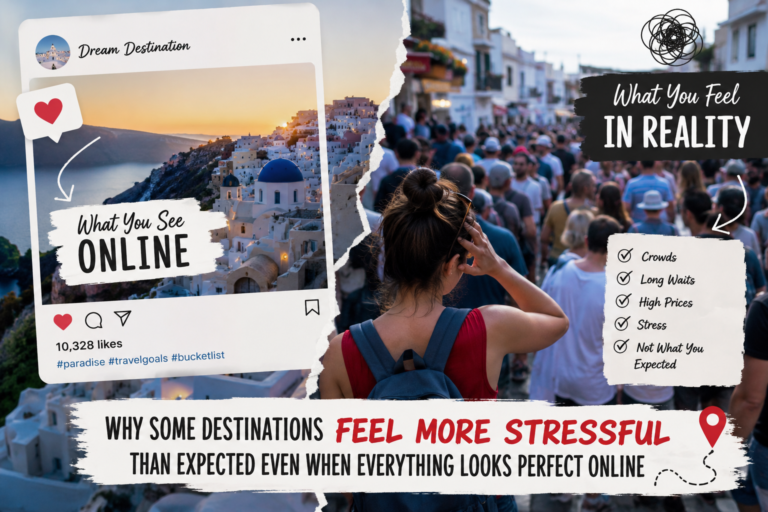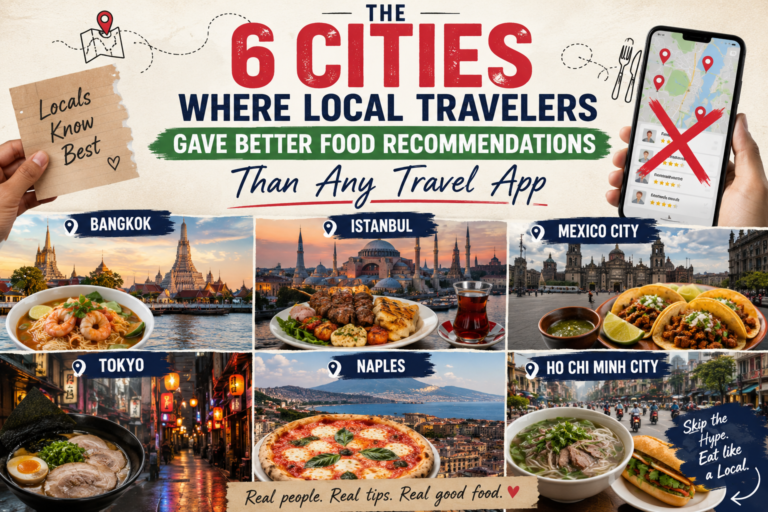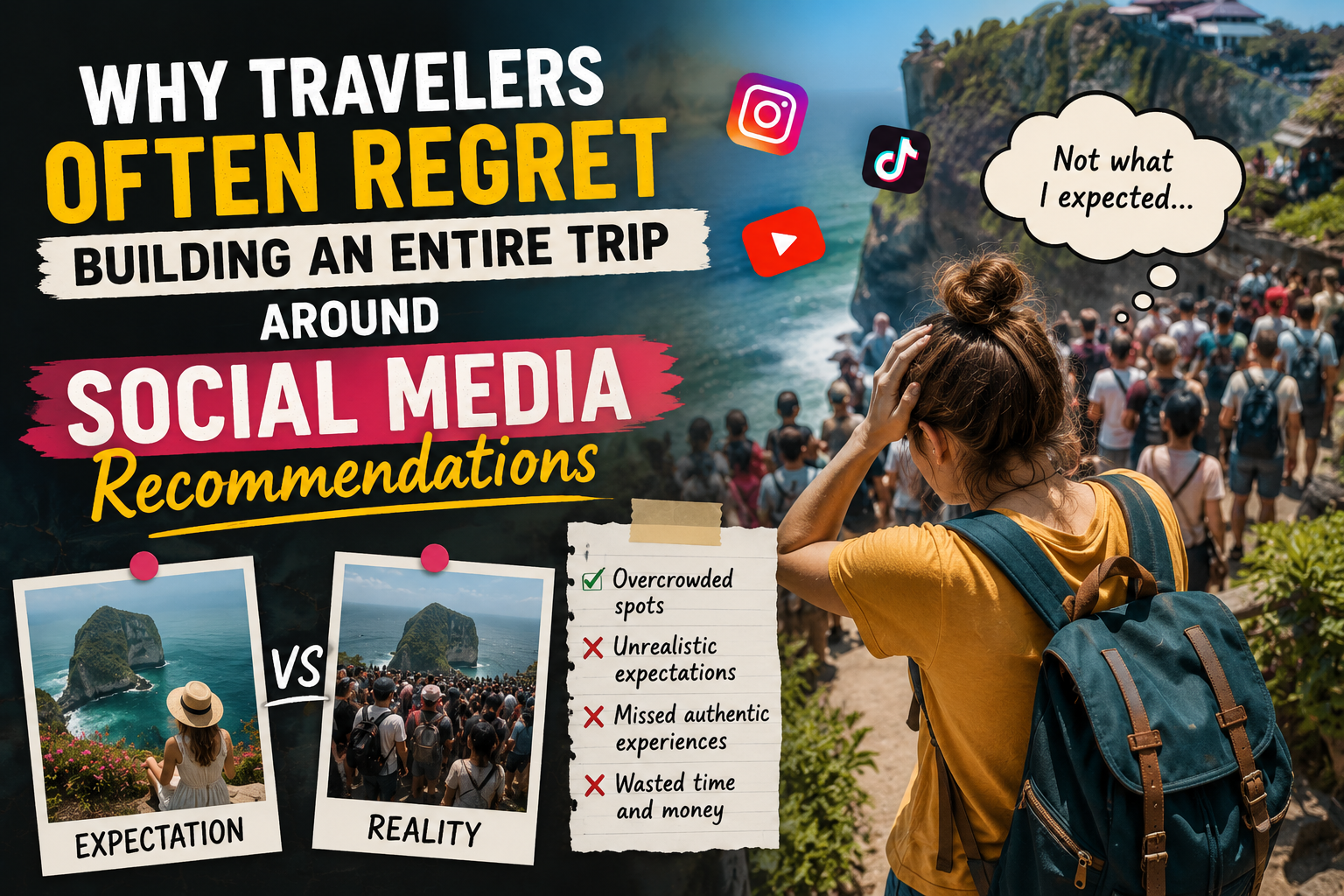
Why Travelers Often Regret Building an Entire Trip Around Social Media Recommendations
You’ve probably done it before.
You see a beautiful beach on Instagram. Then a hidden café on TikTok. Then a travel influencer calls a certain town “the most underrated place in the world.”
Before you know it, your entire trip is built around content you saw online.
The problem? Real life rarely looks like social media.
I’ve noticed that many travelers don’t regret visiting these places. They regret expecting them to look exactly like the videos. That’s a big difference.
Social media can be great for finding ideas. I use it myself. But planning an entire trip around viral recommendations is where things often go wrong.
Some spots are genuinely worth the hype. Many are not.
And once you spend enough time traveling, you start seeing the same pattern again and again.
Why Social Media Travel Plans Often Backfire
Here’s the simple truth.
Most social media content is made to get attention, not help people plan better trips.
That’s not necessarily a bad thing. Creators need views. That’s how the platforms work.
But a 20-second video can’t show everything.
It won’t show the one-hour wait for a photo. It won’t show the expensive taxi ride to get there. It won’t show the hundreds of people standing just outside the camera frame.
What usually works is using social media for inspiration.
What often fails is treating it like a complete travel guide.
Those are two very different things.
The Instagram Problem Nobody Talks About
Instagram is probably the biggest reason travelers end up disappointed.
Not because the photos are fake.
Because they’re incomplete.
A photo shows one moment.
Travel is everything around that moment.
A famous viewpoint might look peaceful online. In reality, you may be sharing it with 300 other people.
A beach may look empty in a sunrise photo. By noon, it could be packed.
I’ve seen travelers spend half a day chasing one Instagram photo and then rush through everything else around it.
Personally, I think that’s a terrible trade-off.
The photo lasts a few seconds.
The travel experience lasts much longer.
Why Influencer Recommendations Can Be Misleading
Not every influencer recommendation is bad.
Some creators give excellent advice.
But travelers should remember one thing.
Influencers and travelers often have different goals.
An influencer wants engaging content.
A traveler wants a good vacation.
Those goals overlap sometimes. Not always.
For example, a hotel might look incredible in a sponsored video. And maybe it really is incredible.
But if rooms cost three times more than nearby alternatives, that’s information viewers need too.
Many creators don’t intentionally hide things.
They simply focus on the exciting parts.
The result is a polished version of reality.
And polished reality can create unrealistic expectations.
Why Influencer Spots Are Always Crowded
This one is pretty obvious when you think about it.
Millions of people watch the same videos.
Then thousands visit the same places.
Then even more people post about them.
The cycle never stops.
One thing I’ve learned from traveling is that the “hidden gems” everyone talks about usually aren’t hidden anymore.
If a place has appeared in thousands of TikTok videos, chances are you’re not the first person who found it.
You’re probably joining a long line of people trying to recreate the exact same photo.
What Usually Works Instead
The travelers who seem happiest often follow a different approach.
They take ideas from social media but don’t copy entire itineraries.
They leave room for surprises.
They talk to locals.
They check recent reviews.
They wander into places that weren’t on their original list.
That flexibility often leads to better experiences.
Some of my favorite travel memories came from places I never planned to visit.
Meanwhile, some of the most famous locations I’ve visited were simply… fine.
Not terrible.
Not life-changing.
Just fine.
And that’s something social media rarely prepares people for.
Social Media Travel vs Real Travel
Here’s how I look at it.
Social media sells moments.
Travel is about experiences.
Moments matter.
But experiences matter more.
A perfect sunset photo is nice.
A fun day with good food, interesting people, and unexpected discoveries is usually better.
One creates content.
The other creates memories.
In my opinion, too many travelers accidentally optimize for content instead of memories.
That’s where regret starts.
Final Thoughts
If you’re wondering whether social media is a reliable source for travel planning, my answer is simple.
It’s a useful tool.
It’s not a complete strategy.
Use Instagram. Use TikTok. Save ideas. Get inspired.
But don’t hand over your entire trip to an algorithm.
The best trips usually happen when social media gives you the first idea, and your own curiosity does the rest.
That’s what works most often.
And after years of watching travel trends come and go, I’d trust local recommendations and recent traveler reviews over a viral reel almost every time.
Ravinder Kaur is the founder of OpinionHook, an independent travel publication established in 2023. She oversees editorial standards, destination research, travel planning resources, and content quality across the website. OpinionHook focuses on publishing practical travel guides, itineraries, budgeting advice, and destination resources designed to help travelers make informed travel decisions.