
Is Vietnam Still Cheap in 2026? A Real Breakdown of Costs
Vietnam is still good value in 2026, especially for food and local transport, but it is not the near-free destination of a decade ago. The biggest costs for an Indian traveller are usually the flights, the e-visa and the long distances between cities, not the daily meals. If you eat local food, take buses or trains between regions and avoid peak holiday weeks, your money can still go a long way.
This guide shows what we could actually check: crowd-sourced local prices, national inflation data and the current visa fee. It then explains how to build your own budget in rupees, instead of handing you a daily number that may be out of date by the time you read it.
Key takeaways
- Indian passport holders need a visa for mainland Vietnam. The e-visa costs US$25 for single entry or US$50 for multiple entry and is valid for up to 90 days. Apply only on the official portal.
- Local food and local transport are still cheap. Crowd-sourced data from October 2026 shows an inexpensive restaurant meal at around 50,000 Vietnamese dong (VND) and a local one-way ticket at around 8,500 VND.
- Prices have risen. Vietnam’s consumer prices rose an average of 3.31 percent in 2025, and restaurant services rose 3.81 percent.
- Intercity travel is where budgets slip. Vietnam is long and narrow, and flights add up quickly.
- Peak weeks such as New Year and Tet (Lunar New Year) can push hotel prices up, so check the dates.
- Check the INR to VND rate on the day you plan, because rupee costs move with the exchange rate.
So, is Vietnam still cheap?
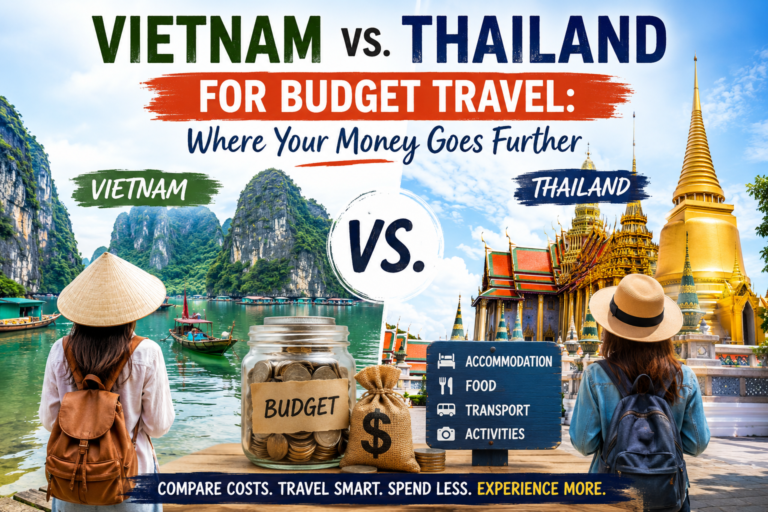
It depends on what you compare it with and how you travel. Compared with most of Europe, yes, daily costs for food, local rides and many hotels are lower. Compared with Vietnam ten years ago, prices are higher. Compared with other Southeast Asian countries, the gap depends on the cities you visit and your style of travel. Our comparison of Vietnam vs Thailand for budget travel looks at this in more detail.
I am not giving a single daily budget here. Published daily budgets for Vietnam vary widely between guides, are usually in dollars, and often come without a source or date. A better approach is to build your own from the pieces below.
What the data shows
Local prices
Numbeo is a crowd-sourced price database. For Vietnam it was last updated on 6 October 2026, with data from 333 contributors and 3,262 entries over the previous 12 months. It reports the following (in Vietnamese dong):
| Item | Typical price | Range reported |
|---|---|---|
| Meal at an inexpensive restaurant | about 50,000 VND | 30,000 to 100,000 VND |
| Domestic draught beer, one pint | about 25,000 VND | 15,000 to 60,000 VND |
| Cappuccino, regular size | about 43,400 VND | 20,000 to 70,000 VND |
| Local transport, one-way ticket | about 8,450 VND | 7,000 to 15,000 VND |
| Taxi, standard start fare | about 20,000 VND | 12,000 to 30,000 VND |
These are averages from user entries across the whole country, so tourist areas can cost more. Convert them to rupees using the exchange rate on the day you check.
Inflation
Official figures reported by Vietnam News show that average consumer prices rose 3.31 percent in 2025. Food and catering services went up 3.27 percent and restaurant services 3.81 percent. These are national averages, not tourist prices, but they confirm that costs are rising steadily rather than falling.
Visa fee
Vietnam’s e-visa has been open to citizens of all countries since 15 August 2023. The fee is US$25 for a single entry and US$50 for multiple entry, and the visa can be valid for up to 90 days. India is not on the visa-exempt list, so Indian travellers need a visa in advance. A travel-industry report from April 2026 says processing takes about three working days on average and up to five to seven working days in busy periods. It also notes that your passport should be valid for at least six months and have two blank pages. Confirm all of this on the official e-visa portal before applying, and avoid third-party sites that may add large fees.
One special case is Phu Quoc island. Some travellers can enter for up to 30 days without a visa if they arrive directly from abroad and follow the conditions, but the rules are strict, and the Indian Embassy in Hanoi has issued advice on it. Check the embassy’s current notice before relying on this.
How to build your own Vietnam budget in rupees
Try this step by step.
- Flights: price return flights from your Indian city for your dates on an airline site or comparison tool. This is usually the largest single item
- Visa: add the e-visa fee and insurance
- Hotels: search your actual cities for your dates and filter by the standard you want. Prices vary a lot by city and season
- Food: use local prices as a guide. A mix of street food and local restaurants usually costs much less than western-style restaurants
- Local transport: budget for rides, buses or a scooter if you can ride one legally and safely
- Intercity travel: price the sleeper train, bus and flight for each leg
- Activities: add tours such as Ha Long Bay cruises, cooking classes and entry tickets
- Buffer: add some extra for shopping, tips and surprises
Then convert the total to rupees at today’s rate and divide by the number of days. That is your real daily cost.
Where costs creep up
Our guide to hidden costs in budget destinations explains why cheap trips become expensive. In Vietnam, the main culprits are:
| Cost area | Why it surprises people |
|---|---|
| Domestic flights | The country is long, and flying between regions adds up |
| Popular tours | Cruises, multi-day tours and treks are priced for tourists |
| Peak weeks | Christmas, New Year and Tet can bring higher hotel prices and sold-out transport |
| Tourist hotspots | Popular beach islands and old towns often charge more than big cities |
| Western-style food | Travel sites note that it costs far more than local meals |
| Taxi scams and unmetered rides | Use a ride-hailing app or agree on a price first |
Money-saving habits that work
- Travel outside peak weeks. Our guide to the best time to visit Vietnam on a budget covers regional weather and timing, and our piece on shoulder season travel costs explains how to compare your own dates
- Eat local. Street stalls and local restaurants are usually the best value
- Use buses or sleeper trains for long legs. Travel sites describe buses as the most affordable intercity option, but journeys are long and often overnight
- Stay longer in each place. Constant moving costs more than a bed
- Use ride-hailing apps. They show the fare in advance
- Book flights and stays early for peak dates. Do this especially around Tet
What changes your budget most, by travel style
Instead of fixed daily numbers, here is how each style tends to shift your spending. Use it to decide where to spend and where to save.
| Travel style | Where money goes | Where you can save |
|---|---|---|
| Backpacker | Intercity transport and activities | Dorm beds, street food, buses and trains |
| Budget traveller | Private room, a few tours | Eating local, using ride-hailing apps, travelling off-peak |
| Mid-range | Hotel quality, domestic flights, guided tours | Booking early, mixing flights with trains, staying longer in each city |
| Comfort | Boutique stays, private drivers, resorts | Choosing one or two bases instead of many |
The style matters less than the number of moves. Every extra city adds transport, check-in time and often a night of poor sleep.
Money and payments for Indian travellers
A few practical points help you avoid extra fees:
- Check your bank’s foreign-transaction charges and your card’s international usage settings before you leave
- Carry a backup card and some cash for small shops and street food stalls
- Keep the exchange rate in mind when you compare prices. A small change in the INR to VND rate can change your total by a noticeable amount on a long trip
- Compare exchange counters before changing cash, and avoid changing large amounts at airports without checking the rate
- Keep a record of your spending for the first few days, then adjust your daily budget
Fees and limits differ by bank and card, so check them yourself instead of relying on general advice.
Is it worth it for solo travellers and couples?
Solo travellers often find Vietnam easy to travel on a budget because hostels, buses and street food are widely available. Couples can save by sharing rooms. In both cases, the same rule applies: the cost of getting there and moving between regions matters more than the cost of a bowl of noodles.
Vietnam compared with other budget options
Whether Vietnam is the cheapest depends on where you compare it with. Our overview of whether budget destinations are still worth it in 2026 explains how to judge value, and our list of cheapest international trips for 2026 can help you compare more countries.
FAQ
Is Vietnam still cheap for tourists in 2026?
For food and local transport, yes, according to crowd-sourced price data. Costs are rising each year, and flights, tours and peak weeks can raise your total.
Do Indians need a visa for Vietnam?
Yes. Indian passport holders need a visa for mainland Vietnam. The e-visa costs US$25 for single entry or US$50 for multiple entry and is valid for up to 90 days. Apply on the official portal only.
How much is a meal in Vietnam?
Crowd-sourced data from October 2026 shows around 50,000 VND for a meal at an inexpensive restaurant. Prices are higher in tourist areas and at western-style restaurants.
What is the biggest hidden cost in Vietnam?
Usually flights, both international and domestic, followed by tours and peak-season hotels.
How do I convert costs to rupees?
Use the exchange rate on the day you are planning. Check it again before you travel, because it changes.
How this guide was checked
I checked the price data, inflation figures and visa details on 10 October 2026. The local prices are crowd-sourced, so treat them as a guide and not as official tariffs. The visa processing times and Phu Quoc details come from a secondary travel report, so confirm them on the official portal and with the Indian Embassy in Hanoi. I removed the fixed daily budgets and the Thailand percentage comparison from the earlier version of this article because I could not verify them.
Sources
- Numbeo: Cost of living in Vietnam
- Vietnam News: 2025 CPI rises 3.31 percent
- Wikipedia: Visa policy of Vietnam
- Wego: Vietnam visa for Indian citizens, updated April 2026
- Budget Your Trip: Vietnam transport notes
Related Guides
- Hidden Costs in Budget Destinations: Why Cheap Trips Get Expensive
- Cheapest International Trips for 2026 That Still Feel Luxurious
- Shoulder Season Travel Costs: How Much Can You Really Save?
- The Best Time to Visit Vietnam If You Are Watching Your Budget
Browse all of our Southeast Asia guides.

Varinder Kaur is from Amritsar, India. She has traveled to well-known places across India, including Darjeeling, and to a few countries abroad, and shares travel experiences and practical tips for travelers through OpinionHook.


3 Comments
Comments are closed.