
Vietnam vs. Thailand for Budget Travel: Where Your Money Goes Further
Vietnam is usually the cheaper country for most travellers, but Thailand is often easier and smoother, especially on a first trip. If you want to stretch every rupee, start with Vietnam. If you want fewer logistics and more island choices, Thailand can be worth the extra spend.
This guide is written for Indian travellers. It covers visas for Indian passport holders, where your money goes (stay, food, transport, activities), the hidden costs people forget, and a simple method to price your own trip, so you are not relying on someone else’s guess.
One note on numbers: prices in both countries change with the season, the city and the exchange rate. We have not printed fixed daily-budget tables, because they go out of date fast. Instead, you will find a clear way to check current prices yourself before you book.
Key takeaways
- Vietnam is generally the cheaper of the two for food, local transport and mid-range stays, according to what travellers commonly report. Thailand’s most popular tourist hubs are where the gap is widest.
- Thailand is the easier first trip: more tourism infrastructure, more island routes and plenty of English in tourist areas.
- Indian passport holders need a visa for Vietnam (the e-visa is the usual route). Thailand has recently allowed visa-free entry for Indians, but the rules have changed several times, so confirm before you fly.
- Thailand also asks you to fill in the Thailand Digital Arrival Card (TDAC) online before you arrive, even if you are visa-free.
- A planned Thai tourist entry fee of 300 baht had not started as of the latest report we checked (May 2026).
- The biggest savings usually come from where you stay and how you move, not which country you choose.
- Visiting both countries in one trip is realistic and often gives the best mix of value and variety.
Vietnam vs Thailand at a glance
| What matters | Vietnam | Thailand | Usually cheaper or easier |
|---|---|---|---|
| Visa for Indians | E-visa needed | Visa-free entry reported, plus TDAC | Thailand is simpler |
| Street food and local meals | Very low prices | Low prices, higher in tourist zones | Vietnam |
| Budget stays | Wide choice in cities | Wide choice, higher on popular islands | Vietnam, in general |
| Island hopping | Fewer, more spread out | Many islands, many ferry links | Thailand for choice |
| Getting around | Good, long distances | Very developed, many options | Thailand for ease |
| First-time comfort | Good, takes a little more effort | Very easy | Thailand |
| Long stays and remote work | Strong value in Hanoi, Da Nang | Strong community in Chiang Mai, Bangkok | Depends on your priorities |
The table reflects general traveller experience and published guides, not exact prices. Use it to decide what to research, then check live prices for your own dates.
Visa and entry rules for Indian passport holders
Visa rules affect your budget twice: through the fee itself and through the time you spend sorting it out. Here is what we found when we checked in October 2026.
| Vietnam | Thailand | |
|---|---|---|
| Visa for Indian passport | Not visa-free. E-visa is the usual route | Visa-free entry reported for Indian passport holders |
| Stay allowed | E-visa valid for up to 90 days | Reported as 30 days (earlier 60) |
| Fee | E-visa fee reported as USD 25 for single entry and USD 50 for multiple entry | No visa fee when visa-free |
| Extra step | Apply online and wait for approval (3 to 5 working days is the standard time reported) | Fill in the Thailand Digital Arrival Card online before you arrive |
| Where to apply | Official Vietnam e-visa portal, evisa.gov.vn | Official TDAC site, listed in Sources below |
Two cautions. First, only use the official government sites. Copycat visa websites charge extra fees for the same form. Second, Thailand has changed its visa-exempt list and stay limits more than once, so check the Thai embassy or the official immigration site close to your travel date. Your passport should also have enough validity left; our guide to the six-month passport validity rule explains how airlines apply it.
For a wider look at countries that do not need a visa for Indians, see our list of visa-free countries for Indians in 2026.
Thailand has also been planning a tourist entry fee of 300 baht. At the time of the latest report we checked (May 2026) it had not started and still needed formal approval. If it begins, it is a small cost compared with flights, but it is worth adding to your budget.
How to compare real costs without guessing
Most blog price lists go stale in a few months. A better approach is to build your own comparison from live sources. It takes about an hour and can save you far more than that.
- Pick your dates and your route (for example Hanoi, Da Nang and Ho Chi Minh City, or Bangkok, Chiang Mai and Phuket).
- Search stays for the same dates in both countries on the same booking site, with the same filters: private room, free cancellation, rating of 8 or more.
- Check flights from your Indian city to the main entry airport in each country, and the internal flights or trains you will need.
- Look at a few menus on Google Maps for the neighbourhoods you will stay in. Prices are often listed in photos and reviews.
- Convert everything into rupees on the same day, and add a 10 percent buffer for things you will forget.
Traveller-reported averages can be a useful cross-check. The BudgetYourTrip site, for example, collects spending reported by past travellers for each country. Treat these as a rough guide, not a quote.
Accommodation: where Vietnam usually wins
Stay is often the biggest cost after flights, and this is where most travellers see the gap. In general, comparable hostels and budget hotels in Vietnamese cities such as Hanoi, Da Nang and Ho Chi Minh City are reported to cost less than in Bangkok, Phuket or Krabi. The gap is usually widest in Thailand’s famous beach areas in peak season.
What to do about it:
- Book in the middle of the week where possible. Weekend prices in beach towns often rise.
- Stay a short walk from the main tourist street rather than on it. Prices drop quickly one or two streets away.
- If you are staying a week or more, ask for a direct discount or check monthly rates, especially for apartments.
- Compare the total price including taxes and cleaning fees, not the headline nightly rate.
If you want more ideas, read our guide on how to save money on accommodation when travelling.
Food and coffee
Both countries are great for cheap, tasty food. Vietnam is known for pho, bun cha, banh mi and com tam. Thailand is known for pad thai, khao pad, som tam and boat noodles. Eating at busy local stalls and small family restaurants is cheaper than eating at places aimed at tourists in either country.
For vegetarian Indian travellers, a little planning helps. In both countries, fish sauce and shrimp paste are common, so learn a short phrase for no meat or fish, or check Happycow for vegetarian restaurants. Thailand has a well-known vegetarian festival and many vegetarian restaurants in big cities, and Vietnam has a long tradition of Buddhist vegetarian food, especially in cities like Hue and Hanoi. Always ask how a dish is made, since broth and sauces often contain animal products.
Vietnamese coffee, especially the strong, sweet iced version with condensed milk, is a budget favourite for remote workers because cafes are everywhere and you can sit for hours.
Getting around
Local transport is cheap in both countries. Ride-hailing apps such as Grab work in major cities in both, which makes short rides easier to price and avoids haggling. Always check the fare in the app before you confirm.
For longer trips, the picture changes:
- Vietnam: The country is long and thin, so the north-to-south journey is the main cost. Flights are often the best use of time; the train and sleeper buses are the budget options.
- Thailand: Domestic flights, trains, buses and ferries are all well developed, and tourist-focused booking services make it easy to plan a multi-stop trip.
If you plan to move every two or three days, transport costs can outweigh any savings on food. Fewer, longer stops almost always cost less. Our post on how much shoulder season can save you shows the same principle applied to timing.
Attractions and activities
Both countries have many free or low-cost sights: temples, markets, old quarters, parks and walking streets. In Vietnam, popular paid experiences include Ha Long Bay cruises, the Imperial City in Hue, and museums such as the War Remnants Museum in Ho Chi Minh City. In Thailand, the big spenders are island boat trips, national park entry and popular shows.
Check entrance fees on each site’s official page, since foreign visitor prices can differ from local prices and change often. For tours, compare the price online with what local operators charge after you arrive, and read recent reviews before paying in advance.
Beaches and islands
Thailand has more islands and better ferry links, which is a real advantage if you want to island-hop. That convenience has a price: boats, island transfers and beachfront stays add up quickly in peak months. Vietnam’s beach towns, including Da Nang, Nha Trang, Phu Quoc and Mui Ne, are often cheaper, but they are more spread out and the weather varies by region.
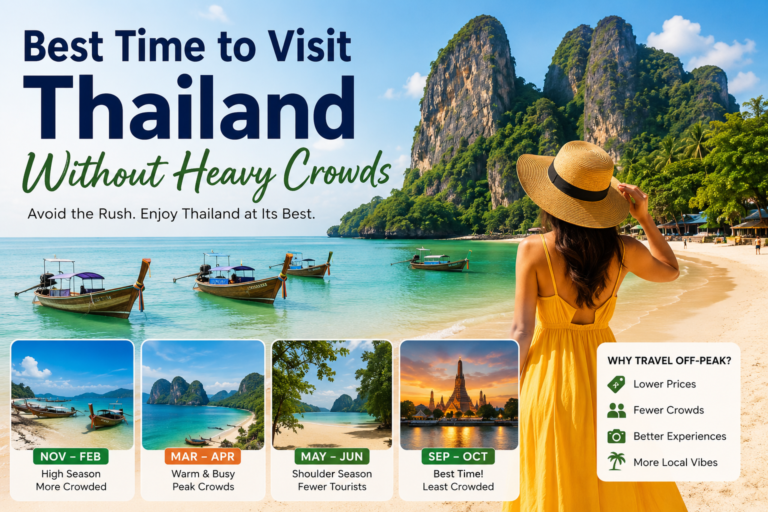
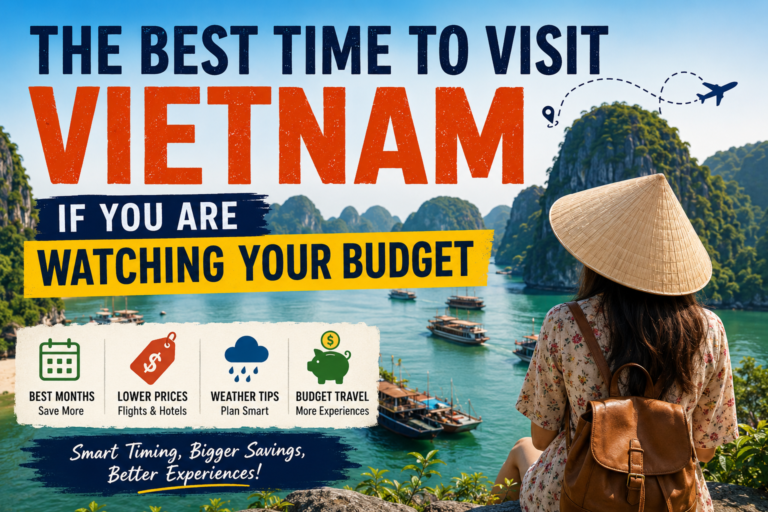
Beach weather is the key detail here. Seasons differ across each country, so check our guides on the best time to visit Vietnam on a budget and the best time to visit Thailand before choosing your dates.
Hidden costs to plan for
Cheap daily prices can hide costs that add up. Our guide to hidden costs in budget destinations covers this in more detail. For this comparison, the most common ones are:
- Tourist-zone pricing. A meal one street away from a big attraction can cost much less than the one beside it.
- Island logistics. Ferries, long-tail boats and bag transfers can cost more than the room itself in some places.
- Nightlife and alcohol. These can quickly double a day’s spending, particularly in Thailand’s party areas.
- Foreign card and ATM fees. Check your bank’s forex mark-up and consider a forex card. ATM operators in both countries may charge a fee per withdrawal.
- Travel insurance. It is not optional in practice. A medical bill abroad can cost many times your whole trip budget.
- Phone data. An eSIM or local SIM is usually cheaper than Indian roaming packs. Compare before you go.
Long stays and remote work
If you will stay a month or more, the monthly cost of rent, food and coworking matters more than the daily cost of a hostel. Reports from travellers and digital nomads suggest Vietnam is cheaper for month-long stays in cities like Da Nang and Hanoi, while Thailand has the larger, more established remote-work community in Chiang Mai and Bangkok.
Before you plan a long stay, check the visa length. A short visa-free period may mean border runs or an extension, which adds time and money.
When Thailand is the better choice
The cheaper country is not always the better one for you. Thailand may suit you better if:
- It is your first trip to Southeast Asia and you want the smoothest start.
- You want to island-hop and need easy ferry connections.
- You do not want to apply for a visa in advance.
- You are travelling with family or elders who value easy transport and clear signage in English.
- You have a mid-range budget and the price difference matters less than comfort.
When Vietnam is the better choice
Vietnam is usually the stronger choice if:
- Your main goal is to keep the total trip cost low.
- You love food, coffee and city streets, and want to spend time exploring on foot.
- You are planning a longer trip and want your savings to last.
- You like a route across the whole country, from mountains in the north to the delta in the south.
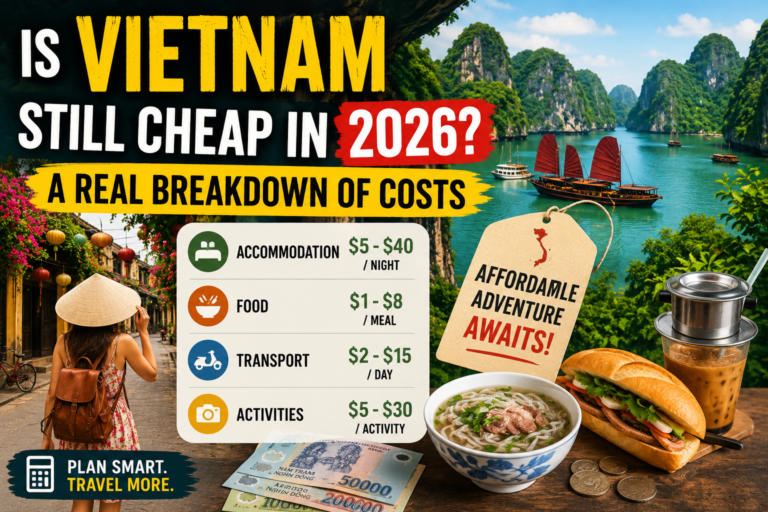
For a longer look at costs there, read our post on whether Vietnam is still cheap in 2026.
Can you visit both?
Yes. Many travellers fly into one country and out of the other, often with a short flight in between. Check the total cost of flights, since a one-way ticket between the two can sometimes cost more than a transfer by land plus a short flight. Make sure your visa and your onward ticket both match the dates.
A worksheet for your own two-week comparison
Copy this into a notes app and fill it in with live prices for your dates.
| Item | Vietnam (in rupees) | Thailand (in rupees) | Where to check |
|---|---|---|---|
| Return flights from your city | Google Flights, airline sites | ||
| Visa or entry steps | Official sites only | ||
| Stay for 14 nights | Booking sites with the same filters | ||
| Food per day x 14 | Menus on Google Maps | ||
| Local transport | Grab app fare estimates | ||
| Internal flights or trains | Airline and rail sites | ||
| Activities and entry fees | Official attraction pages | ||
| Insurance and SIM | Insurer and eSIM sites | ||
| Buffer (10 percent) | Add last |
When both columns are filled, the answer is usually clear. If the gap is small, choose by interest and ease. If the gap is large, you have your budget answer.
Simple habits that save money in either country
- Travel in shoulder season when weather is still good but prices are lower.
- Stay slightly outside the busiest tourist zone.
- Eat where local people eat, and look for busy places.
- Book domestic flights and trains early where possible.
- Keep a daily spending note for the first three days, then adjust.
Frequently asked questions
Is Vietnam cheaper than Thailand for tourists?
For most travellers, yes, especially for food, local transport and mid-range stays. The difference is smaller if you stay in budget hostels in both countries or avoid Thailand’s most popular islands. For current figures, compare live prices for your own dates.
Do Indians need a visa for Vietnam and Thailand?
For Vietnam, yes. Indian passport holders generally apply for an e-visa online. For Thailand, recent reports say Indian passport holders can enter visa-free for a limited stay, and must also complete the Thailand Digital Arrival Card. Rules can change, so confirm on official sites before you book.
Which country is better for a first international trip from India?
Thailand is usually easier on a first trip because of its tourism set-up and simple entry rules. Vietnam is also manageable if you prepare your e-visa and plan your route.
Is Thailand worth the extra cost?
Often yes, if you value convenience, islands and a large choice of stays. If your budget is tight and you can handle a bit more planning, Vietnam usually stretches further.
Can I do Vietnam and Thailand in one trip?
Yes. Fly into one and out of the other, and keep your visa dates and tickets in line. Two or three weeks is a comfortable minimum for both.
Final verdict
If lowest cost is your main goal, Vietnam is usually the better pick. If ease, islands and fewer entry steps matter more, Thailand is a strong choice and may be worth the extra spending. Do not decide on averages alone. Use the worksheet above, put your real dates in, and let your own numbers settle it.
For more planning help, see our guides on whether budget destinations are still worth it in 2026 and the wider visa-free list for Indians.
How we checked these facts
Visa and fee details were checked in October 2026 against recent news reports and visa-service pages, then cross-checked against each other. Official government portals were identified from those sources, but some blocked automated access, so confirm fees and stay limits on the official site before applying. We have deliberately not published fixed daily prices, because we could not verify them to a standard we are comfortable with.
Sources
- Vietnam e-visa portal (official, Vietnam Immigration Department)
- Thailand Digital Arrival Card (TDAC) site
- Business Today: Thailand visa-free for Indians and TDAC (July 2026)
- Wego: Thailand tourist entry fee status (2026)
- Vietnam e-visa for Indian citizens: fees and validity (private visa service guide)
- BudgetYourTrip: traveller-reported costs in Thailand
Heading to Thailand? See our Thailand time to India time guide for the time gap, overnight flight arrivals and call times.
Related Guides
- The Best Time to Visit Vietnam If You Are Watching Your Budget
- Best Time to Visit Thailand Without Heavy Crowds
- How to Save Money on Accommodation When Traveling
- Are Budget Destinations Still Worth It in 2026? What Travelers Need to Know
Browse all of our Southeast Asia guides.

Varinder Kaur is from Amritsar, India. She has traveled to well-known places across India, including Darjeeling, and to a few countries abroad, and shares travel experiences and practical tips for travelers through OpinionHook.
7 Comments
Comments are closed.