What Experienced Solo Travelers Notice That Beginners Often Miss
Summary
Most people think solo travel is about courage.
Experienced solo travelers know it’s mostly about awareness.
The first solo trip often focuses on the obvious things: flights, hotels, packing lists, budgets, and sightseeing plans. Those things matter, but they are rarely what determines whether a trip feels smooth or stressful.
Over time, solo travelers start noticing small details that beginners often overlook. They pay attention to local routines, transportation patterns, personal energy levels, safety signals, and flexibility. These observations may seem minor, but they often make the difference between an enjoyable trip and a frustrating one.
If you’re planning your first solo adventure, understanding these lessons can help you avoid common mistakes first-time solo travelers make and enjoy a much more rewarding experience.
Key Takeaways
- Solo travel becomes easier when you focus on awareness rather than confidence.
- Experienced travelers plan less rigidly and adapt more easily.
- Transportation, timing, and local habits often matter more than famous attractions.
- Overpacking remains one of the biggest beginner mistakes.
- Solo travel is not lonely all the time, but it can feel isolating at certain moments.
- Experienced travelers build routines that reduce stress.
- The best solo travel experiences often happen between planned activities.
- Learning how to handle unexpected situations matters more than creating a perfect itinerary.
Why Do Experienced Solo Travelers See Travel Differently?
The biggest difference is perspective.
Beginners often view travel through a checklist. They want to see landmarks, take photos, and make sure they do everything correctly.
Experienced solo travelers focus more on how a destination functions.
They notice:
- How locals commute
- When neighborhoods become crowded
- Which areas feel comfortable after dark
- Where people actually eat
- How transportation changes throughout the day
Instead of asking, “What should I see?”
They often ask, “How does this place work?”
That shift creates smoother and more authentic travel experiences.
What Do Experienced Solo Travelers Notice About Time?
Experienced solo travelers understand that rushing creates stress.
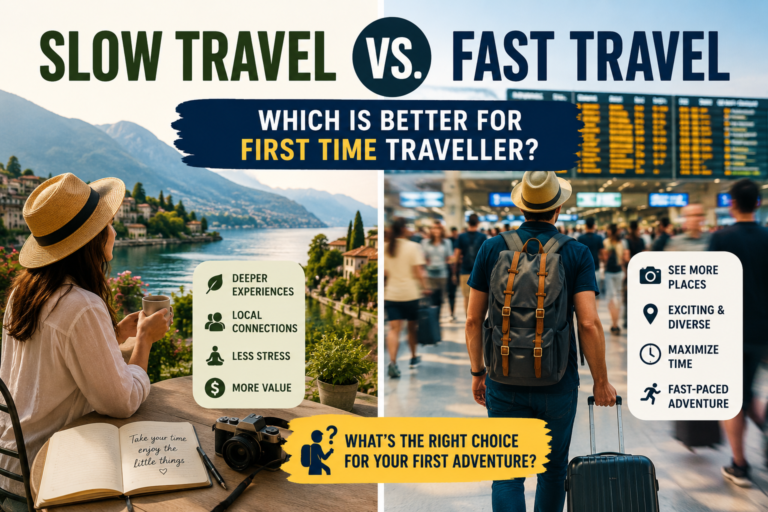
Many beginners try to maximize every hour. They schedule attractions from morning until night because they fear missing something important.
In reality, this often creates exhaustion.
Beginners Schedule Attractions
A first-time traveler might plan:
- Museum at 9 AM
- Walking tour at 11 AM
- Lunch reservation at 1 PM
- Landmark visit at 3 PM
- Evening activity at 6 PM
Everything looks efficient on paper.
Unfortunately, transportation delays, weather changes, long lines, and simple fatigue quickly disrupt those plans.
Experienced Travelers Schedule Energy
Seasoned travelers pay attention to how much energy activities require.
They leave room for:
- Unexpected discoveries
- Rest breaks
- Transportation issues
- Conversations with locals
This flexibility often produces better experiences than tightly packed itineraries.
Why Do Experienced Solo Travelers Pack Less?
One of the most important solo travel lessons learned is that carrying less makes travel easier.
Many beginners pack for every possible situation.
They bring:
- Extra shoes
- Multiple jackets
- Backup outfits
- Too many toiletries
Then they spend weeks dragging heavy luggage through airports, train stations, staircases, and city streets.
Real Example
Many travelers arriving in cities like Tokyo, Paris, or Rome quickly realize that public transportation often involves stairs, walking, and crowded stations.
A suitcase that felt manageable at home suddenly becomes frustrating.
Experienced travelers usually pack fewer items because they understand that mobility is valuable.
What Do Experienced Solo Travelers Notice About Safety?
Experienced solo traveler advice rarely focuses on fear.
Instead, it focuses on awareness.
Most safety problems can be reduced by paying attention to surroundings rather than constantly worrying.
They Notice Patterns
Experienced travelers watch:
- How locals behave
- Which streets remain active at night
- Transportation schedules
- Areas that suddenly become empty
If locals avoid a location after dark, experienced travelers notice.
If everyone uses a specific transportation option, they notice that too.
They Avoid Looking Lost
This doesn’t mean pretending to know everything.
It means stepping into a café or store before checking directions rather than standing in the middle of a busy street staring at a map.
Small habits often improve safety significantly.
Why Do Experienced Solo Travelers Spend Time Near Locals?
Tourist areas provide convenience.
Local areas provide understanding.
Experienced travelers know that destinations reveal their personality outside major attractions.
Consider cities like:
- Lisbon
- Bangkok
- Mexico City
The famous attractions matter, but daily life often creates stronger memories.
Neighborhood bakeries, local markets, public parks, and community spaces offer a more realistic picture of how people live.
This doesn’t mean avoiding tourist attractions.
It means balancing them with local experiences.
What Experienced Solo Travelers Do Differently When Choosing Accommodation
Experienced solo travelers choose accommodation based on convenience, not just price.
Many beginners search only for the cheapest option.
Unfortunately, a cheap room far from transportation can create daily stress and extra expenses.
Accommodation Comparison
| Factor | Beginner Focus | Experienced Traveler Focus |
|---|---|---|
| Price | Lowest cost | Best value |
| Location | Sometimes ignored | High priority |
| Reviews | Overall rating only | Recent detailed reviews |
| Transportation | Often overlooked | Carefully checked |
| Neighborhood | Little research | Thorough research |
A slightly more expensive hotel or hostel near transportation hubs often saves money and time throughout the trip.
Why Experienced Solo Travelers Build Daily Routines
Many beginners imagine travel as nonstop excitement.
Reality looks different.
Even amazing destinations involve:
- Laundry
- Navigation
- Planning
- Waiting
- Problem solving
Experienced travelers create simple routines.
These might include:
- Morning coffee in the same café
- Evening walks
- Budget reviews
- Planning the next day before bed
These habits reduce decision fatigue and create stability.
When everything around you is unfamiliar, small routines become surprisingly valuable.
Soft Tip: Keep a Simple Travel Journal
One habit many experienced solo travelers recommend is keeping a basic travel journal.
You don’t need to write pages every day.
Just record:
- Places visited
- Interesting conversations
- Unexpected experiences
- Lessons learned
Months later, these notes often become more meaningful than photos.
You may also enjoy our guides on avoiding common travel planning mistakes, choosing beginner-friendly destinations, and managing travel anxiety on your first solo trip.
What Do Experienced Solo Travelers Notice About Loneliness?
They understand that loneliness is normal.
Many first-time travelers expect constant excitement.
Social media often creates the impression that solo travel means meeting amazing people every day.
That’s rarely reality.
Even experienced travelers occasionally feel lonely.
The difference is that they don’t panic when it happens.
They Understand the Difference
Being alone and feeling lonely are not the same thing.
Sometimes solitude feels peaceful.
Sometimes it feels uncomfortable.
Both experiences are part of solo travel.
Accepting this reality makes those moments easier to handle.
Why Do Experienced Travelers Talk to More People?
Experienced solo travelers know that conversations often create the most memorable experiences.
That doesn’t mean talking to everyone.
It means remaining approachable.
Simple interactions can lead to:
- Restaurant recommendations
- Local insights
- Friendship
- Better understanding of a destination
Many memorable travel stories begin with casual conversations in hostels, cafés, train stations, or walking tours.
What Do Experienced Solo Travelers Know About Itineraries?
The best itineraries leave room for change.
Beginners often create schedules that leave no flexibility.
Experienced travelers know plans will change.
Weather shifts.
Transportation gets delayed.
New opportunities appear.
A flexible itinerary often produces better experiences than a perfect schedule.
Featured Snippet: What Experienced Solo Travelers Do Differently
Experienced solo travelers typically:
- Pack lighter.
- Prioritize location over price.
- Leave room for flexibility.
- Observe local habits.
- Build daily routines.
- Focus on awareness rather than fear.
- Manage energy instead of maximizing activities.
- Stay open to unexpected experiences.
These habits help reduce stress and improve overall travel experiences.
What to Expect When Traveling Alone for the First Time
The first solo trip feels exciting and uncomfortable at the same time.
This is completely normal.
You can expect:
- More decision-making
- Greater freedom
- Occasional loneliness
- Increased confidence over time
- Unexpected challenges
- Unexpected rewards
Most first-time travelers experience a learning curve during the first few days.
Things usually become easier once routines develop.
Common Mistakes First-Time Solo Travelers Make
Many solo travel mistakes beginners make are predictable.
Trying to See Everything
No trip covers everything.
Accepting this creates a more enjoyable experience.
Overplanning
Rigid schedules often increase stress.
Overpacking
Heavy luggage reduces flexibility.
Ignoring Recovery Time
Travel can be physically tiring.
Rest matters.
Comparing Your Trip to Social Media
Online travel content often highlights only the best moments.
Real travel includes delays, mistakes, and quiet days.
Comparisons rarely help.
Why Small Travel Skills Matter More Than Big Travel Dreams
Experienced travelers know that practical skills create better trips.
Skills such as:
- Reading transportation systems
- Managing budgets
- Handling delays
- Adapting plans
- Communicating respectfully
often matter more than ambitious travel goals.
A traveler who can adapt usually enjoys more destinations than someone who relies on perfect conditions.
People Also Ask
What should beginners know before traveling solo?
Beginners should know that solo travel requires flexibility, awareness, and patience. Things will not always go according to plan, and that’s normal. Learning to adapt is often more important than creating a perfect itinerary.
Is solo travel safe for first-time travelers?
Solo travel can be safe when travelers research destinations, stay aware of their surroundings, use trusted transportation options, and follow common-sense safety practices. Awareness is usually more important than fear.
What mistakes do beginner solo travelers make?
Common mistakes include overpacking, overplanning, choosing accommodations based only on price, ignoring rest days, and trying to visit too many attractions in a short period.
How do solo travelers avoid loneliness?
Experienced travelers stay active, join walking tours, visit social spaces, and remain open to conversations. They also understand that occasional loneliness is a normal part of traveling alone.
How long should a first solo trip be?
Many experienced travelers recommend starting with a trip lasting three to seven days. This provides enough time to gain confidence without feeling overwhelming.
Does solo travel become easier over time?
Yes. Most people become more comfortable with navigation, planning, communication, and decision-making after several solo trips. Experience reduces uncertainty and increases confidence.
Final Thoughts
The biggest thing experienced solo travelers notice is that travel is rarely about the famous landmark, the perfect photo, or the detailed itinerary.
It’s about awareness.
They notice how places function, how people interact, how neighborhoods change throughout the day, and how small decisions affect the overall experience.
If you’re preparing for your first solo trip, don’t focus on being fearless.
Focus on being observant.
Pack lighter than you think you need.
Leave room in your schedule.
Pay attention to local habits.
Accept that some moments will feel uncomfortable.
Most importantly, give yourself permission to learn as you go.
Every experienced solo traveler started exactly where you are now. The difference is that they kept traveling long enough to notice the lessons beginners often miss. Your first solo trip is not a test to pass. It’s the beginning of learning how to travel on your own terms.

Ravinder Kaur is the founder of OpinionHook, an independent travel publication established in 2023. She oversees editorial standards, destination research, travel planning resources, and content quality across the website. OpinionHook focuses on publishing practical travel guides, itineraries, budgeting advice, and destination resources designed to help travelers make informed travel decisions.