Why Travelers Often Enjoy Unplanned Moments More Than Scheduled Activities
Summary
Think about your favorite travel memory.
Was it the attraction you spent months researching and booked weeks in advance?
Maybe. But for many travelers, the memories that stay with them are the ones they never expected.
It might be a conversation with a local in a small café, a sunset viewed from the wrong bus stop, an invitation to join a neighborhood festival, or a hidden street that wasn’t listed in any guidebook.
This isn’t just coincidence. Experienced travelers often notice that the best travel experiences happen unexpectedly. While planning remains important, leaving room for spontaneity often creates the stories people remember for years.
This guide explains why travelers enjoy unplanned moments more than scheduled activities, how over-planning can limit experiences, and how to create a trip that balances preparation with flexibility.
Key Takeaways
- Many memorable travel experiences happen outside planned itineraries.
- Over-planning can increase stress and reduce flexibility.
- Unplanned moments often create stronger emotional connections.
- Spontaneous experiences help travelers interact more with local culture.
- A balanced itinerary works better than a rigid schedule.
- Leaving free time does not mean traveling without preparation.
- Some of the world’s most famous travel stories started by accident.
- Flexible travelers often report greater satisfaction with their trips.
Why Do Unplanned Travel Moments Feel More Memorable?
Unplanned travel moments often feel more memorable because they create surprise and emotional connection.
When travelers expect an activity, their minds already know what will happen. The experience can still be enjoyable, but it rarely creates the same emotional impact as something unexpected.
Psychologists have long studied how novelty affects memory. New and surprising experiences tend to stand out because the brain pays closer attention to them.
This explains why a random encounter in a small town can sometimes feel more memorable than a famous landmark visited the same day.
The attraction may have been impressive, but the unexpected experience felt personal.
Why Do the Best Travel Experiences Happen Unexpectedly?
The best travel experiences often happen unexpectedly because real life doesn’t follow itineraries.
Many travel highlights occur when people step outside their schedules.
Examples include:
- Finding a local market not listed in guidebooks
- Meeting fellow travelers who share recommendations
- Joining a community event
- Taking a different route and finding a beautiful viewpoint
- Spending extra time somewhere because it feels right
These moments happen because travelers remain open to opportunities.
A rigid itinerary leaves little room for those opportunities to appear.
What Happens When You Over-Plan a Trip?
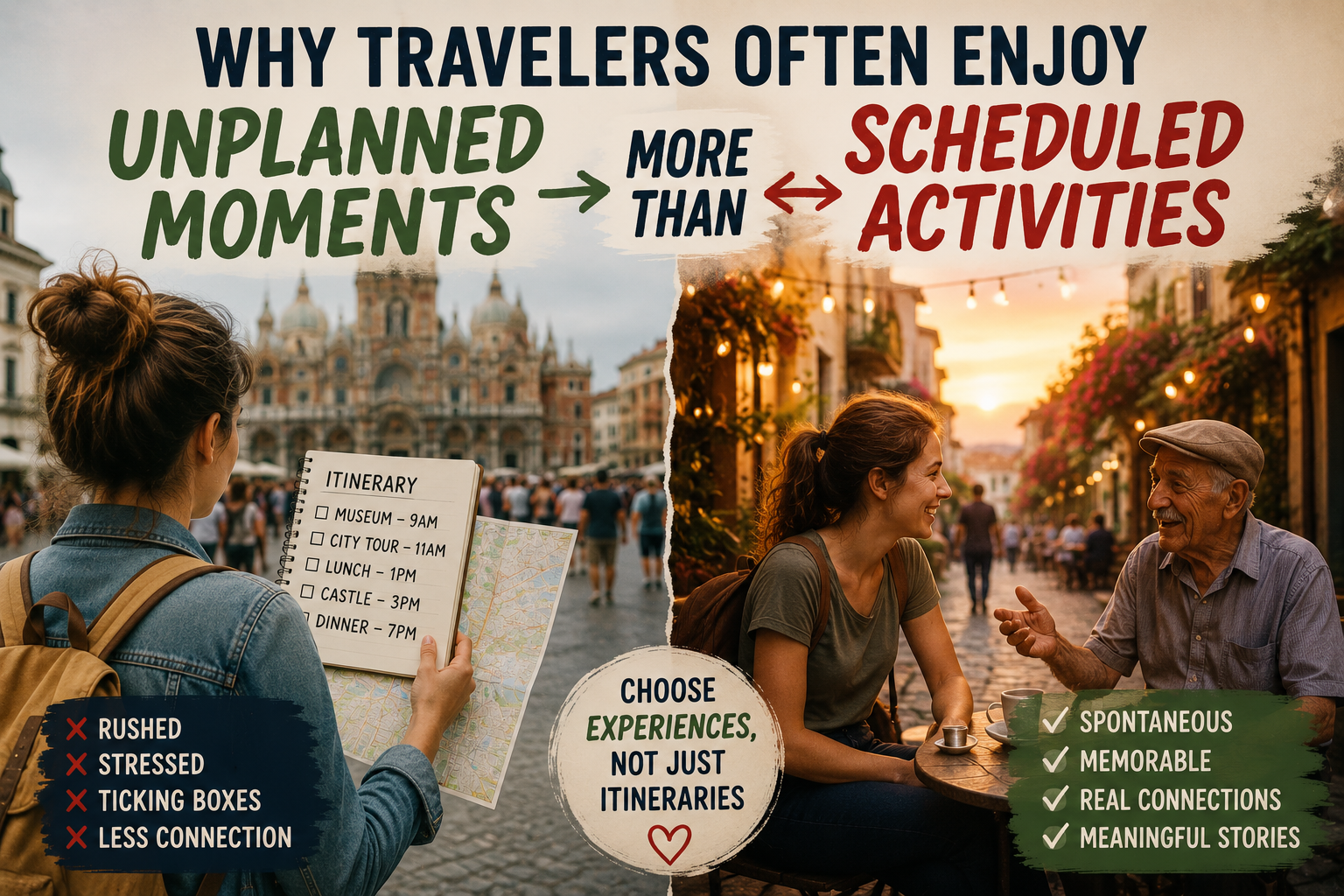
Over-planning can turn a vacation into a checklist rather than an experience.
Many first-time travelers create schedules that fill every hour.
The intention is understandable.
People want to maximize limited vacation time.
However, this often creates pressure.
Signs of Over-Planning
A trip may be over-planned when:
- Every hour is scheduled
- Delays create significant stress
- Travelers rush through attractions
- Meals become time slots instead of experiences
- There is no flexibility for unexpected opportunities
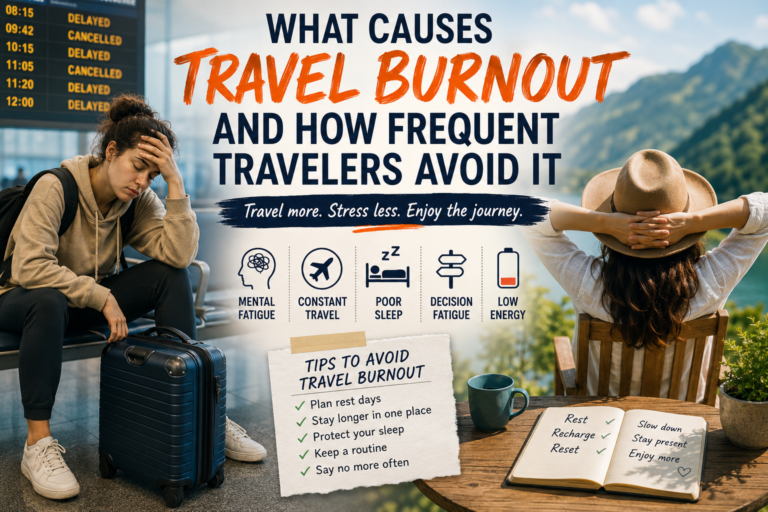
The result is often exhaustion rather than enjoyment.
Real-World Example: Famous Destinations vs Unexpected Moments
Many visitors travel to places such as:
- Paris
- Kyoto
- Barcelona
- Istanbul
They naturally plan visits to major attractions.
Yet travel forums, travel memoirs, and traveler interviews frequently highlight unexpected experiences as the most memorable part of the trip.
A conversation with a shop owner.
A neighborhood celebration.
A quiet street discovered by accident.
A recommendation from a local resident.
These experiences often create stronger memories because they feel unique rather than shared by thousands of other visitors.
Why Do Scheduled Activities Sometimes Feel Less Special?
Scheduled activities often feel less special because expectations can become too high.
Travelers may spend months reading reviews, watching videos, and seeing photos online.
By the time they arrive, they already know exactly what to expect.
The experience becomes confirmation rather than surprise.
That doesn’t mean famous attractions aren’t worthwhile.
Many absolutely are.
The difference is that unexpected experiences often arrive without expectations, making them feel more authentic and emotionally impactful.
How Does Spontaneity Improve Travel?
Spontaneity improves travel by creating flexibility.
When travelers allow room for change, they can respond to opportunities instead of constantly following schedules.
Benefits of Spontaneous Travel
| Planned Travel Only | Flexible Travel Approach |
|---|---|
| Strict schedules | Adaptable schedules |
| Less exploration | More exploration |
| Higher stress when plans change | Easier adjustments |
| Focus on attractions | Focus on experiences |
| Limited local interaction | More local interaction |
This doesn’t mean abandoning planning completely.
It means planning intelligently.
Why Travelers Often Remember People More Than Places
One surprising travel lesson is that people often remember interactions more than attractions.
Many experienced travelers can easily recall:
- Interesting conversations
- Helpful strangers
- Local guides
- Fellow travelers
- Families they met abroad
Yet they may struggle to remember every monument or museum visited.
Human connection creates emotional engagement.
Emotional engagement creates lasting memories.
That’s one reason spontaneous travel moments that change your life often involve people rather than locations.
How to Leave Room for Spontaneity When Traveling
Leaving room for spontaneity does not mean traveling without preparation.
It means creating flexibility within your plans.
Featured Snippet: How to Leave Room for Spontaneity While Traveling
- Schedule only one or two major activities per day.
- Leave several open hours daily.
- Avoid making every meal reservation in advance.
- Stay flexible with transportation when possible.
- Follow local recommendations.
- Explore neighborhoods without specific goals.
- Allow yourself to change plans.
This approach creates balance between structure and freedom.
Why Experienced Travelers Often Plan Less
Experienced travelers understand that travel rarely unfolds exactly as expected.
Flights get delayed.
Weather changes.
Interesting opportunities appear unexpectedly.
Instead of controlling every detail, experienced travelers focus on preparation.
They research:
- Transportation
- Safety
- Accommodation
- Local customs
Then they allow the trip to evolve naturally.
This approach often reduces stress and increases enjoyment.
What Makes Unplanned Moments Feel More Authentic?
Unplanned moments feel authentic because they happen naturally.
Many scheduled activities are designed specifically for visitors.
There is nothing wrong with that.
However, spontaneous experiences often reveal how people actually live.
Examples include:
- Local markets
- Community events
- Neighborhood cafés
- Public parks
- Everyday conversations
These experiences provide cultural context that guidebooks cannot fully capture.
Can Too Much Planning Actually Reduce Enjoyment?
Yes, excessive planning can reduce enjoyment.
Research in tourism and behavioral psychology frequently shows that anticipation can increase happiness before a trip, but excessive expectations sometimes lead to disappointment.
When travelers expect perfection, reality struggles to compete.
A more flexible mindset often produces greater satisfaction because travelers appreciate what happens rather than comparing everything to a predetermined vision.
Midway Reminder: Leave Space for the Unexpected
One simple exercise can improve almost any trip.
Before finalizing your itinerary, remove one activity from each day.
That empty space becomes an opportunity.
It may become:
- A longer lunch
- A hidden attraction
- A local recommendation
- A spontaneous conversation
- A needed rest period
Many travelers later realize those unscheduled hours became the best part of the trip.
For more practical advice, explore our guides on solo travel planning, avoiding common travel mistakes, and choosing destinations that suit your travel style.
Why Travelers Enjoy Wandering Without a Specific Goal
Wandering encourages observation.
When travelers move through a destination without rushing toward a schedule, they notice details they might otherwise miss.
These details include:
- Architecture
- Street art
- Local businesses
- Community life
- Daily routines
Cities such as Lisbon, Prague, and Florence often reward slow exploration because much of their charm exists between major attractions.
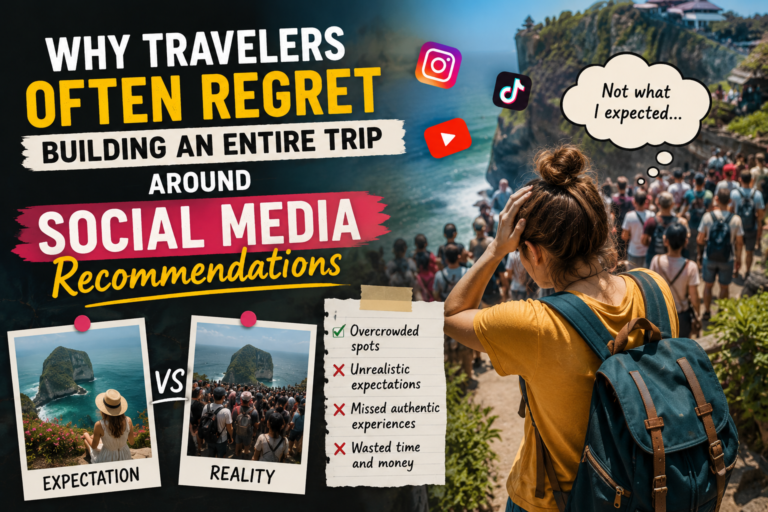
Why Social Media Sometimes Encourages Over-Planning
Social media has changed how many people travel.
Travelers now arrive with lists of:
- Must-see viewpoints
- Viral cafés
- Popular photo locations
- Trending attractions
While these places can be worthwhile, constantly chasing online recommendations sometimes prevents personal exploration.
The result is a trip designed by algorithms rather than individual curiosity.
Experienced travelers often use recommendations as a starting point rather than a complete itinerary.
What Travel Experts and Experienced Travelers Commonly Agree On
Across travel books, interviews, and travel communities, a common theme appears repeatedly.
Preparation matters.
Flexibility matters more.
Many experienced travelers recommend:
- Researching essential logistics
- Booking critical reservations
- Understanding local customs
- Leaving room for surprises
This balanced approach consistently appears in successful travel experiences.
People Also Ask
Why are unplanned travel moments often more memorable?
Unplanned moments often create stronger memories because they involve surprise, emotion, and personal connection. Unexpected experiences activate curiosity and engagement, making them easier to remember than activities that were heavily anticipated.
How do you balance planning and spontaneity while traveling?
Plan important logistics such as flights, accommodation, and transportation. Then leave open time in your schedule for exploration, local recommendations, and unexpected opportunities. This creates structure without eliminating flexibility.
Can over-planning ruin a vacation?
Over-planning can increase stress, create unrealistic expectations, and make travelers feel rushed. A packed itinerary often leaves little room for rest, flexibility, or spontaneous experiences.
What are the benefits of traveling without a strict itinerary?
Traveling without a strict itinerary allows greater flexibility, more authentic local interactions, easier adaptation to changing conditions, and opportunities for unexpected discoveries that often become lasting memories.
Why do experienced travelers leave free time in their schedules?
Experienced travelers know that weather, transportation, recommendations, and personal interests can change plans. Free time allows them to take advantage of opportunities without feeling restricted.
Are spontaneous travel experiences safer than planned ones?
Safety depends on awareness and decision-making rather than spontaneity itself. Travelers can remain flexible while still following basic safety practices, researching destinations, and making informed choices.
How to Create a Travel Plan That Actually Works
The most effective travel plans combine preparation and flexibility.
Research the destination.
Book essential reservations.
Understand transportation.
Learn local customs.
Then stop planning.
Many travelers continue adding activities until every hour is occupied.
This often creates unnecessary pressure.
Instead, leave room for the unexpected.
Travel works best when there is enough structure to feel confident and enough freedom to feel curious.
Conclusion
The reason travelers often enjoy unplanned moments more than scheduled activities is simple.
Unexpected experiences feel personal.
They create surprise, emotional connection, and stories that belong uniquely to the traveler.
Famous attractions deserve their place in an itinerary. Many are famous for good reasons.
But the moments people talk about years later are often different.
They are the wrong turn that led to a beautiful street.
The local recommendation that wasn’t in any guidebook.
The conversation that lasted longer than expected.
The afternoon that had no plan at all.
As you prepare for your next trip, try an experiment.
Keep your essential plans, but leave space between them.
Protect a few unscheduled hours.
Say yes to opportunities that feel right.
You may find that the part of the trip you never planned becomes the part you never forget.

Ravinder Kaur is the founder of OpinionHook, an independent travel publication established in 2023. She oversees editorial standards, destination research, travel planning resources, and content quality across the website. OpinionHook focuses on publishing practical travel guides, itineraries, budgeting advice, and destination resources designed to help travelers make informed travel decisions.