
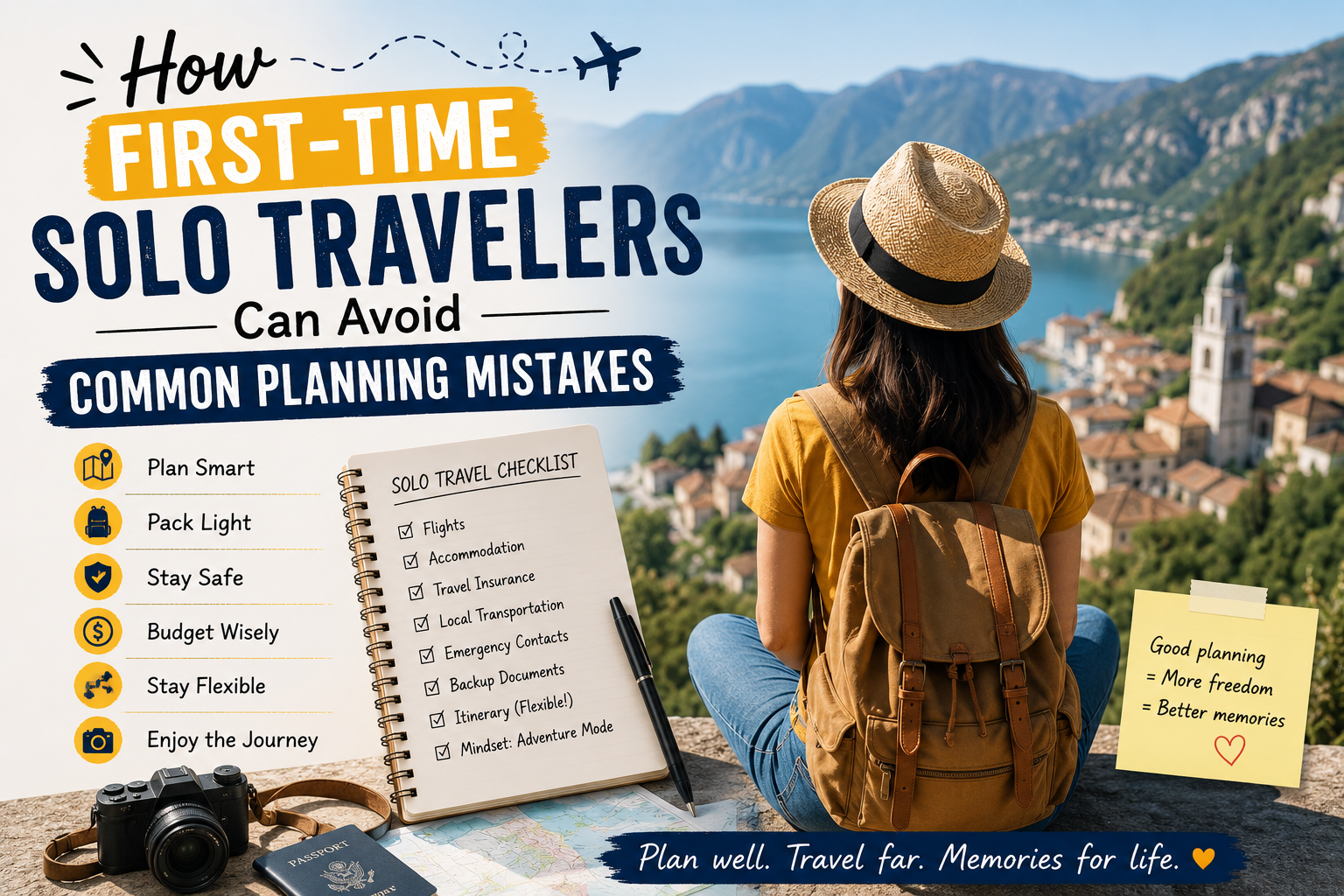
How First-Time Solo Travelers Can Avoid Common Planning Mistakes
Traveling alone for the first time is one of those things that sounds amazing when you’re planning it and slightly terrifying when the departure date gets close.
At first, it’s all excitement. You imagine yourself exploring a new city, eating where you want, walking wherever you feel like going, and finally having complete freedom. No compromises. No waiting for friends to decide where to eat. No changing your plans because someone else isn’t interested.
Then reality starts creeping in.
You begin thinking about airports, transportation, accommodation, safety, navigation, and all the little decisions that nobody else will make for you.
That’s usually the point where many first-time solo travelers start feeling nervous.
The interesting thing is that traveling alone isn’t what causes most problems. Poor planning does.
I’ve seen people spend weeks researching famous attractions and only ten minutes thinking about how they’re actually going to get from the airport to their hotel. Others spend hours building the perfect itinerary and completely forget about practical things like local transportation, mobile data, or backup payment methods.
The result is often unnecessary stress.
The good news is that most solo travel mistakes are completely avoidable.
What I’ve noticed over the years is that experienced solo travelers aren’t necessarily more adventurous or fearless than everyone else. Most of them simply know what deserves their attention and what doesn’t.
They understand that some things are worth preparing for, while other worries exist only in their heads.
That’s why this guide focuses on the planning mistakes beginners make most often and, more importantly, what usually works instead.
Key Takeaways
- Choose a simple destination for your first solo trip.
- Avoid creating a schedule that leaves no room for flexibility.
- Research transportation options before you arrive.
- Always carry a backup payment method.
- Share your travel plans with someone you trust.
- Book accommodation for at least your first few nights.
- Pack lighter than you think you need to.
- Learn basic local customs and safety habits.
- Accept that small problems will happen.
- Focus on gaining confidence rather than trying to have a perfect trip.
Why First-Time Solo Travel Feels So Different
Traveling alone feels different because every decision belongs to you.
When you’re traveling with friends, family, or a partner, responsibility gets shared. Someone else might handle directions, choose restaurants, check train schedules, or book accommodation.
When you’re alone, none of that happens.
If you miss a train, it’s your responsibility.
If you choose a hotel that’s an hour away from everything, that’s your decision.
If you forget to research transportation from the airport, you’re the one standing there trying to figure it out after a long flight.
For many people, that level of responsibility feels intimidating at first.
I think that’s completely normal.
Most first-time solo travelers worry they’ll make mistakes. The truth is they probably will. Everyone does.
But something interesting happens during solo travel.
You start solving problems.
You figure things out.
You learn how to adjust when plans change.
And little by little, your confidence grows.
That’s why I don’t think the biggest challenge of solo travel is being alone.
The real challenge is becoming comfortable with uncertainty.
Not knowing exactly how everything will unfold can feel uncomfortable at first. Eventually, it becomes one of the most rewarding parts of the experience.
What Is the Biggest Solo Travel Planning Mistake?
In my opinion, the biggest mistake first-time solo travelers make is trying to travel like experienced travelers.
Social media is partly responsible for this.
You see videos of people visiting five countries in two weeks. They’re hopping on trains, catching flights, exploring hidden locations, and making it all look effortless.
What those videos don’t show is the experience behind it.
Many of those travelers have spent years learning how to travel efficiently.
Beginners often see the final result and assume they should do the same thing.
That’s usually where things start going wrong.
What usually works is starting small.
One city.
One country.
One destination where transportation is easy, safety is generally good, and tourist infrastructure is reliable.
Cities such as Tokyo, Singapore, Amsterdam, Copenhagen, and Melbourne are often recommended to beginners because they’re relatively easy to navigate and have excellent public transportation systems.
What often fails is choosing a complicated itinerary simply because it looks exciting online.
I’ve talked to travelers who tried to squeeze four or five destinations into their first solo trip and spent most of their time stressed, exhausted, or rushing between transportation hubs.
Personally, I think there is absolutely nothing wrong with spending an entire week in one city.
In fact, for a first solo trip, I think it’s often the smarter choice.
You don’t need to prove you’re adventurous.
You don’t need to collect countries like trophies.
Your first solo trip should build confidence, not test your limits.
How to Plan Your First Solo Trip Without Feeling Overwhelmed
The easiest way to reduce travel stress is to focus on essentials before anything else.
Most beginners do the exact opposite.
They spend hours researching attractions, restaurants, and Instagram-worthy locations while ignoring practical details that matter much more.
That’s backwards.
Before looking at beaches, museums, landmarks, or food recommendations, focus on the basics.
Figure out your entry requirements.
Research transportation.
Understand how you’ll access money.
Choose accommodation carefully.
Plan your internet connectivity.
Save emergency contact information.
Once these things are handled, everything else becomes easier.
One approach that works well is dividing your trip into stages.
Before Departure
Focus on documents, accommodation, transportation, payment methods, and safety preparation.
Arrival Day
Focus only on getting from the airport to your accommodation smoothly.
Don’t try to see half the city immediately after landing.
During the Trip
Focus on enjoying the experience rather than constantly checking schedules.
What usually works is simplifying your priorities.
What often fails is trying to manage twenty different things at once.
A simple plan is often more effective than an elaborate one.
Why Overplanning Usually Backfires
Many first-time solo travelers believe detailed planning automatically creates a better trip.
I don’t completely agree.
Having a plan is smart.
Trying to control every hour of every day usually isn’t.
I’ve seen travel itineraries that honestly look more exhausting than a full-time job.
Breakfast at 8.
Museum at 9.
Walking tour at 11.
Lunch reservation at 1.
Another attraction at 2.
Dinner reservation at 6.
Night activity at 8.
By the second day, people are already tired.
The problem isn’t the attractions themselves.
The problem is having no room to breathe.
What usually works is identifying a few important activities each day and leaving everything else flexible.
What often fails is treating travel like a productivity competition.
Some of the best travel memories happen completely by accident.
A random conversation.
A hidden café.
A local market.
A street performance.
A neighborhood you weren’t planning to visit.
Those moments rarely appear on an itinerary.
And yet they often become the stories people remember years later.
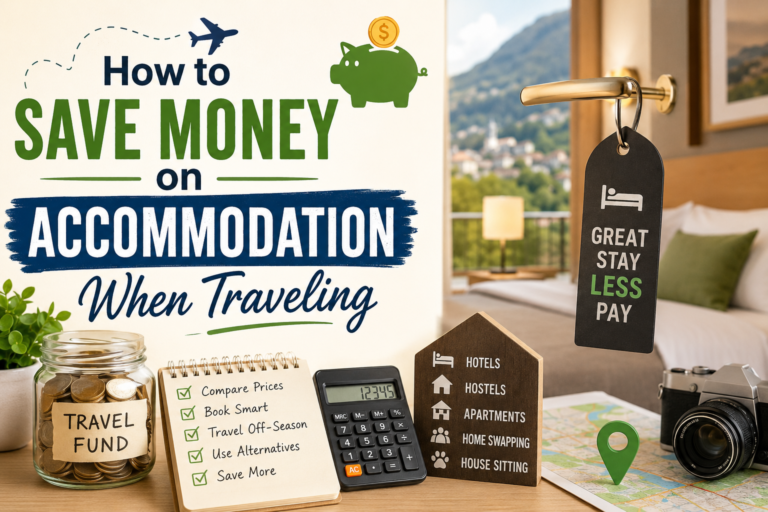
Why Accommodation Location Matters More Than Price
One mistake I see beginners make all the time is choosing accommodation based almost entirely on price.
I understand why.
When you’re planning a trip, it’s tempting to save money wherever you can. If one hotel costs $40 less per night than another, it feels like an easy decision.
But travel doesn’t always work that way.
A cheaper room can easily become more expensive once the trip starts.
Imagine saving a few dollars on accommodation only to spend extra money every day on taxis, rideshares, buses, or trains because you’re staying far from everything.
I’ve seen travelers do exactly that.
They book a budget hotel on the outskirts of a city, then spend the entire trip commuting back and forth. By the end of the week they’ve spent more on transportation than they saved on the room.
What usually works is finding a balance between cost and convenience.
You don’t need to stay in the most expensive area of a city. But staying somewhere reasonably close to public transportation, restaurants, and major attractions makes a huge difference.
This becomes even more important when you’re traveling alone.
After a long day of sightseeing, there’s something comforting about knowing your accommodation is a short walk away instead of a complicated journey involving multiple train changes.
Personally, I would rather stay in a smaller room with a great location than a large room that’s far from everything.
When you’re traveling, the city is your living room. The hotel is mostly a place to sleep.
That’s something many first-time travelers don’t realize until after their trip.
The Packing Mistake Nearly Every Beginner Makes
If experienced travelers could only give one piece of advice, I think many would say the same thing:
Pack less.
Then remove a few more things.
Seriously.
Most people don’t believe this advice until they’ve traveled a few times themselves.
Before a first solo trip, it’s easy to imagine every possible situation.
Maybe it’ll get cold.
Maybe I’ll need formal clothes.
Maybe I’ll need three pairs of shoes.
Maybe I’ll wear this outfit.
Maybe I’ll use this gadget.
The problem is that “maybe” takes up a lot of space.
What usually happens is travelers fill their bags with things they never use.
Then they spend the entire trip dragging those items through airports, train stations, hotel lobbies, sidewalks, and public transportation.
I’ve talked to travelers who carried heavy backpacks across multiple countries only to realize they wore the same few outfits repeatedly.
Most people naturally gravitate toward comfortable, familiar clothing while traveling.
The extra items often stay untouched.
What usually works is packing versatile items.
Clothes that can be mixed and matched.
Shoes that work in different situations.
Simple travel gear that serves multiple purposes.
What often fails is packing for imaginary situations that never happen.
One thing I’ve learned is that carrying less gives you more freedom.
You move faster.
You worry less.
You spend less energy managing your luggage.
And honestly, freedom is one of the biggest reasons people choose solo travel in the first place.
Why Solo Travelers Should Have Backup Plans
One mistake that doesn’t get talked about enough is relying on a single solution for important things.
One credit card.
One bank card.
One navigation app.
One transportation option.
One hotel booking confirmation.
That approach works perfectly until something goes wrong.
And sometimes things do go wrong.
Cards stop working.
Phones run out of battery.
Flights get delayed.
Apps fail.
Internet connections disappear.
Experienced solo travelers usually have backups because they’ve learned that small problems are part of travel.
Not constant problems.
Not disasters.
Just small inconveniences.
What usually works is preparing simple alternatives.
Carry two payment methods.
Save offline maps.
Keep digital and printed copies of important documents.
Store emergency contact information somewhere accessible.
These aren’t dramatic travel hacks.
They’re practical habits.
Most travelers never need them.
But when they do, they’re incredibly valuable.
I once heard a traveler say that travel rewards preparation more than perfection.
I think that’s true.
You don’t need to predict every problem.
You simply need enough flexibility to handle the unexpected.
The Fear of Eating Alone Is Bigger Than the Reality
For many first-time solo travelers, eating alone feels awkward.
Some people worry others will judge them.
Others think they’ll feel lonely sitting by themselves in a restaurant.
The reality is usually much less dramatic.
Most people are focused on their own meals, conversations, and lives.
They’re not paying attention to who is eating alone.
What usually happens is travelers realize the fear was much bigger than the actual experience.
In fact, eating alone can become surprisingly enjoyable.
You eat when you want.
You stay as long as you want.
You choose the restaurant.
You don’t need to compromise.
Personally, I think learning to enjoy your own company is one of the most valuable parts of solo travel.
At first it can feel uncomfortable.
Then it starts feeling normal.
Eventually it feels freeing.
That’s one of those lessons that often extends beyond travel itself.
Why Flexibility Is More Important Than Confidence
A lot of people assume successful solo travelers are naturally confident.
I don’t think that’s entirely true.
Most solo travelers feel nervous at some point.
The difference is that they keep going anyway.
Confidence usually comes after the experience, not before it.
What matters more is flexibility.
Flights get delayed.
Weather changes.
Plans fall apart.
Transportation schedules shift.
Restaurants close.
Attractions sell out.
These things happen to everyone.
The travelers who enjoy themselves most aren’t necessarily the most confident people.
They’re often the most adaptable.
Instead of asking, “How do I make sure nothing goes wrong?”
A better question is:
“How will I respond if something goes wrong?”
That small shift in mindset changes everything.
Because the goal of solo travel isn’t creating a perfect trip.
The goal is learning that you can handle more than you think.
And once you realize that, future trips become much easier.
Ravinder Kaur is the founder of OpinionHook, an independent travel publication established in 2023. She oversees editorial standards, destination research, travel planning resources, and content quality across the website. OpinionHook focuses on publishing practical travel guides, itineraries, budgeting advice, and destination resources designed to help travelers make informed travel decisions.
2 Comments
Comments are closed.