What First-Time Travelers Wish They Knew Before Visiting a New Country
Summary
Your first international trip feels exciting until it suddenly feels overwhelming.
One minute you’re looking at photos of famous landmarks and imagining yourself there. The next minute you’re wondering if your passport is valid, whether your phone will work overseas, and what exactly happens when you land in a country you’ve never visited before.
I think this is where many first-time travelers struggle. They spend a lot of time dreaming about the destination and not enough time preparing for the small things that actually create stress.
The funny part is that most travel problems aren’t huge disasters. They’re usually simple mistakes. Things like overpacking, misunderstanding transportation, carrying the wrong payment method, or trying to do too much in too little time.
If you’re traveling to a new country for the first time, this guide covers the things experienced travelers often wish they had known earlier. Some lessons come from common mistakes. Others come from realizing that travel rarely goes exactly according to plan, and that’s perfectly okay.
Key Takeaways
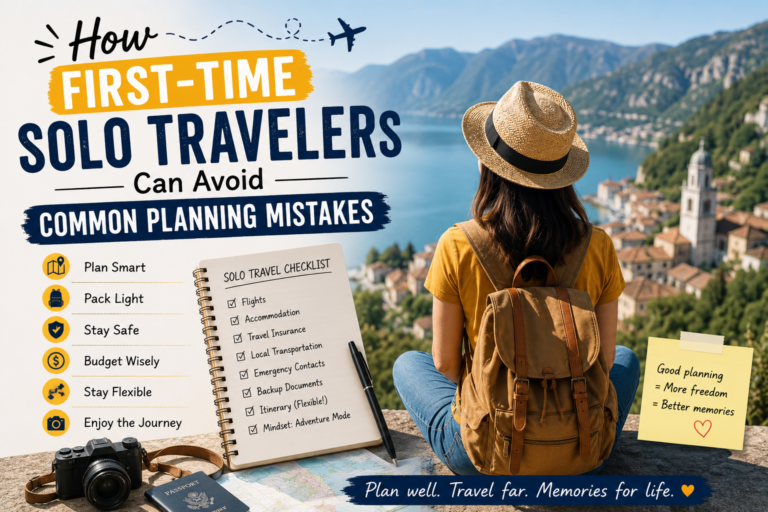
- Check passport and visa requirements early.
- Don’t overpack. You’ll probably wear less than you expect.
- Keep digital copies of important documents.
- Learn basic local phrases before arriving.
- Research transportation before landing.
- Notify your bank before traveling abroad.
- Expect small problems and stay flexible.
- Respect local customs and cultural differences.
- Leave space in your itinerary for unexpected experiences.
- Focus on enjoying the trip rather than making everything perfect.
Why First-Time International Travel Feels So Different
Traveling internationally for the first time isn’t difficult because one thing is hard. It’s difficult because twenty small things are happening at once.
You’re dealing with airports, immigration, different currencies, unfamiliar transportation systems, and maybe even a language you’ve never spoken before.
I remember talking to a traveler who said their first trip abroad wasn’t stressful because of the destination itself. It was stressful because they felt like they had to figure out everything at the same time.
That’s actually a common experience.
What first-time travelers need to know is that feeling slightly overwhelmed at first is normal. Most people don’t step off an international flight feeling completely confident.
The good news is that once you get through the first day or two, things usually become much easier.
What to Know Before Traveling Abroad
The best travel advice I can give is simple: prepare for the practical stuff before you start worrying about the fun stuff.
Most travelers spend hours researching attractions but forget to research things like transportation, local payment methods, or entry requirements.
That approach often creates unnecessary stress.
Before your trip, focus on the essentials.
Pre-Trip Travel Checklist
One mistake that surprises many travelers is discovering that their passport doesn’t meet entry requirements.
Some countries require six months of passport validity beyond your arrival date. Many people don’t realize this until it’s almost too late.
What usually works is checking these details months in advance.
What often fails is assuming everything will be fine because your passport hasn’t technically expired.
How to Prepare for Your First Trip Abroad
Preparation isn’t about planning every second.
It’s about removing avoidable problems.
Start with your documents.
Keep physical copies of your passport, travel insurance, hotel reservations, and flight information. Also keep digital copies stored securely online.
Next, think about how you’ll access money.
I personally think relying on only one card is risky. Cards get blocked. ATMs malfunction. Banks sometimes flag transactions as suspicious.
A better approach is carrying at least two payment methods and a small amount of local currency.
Another thing that helps is planning your arrival.
Many first-time travelers spend weeks planning activities but never think about what happens after landing.
Ask yourself:
- How will I get from the airport to my hotel?
- Will I have internet access?
- Do I know the local currency?
- What if my flight arrives late?
Having answers to these questions makes the first day much smoother.
The Travel Mistake Almost Everyone Makes
If there is one mistake that deserves its own section, it’s overpacking.
I’ve never met an experienced traveler who said, “I wish I had packed more.”
I’ve met plenty who wished they packed less.
For some reason, people preparing for their first trip imagine every possible scenario.
Maybe I’ll need this jacket.
Maybe I’ll need these shoes.
Maybe I’ll wear this outfit.
Then half of it never leaves the suitcase.
What usually works is packing versatile clothing that can be mixed and matched.
What often fails is preparing for situations that never happen.
Personally, I’d rather do laundry during a trip than drag around an oversized suitcase for two weeks.
A lighter bag makes airports easier, trains easier, buses easier, and honestly, travel itself easier.
Why Understanding Local Culture Matters More Than You Think
Many travelers focus on famous attractions but overlook cultural differences.
That can create awkward situations.
You don’t need to become an expert on another culture before visiting. But learning basic customs shows respect and often leads to better experiences.
For example, tipping expectations vary around the world.
In some countries, tipping is expected.
In others, it may be unnecessary or even considered unusual.
The same applies to greetings, clothing, public behavior, and dining etiquette.
What usually works is approaching differences with curiosity.
What often fails is assuming every country operates exactly like home.
The travelers who enjoy the best local interactions are usually the ones willing to observe, learn, and adapt.
International Travel Dos and Don’ts
Do
Research local customs.
Carry emergency contact information.
Keep backup payment methods.
Learn a few local phrases.
Stay aware of your surroundings.
Respect cultural differences.
Don’t
Assume everyone speaks English.
Carry all your money in one place.
Ignore local laws.
Overbook every day of your trip.
Depend entirely on internet access.
Treat local customs as unimportant.
Most travel mistakes aren’t caused by bad intentions. They’re caused by lack of preparation.
A little research can prevent many problems.
Managing Money Abroad Without Stress
Money worries are common among first-time travelers.
The simplest solution is not putting all your trust in one method of payment.
Carry a combination of:
- Credit cards
- Debit cards
- Small amounts of cash
This approach creates backup options.
I’ve heard stories from travelers whose cards stopped working while abroad. Usually they solved the problem because they had another payment method available.
The travelers who struggle most are often the ones who depend entirely on a single card.
One practical tip that works surprisingly well is notifying your bank before traveling.
It only takes a few minutes and can help prevent unexpected transaction blocks.
What to Expect When Traveling Internationally
Many first-time travelers expect airports to work exactly like they do at home.
International travel often involves extra steps.
You’ll likely go through immigration checks, customs procedures, and additional document verification.
The process isn’t difficult, but it usually takes longer than domestic travel.
Another thing to expect is occasional delays.
Flights get delayed.
Weather changes.
Transportation schedules shift.
I’ve learned that travel becomes much more enjoyable when you stop expecting everything to happen perfectly.
The travelers who adapt quickly usually have better experiences than those who try to control every detail.
Dealing With Language Barriers
One fear many first-time travelers have is not speaking the local language.
Honestly, this concern is often bigger than the actual problem.
Technology helps a lot.
Translation apps, maps, and mobile tools make communication easier than ever.
That said, learning a few local phrases still makes a difference.
Simple words like:
- Hello
- Thank you
- Please
- Excuse me
can go a long way.
People generally appreciate the effort.
You don’t need perfect pronunciation.
You just need willingness.
Staying Connected During Your Trip
Internet access matters more than most travelers realize.
Maps, hotel reservations, transportation apps, translation tools, and emergency information all depend on connectivity.
Before traveling, research your options.
You may choose:
- International roaming
- Local SIM cards
- eSIM services
What usually works is setting up connectivity before arrival.
What often fails is landing in a new country and trying to figure everything out without internet access.
A little preparation can save a lot of frustration.
Travel Safety Tips That Actually Matter
Travel safety doesn’t require paranoia.
It requires awareness.
Most international travelers never experience major problems.
Still, a few habits make a difference.
Keep valuables secure.
Research neighborhoods before booking accommodations.
Use official transportation options whenever possible.
Share your itinerary with someone you trust.
Pay attention to your surroundings.
One thing I’ve noticed is that many first-time travelers focus on dramatic worst-case scenarios.
The reality is that simple precautions prevent most issues.
Good judgment usually matters more than complicated safety strategies.
Why Trying to Create the Perfect Trip Often Backfires
This might be the lesson I wish more travelers understood.
Perfect trips don’t exist.
Every trip has small problems.
A delayed flight.
Unexpected weather.
A missed train.
A restaurant that wasn’t as good as expected.
The people who enjoy travel the most aren’t the people whose trips go perfectly.
They’re the people who stay flexible when things don’t.
I’ve seen travelers become frustrated because one activity didn’t go according to plan.
Meanwhile, others treat the same situation as part of the adventure.
Personally, I think flexibility is one of the most valuable travel skills anyone can develop.
Mid-Trip Reminder: Slow Down
Many first-time travelers try to see everything.
I understand why.
You’ve traveled far. You want to make the most of it.
But trying to see everything often means enjoying very little.
Some of my favorite travel memories came from unplanned moments.
A random conversation.
A small local café.
A neighborhood I wasn’t expecting to visit.
What usually works is choosing a few priorities and leaving room for surprises.
What often fails is treating travel like a checklist.
People Also Ask
What do first-time travelers need to know before traveling internationally?
First-time travelers should understand passport requirements, visa rules, transportation options, payment methods, and local customs. Preparing these basics before departure makes international travel much smoother and less stressful.
How early should I arrive for an international flight?
Most airlines recommend arriving three hours before departure. International travel involves additional procedures such as immigration, document checks, baggage processing, and security screening.
Is travel insurance worth it for first-time travelers?
In most cases, yes. Travel insurance can help cover medical emergencies, cancellations, delays, and lost luggage. Many travelers never need it, but those who do are usually glad they purchased it.
What is the most common mistake first-time travelers make?
Overpacking is one of the most common mistakes. New travelers often bring far more than they actually use, which creates unnecessary inconvenience throughout the trip.
How much cash should I carry abroad?
A small amount of local currency is usually enough for arrival expenses, transportation, and small purchases. Most travelers rely primarily on cards while keeping cash as a backup.
Can I travel internationally if I only speak English?
Absolutely. Millions of travelers do it every year. Translation apps, maps, and basic local phrases make communication much easier than many people expect.
Final Thoughts
The truth is that every confident traveler started exactly where you are now.
Nobody is born knowing how immigration works, how foreign transportation systems operate, or how to navigate a country they’ve never visited.
Those things come with experience.
If you’re preparing for your first trip abroad, focus on preparation, not perfection.
Check your documents.
Research the basics.
Pack lighter than you think you need to.
Stay flexible when plans change.
Most importantly, don’t let fear stop you from going.
In my opinion, the biggest travel regret isn’t making mistakes during a trip. It’s never taking the trip at all.
Your first international journey probably won’t be perfect.
That’s okay.
It will teach you things no travel guide ever can, and chances are, it will leave you wanting to plan the next one before you’ve even unpacked.

Ravinder Kaur is the founder of OpinionHook, an independent travel publication established in 2023. She oversees editorial standards, destination research, travel planning resources, and content quality across the website. OpinionHook focuses on publishing practical travel guides, itineraries, budgeting advice, and destination resources designed to help travelers make informed travel decisions.