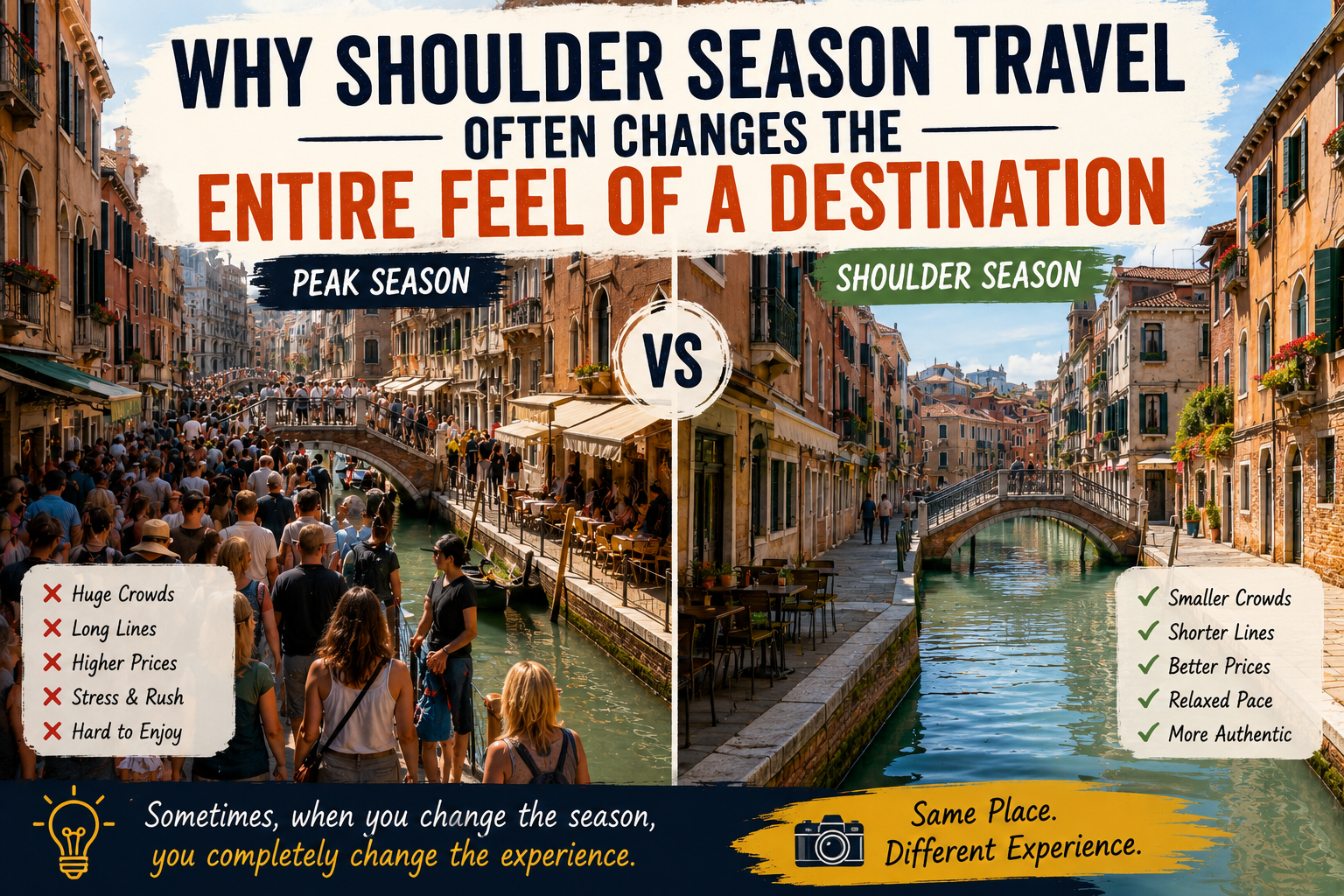
Why Shoulder Season Travel Often Changes the Entire Feel of a Destination
Quick Summary
Have you ever visited a place and wondered why everyone seemed to have a completely different experience than you?
I’ve had that happen more than once.
One traveler talks about endless crowds, long lines, and overpriced hotels. Another describes the same destination as peaceful, welcoming, and surprisingly affordable.
Sometimes the difference isn’t the destination.
It’s the timing.
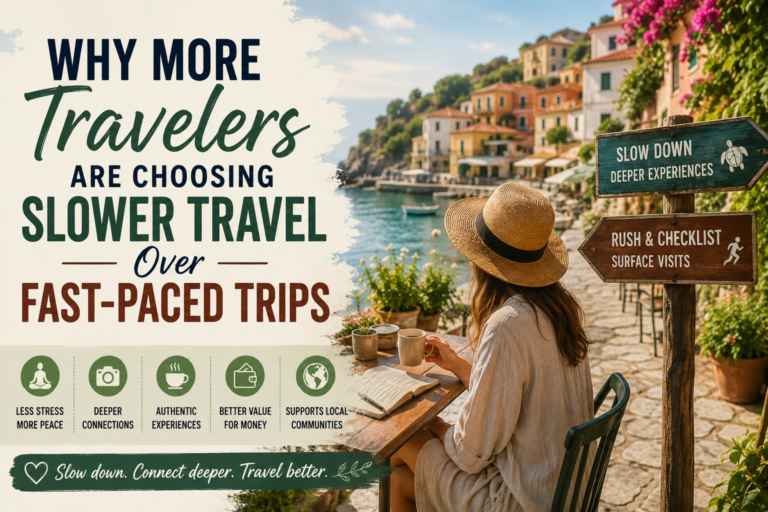
That’s one of the biggest reasons why shoulder season travel often changes the feel of a destination.
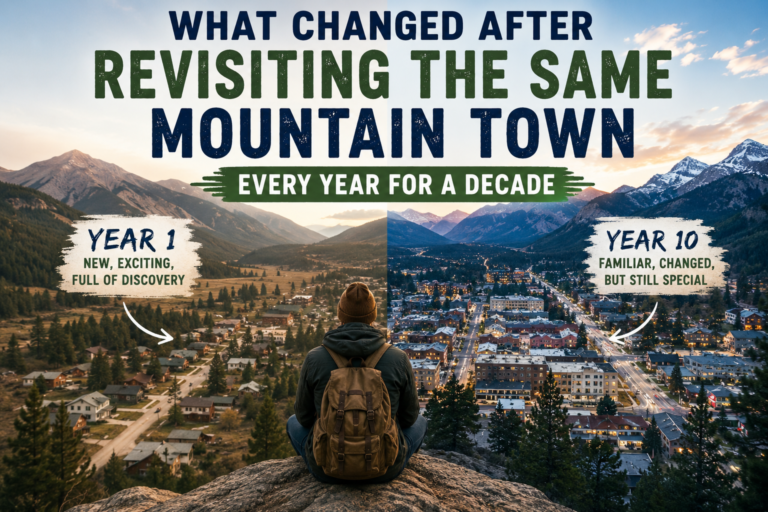
Many travelers spend months researching where to go but very little time thinking about when to go. In reality, timing can completely change how a place feels. The same city, beach, mountain town, or historic destination can feel like two entirely different places depending on whether you visit during peak season or shoulder season.
Personally, I think shoulder season is one of the most underrated travel strategies available today. It doesn’t work everywhere, and it isn’t perfect, but I’ve found that some of my favorite travel experiences happened when crowds were smaller and destinations felt more connected to everyday life.
If you’ve ever wondered why some travelers seem to enjoy popular destinations more than others, shoulder season may be the answer.
Key Takeaways
| Factor | Peak Season | Shoulder Season |
|---|---|---|
| Crowds | Heavy | Moderate |
| Hotel Prices | Highest | Often Lower |
| Attraction Wait Times | Long | Shorter |
| Local Interaction | Limited | More Natural |
| Availability | Can Be Limited | Usually Better |
| Photography Conditions | Crowded | Cleaner Views |
| Overall Experience | Fast-Paced | More Relaxed |
What Is Shoulder Season in Travel?
Shoulder season is the period between peak tourism season and off-season.
In most destinations, this usually means spring or fall, although exact dates vary by country and region.
For example:
- Many European destinations experience shoulder season during April, May, September, and October.
- Popular beach destinations often have shoulder seasons immediately before or after summer.
- Some tropical destinations experience shoulder season during periods with occasional rain but fewer visitors.
The important thing to understand is that shoulder season isn’t off-season.
You’re not arriving when everything is closed.
Instead, you’re arriving when tourism is still active but no longer overwhelming.
That’s a huge difference.
Why Shoulder Season Travel Changes the Feel of a Destination
The simple answer is that fewer people change everything.
The streets feel different.
The attractions feel different.
The restaurants feel different.
Even your own mood feels different.
One thing I’ve noticed repeatedly is that many destinations aren’t actually stressful.
The crowds are.
When visitor numbers drop, places often feel more relaxed and easier to enjoy.
This is one reason why shoulder season travel is better than peak season tourism for many travelers.
The destination itself hasn’t changed.
The environment around it has.
And that can completely transform the experience.
Why Fewer Crowds in Shoulder Season Make Destinations Feel Completely Different
If I had to choose one factor that changes a destination the most, it would be crowd levels.
Crowds affect nearly every part of a trip.
They affect transportation.
They affect restaurants.
They affect hotel prices.
They affect photography.
They affect your patience.
I’ve visited popular locations where walking through the historic center felt exhausting during peak season. The same place during shoulder season felt calm and enjoyable.
One real-world example is Venice.
During peak summer months, visitor numbers can be overwhelming. Narrow streets become crowded and moving between attractions takes longer than expected.
During shoulder season, many travelers report a completely different experience. The city feels slower, quieter, and easier to appreciate.
The buildings are the same.
The canals are the same.
The difference is the number of people.
That’s one of the hidden benefits of traveling to popular destinations in shoulder season.
How Traveling in Shoulder Season Improves Your Trip Experience
The biggest improvement is often quality rather than quantity.
You may see the same attractions.
But you’ll experience them differently.
Shorter lines mean less waiting.
Lower crowd levels mean less stress.
More hotel availability means more choices.
Local businesses often have more time to interact with customers.
In my opinion, travel becomes more enjoyable when you’re spending your time experiencing a place rather than competing with thousands of other visitors for access to it.
What usually works is choosing destinations just before or just after their busiest season.
What often fails is assuming the most popular travel month automatically provides the best experience.
Sometimes the opposite is true.
Why Hotel Prices and Availability Improve During Shoulder Season
One of the most practical benefits of shoulder season travel is cost.
According to booking trends observed by major travel platforms such as Booking.com and Expedia, accommodation prices often drop once peak demand decreases.
That doesn’t mean every destination becomes cheap.
But it often means better value.
Instead of paying premium prices for average rooms, travelers may find better properties at more reasonable rates.
The same budget can often stretch further.
Personally, I’d rather spend the same amount of money on a better hotel than spend more money fighting peak-season crowds.
For many travelers, shoulder season makes that possible.
The Photography Advantage Most Travelers Overlook
Most travel photos online are carefully framed.
What you don’t see are the hundreds of people standing just outside the frame.
During peak season, getting clean photos can be surprisingly difficult.
Shoulder season changes that.
Popular landmarks become easier to photograph.
Scenic viewpoints feel less crowded.
Sunrise and sunset locations become more accessible.
This doesn’t matter to everyone.
But if you enjoy photography, shoulder season can significantly improve your results without requiring better equipment.
Why Local Interactions Often Feel More Genuine
One thing that rarely gets discussed is how visitor numbers affect local interactions.
When businesses are overwhelmed with customers, conversations become shorter.
Service becomes more transactional.
Everything moves faster.
During shoulder season, interactions often feel more natural.
Restaurant staff have more time.
Hotel employees aren’t handling peak-volume crowds.
Shop owners may be more willing to talk.
Of course, this varies by destination.
But I’ve personally noticed that some of my most memorable conversations happened during quieter travel periods.
The destination felt less like a tourism machine and more like a community.
A Quick Reality Check About Shoulder Season
Shoulder season isn’t perfect.
It’s important to be realistic.
Weather can be less predictable.
Some attractions may operate on reduced schedules.
Certain seasonal activities may not be available.
That’s the tradeoff.
What usually works is researching the specific shoulder season for each destination.
What often fails is assuming shoulder season means the same thing everywhere.
A shoulder season trip to Italy is very different from a shoulder season trip to Thailand or Canada.
Understanding those differences helps set realistic expectations.
Mid-Article Tip
Before booking your next trip, compare hotel prices and crowd levels across three different months.
You may be surprised.
Sometimes moving your trip by just three or four weeks creates a dramatically different experience while costing less money.
It’s one of the easiest travel improvements most people never consider.
Why Visiting a Destination in Shoulder Season Changes Everything
The biggest reason is balance.
You still get access to attractions.
You still get tourism infrastructure.
You still get restaurants, transportation, and activities.
But you often avoid the worst parts of peak tourism.
That balance is difficult to achieve during high season.
It’s one reason many experienced travelers intentionally target shoulder season when planning international trips.
They’re not necessarily looking for cheaper travel.
They’re looking for a better experience.
And often, they find it.

Ravinder Kaur is the founder of OpinionHook, an independent travel publication established in 2023. She oversees editorial standards, destination research, travel planning resources, and content quality across the website. OpinionHook focuses on publishing practical travel guides, itineraries, budgeting advice, and destination resources designed to help travelers make informed travel decisions.