
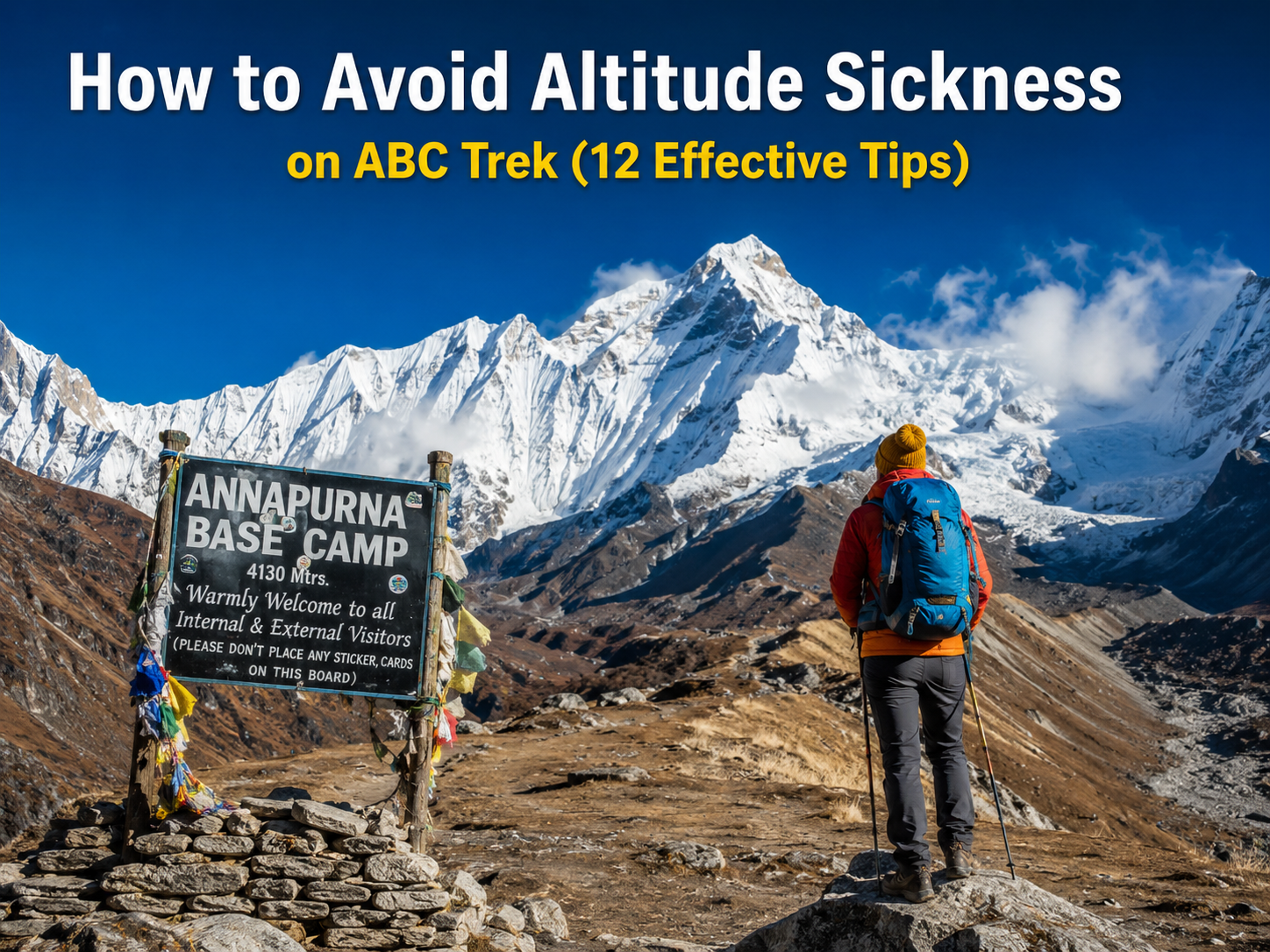
How to Avoid Altitude Sickness on ABC Trek (12 Effective Tips)
Planning the Annapurna Base Camp trek is exciting, especially for first-time trekkers. But many beginners worry about one thing more than steep trails or cold weather – altitude sickness. You may have heard stories of trekkers getting headaches, nausea, dizziness, or even needing evacuation before reaching base camp.
The good news is that most cases of altitude sickness on the ABC Trek are preventable.
With proper preparation, smart pacing, hydration, and awareness of symptoms, many trekkers complete the trek safely and comfortably every year. The Annapurna Base Camp Trek reaches around 4,130 meters (13,550 feet), which is high enough for Acute Mountain Sickness (AMS) to affect anyone, even fit and experienced hikers.
Here we explains how to avoid altitude sickness on the ABC Trek using practical, beginner-friendly tips based on real trekking practices followed in Nepal today. You will also learn what symptoms to watch for, what mistakes to avoid, and when to descend for safety.
Quick Summary
Altitude sickness on the Annapurna Base Camp Trek usually happens when trekkers gain elevation too quickly without allowing the body enough time to adjust. The best prevention methods include walking slowly, staying hydrated, sleeping properly, eating enough food, avoiding alcohol, and following a well-paced itinerary with acclimatization in mind.
Most trekkers who listen to their bodies and trek responsibly complete the ABC Trek without serious altitude-related problems.
Key Takeaways
- The Annapurna Base Camp Trek reaches 4,130 meters
- AMS can affect anyone, regardless of fitness level
- Slow ascent is the most effective prevention method
- Hydration and proper nutrition help your body adapt
- Alcohol and smoking increase the risk of AMS
- Mild symptoms should never be ignored
- Descending is the safest treatment if symptoms worsen
- A guided trek often helps beginners manage altitude safely
What Is Altitude Sickness?
Altitude sickness, also called Acute Mountain Sickness (AMS), happens when your body struggles to adjust to lower oxygen levels at high altitude.
At sea level, oxygen pressure is much higher. As you climb higher into the Himalayas, the air becomes thinner. Your body needs time to adapt. If you ascend too quickly, symptoms may appear.
The ABC Trek is considered moderate in altitude compared to the Everest Base Camp trek, but AMS is still common among beginners.
Common Symptoms of AMS
| Mild Symptoms | Serious Symptoms |
| Headache | Severe breathing difficulty |
| Loss of appetite | Confusion |
| Nausea | Loss of coordination |
| Fatigue | Chest tightness |
| Dizziness | Blue lips or fingernails |
| Trouble sleeping | Persistent vomiting |
Mild symptoms are common and manageable if treated early. Serious symptoms require immediate descent and medical help.
At What Altitude Does AMS Start on the ABC Trek?
Most trekkers begin noticing mild altitude effects above 2,500 meters.
On the Annapurna Base Camp Trek, areas like Deurali, Machapuchare Base Camp, and Annapurna Base Camp itself are where symptoms often appear.
Here is a quick altitude breakdown:
| Trekking Stop | Approximate Elevation |
| Pokhara | 822 m |
| Chhomrong | 2,170 m |
| Himalaya | 2,920 m |
| Deurali | 3,230 m |
| Machapuchare Base Camp | 3,700 m |
| Annapurna Base Camp | 4,130 m |
Many trekkers feel slightly short of breath above 3,000 meters. That is normal. Severe headaches, vomiting, or confusion are not normal and should never be ignored.
1. Walk Slowly From Day One
The best way to avoid altitude sickness on the ABC Trek is to walk slowly.
Many beginners make the mistake of trekking too fast because the early trail sections feel easy. But your body needs gradual exposure to altitude. Fast hiking increases your breathing rate and physical stress, making acclimatization harder.
Experienced guides in Nepal often repeat the same advice:
“Walk slowly enough that you can still hold a conversation.”
A slow and steady pace helps your body use oxygen more efficiently. It also reduces exhaustion later in the day.
Even very fit trekkers can get altitude sickness if they ascend too quickly.
2. Stay Hydrated Throughout the Trek
Dehydration increases the risk of AMS.
At high altitude, your body loses water faster through breathing and physical activity. Cold weather can also reduce your feeling of thirst, so many trekkers accidentally drink too little.
Aim for around 3 to 4 liters of water daily during the trek.
Good hydration practices include:
- Drink small amounts regularly
- Use electrolyte tablets occasionally
- Carry a reusable water bottle
- Avoid waiting until you feel thirsty
Many trekking lodges along the route provide boiled drinking water.
3. Do Not Ignore Mild Symptoms
One of the biggest mistakes beginners make is ignoring early AMS signs.
A mild headache after reaching a higher village may not seem serious. But symptoms can worsen overnight if your body is struggling to acclimatize.
Early symptoms often include:
- Headache
- Loss of appetite
- Poor sleep
- Mild dizziness
- Fatigue
If symptoms appear:
- Rest
- Hydrate
- Avoid climbing higher that day
- Inform your guide or trekking partner
Listening to your body is more important than sticking to a schedule.
4. Follow a Proper Acclimatization-Friendly Itinerary
A rushed itinerary is one of the top causes of altitude sickness on Himalayan treks.
Many experienced trekking companies now design ABC itineraries with better pacing, especially for beginners. A standard 7-12 day itinerary usually provides enough time for safe ascent.
Trekkers who try to finish the route too quickly often increase their AMS risk significantly.
Example of a Safer ABC Trek Pace
| Day | Overnight Stop | Elevation |
| 1 | Pokhara | 822 m |
| 2 | Chhomrong | 2,170 m |
| 3 | Dovan/Himalaya | 2,600-2,900 m |
| 4 | Deurali | 3,230 m |
| 5 | Annapurna Base Camp | 4,130 m |
| 6 | Bamboo | Lower altitude |
| 7 | Jhinu Danda | Lower altitude |
This gradual ascent gives your body more time to adjust naturally.
5. Eat Enough Food Even If You Lose Appetite
High altitude can reduce appetite, but your body actually needs more energy during trekking.
Skipping meals weakens your energy levels and may make AMS symptoms feel worse.
Dal Bhat, the traditional Nepali meal of rice, lentils, vegetables, and curry, is one of the best trekking foods because it provides carbohydrates, protein, and warmth.
Foods that help during trekking include:
- Rice
- Soup
- Potatoes
- Oatmeal
- Garlic soup
- Noodles
Avoid heavy fried meals at higher elevations because digestion becomes slower.
6. Avoid Alcohol and Smoking
Alcohol affects breathing and hydration, both of which are critical at altitude.
Many trekkers celebrate in teahouses with beer or local alcohol, especially after long trekking days. But drinking at high altitude increases dehydration and can worsen AMS symptoms.
Smoking also reduces oxygen efficiency in the body.
Most experienced guides recommend avoiding alcohol entirely above 3,000 meters.
Even one night of heavy drinking before reaching base camp can make the next day much harder physically.
7. Sleep Properly Before and During the Trek
Good sleep supports acclimatization.
Many trekkers arrive in Nepal after long international flights with poor sleep and fatigue. Starting the trek already exhausted can increase stress on the body.
Before your trek:
- Rest properly in Kathmandu or Pokhara
- Stay hydrated
- Avoid excessive partying before departure
During the trek:
- Use warm sleeping layers
- Stay dry
- Avoid caffeine late at night
- Sleep at a comfortable pace without rushing
Sleep disturbances are common at higher altitude, but quality rest still matters.
8. Consider Using Diamox After Medical Advice
Diamox is commonly used to help prevent altitude sickness.
It helps your body acclimatize faster by improving breathing adaptation at altitude. Many trekkers use it successfully on Himalayan treks.
However, it is not mandatory for everyone.
You should consult a doctor before using Diamox, especially if you have allergies or medical conditions.
Typical side effects may include:
- Tingling fingers
- Frequent urination
- Mild taste changes
Diamox helps reduce risk, but it does not replace proper acclimatization.
9. Train Your Body Before the Trek
You do not need to be an athlete to complete the ABC Trek, but basic fitness helps your body handle physical stress more efficiently.
Good pre-trek preparation includes:
- Stair climbing
- Walking uphill
- Cardio exercises
- Light strength training
- Practice hikes with a backpack
Trekkers who prepare physically often maintain a steadier pace and recover faster during the trek.
A practical approach is walking 5-10 kilometers several times a week before your trip.
10. Trek With an Experienced Guide
Guides play a major role in altitude safety.
Experienced local guides know how to recognize early AMS symptoms and adjust the trekking pace accordingly. They also understand weather changes, emergency procedures, and safe acclimatization practices.
For beginners, trekking with a reliable company like Nepal Hiking Team can provide extra safety and confidence during the trek.
A good guide may notice symptoms before you fully recognize them yourself.
Why Guided Treks Help Beginners
- Better pace management
- Local altitude knowledge
- Emergency support
- Safer route planning
- Easier logistics
Many first-time trekkers feel less anxious when trekking with professional support.
11. Descend Immediately if Symptoms Get Worse
Descending is the most effective treatment for worsening altitude sickness.
No trekking goal is more important than your health.
If symptoms become severe, do not continue climbing. Going lower by even 500-1,000 meters can significantly improve symptoms.
Danger signs include:
- Severe headache
- Confusion
- Trouble walking straight
- Breathing difficulty at rest
- Persistent vomiting
These symptoms may indicate serious altitude illnesses such as:
- HAPE – High Altitude Pulmonary Edema
- HACE – High Altitude Cerebral Edema
Both conditions can become life-threatening without rapid descent.
12. Choose the Right Season for Better Trekking Conditions
Weather affects trekking comfort and physical stress levels.
The best seasons for the ABC Trek are:
| Season | Conditions |
| Spring (March-May) | Stable weather, warmer temperatures, rhododendron blooms |
| Autumn (September-November) | Clear mountain views, dry trails, ideal temperatures |
Winter trekking is possible but colder temperatures may increase physical strain for beginners.
Monsoon season brings slippery trails and poor visibility, making trekking more tiring.
Stable weather usually creates a safer and more comfortable trekking experience overall.
Tip From US: Listen to Your Guide, Not Your Ego
Many altitude problems happen because trekkers try to “push through” symptoms.
Experienced guides in Nepal often say that the mountain will always be there tomorrow. Rushing for a summit or base camp photo is never worth risking serious illness.
If your guide recommends extra rest, slower pacing, or descent, take that advice seriously.
This is one reason many first-time trekkers prefer organized trips through experienced operators like Nepal Hiking Team, where safety protocols and acclimatization are already planned into the itinerary.
FAQs About Altitude Sickness on ABC Trek
1. Can beginners get altitude sickness on the ABC Trek?
Yes. Beginners commonly experience mild AMS symptoms on the ABC Trek because the route reaches over 4,000 meters. Fitness alone does not prevent altitude sickness. Proper acclimatization, hydration, and pacing are more important than athletic ability.
2. Is Annapurna Base Camp harder than Everest Base Camp for altitude sickness?
No. Everest Base Camp reaches a higher elevation at 5,364 meters, so altitude sickness risk is generally higher there. However, AMS can still affect trekkers seriously on the ABC Trek if they ascend too quickly.
3. How common is altitude sickness on the ABC Trek?
Mild AMS symptoms are relatively common above 3,000 meters. Serious altitude sickness is less common when trekkers follow proper acclimatization practices and avoid rushing the itinerary.
4. Does drinking garlic soup help with altitude sickness?
Garlic soup is popular on Himalayan treks and many trekkers believe it helps circulation and warmth. However, there is limited scientific evidence proving it prevents AMS directly. Proper acclimatization remains the most important factor.
5. Should I take Diamox for the Annapurna Base Camp Trek?
Many trekkers use Diamox successfully for AMS prevention, especially beginners or those with previous altitude issues. You should always consult a doctor before taking it because side effects and medical conditions vary.
6. Can fit people still get altitude sickness?
Yes. Altitude sickness can affect anyone regardless of age or fitness level. Very fit trekkers sometimes ascend too quickly, which may actually increase AMS risk.
Common Mistakes That Increase AMS Risk
Trekking Too Fast
Fast ascent is one of the leading causes of AMS. Your body needs time to adapt gradually.
Drinking Too Little Water
Cold weather often hides thirst. Dehydration makes symptoms worse.
Ignoring Early Symptoms
Small headaches or dizziness can become serious if ignored overnight.
Drinking Alcohol at High Altitude
Alcohol increases dehydration and affects breathing efficiency.
Poor Sleep Before Trekking
Starting the trek already exhausted puts additional stress on the body.
Final Thoughts
Altitude sickness is one of the biggest concerns for first-time trekkers on the Annapurna Base Camp Trek, but it is manageable with the right approach.
The most important things to remember are simple:
- Walk slowly
- Drink enough water
- Eat properly
- Listen to your body
- Never ignore symptoms
Thousands of trekkers complete the ABC Trek safely every year because they respect the altitude and trek responsibly.
If you are planning your first Himalayan adventure, trekking with experienced local professionals can make the journey safer, smoother, and more enjoyable. Nepal Hiking Team offers guided Annapurna Base Camp treks designed with acclimatization, safety, and beginner comfort in mind.
The mountains are far more enjoyable when you feel healthy, confident, and prepared.

Ravinder Kaur is the founder of OpinionHook, an independent travel publication established in 2023. She oversees editorial standards, destination research, travel planning resources, and content quality across the website. OpinionHook focuses on publishing practical travel guides, itineraries, budgeting advice, and destination resources designed to help travelers make informed travel decisions.






One Comment
Comments are closed.