
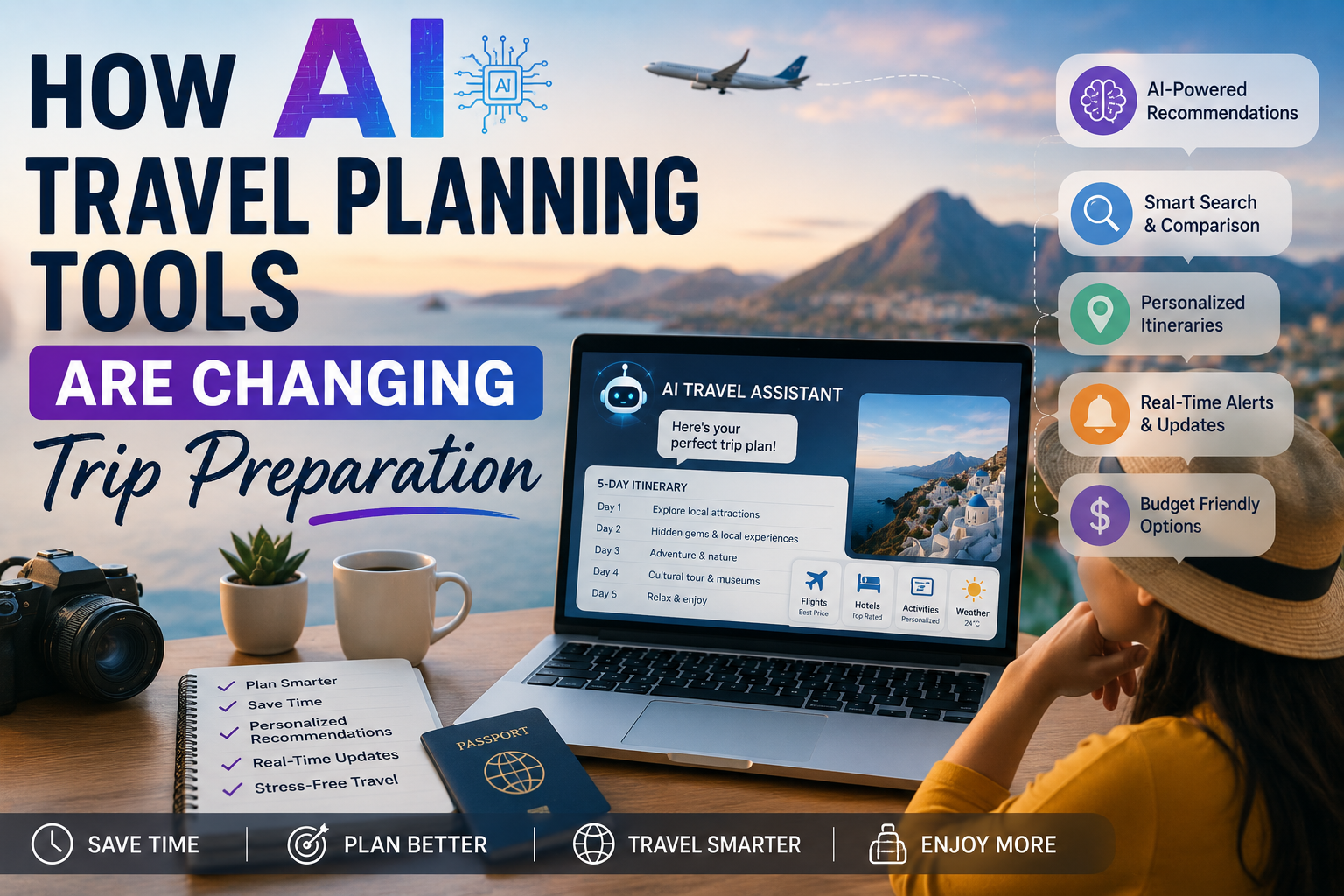
How AI Travel Planning Tools Are Changing Trip Preparation
Summary
Planning a trip used to mean opening dozens of browser tabs, comparing flight prices manually, reading hundreds of reviews, and spending hours building an itinerary.
Today, many travelers can accomplish much of that work in minutes.
Artificial intelligence is changing how people research destinations, organize travel plans, compare options, and prepare for international trips. Instead of searching through endless information, travelers can now receive personalized suggestions based on their budget, travel style, interests, and schedule.
This does not mean AI replaces travel expertise or human judgment. It means travelers now have access to tools that can reduce planning time, organize information more efficiently, and help identify options they might otherwise miss.
In this guide, we’ll look at how AI travel planning tools are transforming trip preparation, the benefits they offer, their limitations, and how travelers can use them effectively.
Key Takeaways
- AI is making trip planning faster and more personalized.
- Travelers use AI for itinerary creation, destination research, budgeting, and travel recommendations.
- AI travel assistants can reduce research time significantly.
- Human judgment is still necessary when making final travel decisions.
- AI works best when combined with verified travel information.
- International travelers increasingly use AI-powered planning tools.
- Traditional travel agencies still offer value for complex trips.
- AI travel planning continues to improve as technology evolves.
Why Is AI Becoming Popular for Travel Planning?
AI has become popular because travelers face information overload.
A typical trip may require research on:
- Flights
- Hotels
- Attractions
- Transportation
- Visa requirements
- Weather conditions
- Local customs
- Travel insurance
The internet contains more travel information than ever before.
The challenge is sorting through it all.
AI helps by organizing large amounts of information and presenting recommendations more efficiently.
Instead of spending hours searching, travelers can ask specific questions and receive customized responses within seconds.
How AI Travel Planning Tools Are Transforming Trip Preparation
AI travel planning tools are transforming trip preparation by simplifying research, personalization, and decision-making.
Traditional travel planning often follows this process:
- Search destinations
- Compare flights
- Research hotels
- Build itineraries
- Check transportation
- Read reviews
- Create schedules
AI can assist with many of these steps simultaneously.
A traveler might request:
“Plan a seven-day trip to Japan focused on food, culture, and public transportation.”
An AI tool can instantly provide:
- Suggested cities
- Daily itinerary ideas
- Transportation recommendations
- Budget estimates
- Popular attractions
This efficiency is one of the biggest reasons travelers are adopting AI-powered travel tools.
How Are Travelers Using AI to Plan Better Trips?
Most travelers use AI as a planning assistant rather than a replacement for research.
Common uses include:
Destination Research
Travelers ask AI to compare destinations based on:
- Budget
- Weather
- Safety
- Activities
- Family-friendliness
- Solo travel suitability
Itinerary Building
AI can organize attractions based on location and travel time.
This helps reduce unnecessary movement between areas.
Budget Planning
Many travelers use AI to estimate:
- Daily expenses
- Transportation costs
- Accommodation ranges
- Food budgets
Travel Checklists
AI-generated packing lists and preparation checklists have become increasingly popular.
Best AI Tools to Plan Your Next Vacation
Several well-known tools are shaping modern travel planning.
ChatGPT
Many travelers use ChatGPT to create itineraries, compare destinations, build packing lists, and answer travel-related questions.
Google Gemini
Gemini assists with destination research and integrates with Google’s information ecosystem.
Google Maps
While not purely an AI travel planner, Google Maps increasingly uses AI features for recommendations, route optimization, and location insights.
Tripadvisor AI Tools
Tripadvisor has integrated AI-driven recommendations into its travel planning features.
Kayak AI Features
Kayak uses AI-assisted search capabilities for flights and travel planning.
Each platform serves different travel planning needs.
What Makes AI Travel Assistants Different From Traditional Search?
Traditional search provides information.
AI provides organization.
For example:
A search engine may show hundreds of pages about visiting Rome.
An AI assistant can summarize:
- Top attractions
- Transportation options
- Suggested itineraries
- Budget estimates
- Travel tips
This saves significant time during the research phase.
However, travelers should still verify critical information before making bookings.
How to Use AI for Stress-Free Travel Planning
The most effective approach is using AI strategically.
Featured Snippet: How to Use AI for Stress-Free Travel Planning
- Define your budget and travel goals.
- Ask AI for destination suggestions.
- Generate a draft itinerary.
- Verify transportation and accommodation details.
- Research current travel requirements.
- Adjust recommendations to your personal preferences.
- Save plans in one organized document.
AI works best when travelers provide detailed instructions.
The more specific the request, the more useful the recommendations tend to be.
AI Travel Planning vs Traditional Travel Agencies
AI and travel agencies solve different problems.
Comparison Table
| Feature | AI Travel Planning | Traditional Travel Agency |
|---|---|---|
| Speed | Very Fast | Moderate |
| Cost | Often Free or Low Cost | Service Fees Possible |
| Personalization | High | High |
| Human Expertise | Limited | Strong |
| Complex Travel Support | Moderate | Excellent |
| Emergency Assistance | Limited | Often Available |
| Group Travel Planning | Good | Excellent |
| Luxury Travel Planning | Moderate | Strong |
Travel agencies still provide significant value for:
- Multi-country itineraries
- Luxury travel
- Corporate travel
- Complex visa situations
- Large group travel
AI currently works best as a planning assistant rather than a complete replacement.
How AI Is Helping International Travelers
International travel often requires more preparation.
Travelers must consider:
- Visa requirements
- Currency exchange
- Transportation systems
- Language barriers
- Local customs
AI-powered tools for planning international trips can simplify these challenges by providing organized information quickly.
For example, someone planning a trip to Japan, Thailand, or Italy can ask AI for transportation guides, cultural etiquette tips, or budget estimates.
This reduces research time while improving preparedness.
Why Personalized Travel Planning Is Becoming More Important
Not all travelers want the same experience.
Some prioritize:
- Food
- Adventure
- Luxury
- Family activities
- History
- Nature
AI helps personalize recommendations based on those preferences.
A backpacker and a luxury traveler visiting the same destination may receive completely different itinerary suggestions.
This level of customization was previously difficult to achieve without significant research.
Can AI Help Travelers Save Money?
In many cases, yes.
AI can identify:
- Budget-friendly destinations
- Alternative travel dates
- Transportation options
- Accommodation comparisons
- Free attractions
However, travelers should verify prices independently because travel costs change frequently.
AI helps identify opportunities but should not be considered a guaranteed pricing source.
Midway Tip: Use AI as a Starting Point, Not the Final Answer
One of the smartest ways to use AI is treating it as a research assistant.
Let AI:
- Organize information
- Generate ideas
- Create draft itineraries
- Suggest destinations
Then verify everything before booking.
This approach combines efficiency with accuracy.
You may also enjoy our guides on solo travel planning, how travelers choose memorable destinations, and why unplanned travel moments often become the best memories.
What Are the Limitations of AI Travel Planning?
AI is useful, but it is not perfect.
Travelers should understand its limitations.
Information Can Become Outdated
Travel conditions change regularly.
Airlines adjust schedules.
Hotels close.
Visa policies change.
Current information should always be verified through official sources.
Personal Preferences Are Complex
AI can make recommendations, but it cannot fully understand human preferences.
Travelers still need to evaluate suggestions themselves.
Local Context Matters
Some travel decisions benefit from local expertise that AI may not fully capture.
This is one reason travel advisors remain valuable in certain situations.
How Artificial Intelligence Is Revolutionizing Travel Beyond Planning
AI affects more than trip preparation.
The travel industry increasingly uses AI for:
- Flight pricing analysis
- Customer support
- Hotel recommendations
- Translation tools
- Navigation systems
- Personalized marketing
Companies across aviation, hospitality, and tourism continue integrating AI into traveler experiences.
This trend is expected to expand in the coming years.
What Does the Future of AI Travel Planning Look Like?
Future travel planning will likely become more personalized.
AI systems may increasingly:
- Monitor flight changes
- Suggest itinerary adjustments
- Recommend activities in real time
- Predict travel disruptions
- Translate conversations instantly
The goal is not simply planning trips.
The goal is helping travelers navigate trips more efficiently.
How Can Travelers Get Better Results From AI Travel Tools?
The quality of AI recommendations often depends on the quality of the request.
Instead of asking:
“Plan a vacation.”
Try asking:
“Plan a 10-day budget-friendly trip to Portugal focused on food, local culture, and public transportation.”
Specific inputs produce more useful outputs.
This simple adjustment often improves travel recommendations dramatically.
People Also Ask
How are AI travel planning tools transforming trip preparation?
AI travel planning tools simplify research, itinerary creation, budgeting, and destination comparisons. They help travelers organize information faster and reduce the time required to plan a trip.
What are the best AI tools for vacation planning?
Popular options include ChatGPT, Google Gemini, Google Maps AI features, Tripadvisor AI tools, and Kayak’s AI-powered search capabilities. Each tool serves different travel planning needs.
Can AI replace travel agents?
Not completely. AI excels at research and organization, while travel agents provide human expertise, personalized support, and assistance with complex travel situations.
Is AI useful for planning international trips?
Yes. AI can help travelers understand transportation systems, cultural etiquette, budgeting, packing requirements, and general trip logistics for international destinations.
What are the benefits of using AI for vacation planning?
Benefits include faster research, personalized recommendations, itinerary generation, budget planning assistance, and improved organization of travel information.
Are AI travel recommendations always accurate?
No. AI-generated information should always be verified through official sources, airline websites, government travel advisories, and current booking platforms before making decisions.
The Smartest Way to Use AI for Travel Planning
The best approach is not choosing between AI and traditional travel research.
It’s combining both.
Use AI to:
- Save time
- Organize information
- Generate ideas
- Build itineraries
Then use trusted sources to confirm details.
This combination provides efficiency without sacrificing accuracy.
Travelers who use AI effectively often spend less time researching and more time focusing on experiences that matter.
Conclusion
AI travel planning tools are changing trip preparation by making travel research faster, more organized, and more personalized.
What once required hours of searching through blogs, forums, maps, and booking websites can now begin with a single conversation.
That does not mean travelers should stop thinking critically or verifying information.
The most successful travel planning still combines technology with human judgment.
Use AI to generate ideas.
Use trusted sources to confirm details.
Use personal experience to make final decisions.
As AI continues to improve, travelers will likely gain even more tools that simplify planning and reduce stress. The travelers who benefit most will be those who use AI as a helpful assistant rather than a complete replacement for informed decision-making.
If you’re planning your next trip, try using an AI tool to create your first draft itinerary. Compare it with your usual planning process and see how much time it saves. You may find that preparing for travel becomes almost as enjoyable as the trip itself.

Ravinder Kaur is the founder of OpinionHook, an independent travel publication established in 2023. She oversees editorial standards, destination research, travel planning resources, and content quality across the website. OpinionHook focuses on publishing practical travel guides, itineraries, budgeting advice, and destination resources designed to help travelers make informed travel decisions.






2 Comments
Comments are closed.