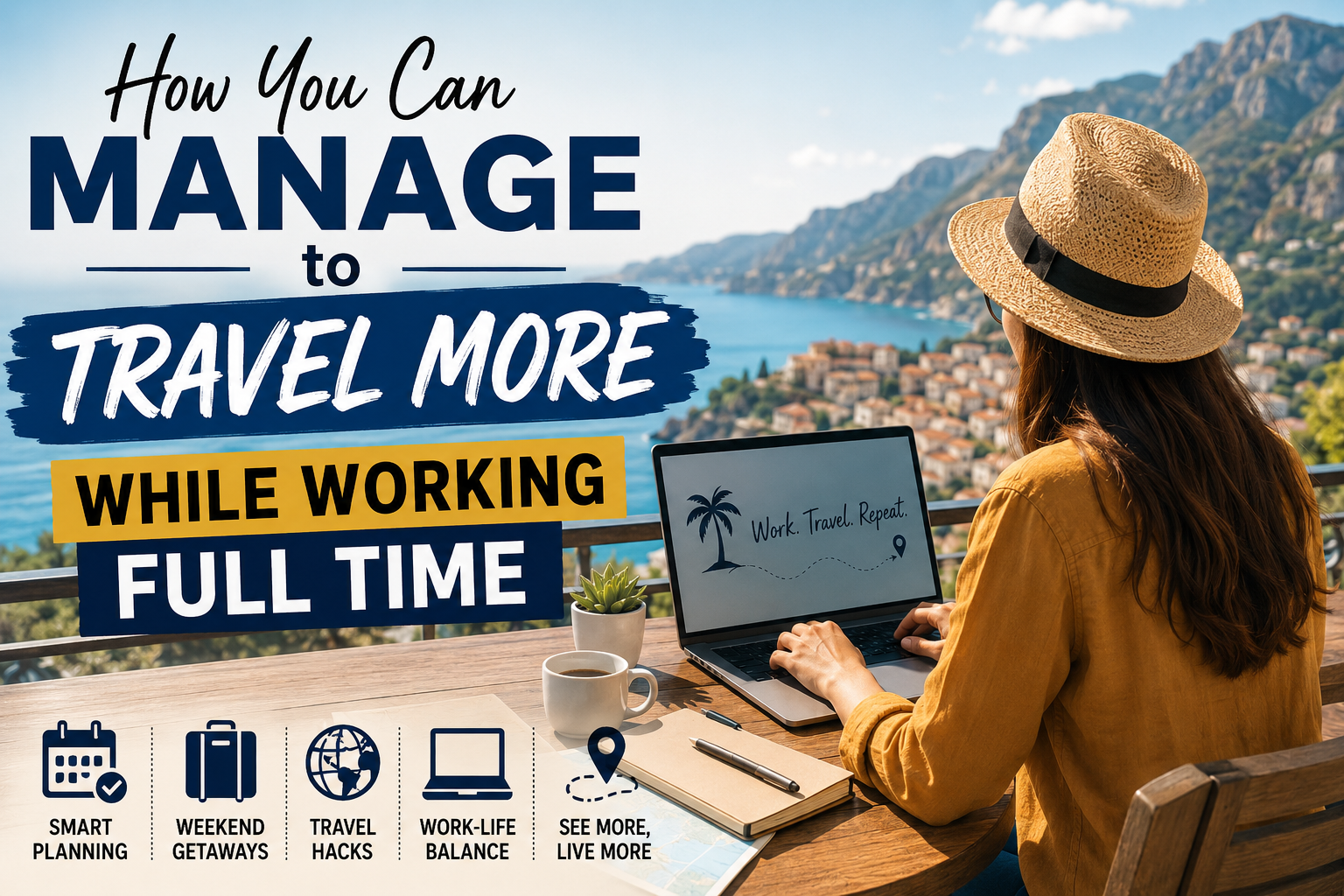
How You Can Manage to Travel More While Working Full Time
Summary
Many people believe they need to quit their job, become a freelancer, or save for years before they can travel regularly. In reality, thousands of full-time employees travel several times a year while maintaining successful careers. The secret is not having unlimited vacation days or a huge salary. It comes down to planning, prioritization, smart budgeting, and using time more effectively.
If you’ve ever wondered whether you can travel with a full-time job, the answer is yes. With the right approach, you can take weekend trips, explore new countries during holidays, work around your vacation schedule, and build a lifestyle that includes both career growth and meaningful travel experiences.
This guide explains practical, proven ways to travel more while working full time without sacrificing your professional responsibilities.
Key Takeaways
- You do not need to quit your job to travel frequently.
- Strategic use of weekends and public holidays can dramatically increase travel opportunities.
- Budgeting specifically for travel makes trips more achievable.
- Remote work options can create additional travel flexibility.
- Planning trips months in advance often reduces costs significantly.
- Short trips can be just as rewarding as long vacations.
- Travel becomes easier when it is treated as a regular life priority rather than an occasional luxury.
- Small lifestyle adjustments can fund multiple trips every year.
Why Is It So Hard to Travel When You Work Full Time?
The biggest challenge is usually not money. It’s time.
Most employees work approximately 40 hours per week, and many also manage family responsibilities, commuting, and personal commitments. After a busy workweek, planning a trip can feel overwhelming.
Another issue is that many people view travel as something that requires two or three weeks away from work. This mindset often limits opportunities.
The reality is different. Many experienced travelers build their travel lifestyle around shorter trips, strategic vacation planning, and efficient use of available time.
Once you stop thinking only about long vacations, more travel opportunities become available.
Can You Travel With a Full-Time Job?
Yes, absolutely.
Millions of people travel regularly while maintaining full-time careers. Employees at companies around the world use vacation days, public holidays, remote work arrangements, and flexible schedules to explore new destinations.
For example, many professionals in technology, consulting, education, healthcare administration, finance, and marketing regularly take multiple trips each year without leaving their jobs.
The key is treating travel as an ongoing lifestyle goal rather than a rare event.
People who travel frequently while employed usually focus on:
- Advanced planning
- Strategic use of vacation days
- Travel budgeting
- Flexible destination choices
- Efficient trip scheduling
These habits matter more than income level.
How to Travel More While Working Full Time
The most effective way to travel more while working full time is to maximize existing time off, plan trips early, and make travel a consistent financial priority.
Let’s look at the strategies that actually work.
1. Treat Travel Like a Financial Goal
Many people spend money on travel only if they have something left over at the end of the month.
Frequent travelers often do the opposite.
They create a dedicated travel fund and contribute to it regularly.
For example:
- Save $50 per week
- Automate monthly transfers
- Allocate bonuses or tax refunds
- Reduce unnecessary subscriptions
A dedicated travel account makes future trips feel realistic and achievable.
According to financial experts, automatic savings systems consistently improve long-term savings behavior because they remove emotional decision-making.
2. Use Long Weekends More Effectively
One of the best ways to travel more when you work full time is maximizing long weekends.
Many people waste these opportunities because they assume a trip isn’t worth taking unless it’s at least a week long.
That’s rarely true.
A three-day weekend can provide enough time for:
- Domestic city breaks
- Beach destinations
- National parks
- Road trips
- Nearby international destinations
Four well-planned long weekends each year can create nearly two extra weeks of travel.
3. Combine Vacation Days With Public Holidays
This is one of the most powerful travel hacks for full-time workers.
Instead of using vacation days randomly, connect them with public holidays.
Example
| Vacation Days Used | Total Days Off |
|---|---|
| 1 Day | 4 Days |
| 2 Days | 5 Days |
| 3 Days | 6-7 Days |
| 5 Days | 9-10 Days |
This strategy significantly increases travel time without consuming your entire annual leave balance.
Many experienced travelers plan their entire year around holiday calendars for this reason.
Best Ways to Travel More When You Work Full Time
4. Book Trips Earlier
Last-minute travel is often expensive.
Booking flights and accommodations several months ahead usually provides:
- Lower prices
- Better accommodation options
- More destination choices
- Reduced travel stress
Data from travel platforms such as Google Flights and major airline booking systems consistently show that advance booking often leads to lower airfare costs compared to purchasing shortly before departure.
Planning ahead also gives you time to coordinate work responsibilities.
5. Embrace Short Trips
Many people underestimate how refreshing a short trip can be.
A two-day getaway can provide:
- Mental reset
- New experiences
- Reduced burnout
- Better work-life balance
Research published by tourism and workplace wellness studies regularly shows that even short breaks can improve mood and reduce stress levels.
The goal is not always to travel farther.
The goal is to travel more consistently.
6. Create a Flexible Destination List
One common mistake is becoming fixated on one expensive destination.
Frequent travelers maintain a list of several places they want to visit.
This flexibility allows them to:
- Book flight deals
- Take advantage of seasonal discounts
- Travel during lower-demand periods
For example, if airfare to Italy is unusually expensive, Portugal, Croatia, Vietnam, Thailand, or Mexico might offer better value during the same period.
Being flexible often leads to better travel experiences and lower costs.
How to Manage Travel With a 9 to 5 Job
The biggest concern for many professionals is balancing work responsibilities with travel plans.
The solution is preparation.
7. Plan Work Ahead Before Leaving
Successful professionals don’t disappear unexpectedly before a trip.
Instead, they:
- Complete priority tasks early
- Inform colleagues in advance
- Set clear expectations
- Create status updates
- Schedule important meetings before departure
This reduces stress both during the trip and after returning.
Travel becomes much more enjoyable when work isn’t constantly hanging over your head.
8. Avoid Overloading Your Vacation
Many travelers try to see everything in one trip.
This often creates exhaustion rather than relaxation.
A better approach is focusing on fewer experiences.
Instead of visiting five cities in seven days, spend more time enjoying one or two locations.
Slower travel often leads to better memories and less stress.
9. Consider Remote Work Opportunities
Remote work has changed travel possibilities for many professionals.
If your employer allows occasional remote work, you may be able to:
- Extend trips
- Work from another city
- Combine business and leisure travel
- Relocate temporarily
Companies increasingly support flexible work arrangements when productivity remains strong.
Even a few remote work days can create additional travel opportunities.
Balancing Work and Travel Lifestyle Without Burnout
Travel should improve your life, not create more stress.
A sustainable travel lifestyle requires balance.
10. Protect Recovery Time
Not every weekend should involve travel.
Constant movement can become exhausting.
Leave space for:
- Rest
- Family
- Exercise
- Personal projects
People who maintain long-term travel habits usually balance active travel periods with recovery periods.
Consistency beats intensity.
11. Travel According to Your Energy Levels
Some travelers enjoy fast-paced adventures.
Others prefer slower experiences.
Choose trips that match your current lifestyle.
If work has been demanding, a relaxing beach destination may be more beneficial than a packed sightseeing schedule.
The best trip is the one that leaves you feeling better afterward.
Travel Hacks for Full-Time Workers
12. Pack Light
Traveling with carry-on luggage saves:
- Airport time
- Checked baggage fees
- Stress
Many experienced travelers use carry-on bags even for week-long trips.
Packing efficiently creates a smoother experience from start to finish.
13. Use Travel Rewards Programs
Airlines, hotels, and travel credit card programs can help reduce costs.
Popular reward systems allow travelers to earn:
- Flight miles
- Hotel points
- Travel upgrades
- Airport lounge access
These programs work best when used responsibly and paid off regularly.
14. Track Flight Prices
Tools such as Google Flights, Skyscanner, and Hopper allow travelers to monitor price changes and receive alerts.
This helps identify:
- Seasonal price drops
- Promotional fares
- Better booking windows
Small savings on each trip can add up significantly over time.
A Practical Annual Travel Plan for Full-Time Employees
Here’s an example of how someone with a standard office job might travel multiple times in one year.
| Trip Type | Duration | Frequency |
|---|---|---|
| Weekend Getaway | 2-3 Days | 4 Times |
| Long Weekend Trip | 3-4 Days | 3 Times |
| Major Vacation | 7-10 Days | 1-2 Times |
| Work Extension Trip | 2-4 Days | 1 Time |
This schedule can create more than 30 travel days annually without leaving a full-time position.
That’s far more achievable than many people realize.
Mid-Article Tip: Start Small
If traveling frequently feels impossible right now, don’t aim for five international trips immediately.
Start with one additional trip this year.
Then add another next year.
Small changes compound over time.
Many people who now travel regularly began with simple weekend road trips and gradually built better habits, savings systems, and planning skills.
People Also Ask
How can I travel more while working full time?
Plan trips around weekends and public holidays, save consistently for travel, book in advance, and prioritize short getaways. Most frequent travelers do not rely only on long vacations. They maximize smaller travel opportunities throughout the year.
Can you travel with a full-time job?
Yes. Millions of employees travel regularly while maintaining full-time careers. Strategic use of vacation days, flexible schedules, remote work options, and advance planning make travel possible without leaving employment.
What are the best ways to travel more when you work full time?
The most effective methods include combining holidays with vacation days, taking weekend trips, maintaining a travel fund, tracking airfare deals, and planning trips several months in advance.
How do busy professionals travel so often?
Busy professionals often prioritize travel financially and schedule trips strategically. They maximize available time off, use rewards programs, plan ahead, and choose destinations that fit their schedules and budgets.
How many vacation days should I save for travel?
There is no universal answer, but many travelers reserve part of their annual leave for one major trip while using remaining days to extend long weekends and public holidays throughout the year.
Is weekend travel worth it?
Yes. Weekend trips provide a change of scenery, reduce stress, and create memorable experiences without requiring significant time away from work. Many frequent travelers rely heavily on weekend travel.
Common Mistakes That Prevent People From Traveling More
Many people struggle to travel regularly because they:
- Wait for the perfect time
- Assume travel requires large budgets
- Ignore long weekends
- Fail to plan vacation days strategically
- Delay booking until prices increase
- Focus only on expensive destinations
The biggest obstacle is often mindset rather than money or time.
People who travel frequently simply make travel a consistent priority.
Conclusion
If you’re wondering how to manage travel with a 9 to 5 job, the answer is simpler than most people expect. You don’t need to quit your job, become a digital nomad, or wait for retirement.
You need a realistic system.
Use long weekends strategically. Save specifically for travel. Book trips earlier. Take advantage of public holidays. Stay flexible with destinations. Consider remote work opportunities when available.
The people who travel the most while working full time are rarely the ones with unlimited freedom. They’re usually the ones who plan ahead and make travel a regular part of their lives.
Start by looking at your calendar today. Identify one long weekend, one potential getaway, and one travel goal for the next six months.
Then book something.
The best way to travel more without quitting your job is to stop waiting for the perfect opportunity and start creating one.

Ravinder Kaur is the founder of OpinionHook, an independent travel publication established in 2023. She oversees editorial standards, destination research, travel planning resources, and content quality across the website. OpinionHook focuses on publishing practical travel guides, itineraries, budgeting advice, and destination resources designed to help travelers make informed travel decisions.