
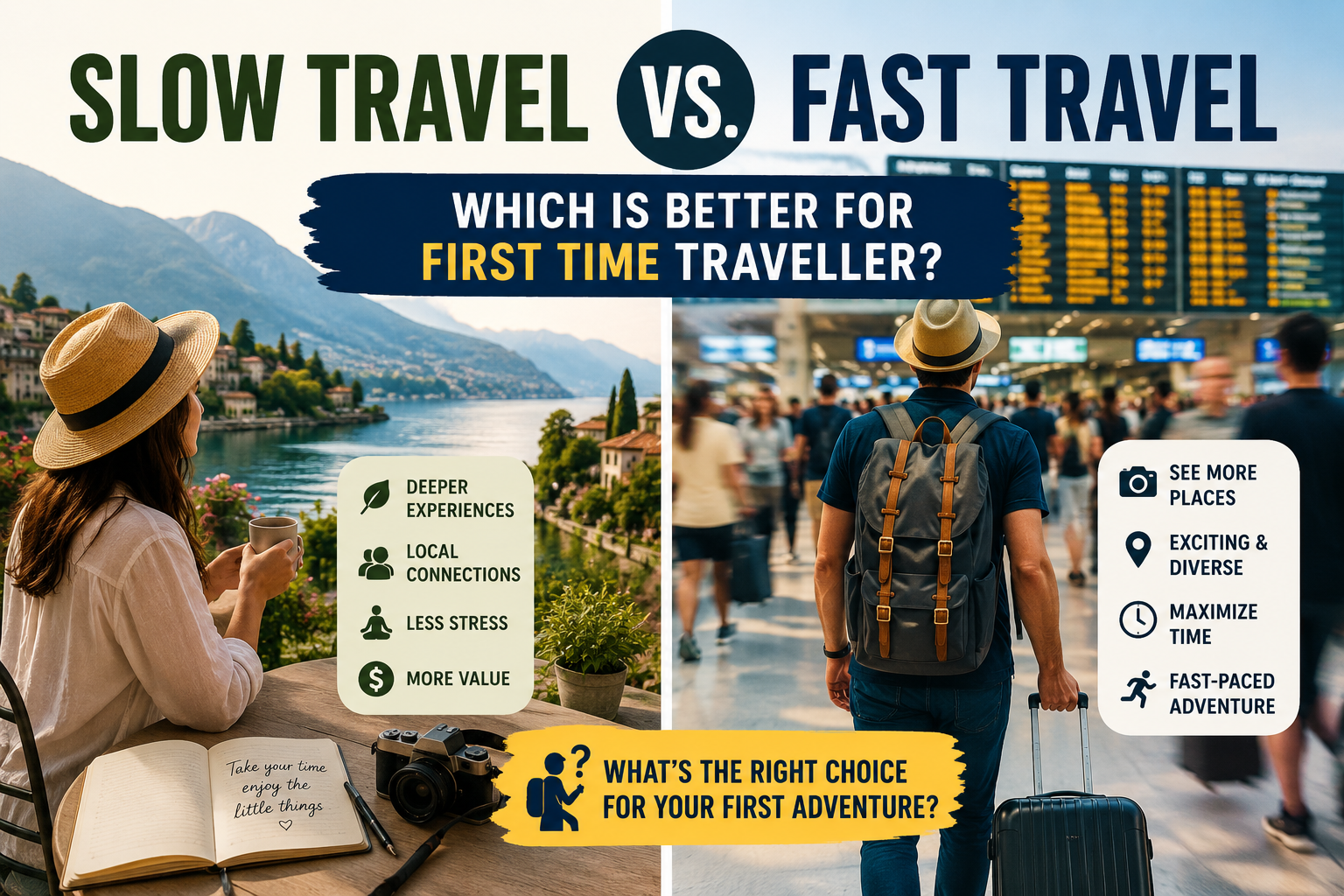
Slow Travel vs. Fast Travel — Which is better for first time traveller
Summary
Planning your first trip can feel overwhelming. One of the biggest decisions is how fast you want to travel. Should you spend several days in one place and truly get to know it? Or should you visit as many destinations as possible and see more in less time?
This is where the debate between slow travel vs fast travel begins.
Neither approach is right or wrong. Both offer unique experiences, different costs, and different challenges. The best choice depends on your personality, budget, available time, and what you hope to get from your trip.
In this guide, you’ll learn the real differences between slow and fast travel, the advantages and disadvantages of each style, and how to decide which travel pace works best for your first adventure.
Key Takeaways
- Slow travel focuses on spending more time in fewer destinations.
- Fast travel focuses on visiting multiple places in a limited timeframe.
- First-time travelers often enjoy slow travel because it reduces stress and decision fatigue.
- Fast travel can be rewarding when vacation time is limited.
- Budget travelers frequently save money with slow travel through longer stays and fewer transportation costs.
- Neither style is universally better. Your goals should determine your travel pace.
- Many successful travelers combine both approaches depending on the destination and trip length.
What Is Slow Travel?
Slow travel is a travel style that prioritizes quality over quantity.
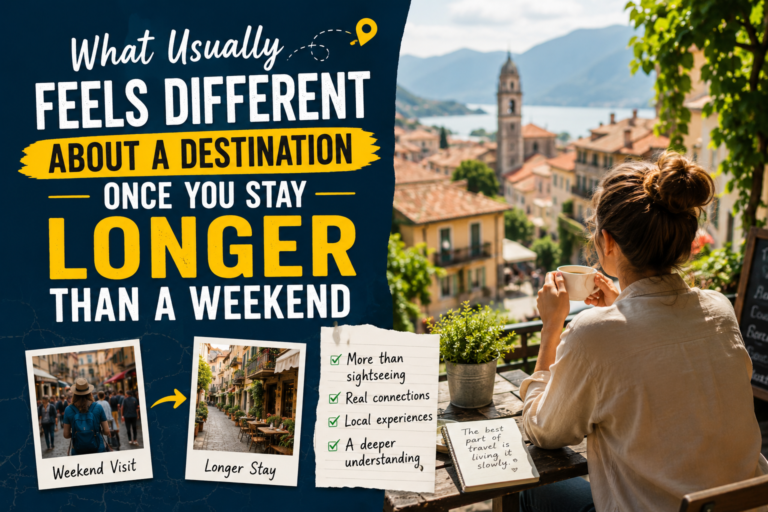
Instead of trying to visit five cities in ten days, you might spend the entire trip in one city or region. The goal is to experience daily life, local culture, food, neighborhoods, and traditions at a deeper level.
The concept gained popularity alongside the “Slow Food Movement,” which started in Italy during the 1980s. The idea was simple: enjoy experiences rather than rushing through them.
A traveler spending two weeks in Lisbon, working from local cafes, shopping at neighborhood markets, and taking day trips nearby is practicing slow travel.
This approach often creates more meaningful travel experiences because visitors have time to connect with the destination beyond tourist attractions.
Why Slow Travel Appeals to Beginners
Many first-time travelers underestimate how exhausting constant movement can be.
Checking into hotels, catching trains, finding transportation, and managing luggage takes time and energy. Slow travel removes much of that pressure.
Beginners often find it easier to gain confidence when they stay longer in one place rather than constantly adapting to new environments.
What Is Fast Travel?
Fast travel focuses on seeing more destinations during a single trip.
This style is common among travelers with limited vacation days who want to maximize their experience.
For example, someone visiting Paris, Amsterdam, Brussels, and Berlin within ten days is following a fast travel approach.
Fast travel prioritizes variety. Travelers can experience multiple cultures, landmarks, cuisines, and cities in a short period.
Many first-time visitors to Europe choose this style because they may not know when they’ll return and want to see as much as possible.
Why Fast Travel Remains Popular
Fast travel offers excitement.
Every few days brings a new city, different food, new attractions, and fresh experiences. For some people, that constant change is exactly what makes travel exciting.
Travel companies, guided tours, and package vacations often use fast-travel itineraries because they allow travelers to cover more destinations quickly.
Slow Travel vs Fast Travel: Side-by-Side Comparison
| Factor | Slow Travel | Fast Travel |
|---|---|---|
| Number of Destinations | Few | Many |
| Travel Pace | Relaxed | Busy |
| Transportation Costs | Lower | Higher |
| Local Cultural Immersion | High | Moderate |
| Planning Complexity | Lower | Higher |
| Flexibility | High | Lower |
| Stress Level | Usually Lower | Usually Higher |
| Ideal For | Beginners, long trips, remote workers | Short vacations, bucket-list travelers |
| Accommodation Costs | Often lower with long stays | Can be higher due to frequent bookings |
| Experience Style | Deep and meaningful | Broad and varied |
Is Slow Travel Better for First-Time Travellers?
In many cases, yes.
Slow travel is often better for first-time travellers because it reduces stress while increasing comfort and confidence.
When you’re new to travel, almost everything requires attention:
- Navigating airports
- Using public transportation
- Understanding local customs
- Managing money abroad
- Handling language differences
Trying to do all of this while changing cities every few days can become overwhelming.
By staying longer in one destination, you create routines. You learn the transportation system, discover favorite restaurants, and gain confidence navigating the area.
That familiarity allows you to enjoy the trip rather than constantly managing logistics.
However, slow travel isn’t automatically the best choice for everyone.
Some travelers thrive on movement and enjoy packed itineraries. Personality matters.
Why Some First-Time Travelers Prefer Fast Travel
Fast travel can be an excellent choice when time is limited.
Imagine someone from the United States taking their first trip to Europe with only ten vacation days available.
Spending all ten days in one city might feel restrictive. They may want to see famous places like:
- The Eiffel Tower
- The Colosseum
- The canals of Amsterdam
- The Brandenburg Gate
Fast travel allows them to experience multiple iconic destinations in one trip.
Many travelers later use those first fast-paced trips to identify locations they want to revisit for longer stays.
Think of fast travel as sampling a menu before deciding which meal you want next time.
The Real Cost Difference Between Slow and Fast Travel
One of the biggest misconceptions is that slow travel always costs more because you stay longer.
In reality, slow travel often reduces daily expenses.
Transportation Savings
According to data from organizations such as the International Air Transport Association and major booking platforms, transportation remains one of the largest travel expenses.
When you constantly move between cities, costs add up quickly:
- Flights
- Trains
- Buses
- Airport transfers
- Luggage fees
Slow travelers pay these costs less frequently.
Accommodation Savings
Many apartment rental platforms and hotels offer discounts for weekly or monthly stays.
A traveler staying four weeks in one city may pay significantly less per night than someone booking four separate one-week stays in different locations.
Food Savings
Slow travelers often use local grocery stores and kitchens.
Fast travelers tend to rely more on restaurants because they have less time to settle into a routine.
This can create noticeable savings over longer trips.
How Travel Pace Affects Your Experience
Travel pace influences what you remember most.
Fast travelers often remember landmarks.
Slow travelers often remember people.
For example, someone rushing through Tokyo might remember visiting famous attractions and neighborhoods.
Someone staying for three weeks might remember conversations with locals, favorite coffee shops, morning walks, and everyday cultural experiences.
Neither memory is better.
They are simply different.
If your goal is to collect experiences, fast travel may fit.
If your goal is to understand a place, slow travel often provides more opportunities.
Backpacking vs Sightseeing: Where Do They Fit?
Many people confuse backpacking with slow travel and sightseeing with fast travel.
The reality is more complicated.
Backpacking
Backpacking often involves budget-conscious travel and can be either slow or fast.
Some backpackers stay in one destination for weeks.
Others move every two days.
Sightseeing
Sightseeing focuses on attractions and landmarks.
You can sightsee slowly or quickly.
For example:
- Spending one week exploring Rome is slow sightseeing.
- Visiting Rome for one day before moving on is fast sightseeing.
The two concepts overlap but are not identical.
How to Choose Your Travel Style as a Beginner
The best travel style for beginners depends on four factors.
1. Available Time
If you only have one week, fast travel may help maximize your opportunities.
If you have three or four weeks, slow travel becomes much more practical.
2. Budget
Longer stays often reduce daily expenses.
Travelers with tighter budgets frequently benefit from a slower pace.
3. Energy Level
Some people love constant activity.
Others feel exhausted after changing hotels every few days.
Be honest about your comfort level.
4. Travel Goals
Ask yourself one question:
“What do I want to remember from this trip?”
If your answer involves landmarks and famous attractions, fast travel may fit.
If your answer involves local culture and daily life, slow travel may be the better choice.
A Practical Hybrid Approach for First-Time Travellers
Many experienced travelers recommend a hybrid strategy.
Instead of choosing one extreme, combine both styles.
For example:
Two-Week Europe Example
Days 1-4: London
Days 5-8: Amsterdam
Days 9-14: Paris
This approach allows you to visit multiple destinations without feeling rushed.
You still experience variety while giving yourself enough time to settle into each location.
For most beginners, this balance works extremely well.
Helpful Tip
Before finalizing your itinerary, estimate how many hours you’ll spend packing, checking out, traveling, and checking in.
Many travelers are surprised to discover that changing cities can consume nearly an entire day.
Understanding this often leads to more realistic planning.
Common Mistakes First-Time Travelers Make
Trying to See Everything
No trip can cover everything.
Attempting to do so often leads to exhaustion rather than enjoyment.
Following Social Media Itineraries
Many viral itineraries prioritize impressive photos rather than practical travel experiences.
What looks good online may feel exhausting in reality.
Ignoring Recovery Time
Jet lag, long walks, and transportation delays affect everyone.
Leaving unscheduled time creates a more enjoyable trip.
Underestimating Transportation Time
A two-hour train ride can easily become a five-hour travel day once transfers and waiting times are included.
Always build buffer time into your schedule.
What Travel Experts Often Recommend
Many travel writers and long-term travelers increasingly advocate slower travel, especially for beginners.
Research from organizations like the United Nations World Tourism Organization has highlighted growing interest in sustainable and experience-focused tourism.
Travelers are increasingly seeking:
- Authentic local experiences
- Cultural immersion
- Reduced travel stress
- Sustainable tourism practices
These goals naturally align with slower travel styles.
That does not mean fast travel is outdated. It simply serves a different purpose.
People Also Ask
What is the difference between slow travel and fast travel?
Slow travel focuses on spending more time in fewer places to build deeper connections with a destination. Fast travel focuses on visiting multiple destinations within a limited timeframe to maximize variety and sightseeing opportunities.
Is slow travel cheaper than fast travel?
In many cases, yes. Slow travel often reduces transportation costs and can provide accommodation discounts through longer stays. However, total trip costs still depend on destination, travel season, and personal spending habits.
Is slow travel better for first-time travellers?
For many beginners, slow travel provides a less stressful experience because it reduces frequent transportation changes and allows more time to adapt to unfamiliar environments. It can make learning travel skills easier and more enjoyable.
How many destinations should a first-time traveler visit?
A good rule is quality over quantity. For a one- to two-week trip, staying in one to three destinations often creates a more balanced and enjoyable experience than trying to visit five or six locations.
Can I combine slow travel and fast travel?
Yes. Many experienced travelers use a hybrid approach by staying several days in each destination while still visiting multiple places during a trip. This often provides the benefits of both travel styles.
What is the best travel pace for beginners?
Most first-time travelers benefit from a moderate pace. Spending at least three to five days in each destination usually provides enough time to explore comfortably without feeling rushed.
Related Resources
You may also find these guides useful:
- How to Plan Your First International Trip
- Budget Travel Tips for First Timers
- Common Solo Travel Mistakes and How to Avoid Them
- How to Create a Realistic Travel Itinerary
Conclusion: Which Travel Style Should You Choose?
When comparing slow travel vs fast travel, there is no universal winner.
The better choice depends on your goals, schedule, budget, and personality.
If you’re a first-time traveller looking for less stress, deeper cultural connections, and more meaningful travel experiences, slow travel often provides the best foundation. You’ll spend less time managing logistics and more time enjoying where you are.
If your vacation time is limited and you want to experience several destinations, fast travel can be a great option. You’ll see more places and gain a broader perspective, even if your experience in each location is shorter.
For most beginners, the smartest choice is often somewhere in the middle. Visit a few destinations, stay long enough to enjoy them, and leave room for unexpected experiences.
Travel is not a competition. The goal is not to see the most places. The goal is to have a trip you’ll remember for the right reasons.
Before booking your first itinerary, decide what matters most to you: seeing more places or understanding a place more deeply. Your answer will point you toward the travel style that fits you best.
And if you’re still unsure, start slower than you think you need to. Most first-time travelers regret rushing. Very few regret having extra time to enjoy a destination.

Ravinder Kaur is the founder of OpinionHook, an independent travel publication established in 2023. She oversees editorial standards, destination research, travel planning resources, and content quality across the website. OpinionHook focuses on publishing practical travel guides, itineraries, budgeting advice, and destination resources designed to help travelers make informed travel decisions.


2 Comments
Comments are closed.