
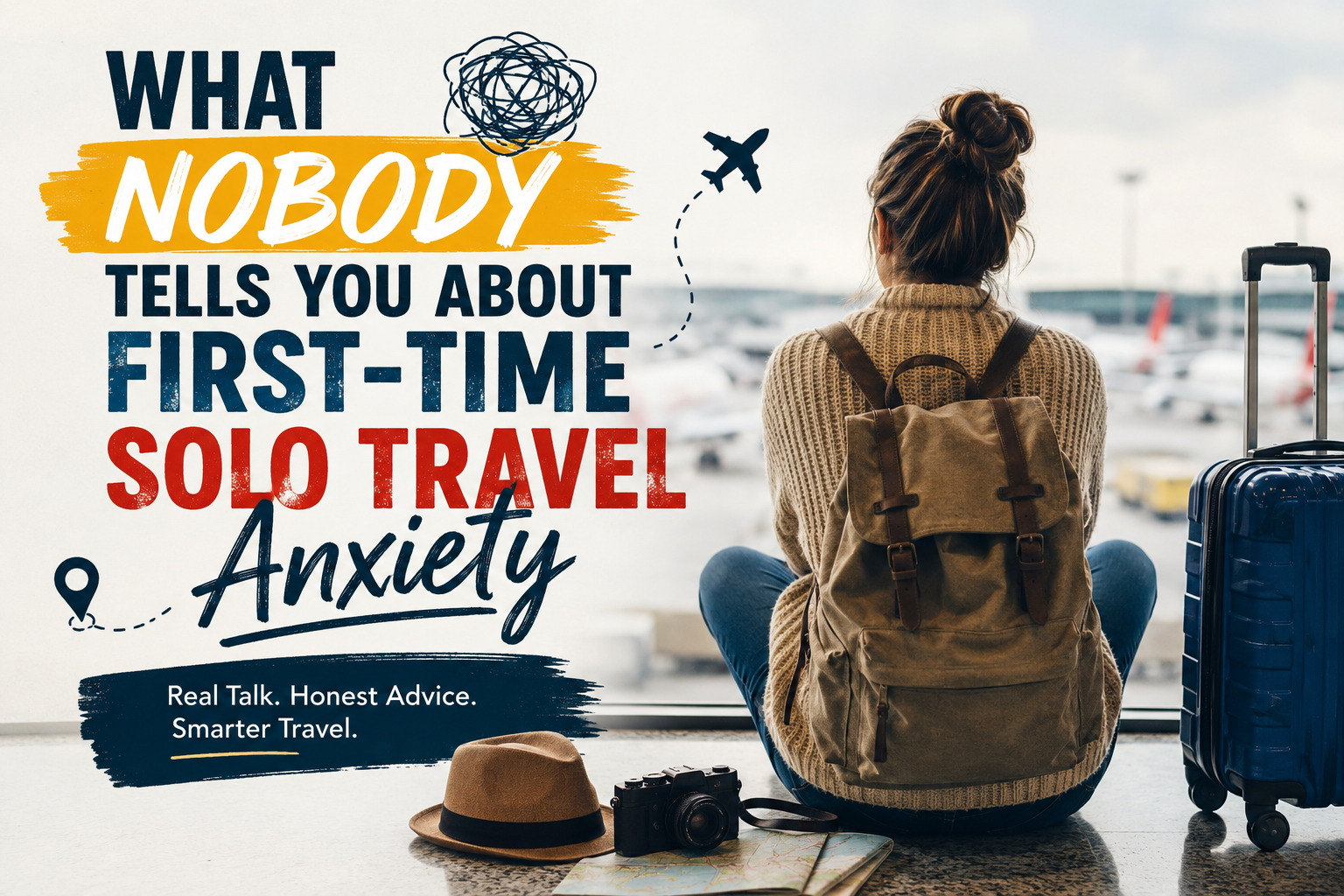
What Nobody Tells You About First-Time Solo Travel Anxiety
Quick Summary
You spend weeks planning your first solo trip. You book flights, save maps, watch travel videos, and imagine yourself confidently exploring a new destination. Then a few days before departure, something unexpected happens.
You start questioning everything.
What if I get lost? What if I feel lonely? What if something goes wrong? What if I hate it?
If you’re experiencing first-time solo travel anxiety, you’re far from alone. In fact, many experienced travelers admit that nervousness before traveling alone never completely disappears. The difference is that they learn how to manage it.
This guide explains why solo travel anxiety happens, what to expect on your first solo trip, and practical ways to handle the fears that often show up before and during your journey.
Key Takeaways
- First-time solo travel anxiety is extremely common and affects travelers of all ages.
- Feeling nervous before a solo trip does not mean you’re making a mistake.
- Most fears are based on uncertainty rather than actual danger.
- Preparation reduces anxiety, but trying to control everything often increases it.
- Confidence usually grows after the first few days of traveling alone.
- Small daily actions can help you manage stress and enjoy the experience more.
- Solo travel teaches problem-solving, independence, and resilience in ways group travel often cannot.
Why Does First-Time Solo Travel Anxiety Feel So Intense?
First-time solo travel anxiety feels intense because your brain is preparing for uncertainty.
When you’re traveling with friends, family, or a tour group, responsibility is shared. When you’re traveling alone for the first time, every decision suddenly feels like your responsibility.
Your brain interprets unfamiliar situations as potential risks. It doesn’t matter whether you’re flying to another continent or taking a short domestic trip. The fear often comes from uncertainty rather than the destination itself.
Researchers from organizations such as the American Psychological Association have long explained that uncertainty is one of the biggest triggers of anxiety. The human brain naturally prefers predictable situations.
That means even exciting experiences can create stress.
You can be thrilled about your trip and anxious at the same time.
Both emotions can exist together.
Is It Normal to Feel Anxious Before Solo Travel?
Yes. It is completely normal to feel anxious before solo travel.
Many first-time travelers assume confident solo travelers never feel nervous. The reality is very different.
Even experienced travelers often experience:
- Pre-trip anxiety
- Fear of getting lost
- Worries about safety
- Concerns about loneliness
- Stress about transportation
- Fear of making mistakes
The difference is that experienced travelers recognize these feelings as part of the process.
They don’t treat anxiety as a sign to cancel the trip.
Instead, they treat it as a sign that they are stepping outside their comfort zone.
That mindset shift can make a huge difference.
What Nobody Tells You About Solo Travel Fears
The biggest solo travel fears are often not the ones that cause problems.
Many first-time travelers spend weeks worrying about dramatic situations. Yet when they arrive, they discover their biggest challenge is something much simpler.
Common worries before departure often include:
| Fear Before the Trip | What Usually Happens |
|---|---|
| Getting hopelessly lost | GPS and offline maps solve most issues |
| Not meeting anyone | Conversations happen naturally in many situations |
| Language barriers | Translation apps help significantly |
| Safety concerns | Basic precautions reduce most risks |
| Eating alone | It becomes normal after a few meals |
| Feeling lonely constantly | Most travelers experience both solitude and connection |
The fear itself is often worse than the actual experience.
That’s one of the most surprising lessons first-time solo travelers learn.
What to Expect on Your First Solo Trip
The first few days are usually the hardest.
Many travelers expect instant confidence the moment they arrive. Instead, the first day can feel overwhelming.
You may experience:
Information Overload
New transportation systems, unfamiliar streets, different languages, and cultural differences all demand attention.
Your brain is processing far more information than it normally does at home.
Feeling mentally tired is completely normal.
Emotional Ups and Downs
One moment you feel excited.
An hour later you wonder why you booked the trip.
Then you find a great café, enjoy a beautiful view, and feel amazing again.
These emotional swings are common during the early stages of solo travel.
Growing Confidence
Most travelers notice a turning point after handling a few challenges independently.
Maybe you navigate a train station successfully.
Maybe you solve a hotel issue.
Maybe you find your way around a city without help.
Each small success builds confidence.
How to Deal With Anxiety When Traveling Alone
The most effective way to deal with anxiety when traveling alone is to focus on preparation, flexibility, and realistic expectations.
Here are strategies that consistently help beginners.
Start With a Simple Destination
Many people make their first solo trip unnecessarily difficult.
You do not need to start with a remote mountain village or a complex multi-country itinerary.
Choose a destination with:
- Good transportation
- Strong tourism infrastructure
- Reliable internet access
- Plenty of accommodation options
A smoother environment allows you to focus on gaining confidence.
Create a First-Day Plan
One reason solo travel nervousness increases is uncertainty.
Instead of planning every minute, create a simple first-day structure.
For example:
- Arrive at accommodation
- Check in
- Eat a meal nearby
- Take a short walk
- Return early and rest
Knowing what comes next can significantly reduce anxiety.
Download Offline Resources
Before departure, save:
- Offline maps
- Hotel information
- Flight details
- Emergency contacts
- Transportation information
Tools such as Google Maps and Google Translate can make navigating unfamiliar places much easier.
Having backup information creates a sense of security.
Focus on the Next Step Only
Anxiety often grows when you think about every possible problem.
Instead of worrying about the entire trip, focus only on the next task.
Ask yourself:
“What do I need to do in the next hour?”
This simple technique prevents your mind from spiraling into worst-case scenarios.
Why Solo Travel Anxiety Often Peaks Right Before Departure
Many travelers experience their highest anxiety 24 to 72 hours before leaving.
This happens because the trip suddenly becomes real.
Weeks earlier, the trip felt like an idea.
Now the flight is approaching.
Packing begins.
Friends start asking questions.
Reality replaces imagination.
This period often triggers thoughts like:
- Maybe I shouldn’t go.
- What if something goes wrong?
- Why did I book this?
Ironically, these thoughts often decrease significantly once the journey begins.
Action tends to reduce anxiety more effectively than endless thinking.
The Difference Between Fear and Real Risk
Not all fear indicates actual danger.
This distinction is important.
Fear is an emotional response.
Risk is a measurable reality.
For example:
You might feel terrified about dining alone in a restaurant.
The actual risk is extremely low.
On the other hand, ignoring travel insurance or local safety advice involves genuine risk, even if it doesn’t feel scary.
Smart solo travelers learn to separate emotional discomfort from legitimate safety concerns.
That allows them to make better decisions.
A Practical Mindset Shift That Helps Most Beginners
One of the most useful solo travel anxiety tips for beginners is changing the goal of the trip.
Many people think:
“I need everything to go perfectly.”
That expectation creates pressure.
A better goal is:
“I want to learn how to travel independently.”
Now mistakes become part of the experience instead of evidence of failure.
Miss a train?
You learn.
Take a wrong turn?
You learn.
Feel awkward eating alone?
You learn.
This mindset removes a surprising amount of stress.
Mid-Trip Reality Check: You Are Probably Doing Better Than You Think
If you’re reading this while already traveling, here’s something worth remembering.
Most solo travelers judge themselves too harshly.
You see:
- Your mistakes
- Your awkward moments
- Your uncertainty
You don’t notice your successes.
You successfully booked transportation.
You arrived in a new place.
You solved problems.
You adapted.
Those are achievements.
A helpful exercise is writing down three things you handled well each evening.
Many travelers find this practice increases confidence quickly.
For more travel preparation advice, you can also explore our solo travel planning guide and beginner travel safety checklist before future trips.
What Experienced Solo Travelers Wish They Knew Earlier
Many long-term solo travelers share similar lessons.
The biggest surprise is rarely about destinations.
It’s about themselves.
They often realize:
Loneliness Comes and Goes
Being alone and feeling lonely are not the same thing.
You can feel lonely in a crowded group.
You can feel perfectly content while exploring alone.
Both experiences are normal during solo travel.
Confidence Comes From Action
Reading articles helps.
Watching videos helps.
Planning helps.
But confidence usually arrives after real experiences.
Confidence is built through action, not preparation alone.
Nobody Notices You As Much As You Think
Many beginners worry about looking awkward.
In reality, most people are focused on themselves.
The restaurant staff doesn’t care that you’re dining alone.
The people at the attraction aren’t judging you.
The pressure often exists only in your own mind.
Solo Travel Tips for Beginners Who Struggle With Anxiety
If anxiety is affecting your excitement, these practical habits can help.
Stay Connected
Share your itinerary with trusted family members or friends.
Regular check-ins provide reassurance for both you and them.
Avoid Overloading Your Schedule
Trying to see everything often creates exhaustion.
Leave room for rest and flexibility.
Maintain Familiar Habits
Simple routines create stability.
Examples include:
- Morning coffee
- Evening walks
- Reading before bed
- Daily journaling
These familiar habits help your mind adjust to new environments.
Limit Doom-Scrolling
Constantly reading travel horror stories increases anxiety.
Most trips happen without major issues.
Focus on reliable information instead of worst-case scenarios.
Organizations such as the World Tourism Organization consistently report hundreds of millions of successful international trips every year.
Most travelers return home with positive memories rather than disasters.
People Also Ask
Is it normal to feel anxious before solo travel?
Yes. Feeling anxious before traveling alone is extremely common. Anxiety often comes from uncertainty, unfamiliar situations, and increased responsibility. Most travelers experience some nervousness before departure, especially on their first solo trip.
How do I stop being nervous about traveling alone?
Focus on preparation rather than perfection. Research your destination, plan your first day, save important information offline, and break the trip into small manageable steps. Confidence usually grows after you successfully handle a few situations independently.
What should I expect on my first solo trip?
Expect a mix of excitement, uncertainty, confidence, and occasional stress. The first few days may feel overwhelming, but most travelers gradually become more comfortable as they learn how to navigate the destination.
Is solo travel safe for beginners?
Solo travel can be safe when you choose suitable destinations, stay aware of your surroundings, follow local guidelines, and use common-sense precautions. Good preparation significantly improves safety and confidence.
How long does solo travel anxiety last?
For many travelers, anxiety is strongest before departure and during the first few days. As routines develop and confidence grows, anxiety often decreases substantially.
What if I feel lonely while traveling alone?
Loneliness is normal and temporary. Staying in social accommodations, joining tours, attending local events, or simply starting conversations can help. Many solo travelers experience periods of both solitude and connection.
Final Thoughts: The Anxiety Isn’t the Problem
First-time solo travel anxiety is not proof that you’re making the wrong decision.
In many cases, it’s evidence that you’re about to do something meaningful.
The truth that nobody tells you is that confidence usually comes after the trip begins, not before.
Most experienced solo travelers were nervous during their first journey too.
They worried about getting lost.
They worried about safety.
They worried about being alone.
Then they traveled anyway.
And that’s where growth happened.
If you’re preparing for your first solo trip, don’t wait until every fear disappears. Start with good preparation, realistic expectations, and a willingness to learn. Your first trip does not need to be perfect to be successful.
Take the first step, book thoughtfully, stay informed, and give yourself permission to be nervous.
The goal isn’t to travel without fear.
The goal is to travel even when fear shows up.
That’s usually where the best stories begin.
For your next step, create a simple first-trip plan today. Choose a destination, outline your first 24 hours, and prepare your essential travel documents. Small actions reduce anxiety faster than endless worrying ever will.

Ravinder Kaur is the founder of OpinionHook, an independent travel publication established in 2023. She oversees editorial standards, destination research, travel planning resources, and content quality across the website. OpinionHook focuses on publishing practical travel guides, itineraries, budgeting advice, and destination resources designed to help travelers make informed travel decisions.


One Comment
Comments are closed.