
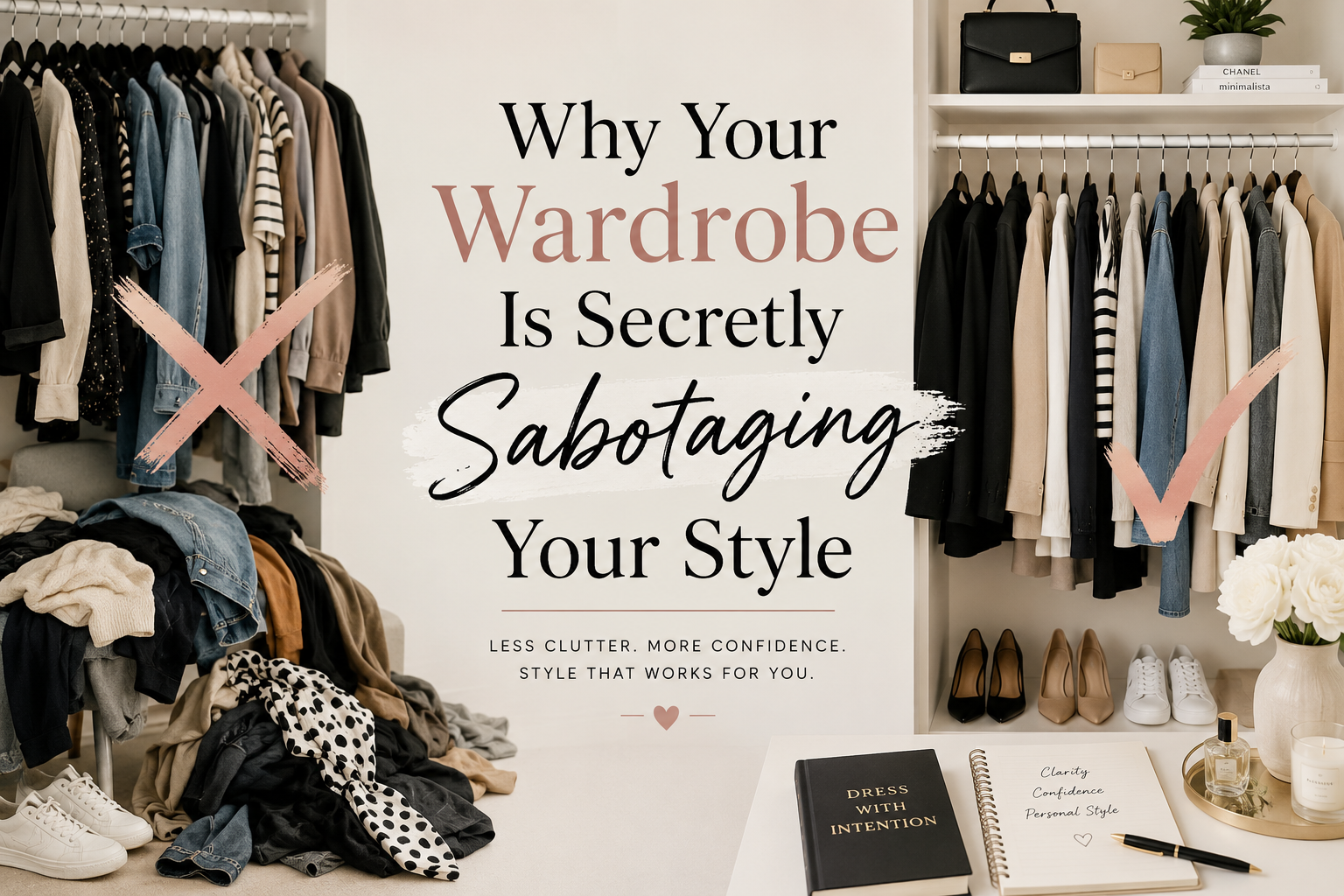
Why Your Wardrobe Is Secretly Sabotaging Your Style
Summary
Many people think they have a style problem when they actually have a wardrobe problem. You may buy new clothes regularly, follow fashion trends, save outfit inspiration, and still feel like your outfits never look right. The issue often isn’t your taste. It’s the habits, choices, and clothing pieces already sitting in your closet.
Your wardrobe directly affects your confidence, daily decisions, and personal style. When your closet contains clothes that don’t fit, pieces you never wear, outdated purchases, or items that don’t work together, getting dressed becomes frustrating.
This guide explains the common wardrobe mistakes ruining your style, why your style isn’t working, and practical ways to fix your wardrobe so it starts supporting your personal style instead of holding it back.
Why Your Wardrobe Is Secretly Sabotaging Your Style
Have you ever stood in front of a full closet and thought, “I have nothing to wear”?
Millions of people experience this problem regularly. According to studies from the fashion resale market and consumer behavior research, many people wear only a small percentage of their wardrobes regularly while the rest remains untouched.
The problem often isn’t a lack of clothing. It’s having the wrong clothing.
Your wardrobe habits can quietly damage your style without you realizing it. Clothes that no longer fit, impulse purchases, trend pieces, and items bought for an imaginary lifestyle can all make your outfits feel disconnected.
If your style feels inconsistent, your closet may be the reason.
Key Takeaways
- A crowded closet can make style decisions harder.
- Poor fit ruins even expensive outfits.
- Shopping without a plan creates wardrobe confusion.
- Trends should support your style, not replace it.
- Quality basics often improve style more than trendy pieces.
- Your wardrobe should match your real lifestyle.
- Small changes can significantly improve personal style.
How Your Closet Affects Your Style
Your wardrobe acts as your personal styling tool.
If the clothing inside your closet works together, getting dressed becomes easier. If the pieces compete against each other, every outfit becomes difficult.
People often blame themselves for poor style when the actual issue is:
- Too many random purchases.
- Wrong sizes.
- Outdated items.
- Lack of versatile basics.
- Clothes bought for special occasions only.
- Impulse trend purchases.
A well-built wardrobe creates outfit options. A disorganized wardrobe creates frustration.
Why Your Style Isn’t Working
Many people feel disconnected from their clothing because their wardrobe does not reflect their actual life.
Ask yourself:
- Do I buy clothes for my real lifestyle?
- Do my clothes fit me today?
- Can most of my clothes work together?
- Do I feel comfortable wearing these items?
If the answer is no, your wardrobe may be holding you back.
Fashion stylists frequently emphasize that personal style begins with self-awareness rather than shopping.
Signs Your Wardrobe Is Holding You Back
Several warning signs indicate that your closet may be sabotaging your style.
You Wear the Same Few Outfits
Research within the fashion industry consistently shows that people regularly wear a small percentage of their clothing.
If you only wear 20 percent of your wardrobe, the remaining pieces may be creating clutter rather than value.
You Buy Clothes But Still Feel Unsatisfied
Shopping often provides temporary excitement, but if purchases do not work with your existing wardrobe, they rarely solve style problems.
Your Closet Feels Overwhelming
Too many choices can create decision fatigue. Psychologists have studied how excessive options make decision-making more stressful.
You Save Outfits You Cannot Recreate
If your inspiration photos never resemble your actual wardrobe, there may be a gap between your style goals and your clothing choices.
Common Wardrobe Mistakes That Ruin Your Style
Most wardrobe styling mistakes happen gradually.
People rarely ruin their style overnight. Small habits accumulate over time.
Buying Trends Instead of Basics
Fashion trends change quickly.
Items that receive attention on social media may not suit your lifestyle, body type, or personal preferences.
Stylists often recommend building around basics such as:
- Well-fitting jeans
- Neutral tops
- Quality jackets
- Versatile shoes
- Simple layers
Trends should complement your wardrobe rather than dominate it.
Keeping Clothes That No Longer Fit
Many people keep clothing for emotional reasons.
These items may include:
- Clothes from previous sizes.
- Expensive purchases.
- Old favorites.
- Aspirational pieces.
Keeping clothes that do not fit can create frustration every time you open your closet.
Professional organizers frequently recommend evaluating clothing based on your current body and lifestyle.
Ignoring Fit
Fit matters more than brand names.
A moderately priced item that fits properly often looks better than expensive clothing with poor proportions.
Fashion experts consistently emphasize:
- Shoulder fit.
- Sleeve length.
- Pant length.
- Proper sizing.
Simple tailoring can dramatically improve appearance.
How Fast Fashion Can Affect Personal Style
Fast fashion makes it easy to buy inexpensive clothing frequently.
However, constant purchasing can create:
- Inconsistent wardrobes.
- Low-quality garments.
- Trend overload.
- Difficult outfit combinations.
Many consumers now prefer fewer, better-quality items that last longer.
The growing popularity of resale platforms and capsule wardrobes reflects this shift toward intentional shopping.
The Difference Between a Functional Closet and a Frustrating Closet
| Functional Wardrobe | Frustrating Wardrobe |
|---|---|
| Clothes fit properly | Multiple wrong sizes |
| Pieces work together | Random purchases |
| Reflects lifestyle | Fantasy lifestyle |
| Easy outfit choices | Daily frustration |
| Quality basics | Excessive trends |
| Clear organization | Closet clutter |
Buying Clothes for Your Fantasy Life
One of the most common wardrobe mistakes is shopping for a life you do not actually live.
Examples include:
- Buying formal clothes for a casual lifestyle.
- Purchasing expensive office wear while working remotely.
- Owning multiple party outfits that rarely get used.
- Collecting trendy pieces that feel uncomfortable.
Your wardrobe should support your real schedule.
If you spend most days working from home, commuting, parenting, or traveling, your clothing should reflect those activities.
Why Fit Is More Important Than Fashion Trends
The right fit improves every outfit.
Fashion consultants often say that tailoring creates more style improvement than buying new clothes.
Small adjustments can make clothing look more polished:
- Hemming pants.
- Adjusting sleeves.
- Taking in waistlines.
- Improving jacket fit.
Even luxury brands cannot compensate for poor fit.
Real-Life Example: The Capsule Wardrobe Approach
Many public figures and professionals have adopted simplified wardrobes.
For example, figures in technology and business often wear consistent outfit combinations to reduce decision fatigue.
The concept of the capsule wardrobe became popular through fashion consultant Susie Faux and later gained attention through author Donna Karan’s “Seven Easy Pieces” concept.
A capsule wardrobe focuses on:
- Fewer pieces.
- Better quality.
- Easier combinations.
- Less stress.
This approach helps many people improve personal style without buying more clothes.
Soft Style Reset: Audit Your Closet First
Before buying anything new, examine your current wardrobe.
Ask these questions:
- Have I worn this in the last year?
- Does it fit comfortably?
- Does it match my current lifestyle?
- Can I create at least three outfits with it?
- Would I buy this again today?
These questions often reveal why your wardrobe is sabotaging your style.
If you want to improve your personal style, start with your closet before visiting stores.
How to Improve Personal Style Without Buying More Clothes
Many people already own enough clothing.
Improving style often involves:
- Organizing your closet.
- Identifying favorite pieces.
- Learning color combinations.
- Improving fit.
- Building complete outfits.
Fashion stylists frequently recommend creating outfit combinations ahead of time rather than choosing clothes in a rush.
This simple habit reduces daily stress and improves consistency.
Wardrobe Habits That Hurt Your Style
Your daily habits influence your style more than occasional shopping trips. Many people repeat wardrobe behaviors that slowly make their outfits less effective.
Shopping Without a Plan
Buying clothes because they are discounted, trending, or popular often creates a disconnected wardrobe.
Before purchasing an item, ask:
- Does it work with at least three existing pieces?
- Can I wear it in multiple situations?
- Does it match my personal style?
Professional stylists frequently recommend shopping with a list instead of buying impulsively.
Keeping Too Many “Just in Case” Items
Many closets contain clothes saved for possible future situations.
Examples include:
- Clothes that may fit someday.
- Special occasion outfits never worn.
- Trend pieces from previous years.
- Duplicate items.
These pieces occupy space and make everyday clothing harder to find.
Ignoring Maintenance
Wrinkled shirts, worn-out shoes, broken zippers, and faded fabrics can negatively affect style.
Simple maintenance habits include:
- Proper storage.
- Regular laundering.
- Shoe care.
- Basic repairs.
- Seasonal organization.
Well-maintained clothing often looks more expensive regardless of price.
Why Color Choices Affect Your Outfits
Color coordination plays a major role in why outfits do or do not work.
Many people buy colors they like individually without considering how they combine with the rest of their wardrobe.
Neutral colors often provide flexibility:
- Black
- Navy
- White
- Gray
- Beige
- Olive
This does not mean avoiding color. Instead, build around shades that easily work together.
Fashion experts often recommend selecting a consistent color palette to improve outfit combinations.
Why Proportions Matter More Than You Think
Good style often depends on balance.
For example:
- Oversized tops work well with slimmer bottoms.
- Relaxed pants pair well with fitted tops.
- Cropped jackets can create balanced silhouettes.
When proportions compete, outfits may feel awkward even if individual pieces are attractive.
Understanding balance helps explain many reasons your outfits don’t look right.
How Social Media Can Confuse Personal Style
Fashion content appears constantly on social platforms.
While inspiration can be helpful, comparison often creates confusion.
Problems include:
- Chasing every trend.
- Copying influencers with different lifestyles.
- Buying items that look good online but not in daily life.
- Feeling pressure to constantly update wardrobes.
Personal style develops through experience, not constant consumption.
Use inspiration as guidance rather than a rulebook.
The Role of Confidence in Style
Clothing affects confidence, but confidence also affects clothing.
People often look more stylish because they feel comfortable and authentic in what they wear.
Confidence grows when:
- Clothes fit properly.
- Outfits match personality.
- You feel physically comfortable.
- Your wardrobe supports your lifestyle.
Fashion psychologists frequently note that clothing influences mood, behavior, and self-perception.
Practical Steps to Fix Your Wardrobe Style Mistakes
Step 1: Remove What Doesn’t Work
Take out clothing that:
- Does not fit.
- Is damaged beyond repair.
- Does not match your lifestyle.
- Has not been worn for years.
Step 2: Identify Your Most-Worn Pieces
Look at what you naturally wear repeatedly.
These items reveal your real style preferences.
Step 3: Build Around Basics
Strong foundations make outfit building easier.
Examples include:
- Neutral tops.
- Quality denim.
- Comfortable shoes.
- Layering pieces.
- Versatile jackets.
Step 4: Fill Genuine Gaps
Only purchase items that solve actual problems.
For example:
- A versatile coat.
- Comfortable everyday shoes.
- Well-fitting trousers.
This approach prevents unnecessary purchases.
Featured Snippet: How to Fix a Wardrobe That Is Ruining Your Style
- Remove clothes that no longer fit.
- Organize your closet.
- Identify your most-used clothing.
- Build versatile outfit combinations.
- Focus on fit over trends.
- Shop with a plan.
- Buy pieces that support your lifestyle.
These steps help improve personal style without replacing your entire wardrobe.
A 30-Day Wardrobe Reset Plan
| Week | Goal | Action |
|---|---|---|
| Week 1 | Declutter | Remove unused items |
| Week 2 | Evaluate | Identify style preferences |
| Week 3 | Organize | Build outfit combinations |
| Week 4 | Shop intentionally | Fill genuine wardrobe gaps |
Small improvements often create better long-term results than major shopping trips.
Mid-Article Tip: Photograph Your Outfits
One practical technique used by stylists is photographing successful outfits.
Benefits include:
- Understanding what works.
- Identifying patterns.
- Reducing morning stress.
- Improving consistency.
Many people find that reviewing outfit photos helps improve style faster than shopping.
People Also Ask
Why do my outfits never look right?
Outfits often feel wrong because of poor fit, inconsistent styles, color mismatches, or clothing that does not reflect your actual lifestyle. Improving fit and creating a more coordinated wardrobe usually solves the problem.
How does your closet affect your style?
Your closet determines the options available every day. A disorganized or mismatched wardrobe makes outfit decisions difficult, while a well-planned closet supports personal style.
What are the most common wardrobe mistakes?
Common mistakes include buying trends instead of basics, keeping clothes that no longer fit, shopping without a plan, and ignoring clothing maintenance.
Can I improve my style without buying new clothes?
Yes. Organizing your closet, improving fit, building outfits from existing pieces, and removing unwanted items often improve style without additional purchases.
How many clothes should a wardrobe have?
There is no perfect number. The right wardrobe contains enough clothing to support your lifestyle, climate, and activities while remaining easy to manage.
Why do expensive clothes still look bad sometimes?
Price does not guarantee good style. Poor fit, incorrect proportions, low confidence, or incompatible pieces can make expensive clothing look ineffective.
Signs Your Wardrobe Is Secretly Sabotaging You
You may have a wardrobe problem if:
- You constantly buy new clothes.
- You wear the same outfits repeatedly.
- Your closet feels overwhelming.
- You struggle to create outfits.
- Your clothes do not fit properly.
- You save inspiration you cannot recreate.
- Shopping never solves your style problems.
Recognizing these signs is often the first step toward improvement.
Building a Wardrobe That Supports Your Style
A supportive wardrobe should:
- Match your daily life.
- Reflect your personality.
- Include versatile pieces.
- Provide comfort.
- Reduce decision fatigue.
- Create outfit flexibility.
Fashion is not about owning more clothes.
It is about owning the right clothes.
Conclusion: Your Closet May Be the Problem, Not Your Style
Many people believe they lack fashion sense when the real issue is their wardrobe.
Clothes that no longer fit, impulse purchases, excessive trends, and disconnected pieces create frustration. Over time, these habits make getting dressed more difficult.
Improving your style does not always require buying more clothing. In many cases, it requires fewer but better choices.
Start by evaluating your closet honestly.
Remove what no longer serves you. Keep what fits your life today. Build around pieces you truly enjoy wearing.
A wardrobe should support your confidence, simplify your mornings, and reflect who you are.
If your style is not working, your closet may be sending the wrong message. Fixing your wardrobe habits can completely change how you dress, feel, and present yourself every day.
Take one step today:
- Clean one section of your closet.
- Create three new outfits.
- Repair one neglected item.
- Donate clothing you never wear.
Small changes often create the biggest style improvements.

Siddharth Kapoor is a fashion and lifestyle writer covering style trends, wardrobe choices, and everyday dressing for real people. He focuses on practical fashion — not runway looks — and writes for readers who want to look good without overthinking it. His articles on OpinionHook cut through the noise and tell you what actually works.


3 Comments
Comments are closed.