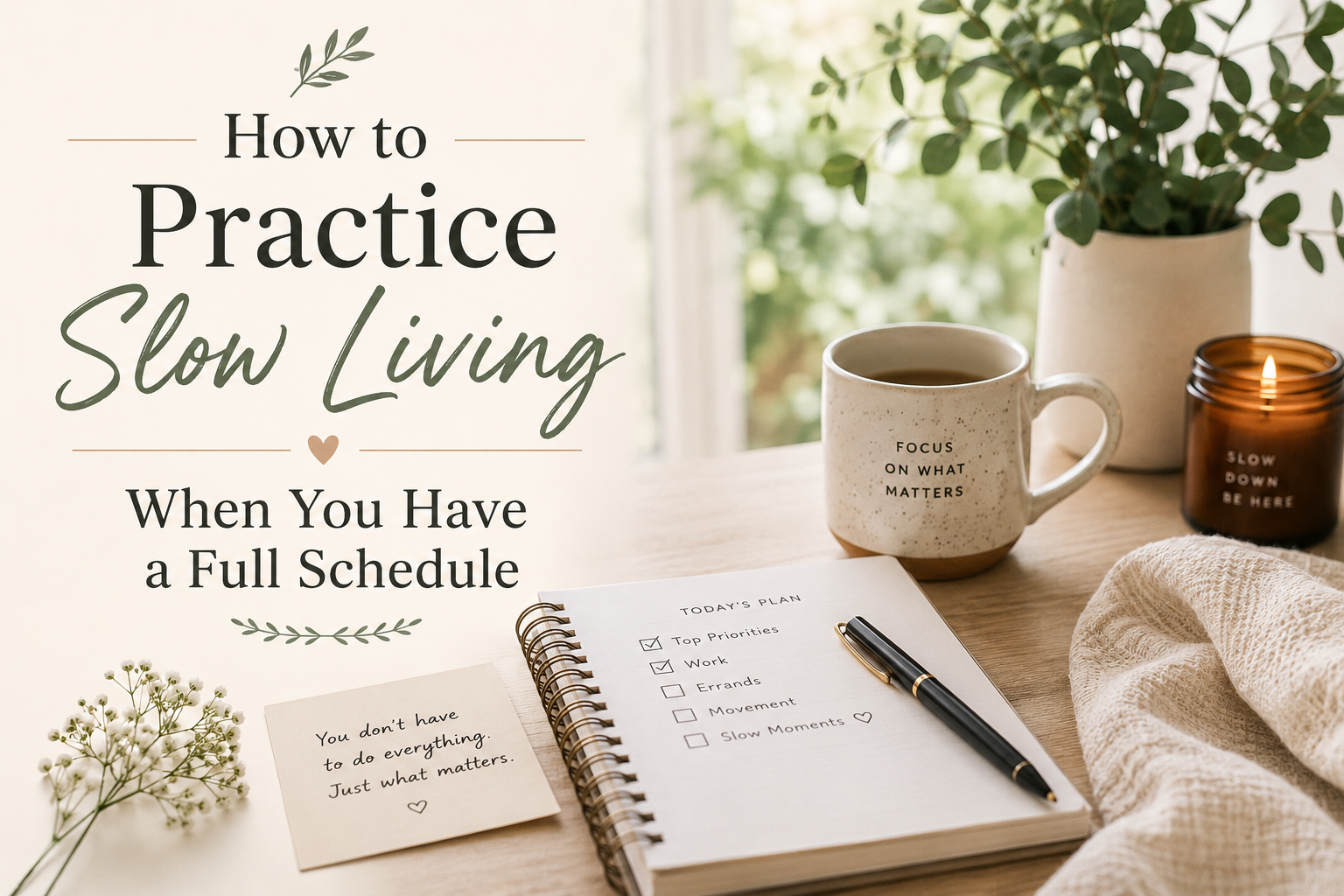
How to Practice Slow Living When You Have a Full Schedule
Summary
Life often feels like a race between work, family responsibilities, notifications, errands, and endless to-do lists. Many people assume slow living means moving to the countryside, quitting their jobs, or having hours of free time each day. In reality, slow living is about being intentional with your time, even when your schedule is packed.
This guide explains how to slow down with a busy schedule, create meaningful routines, reduce mental clutter, and enjoy daily life without giving up your responsibilities. Whether you work full-time, study, run a business, or manage a family, small changes can help you experience a calmer and more balanced life.
How to Practice Slow Living When You Have a Full Schedule
Have you ever reached the end of the day and wondered where all your time went?
You wake up, check your phone, rush through breakfast, answer emails, complete work tasks, run errands, and go to bed feeling exhausted. Then the cycle starts again. Many people live this way for years without realizing how much constant busyness affects their health, relationships, and happiness.
The good news is that slow living does not require extra hours in your day. It simply changes how you experience the hours you already have.
Slow living with a busy schedule means making deliberate choices, reducing unnecessary pressure, and paying attention to what truly matters.
Key Takeaways
- Slow living does not mean doing everything slowly.
- You can practice slow living even with a demanding schedule.
- Small daily habits create lasting changes.
- Reducing mental clutter is as important as reducing physical clutter.
- Quality matters more than quantity when managing time.
- Technology boundaries support a calmer lifestyle.
- Rest should be scheduled like any other important activity.
What Is Slow Living?
Slow living is an intentional lifestyle that focuses on quality over speed. It encourages people to make conscious choices about time, work, relationships, and personal well-being.
The movement became more popular after the Slow Food movement began in Italy during the 1980s. Since then, slow living has expanded into areas such as work, travel, home life, and wellness.
Slow living does not mean:
- Being lazy
- Avoiding ambition
- Ignoring responsibilities
- Working fewer hours
Instead, it means:
- Being present
- Doing fewer things with greater attention
- Reducing unnecessary stress
- Prioritizing meaningful activities
Many productivity experts now emphasize intentional living because constant multitasking often reduces focus and increases stress.
Why Is Slow Living Important for Busy People?
Busy people often need slow living the most.
Research from organizations such as the American Psychological Association has consistently shown that chronic stress affects sleep, concentration, mood, and physical health. Many adults report feeling overwhelmed by work demands, financial pressures, and digital distractions.
Slow living creates space for:
- Better focus
- Improved mental health
- Reduced burnout
- Stronger relationships
- Better sleep quality
- Increased life satisfaction
You do not need an empty calendar to experience these benefits.
How to Slow Down With a Busy Schedule
The first step is accepting that you cannot do everything.
Many people believe they need better time management when they actually need better priorities. Slow living with a busy schedule starts by identifying what deserves your attention and what does not.
Ask yourself:
- What activities truly matter?
- Which tasks create unnecessary stress?
- What can be delegated or removed?
- What makes me feel energized?
When you reduce unnecessary commitments, your schedule becomes more manageable.
Why Modern Life Feels So Fast
Several factors make modern life feel overwhelming.
Constant Notifications
Phones, emails, messaging apps, and social media demand attention throughout the day. Research from Microsoft and other workplace studies has shown that interruptions reduce focus and increase mental fatigue.
Productivity Pressure
Many people feel guilty when resting. Society often rewards being busy, even when busyness does not produce meaningful results.
Multitasking
Studies from researchers at Stanford University have found that heavy multitasking can reduce attention and memory performance.
Comparison Culture
Social media exposes people to carefully selected highlights of other people’s lives, careers, and achievements. This can create pressure to constantly do more.
Recognizing these influences helps you create healthier boundaries.
Slow Living Habits for a Packed Schedule
Small habits often create bigger changes than major life decisions.
Start the Morning Without Your Phone
Checking messages immediately after waking up places your attention on other people’s priorities.
Try spending the first 15 to 30 minutes of your morning without screens. Use this time for:
- Stretching
- Drinking water
- Journaling
- Reading
- Quiet reflection
Many people report feeling calmer and more focused throughout the day.
Single-Task Whenever Possible
Multitasking often feels productive but usually reduces efficiency.
Instead:
- Eat without scrolling.
- Work on one task at a time.
- Listen fully during conversations.
- Complete one project before starting another.
This simple change helps reduce mental fatigue.
Create Small Pauses
Slow living does not require long meditation sessions.
You can practice short pauses by:
- Taking three deep breaths before meetings.
- Walking outside for five minutes.
- Drinking coffee without distractions.
- Sitting quietly after lunch.
These moments help reset your attention.
Practical Daily Habits for Busy People
| Habit | Time Required | Benefit |
|---|---|---|
| Morning without phone | 15 minutes | Reduced stress |
| Evening walk | 20 minutes | Better sleep |
| Single-tasking | Throughout day | Better focus |
| Daily journaling | 5 minutes | Mental clarity |
| Digital breaks | 10 minutes | Lower overwhelm |
| Mindful meals | Meal time | Improved presence |
Small habits often create sustainable change because they fit naturally into existing routines.
How to Incorporate Slow Living Into Busy Life
You do not need to redesign your entire schedule.
Instead, attach slow habits to activities you already do.
Examples include:
- Drink coffee without checking email.
- Walk during phone calls.
- Read before bed instead of scrolling.
- Eat dinner at the table.
- Spend five quiet minutes before work.
Behavior experts often call this habit stacking because new behaviors become easier when linked to existing routines.
Protect Your Energy, Not Just Your Time
Time management is important, but energy management matters even more.
Notice:
- Which activities drain you.
- Which people leave you exhausted.
- Which tasks create unnecessary stress.
You may discover that reducing one unnecessary commitment provides more relief than reorganizing your entire calendar.
This is especially important for people who work remotely, run businesses, or manage multiple responsibilities.
Soft Reminder: Slow Living Is Not Perfection
Many people accidentally turn slow living into another productivity goal.
You do not need:
- The perfect morning routine.
- A minimalist home.
- Hours of meditation.
- Expensive wellness products.
If you are interested in building healthier routines, consider tracking one small habit for two weeks. Consistency often matters more than intensity.
What a Busy Day Can Look Like With Slow Living
Traditional Busy Day
- Wake up and check phone
- Skip breakfast
- Multitask during work
- Eat lunch at desk
- Continue working without breaks
- Scroll social media before bed
Slow Living Busy Day
- Wake up quietly
- Eat breakfast mindfully
- Focus on one task at a time
- Take short breaks
- Walk after work
- Read before sleeping
The schedule may contain the same amount of work, but the experience feels very different.
How to Create an Evening Routine That Supports Slow Living
Your evening routine has a direct effect on how your next day begins. Many busy people end their day with work emails, social media scrolling, or unfinished tasks. This keeps the brain active and makes it difficult to relax.
A slow evening routine does not need to last an hour. Even 20 to 30 minutes can help your mind transition from work mode to rest mode.
Simple evening habits include:
- Turning off work notifications.
- Preparing clothes or meals for the next day.
- Reading a few pages of a book.
- Taking a short walk.
- Writing down tomorrow’s priorities.
These small actions reduce decision fatigue and create a calmer start to the next morning.
Example Evening Routine for Busy People
| Time | Activity | Purpose |
|---|---|---|
| 8:30 PM | Finish work communication | Mental separation |
| 8:45 PM | Prepare for tomorrow | Reduce stress |
| 9:00 PM | Screen-free activity | Relaxation |
| 9:30 PM | Light reading or journaling | Reflection |
| 10:00 PM | Sleep routine | Better recovery |
Why Digital Boundaries Matter for Slow Living
One of the biggest obstacles to slow living when you’re busy is constant digital stimulation.
According to research from organizations including the American Psychological Association, frequent interruptions and constant connectivity can increase stress levels and reduce concentration.
You do not need to eliminate technology. Instead, create intentional boundaries.
Examples include:
- Turning off non-essential notifications.
- Checking email at scheduled times.
- Keeping phones away during meals.
- Using “Do Not Disturb” settings.
- Creating screen-free zones at home.
Many people notice significant improvements in focus and sleep after reducing evening screen time.
Slow Living Tips for Busy People at Work
Work often feels like the biggest obstacle to a slower lifestyle. However, many slow living practices can fit into professional routines.
Focus on One Priority at a Time
Identify your three most important tasks for the day. Complete those before moving to smaller tasks.
Schedule White Space
Leave 10 to 15 minutes between meetings when possible. This creates breathing room and reduces mental fatigue.
Take Short Movement Breaks
Research consistently shows that short walks improve concentration and energy levels.
Avoid Constant Email Checking
Many productivity experts recommend checking email during specific periods rather than continuously throughout the day.
These adjustments help incorporate slow living into busy life without reducing productivity.
Slow Living for Parents With Busy Schedules
Parents often believe slow living is impossible because of family responsibilities. In reality, families can benefit greatly from slower routines.
Some examples include:
- Eating one meal together each day.
- Creating device-free evenings.
- Walking together after dinner.
- Reading before bedtime.
- Simplifying weekend schedules.
Children often respond positively to predictable routines and focused attention.
The goal is not to create perfect family moments. The goal is to be present during ordinary moments.
Slow Living for Students and Young Professionals
Students and early-career professionals frequently experience pressure to achieve more, learn more, and stay productive.
Slow living can help by encouraging:
- Focused study sessions.
- Scheduled breaks.
- Reduced comparison on social media.
- Better sleep habits.
- Realistic goal setting.
For example, using techniques like the Pomodoro method can encourage periods of focused work followed by intentional rest.
Real-Life Examples of Slow Living in Busy Lives
Many successful people intentionally protect their time and attention.
Cal Newport
Author and computer science professor Cal Newport promotes “deep work,” which involves focused periods without distractions. His work highlights the importance of attention and intentional work habits.
Arianna Huffington
After experiencing burnout, Arianna Huffington became an advocate for sleep, recovery, and workplace well-being through her company Thrive Global.
Greg McKeown
Author of “Essentialism,” Greg McKeown emphasizes doing fewer things better rather than trying to do everything.
These examples show that slow living is not about avoiding work. It is about working and living more intentionally.
Signs You May Need More Slow Living
You may benefit from slow living habits if you regularly experience:
- Constant exhaustion.
- Difficulty focusing.
- Feeling rushed all day.
- Poor sleep.
- Irritability.
- Lack of enjoyment.
- Difficulty being present.
Recognizing these signs early can help prevent long-term burnout.
How Long Does It Take to Feel the Benefits?
Many people notice small changes within a few days.
Benefits may include:
- Better focus.
- Reduced anxiety.
- Improved sleep.
- Greater enjoyment of daily activities.
- Less mental clutter.
Long-term habits often develop over several weeks or months.
The important factor is consistency rather than perfection.
People Also Ask
Can you practice slow living with a full-time job?
Yes. Slow living focuses on intentional choices rather than having extra free time. People with full-time jobs can practice slow living by setting boundaries, reducing distractions, taking breaks, and focusing on meaningful activities throughout the day.
How do you slow down when life is busy?
You can slow down by prioritizing essential tasks, reducing multitasking, creating screen-free periods, and adding small moments of rest throughout your day. Even five minutes of intentional quiet time can help.
Is slow living the same as minimalism?
No. Minimalism focuses primarily on reducing possessions, while slow living focuses on being intentional with time, attention, and daily experiences. Some people practice both lifestyles, but they are not the same.
What are simple slow living habits?
Simple habits include eating without distractions, taking walks, limiting notifications, reading before bed, journaling, and focusing on one task at a time.
Does slow living improve mental health?
Many slow living practices support mental well-being by reducing stress, improving sleep, encouraging mindfulness, and helping people create healthier routines.
Can busy parents practice slow living?
Yes. Families can practice slow living by simplifying schedules, sharing meals, limiting screen time, and focusing on quality time rather than constant activities.
Featured Snippet: How to Practice Slow Living With a Busy Schedule
- Identify your most important priorities.
- Reduce unnecessary commitments.
- Limit digital distractions.
- Focus on one task at a time.
- Create short daily pauses.
- Protect your sleep routine.
- Schedule rest intentionally.
These small actions help people experience slow living even with demanding schedules.
Common Mistakes People Make With Slow Living
Trying to Change Everything at Once
Major lifestyle changes often fail because they become overwhelming.
Expecting Immediate Results
Slow living develops gradually through repeated habits.
Comparing Your Routine to Others
Every person’s schedule and responsibilities are different.
Treating Rest as a Reward
Rest is a basic need, not something that must be earned.
Final Thoughts: Slow Living Is About Attention, Not Time
Many people spend years waiting for life to become less busy before they allow themselves to slow down. Unfortunately, schedules often remain full.
Slow living with a busy schedule means making intentional choices within the life you already have. It means paying attention during conversations, protecting your energy, reducing unnecessary noise, and creating moments that matter.
You do not need a different job, a different city, or a completely empty calendar.
You only need small decisions repeated consistently.
Start with one habit this week:
- Put your phone away during breakfast.
- Take a ten-minute walk.
- Read before bed.
- Eat one meal without distractions.
These actions may seem small, but over time they create a slower, calmer, and more meaningful life.
If you want to incorporate slow living into busy life, begin today with one change rather than waiting for the perfect time. The schedule may stay full, but your experience of it can become much lighter.

Aisha Patel is a technology writer with a keen interest in artificial intelligence, digital innovation, and the way emerging tech shapes everyday life. She breaks down complex topics into clear, honest insights that help readers understand what is actually changing — and why it matters to them. Her work on OpinionHook explores both the opportunities and the real risks of our digital future.