
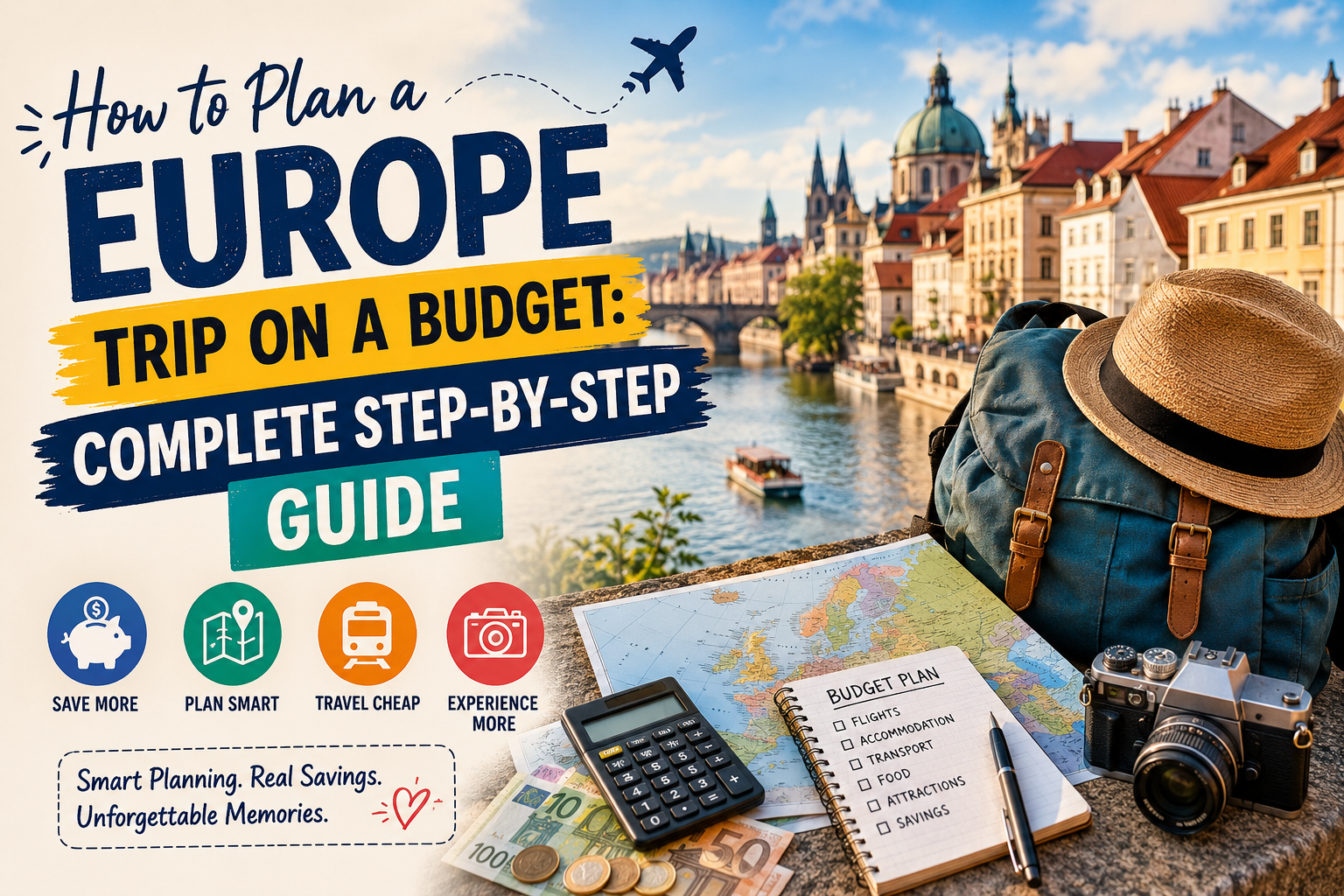
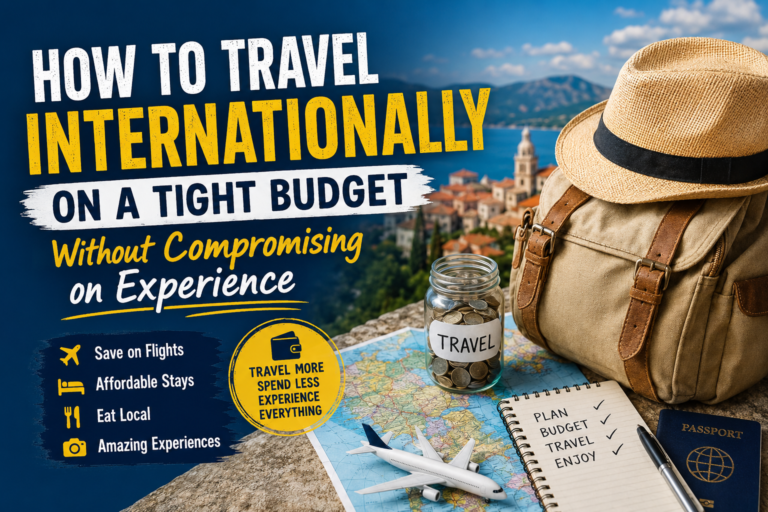
How to Plan a Europe Trip on a Budget: Complete Step-by-Step Guide
Dreaming of visiting Europe but worried about the cost? You’re not alone. Many people assume Europe is one of the most expensive places to travel, but that isn’t always true. With smart planning, flexible travel dates, and a realistic budget, you can enjoy an unforgettable European vacation without spending a fortune.
This Europe trip on a budget guide walks you through every stage of planning, from setting a budget and choosing destinations to estimating expenses and finding the best time to visit. Whether you’re a student, a couple, a solo traveler, or a family planning your first international vacation, this guide will help you make informed decisions while avoiding common mistakes.
Instead of relying on vague advice, you’ll find practical tips based on current travel practices, trusted travel resources, and real-world budgeting methods used by experienced travelers.
Key Takeaways
- Europe doesn’t have to be expensive if you plan early.
- Your biggest expenses will usually be flights and accommodation.
- Eastern and Central Europe generally cost less than Western Europe.
- Traveling during the shoulder season can save hundreds of dollars.
- Budget airlines and trains help reduce transportation costs.
- Booking accommodation early often provides better prices and more options.
- A daily budget makes it easier to control spending throughout your trip.
- Planning your itinerary carefully reduces unnecessary transportation costs.
Europe Trip Budget at a Glance
| Expense Category | Budget Traveler (Per Day) | Mid-Range Traveler (Per Day) |
|---|---|---|
| Accommodation | $25-$60 | $90-$180 |
| Food | $15-$35 | $40-$80 |
| Local Transportation | $8-$20 | $20-$40 |
| Attractions | $10-$40 | $40-$100 |
| Miscellaneous | $10-$20 | $20-$40 |
| Estimated Daily Total | $70-$175 | $210-$440 |
These figures vary depending on the country, season, and travel style.
Why Is Europe More Affordable Than Most People Think?
Many first-time travelers assume that every European destination costs as much as cities like Paris, London, or Zurich. In reality, Europe is incredibly diverse, and travel costs vary significantly from one country to another.
For example, a hostel bed in Budapest may cost less than half the price of one in Amsterdam. Dining in Krakow or Sofia is also considerably cheaper than eating in Copenhagen or Oslo.
The key to cheap Europe trip planning is understanding that Europe is made up of more than 40 countries, each with different price levels, transportation systems, and travel seasons.
If you’re flexible with your itinerary, you can experience beautiful historic cities, mountain landscapes, beaches, castles, and world-famous museums while staying within a reasonable budget.
Step 1: Decide Your Total Budget Before Planning Anything
The first step in how to plan a Europe trip is deciding exactly how much money you’re comfortable spending.
This budget becomes the foundation for every decision you make, including:
- Which countries to visit
- How long to stay
- Where to fly
- What type of accommodation to book
- How often to eat out
- Which attractions to include
Many travelers make the mistake of planning an itinerary first and worrying about costs later. This often leads to overspending or cutting experiences at the last minute.
Instead, start with a realistic budget and build your trip around it.
A Simple Budget Formula
A practical way to estimate your travel budget is:
Total Budget = Flights + Accommodation + Daily Expenses + Transportation + Insurance + Emergency Fund
For example:
| Expense | Estimated Cost |
|---|---|
| Return Flight | $700 |
| Accommodation (10 nights) | $450 |
| Food | $250 |
| Local Transport | $120 |
| Attractions | $180 |
| Travel Insurance | $70 |
| Emergency Buffer | $200 |
| Total | $1,970 |
This method gives you a clear financial target before you start booking.
Practical Tip
Keep an emergency reserve of 10 to 15 percent of your total budget. Unexpected costs such as baggage fees, medical expenses, or transportation delays can happen on any trip.
Step 2: Choose Budget-Friendly European Countries
Your destination has the biggest impact on your total travel cost.
If your goal is an affordable Europe vacation, prioritize countries where accommodation, food, and transportation are naturally less expensive.
Some of the Best Budget-Friendly Destinations
Portugal
Portugal offers beautiful beaches, historic neighborhoods, fresh seafood, and scenic coastal towns at lower prices than many Western European destinations.
Cities like Porto and smaller towns throughout the country provide excellent value compared to larger capitals.
Hungary
Budapest is consistently ranked among Europe’s best-value cities.
Visitors can enjoy thermal baths, historic architecture, river cruises, and affordable public transportation without stretching their budget.
Poland
Cities including Krakow, Gdansk, and Wroclaw offer beautiful old towns, excellent museums, and inexpensive restaurants.
Accommodation prices also remain competitive throughout much of the year.
Romania
Romania combines medieval towns, mountain scenery, and castles with relatively low travel costs.
Public transportation is affordable, and local food is generally inexpensive.
Czech Republic
While Prague has become more expensive over time, it still offers good value compared with many Western European capitals.
Exploring smaller cities can help reduce your overall costs even further.
Croatia (Outside Peak Summer)
Croatia’s Adriatic coastline attracts millions of visitors each year.
Traveling in May, September, or early October allows you to enjoy the same coastal scenery while avoiding peak-season prices.
Countries That Typically Require Larger Budgets
These destinations are amazing but generally more expensive:
- Switzerland
- Norway
- Iceland
- Denmark
- Luxembourg
That doesn’t mean you should avoid them. Instead, consider spending fewer days there while balancing your itinerary with more affordable countries nearby.
Step 3: Pick the Best Time to Visit Europe
Timing can save you hundreds or even thousands of dollars.
The same hotel room may cost twice as much during peak summer compared to the shoulder season.
Peak Season
June to August
Advantages:
- Long daylight hours
- Warm weather
- Festivals and outdoor events
- Ideal for beaches
Disadvantages:
- Highest airfare
- Expensive hotels
- Larger crowds
- Longer attraction lines
Shoulder Season
April-May and September-October
For many travelers, this is the ideal balance.
Benefits include:
- Lower airfare
- Better hotel prices
- Comfortable temperatures
- Smaller crowds
- Easier attraction bookings
Many experienced travelers consider shoulder season the best time for a budget Europe travel guide itinerary because you enjoy nearly all the same experiences at a much lower cost.
Winter Season
November to March
Winter is often the cheapest period for flights and hotels, except around Christmas and New Year.
It’s perfect for:
- Christmas markets
- Ski vacations
- Museums
- City breaks
However, some coastal attractions and seasonal businesses may be closed.
Step 4: Estimate How Much Does a Europe Trip Cost?
One of the most common questions travelers ask is:
How much does a Europe trip cost?
The answer depends on your travel style, destination, and trip length.
Example Budget for a 10-Day Europe Trip
| Expense | Budget Estimate |
|---|---|
| Flights | $600-$900 |
| Hotels or Hostels | $350-$700 |
| Food | $200-$350 |
| Transportation | $120-$250 |
| Attractions | $150-$300 |
| Insurance | $60-$100 |
| Shopping & Extras | $150-$300 |
| Estimated Total | $1,630-$2,900 |
Travelers who stay in hostels, cook some meals, and use budget airlines often spend less.
Couples sharing hotel rooms may reduce accommodation costs per person.
Families can save by renting apartments instead of booking multiple hotel rooms.
What Increases Your Budget the Most?
Understanding your biggest expenses helps you control them.
Flights
Booking several months in advance usually results in lower fares.
Flying into one European city and leaving from another can sometimes reduce transportation costs inside Europe.
Accommodation
Hotels near major tourist attractions often charge premium rates.
Staying slightly outside city centers while using public transportation can significantly reduce costs.
Dining
Eating every meal in tourist areas quickly increases daily expenses.
Many European cities have supermarkets, local bakeries, and neighborhood cafés where you can enjoy quality food for much less.
Attractions
Not every museum or landmark requires an admission fee.
Many European cities offer:
- Free walking tours
- Public parks
- Historic neighborhoods
- Churches
- Scenic viewpoints
- Free museum days
Planning around these opportunities helps stretch your budget.
Common Budget Mistakes First-Time Travelers Make
Even careful travelers sometimes overlook small expenses that add up quickly.
Avoid these common mistakes:
- Booking flights too late
- Visiting too many cities in a short trip
- Ignoring baggage fees
- Forgetting travel insurance
- Exchanging currency at airports
- Dining exclusively in tourist districts
- Not researching public transportation options
- Leaving attraction bookings until arrival
Small planning decisions often make a significant difference to your overall spending.
A Helpful Tip Before You Start Booking
Before confirming any reservations, create a simple spreadsheet with every expected expense.
Include:
- Flights
- Hotels
- Trains
- Local transportation
- Attractions
- Meals
- Insurance
- Emergency fund
Seeing your entire budget in one place makes it easier to adjust your itinerary before spending money.
Step 5: Find Cheap Flights to Europe
The easiest way to lower the cost of a Europe trip on a budget is to save money on airfare. For many travelers, flights are the largest upfront expense, but a few smart choices can make a noticeable difference.
Airfare changes based on demand, season, departure city, and how far in advance you book. If you’re flexible with your travel dates and arrival airport, you can often save hundreds of dollars.
Book Early, But Don’t Book Too Early
For international travel, many airlines release competitive fares several months before departure.
As a general guideline:
| Trip Type | Recommended Booking Window |
|---|---|
| Peak Season (June-August) | 4-8 months before departure |
| Shoulder Season | 3-6 months before departure |
| Winter (excluding holidays) | 2-5 months before departure |
Booking at the last minute usually results in higher prices unless an airline is running a special promotion.
Compare More Than One Airport
Europe has many major international airports.
Instead of searching only for one city, compare nearby alternatives.
For example:
| Instead of… | Also Check… |
|---|---|
| Paris | Brussels, Lille |
| Amsterdam | Brussels, Eindhoven |
| London | Gatwick, Stansted, Luton |
| Milan | Bergamo |
| Munich | Vienna |
| Barcelona | Girona |
Sometimes arriving in a nearby city and taking a train costs much less than flying directly to your preferred destination.
Use Flight Comparison Tools
Experienced travelers compare prices using trusted platforms before booking directly with an airline.
Useful tools include:
- Google Flights
- Skyscanner
- Kayak
- Momondo
These platforms let you compare airlines, flexible dates, nearby airports, and price trends.
Consider an Open-Jaw Ticket
If you’re visiting multiple countries, don’t limit yourself to a return flight from the same airport.
Example:
- Fly into Rome
- Travel across Europe
- Fly home from Amsterdam
This often saves both money and travel time because you avoid returning to your starting city.
Step 6: Choose the Right Accommodation
Accommodation usually takes up the second-largest portion of your travel budget.
Fortunately, Europe offers options for almost every budget.
The best choice depends on your travel style rather than simply choosing the cheapest room.
Hostels
Hostels are popular among solo travelers, students, and backpackers.
Benefits include:
- Lower nightly rates
- Shared kitchens
- Social atmosphere
- Organized activities
- Central locations
Private hostel rooms are also available if you want more privacy.
Budget Hotels
Many budget hotel chains provide clean, comfortable rooms with private bathrooms.
They’re a good option for couples and families who value convenience over luxury.
Apartments
Vacation rentals often become more economical when traveling with friends or family.
Advantages include:
- Kitchen facilities
- Laundry access
- More living space
- Grocery savings
Cooking breakfast or dinner a few times during your trip can significantly reduce food expenses.
Guesthouses and Bed & Breakfasts
In many European towns, locally owned guesthouses provide a more personal experience than large hotel chains.
Many include breakfast, which lowers your daily food costs.
How to Save on Accommodation
Some practical strategies include:
- Book early during busy seasons.
- Stay slightly outside city centers.
- Compare total prices rather than nightly rates.
- Look for accommodations near metro or train stations.
- Read recent guest reviews carefully.
A hotel that costs $25 less per night may actually cost more overall if transportation into the city is expensive.
Step 7: Plan Transportation Within Europe
Getting around Europe is easier than many first-time travelers expect.
The continent has one of the world’s best transportation networks, giving travelers several affordable choices.
The right option depends on your itinerary.
Trains
Europe’s rail system connects thousands of cities.
Trains are ideal for:
- Comfortable travel
- Scenic routes
- City-center arrivals
- Short and medium distances
Countries like Germany, France, Italy, Austria, Switzerland, and Spain have extensive rail networks.
If you’re planning several train journeys, compare individual tickets with rail passes before purchasing.
Budget Airlines
Low-cost airlines connect hundreds of European cities.
Popular carriers include:
- Ryanair
- easyJet
- Wizz Air
- Vueling
These airlines often advertise very low fares.
However, always check:
- Cabin baggage limits
- Checked baggage fees
- Airport transfer costs
- Seat selection charges
A $25 ticket can quickly become much more expensive after additional fees.
Long-Distance Buses
Companies like FlixBus connect hundreds of destinations across Europe.
Bus travel is often slower than trains but can be considerably cheaper.
For overnight journeys, sleeping on the bus may also save one night’s accommodation cost.
Public Transportation
Most European cities have reliable:
- Metro systems
- Trams
- Local buses
- Regional trains
Instead of using taxis every day, purchase daily or multi-day transit passes whenever available.
Step 8: Budget for Food Without Missing Local Cuisine
Eating well in Europe doesn’t require expensive restaurants every day.
Some of the best meals come from local bakeries, neighborhood cafés, food markets, and family-owned restaurants.
A balanced approach helps you enjoy local cuisine while staying within budget.
Mix Restaurant Meals with Grocery Shopping
A practical strategy is:
- Breakfast from a bakery or supermarket
- Casual lunch at a local café
- One memorable dinner every few days
This keeps daily costs manageable without sacrificing the food experience.
Visit Local Markets
Many European cities have fresh food markets where you can buy:
- Sandwiches
- Fruit
- Cheese
- Bread
- Local snacks
- Ready-made meals
These are often fresher and less expensive than tourist restaurants.
Avoid Tourist Traps
Restaurants directly beside famous landmarks often charge premium prices.
Walking just a few streets away frequently leads to:
- Better prices
- Better food
- More authentic local experiences
Many experienced travelers use online reviews to identify neighborhood favorites instead of restaurants aimed primarily at tourists.
Step 9: Plan Attractions Without Overspending
You don’t need an expensive sightseeing schedule to enjoy Europe.
Many iconic experiences are completely free.
Examples include:
- Historic city centers
- Public squares
- Churches
- Beaches
- Parks
- Scenic viewpoints
- Walking along rivers and canals
Some of Europe’s most memorable moments cost nothing.
Prioritize Paid Attractions
Instead of buying tickets for every museum or landmark, choose the experiences that matter most to you.
Quality usually provides better value than quantity.
Check Free Museum Days
Many museums offer free admission on selected days each month.
Researching this before your trip can reduce your attraction budget significantly.
Should You Buy a City Pass?
City passes are useful when you plan to visit several paid attractions within a short period.
They often include:
- Attraction entry
- Public transportation
- Skip-the-line access
- Discounts at participating venues
However, they’re only worthwhile if you’ll actually use most of the included attractions.
Always compare the pass price with the total cost of buying individual tickets.
Step 10: Don’t Skip Travel Insurance
Many travelers try to save money by skipping travel insurance.
This is one area where cutting costs can become very expensive.
Travel insurance helps cover unexpected situations such as:
- Medical emergencies
- Trip cancellations
- Flight delays
- Lost luggage
- Emergency evacuation
Healthcare costs vary across Europe, and visitors may need to pay upfront before reimbursement.
Even a relatively inexpensive insurance policy can protect you from thousands of dollars in unexpected expenses.
Practical Money-Saving Tips Used by Experienced Travelers
Small habits often have a greater impact than major sacrifices.
Here are practical ways to reduce costs without reducing enjoyment.
Travel Light
Packing only carry-on luggage helps you avoid baggage fees on many budget airlines.
It also makes moving between cities much easier.
Carry a Reusable Water Bottle
Tap water is safe to drink in many European countries.
Refilling a reusable bottle instead of buying bottled water every day saves money throughout your trip.
Withdraw Larger Amounts Less Frequently
Frequent ATM withdrawals may result in repeated bank fees.
Using a travel-friendly debit or credit card can also reduce foreign transaction charges.
Walk Whenever Possible
Many European cities were designed for pedestrians.
Walking not only saves transportation costs but also helps you experience neighborhoods that many tourists miss.
Limit One-Night Stays
Changing hotels every day increases transportation costs and wastes valuable sightseeing time.
Spending two to four nights in each destination often provides a better experience while reducing expenses.
Common Budget Mistakes to Avoid
Even a carefully planned itinerary can become expensive if you overlook common mistakes.
Avoid these issues whenever possible:
- Trying to visit too many countries in one trip.
- Booking accommodation before checking transportation costs.
- Ignoring airline baggage policies.
- Exchanging money at airports.
- Eating every meal in tourist districts.
- Forgetting to include local transportation in your budget.
- Not keeping an emergency fund.
- Waiting too long to book popular attractions.
Planning slowly and comparing options usually results in better value than making rushed decisions.

Ravinder Kaur is the founder of OpinionHook, an independent travel publication established in 2023. She oversees editorial standards, destination research, travel planning resources, and content quality across the website. OpinionHook focuses on publishing practical travel guides, itineraries, budgeting advice, and destination resources designed to help travelers make informed travel decisions.
I very delighted to find this internet site on bing, just what I was searching for as well saved to fav
Found a new go to for evening entertainment and honestly it exceeded my expectations. Customer support is super responsive and the games load without any lag. Give th33th a spin and you will see what I mean.
Stepping onto this site feels like being welcomed with open arms after a long day. The games have such a lively personality and the whole platform radiates positivity. I finally found a spot that plays it fair and keeps things light. Visit at aqjilicasino
From the moment I signed up I noticed how professional everything looks and works. The game load times are incredibly fast and I never experienced any downtime. A truly premium gaming destination that deserves more attention. ayaartemiscasino
Found this through a friend and it did not disappoint. The bonus offers are actually fair and the games are genuinely exciting. Love 338slotlink
The login process is seamless and I didnt encounter any glitches. Highly impressed with the stability of kudajitulogin.
Super legit platform with amazing customer support. I had a small issue with my deposit and they fixed it in minutes. Visit phtbjili now!
Been playing here for a week now and the payouts are legit. It is refreshing to find a platform that is this transparent. Love the vibe at br3333bet.
Great variety of options here. I really appreciate how easy it is to navigate the site even if you are a beginner. pkbet55
Best slot experience I have had in a long time. The graphics are amazing and the wins keep coming. Love playing at maxwinslot
Everything is running smoothly. I appreciate how stable the connection is when I use selayar88login to get into my account.
Top notch service and the graphics are amazing. I feel like I have a much better chance of winning here. Check out boga88login for sure.
Really loving the variety of options available here. It keeps things exciting and I never get bored. Cheers to the team at bdzb777 for this awesome experience.
The mobile app is a game changer. I can play whenever I have a few spare minutes and the connection is always stable. Best way to access fb777applogin for sure.