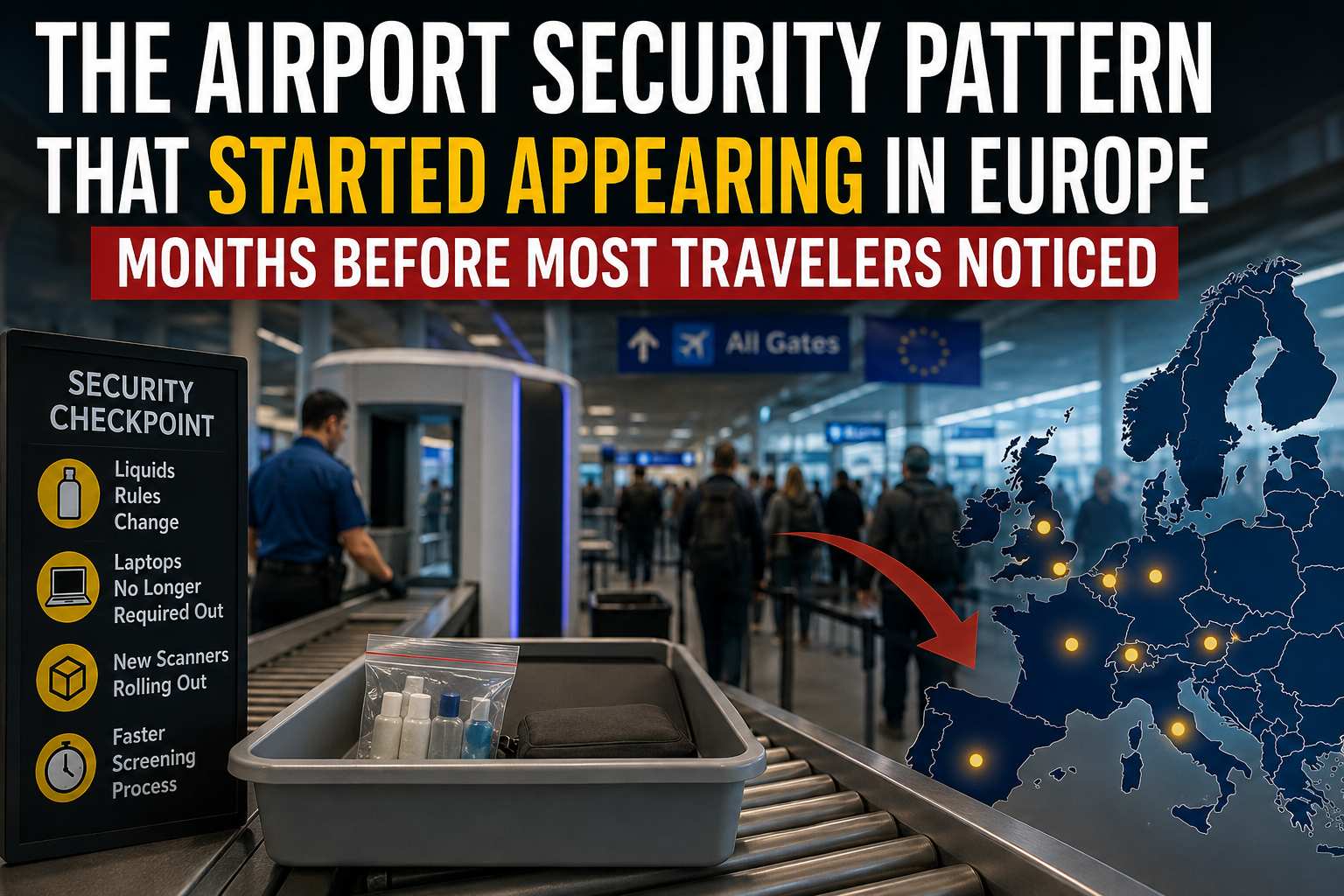
The Airport Security Pattern That Started Appearing in Europe Months Before Most Travelers Noticed
Most travelers only notice airport security when something goes wrong.
A long line. A confused staff member. A bag search that suddenly takes ten minutes because you forgot a power bank somewhere between your socks and charger cables.
But over the last couple of years, something bigger started happening across Europe’s airports. And honestly, frequent travelers spotted it way before everyone else did.
The weird part? It did not happen with one big announcement.
Instead, the changes appeared slowly. One airport stopped asking for laptops. Another suddenly became strict about liquids again. One security lane felt incredibly fast while the next one felt stuck in 2014.
At first, it looked random.
It was not random.
Europe has been going through a massive airport security transition, and most casual travelers did not realize it until they started getting mixed experiences at different airports.
And personally, I think this half-upgraded phase is the most annoying stage of modern air travel. Not because security got harder, but because nobody seems to know what rules apply where anymore.
Quick Summary
- Europe has been replacing older airport scanners with advanced CT scanners.
- Some airports briefly relaxed liquid and laptop rules.
- Then some airports brought older restrictions back again.
- Rules now vary depending on airport, terminal, and even security lane.
- Travelers who assumed “Europe has new rules now” often got caught off guard.
What Changed at European Airport Security?
The biggest airport security changes Europe introduced involve new CT scanners.
These scanners create detailed 3D images of your bag. Older scanners basically worked like flat X-rays. The new systems let security staff rotate and inspect bag contents from multiple angles.
In theory, this is great.
It usually means:
- Fewer random bag checks
- Faster screening
- Less unpacking
- Better detection accuracy
And honestly, when the system works properly, it feels much smoother.
I noticed this first at Heathrow Airport a while back. People were walking through security without pulling out laptops like their lives depended on it. The line moved faster. Nobody was balancing trays like circus performers.
But then I flew through another airport weeks later and got told to remove literally everything again.
That became the pattern.
The Problem Was Never the Technology
The technology itself is actually pretty solid.
The problem is that Europe rolled it out unevenly.
Some airports upgraded quickly. Others moved slowly. Some terminals got modern scanners while older terminals kept outdated systems.
So travelers started getting completely different experiences depending on where they flew.
A person flying through Schiphol Airport could keep items inside their bag, while someone flying from another airport two days later had to unpack half their carry-on.
And this is where travelers got confused.
Because most people expect airport security rules to be universal. Especially inside Europe.
They are not anymore.
The Liquid Rule Situation Became a Mess
This is probably where most travelers noticed something strange was happening.
For years, everyone knew the rule:
- Liquids under 100 ml
- Clear plastic bag
- Tiny shampoo bottles nobody actually likes using
Then some airports started relaxing those rules because the new scanners could inspect liquids more accurately.
People got excited fast.
Travel blogs started saying things like:
“Europe is ending liquid restrictions.”
That turned out to be way too optimistic.
Soon after, stricter liquid checks quietly returned at several airports during regulatory reviews. So suddenly travelers were dealing with mixed rules again.
And honestly, this is what usually fails with airport communication.
Airports update technology faster than they update public understanding.
So now people show up thinking:
“I saw online that liquids are allowed now.”
Then security staff tells them to throw something away.
Not a great experience.
Airport Security Screening Europe Liquid Rules Right Now
Here is the truth most experienced travelers follow now:
Assume the old rules still apply unless you personally confirm otherwise.
That usually works best.
Honestly, over-preparing works better than trying to outsmart airport systems.
I have seen travelers argue with security staff because “another airport allowed it.”
That almost never helps.
The Hidden Airport Security Changes Europe Travelers Missed
The biggest hidden change was not actually liquids.
It was how security staff started relying more on targeted checks instead of random searches.
Older systems created more uncertainty. So officers opened bags more often.
The newer scanners give clearer images. That means fewer pointless searches but more focused inspections.
And to be fair, this part usually works pretty well.
If your bag gets checked now, there is often an actual reason instead of pure randomness.
But here is the downside.
Modern travelers carry way more electronics now:
- Multiple phones
- Power banks
- Camera batteries
- Tablets
- Smartwatches
- Laptop chargers the size of bricks
That creates clutter inside bags.
And clutter is exactly what slows security down.
One thing I learned after years of flying is this:
Messy bags almost always lead to extra screening.
Not because you did something suspicious. Just because security officers cannot quickly identify items.
European Airport Security Before and After
The difference between older and newer systems is honestly pretty noticeable when airports fully upgrade.
Before
Most travelers dealt with:
- Long unpacking routines
- Tray chaos
- Laptop removal
- Slower lines
- More random bag searches
After CT Scanner Upgrades
The newer setup usually feels:
- Faster
- Cleaner
- Less stressful
- More organized
But only when airports fully commit to the system.
Half-upgraded airports are the frustrating middle ground right now.
And Europe still has a lot of those.
Why Frequent Travelers Noticed the Pattern Early
Frequent travelers see small operational changes before casual tourists do.
They noticed:
- New scanner machines appearing
- Mixed instructions from staff
- Faster lanes at certain terminals
- Reduced tray requirements
- Different rules between checkpoints
That last part is still wild to me.
At some airports, two security lanes right beside each other can operate differently depending on which scanner is installed.
For occasional travelers, this just feels confusing.
For frequent flyers, it became obvious that Europe was quietly rebuilding airport security systems in phases.
What Usually Works at European Airport Security
After watching this evolve for a while, here is what genuinely seems to work best.
Pack Like Rules Never Changed
This sounds boring, but it avoids problems.
Keep liquids small.
Keep electronics accessible.
Do not overstuff your carry-on.
People who still pack this way usually move through security faster, even at modern airports.
Use One Electronics Pouch
This is probably the simplest trick that saves the most time.
Instead of hiding chargers and batteries across five pockets, keep them together.
Security staff can inspect them quickly if needed.
Avoid Last-Minute Repacking at the Checkpoint
This almost always creates stress.
You can instantly spot experienced travelers because they prepare before reaching the trays.
Everyone else starts panicking while removing belts, laptops, water bottles, and tangled headphones at the last second.
What Often Fails
A few things consistently make airport security worse.
Assuming Every Airport Uses the Same Rules
Big mistake.
Even airports in the same country can operate differently.
Trusting Old Travel Advice Videos
A lot of airport security advice online becomes outdated fast.
Especially after Europe’s recent security updates.
Carrying Too Many Loose Electronics
This causes delays constantly.
Power banks are especially common triggers for manual checks now because of lithium battery concerns.
Packing “Just in Case” Liquids
Honestly, most travelers carry way more liquids than they actually use.
And oversized cosmetic bags still create unnecessary issues at checkpoints.
Why Some Travelers Think Security Got More Strict
This is interesting because technically the goal was to make security smoother.
But many people feel the opposite.
I think that happens because travelers now face inconsistency instead of predictability.
Old airport security was annoying, but at least everybody knew the process.
Now travelers constantly wonder:
- Do I remove my laptop?
- Can liquids stay inside?
- Does this lane use new scanners?
- Are these rules temporary?
That uncertainty makes the experience feel more stressful.
A Real-World Example Travelers Started Noticing
At airports like Gatwick Airport and Milan Malpensa Airport, travelers started reporting very different security experiences depending on the terminal or checkpoint used.
One lane felt modern and quick.
Another still required full unpacking.
This became one of the clearest signs that Europe’s airport security modernization was happening in stages instead of one massive rollout.
And honestly, that phased rollout makes sense operationally. Airports cannot just shut everything down for upgrades.
But from a traveler perspective, it definitely creates confusion.
The Bigger Trend Behind All This
The bigger goal is actually simple.
Airports want:
- Faster passenger flow
- Better threat detection
- Less manual searching
- Shorter lines
And they need this badly because international travel numbers keep growing.
Modern airports cannot keep using slow screening systems forever.
So even though this transition phase feels messy right now, I do think the long-term direction is better.
The newer CT scanners are genuinely more efficient when airports fully implement them properly.
The problem is that Europe is currently stuck in the awkward middle stage.
People Also Ask
Why are airport security rules changing in Europe?
European airports are upgrading to newer CT scanner systems that create detailed 3D bag images. These systems improve security checks and can reduce the need to remove laptops and liquids during screening.
Do European airports still have liquid restrictions?
Yes. Many European airports still enforce the 100 ml liquid rule. Some airports relaxed rules temporarily, but travelers should still prepare for standard liquid restrictions because policies vary.
Can laptops stay inside bags at European airport security?
Sometimes. Airports using advanced CT scanners often allow laptops to remain inside bags. Older checkpoints still require removal, so travelers should stay prepared for both situations.
Why do airport security rules differ between airports?
Different airports upgrade technology at different speeds. Some use advanced scanners while others still rely on older systems. That creates different screening procedures across Europe.
Final Thoughts
The airport security pattern appearing across Europe was easy to miss at first because the changes happened slowly.
No huge announcement.
No dramatic policy shift.
Just small operational differences spreading airport by airport.
But now the pattern is obvious.
Europe is rebuilding airport security around newer scanning technology, and travelers are stuck in the transition phase right now.
Personally, I think the future system will probably be better once airports fully standardize everything. Faster lines alone would make a huge difference.
But currently? The inconsistency is the real problem.
So the smartest thing travelers can do is stay flexible.
Do not assume every airport follows the same process.
Do not assume online advice from two years ago still applies.
And honestly, just pack like security rules are still strict. That approach usually saves the most headaches.

Ravinder Kaur is the founder of OpinionHook, an independent travel publication established in 2023. She oversees editorial standards, destination research, travel planning resources, and content quality across the website. OpinionHook focuses on publishing practical travel guides, itineraries, budgeting advice, and destination resources designed to help travelers make informed travel decisions.