What Happened When I Tried Dressing Like a Local in Every Country I Visited Instead of Packing ‘Travel Outfits
For years, I packed what most travel blogs would call the perfect travel wardrobe.
Neutral colors. Quick-dry shirts. Lightweight pants. Comfortable shoes. Everything was chosen for convenience.
On paper, it made sense.
In reality, I often felt like a tourist before I even opened my mouth.
Then I tried something different.
Instead of packing an entire suitcase of “travel outfits,” I started buying some of my clothes after arriving. Not traditional costumes. Not cultural clothing meant for ceremonies. Just the kind of everyday clothes local people were actually wearing.
The change was surprisingly noticeable.
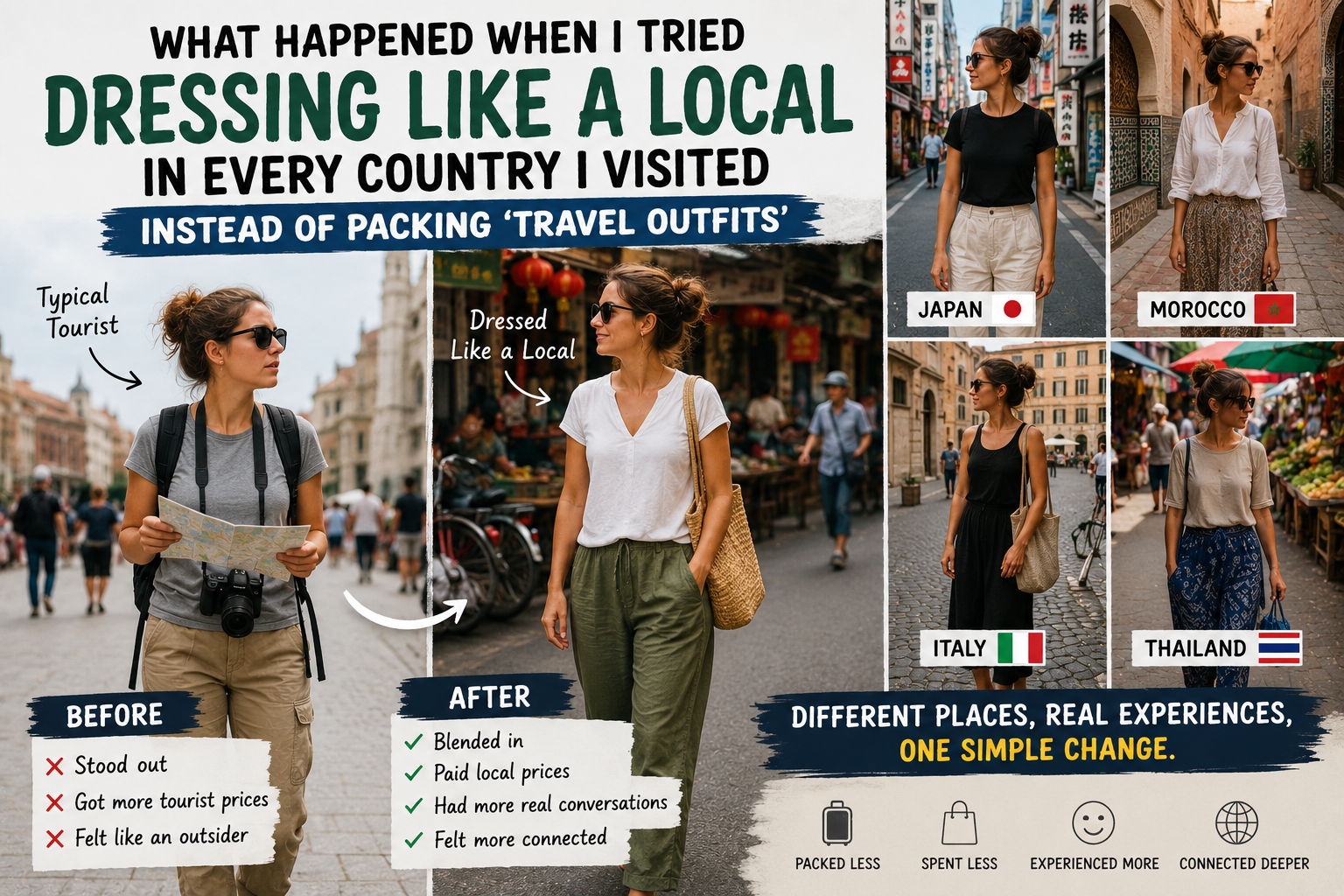
People approached me differently. I felt more comfortable. I blended in better. In some places, I received less attention from street vendors. In others, I found myself having more natural conversations with local people.
Was it perfect?
No.
Sometimes it was inconvenient. Sometimes I bought clothes I never wore again. And occasionally I realized that trying too hard to blend in looked just as awkward as looking like a tourist.
But overall, the experiment taught me something important.
The clothes we wear while traveling affect our experience more than most people realize.
And in my opinion, many travelers spend too much time planning travel outfits and not enough time understanding how people actually dress in the places they’re visiting.
Key Takeaways
- Dressing like a local often helps travelers feel more comfortable and less noticeable.
- Buying some clothes locally can reduce overpacking.
- Travel outfits designed for tourists can sometimes make visitors stand out more.
- Blending in doesn’t mean pretending to be local.
- Everyday local fashion often provides better clues than travel blogs.
- What usually works is adapting to local style. What often fails is trying to completely imitate local culture.
- In my experience, confidence and awareness matter more than expensive travel clothing.
Why Did I Stop Packing Traditional Travel Outfits?
The simple answer is that they rarely helped me blend in.
Most travel clothing is designed around function, not appearance.
There’s nothing wrong with that.
But after several trips, I noticed something.
Many travelers end up wearing almost identical outfits.
Convertible pants.
Outdoor hiking shirts.
Large backpacks.
Travel vests with multiple pockets.
These clothes work well on a hiking trail.
They often look completely out of place in cities.
I remember walking through Tokyo and realizing that almost nobody around me dressed remotely like the average travel influencer.
Local people wore clean, simple, well-fitted everyday clothing.
Meanwhile, many tourists looked ready for a mountain expedition.
That was the moment I started questioning whether travel outfits were actually helping.
What Happens When You Dress Like a Local in Every Country?
The biggest change is usually how you feel.
Most people expect locals to react differently.
That can happen.
But I noticed a different effect first.
I became more aware of my surroundings.
Instead of thinking about what I packed, I started paying attention to what people around me were wearing.
In Seoul, I noticed how common neutral colors were.
In Milan, people often paid attention to fit and presentation, even in casual situations.
In Bangkok, lightweight fabrics made far more sense than many of the travel clothes I had packed.
The more I observed, the easier it became to adapt.
And honestly, adapting felt more enjoyable than carrying the same wardrobe from country to country.
Does Dressing Like a Local Actually Help You Blend In?
Yes, but not as much as many travelers think.
Clothing helps.
Behavior matters more.
A tourist wearing local clothing is still a tourist.
Your accent, body language, habits, and movements often reveal that immediately.
That’s why I think many articles oversell the idea of blending in.
You won’t suddenly become invisible.
But you may attract less attention.
You may feel more comfortable.
You may avoid looking like someone who stepped directly off a sightseeing bus.
Those small changes can improve a travel experience.
Why Travel Outfits Often Make You Stand Out as a Tourist
This is something many travelers never consider.
Travel clothing is often designed by people who travel.
Local clothing is designed for people who live there.
Those are different needs.
Someone living in a city dresses for daily life.
Someone traveling often dresses for maximum flexibility.
As a result, travel outfits can become surprisingly easy to identify.
Think about famous destinations like Paris or Barcelona.
Local residents are usually going to work, meeting friends, shopping, or commuting.
Tourists often wear clothing designed to handle every possible situation at once.
That’s not necessarily bad.
But it definitely makes visitors easier to spot.
Personally, I think the travel industry sometimes convinces people they need specialized clothing for every trip.
Most of the time, they don’t.
Buying Clothes Locally vs Packing Everything: Which Works Better?
After trying both approaches, I think a combination works best.
Packing everything sounds convenient.
Sometimes it is.
Sometimes it isn’t.
One Unexpected Benefit Nobody Talks About
Buying clothes locally created memories.
That surprised me.
Years later, I still own a few items purchased during trips.
When I wear them, I remember the market where I bought them, the conversation with the shop owner, or the neighborhood where I found them.
A travel shirt ordered online before departure never created that feeling.
That’s one reason I continue doing it.
The clothing becomes part of the travel story.
Not just equipment for the trip.
How Local Clothing Can Improve Comfort
Comfort is one of the strongest arguments for buying locally.
People living somewhere year-round usually understand the climate better than visitors.
In tropical destinations, local clothing often handles heat better.
In colder regions, local clothing is often better suited to weather patterns than what visitors assume they need.
I learned this lesson the hard way in Southeast Asia.
I packed several “technical” travel shirts.
Most locals were wearing lighter, more breathable fabrics.
Guess who was more comfortable.
Not me.
Sometimes local knowledge beats travel marketing.
What Usually Works When Trying to Dress More Like a Local
The goal should be adaptation, not imitation.
That’s an important difference.
What works:
- Observing everyday fashion
- Choosing practical local styles
- Respecting cultural expectations
- Keeping clothing simple
- Prioritizing comfort
What often fails:
- Buying ceremonial clothing unnecessarily
- Treating local fashion like a costume
- Assuming all locals dress the same
- Trying too hard to avoid looking like a tourist
In my opinion, the best approach is subtle.
Blend in naturally.
Don’t perform.
Mid-Trip Tip: Spend One Hour People Watching
If you’re planning a trip soon, try this simple experiment.
Spend an hour in a local café, public square, or park.
Pay attention to what people actually wear.
Not influencers.
Not travel bloggers.
Not advertisements.
Real people.
You’ll often learn more about local style in one hour than you would from dozens of packing guides.
If you enjoy practical travel advice, you may also like our guides on packing lighter for long trips, avoiding common tourist mistakes, and how to experience a destination beyond the main attractions.
People Also Ask
Should You Pack Travel Outfits or Buy Clothes Abroad?
A mix of both usually works best. Pack essentials you know you’ll need and consider buying a few items locally. This reduces overpacking while helping you adapt to local weather, culture, and everyday fashion.
Does Dressing Like a Local Make Travel Safer?
Clothing alone won’t make travel significantly safer. However, blending in more naturally can reduce unwanted attention in some situations. Awareness, good judgment, and understanding local customs remain much more important.
Why Do Travel Outfits Make Tourists Stand Out?
Many travel outfits prioritize function over local style. Features such as hiking gear, travel vests, and technical clothing can immediately signal that someone is visiting rather than living in the area.
Is It Respectful to Wear Local Clothing?
Yes, when done thoughtfully and respectfully. Wearing everyday local clothing is generally fine. Problems arise when travelers treat cultural or ceremonial clothing as costumes without understanding their meaning.
Can Buying Clothes Locally Save Space in Your Luggage?
Often, yes. Many travelers pack too much before leaving home. Purchasing a few items after arrival can reduce luggage size while providing clothing better suited to local conditions.
Final Thoughts: Was the Experiment Worth It?
Absolutely.
Not because I suddenly looked local everywhere.
That never happened.
And honestly, that shouldn’t be the goal.
The real benefit was becoming more aware.
I paid more attention to local culture.
I packed less.
I worried less about having the perfect travel wardrobe.
And I ended up feeling more connected to the places I visited.
If I had to give one piece of advice, it would be this:
Stop obsessing over travel outfits.
Pay attention to how people actually live.
Their clothing, routines, habits, and daily choices often teach you more about a destination than any packing list ever could.
On your next trip, leave a little space in your suitcase.
You might come home with better clothes, better stories, and a much more interesting travel experience.

Siddharth Kapoor is a fashion and lifestyle writer covering style trends, wardrobe choices, and everyday dressing for real people. He focuses on practical fashion — not runway looks — and writes for readers who want to look good without overthinking it. His articles on OpinionHook cut through the noise and tell you what actually works.