
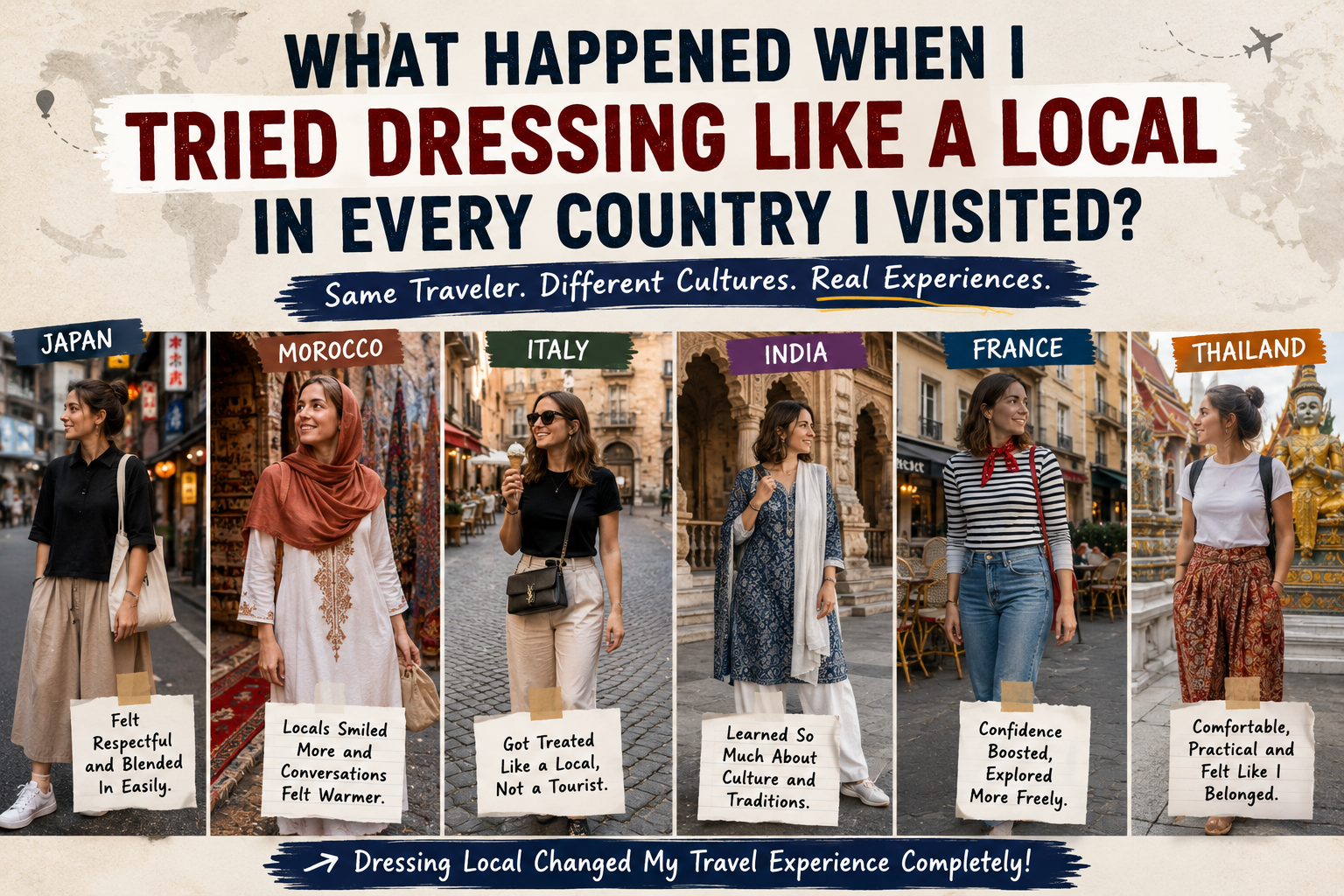
What Happened When I Tried Dressing Like a Local in Every Country I Visited?
I used to dress exactly like a tourist.
Big backpack. Athletic shorts. Loud sneakers. One of those “travel” jackets with seventeen hidden pockets for absolutely no reason.
At the time, I thought I looked practical. Looking back, I looked like someone who had just escaped an airport gift shop.
The turning point happened in Rome. I was sitting outside a café sweating in sportswear while literally every local around me somehow looked relaxed, simple, and normal without trying too hard.
That was when I started paying attention.
Not in a fashion influencer way. Honestly, I don’t care about luxury brands or perfect outfits while traveling. But I became curious about how locals actually dressed day to day. What shoes they wore. How formal casual really was. What looked respectful versus careless.
So I turned it into a travel experiment.
Every country I visited after that, I tried dressing more like the people around me.
Some parts worked surprisingly well.
Some parts completely failed.
And honestly, I learned more about culture from clothing than I expected.
Quick Summary
Dressing like a local while traveling can make you feel more comfortable, less awkward, and sometimes even safer. It helps you understand social norms faster and often changes how people interact with you. But trying too hard usually backfires. The goal is not to become invisible or fake your identity. The goal is to stop looking completely disconnected from the place you’re visiting.
Key Takeaways
- Simple clothes usually work better than flashy “travel fashion”
- Local dress codes matter more than many tourists realize
- Neutral outfits help you blend in almost everywhere
- Trying too hard to imitate locals often looks fake
- Comfortable shoes matter more than expensive clothes
- Respecting local culture usually gets better reactions than following trends
- Social media travel outfits are often impractical in real life
- The best travel style is adaptable, not performative
Why I Started Paying Attention to Local Clothing
Honestly, part of it was embarrassment.
I got tired of instantly looking like the loudest tourist in every room.
And the thing is, locals notice. Even if they’re polite about it.
In a lot of countries, tourists dress completely differently from residents. Sometimes it’s obvious in good ways. Sometimes not.
For example, in many European cities people dress simpler and cleaner than visitors expect. Meanwhile tourists often walk around in giant hiking shoes and quick-dry zip-off pants like they’re preparing for a survival documentary.
I’ve done that too, so no judgment.
But eventually I realized something important: dressing like a local while traveling is less about fashion and more about awareness.
You start paying attention instead of assuming your normal habits automatically fit everywhere.
That changes travel a lot.
What Dressing Like a Local Actually Means
This part gets misunderstood online constantly.
Dressing like a local does NOT mean pretending you’re from that country.
And honestly, people can usually tell anyway.
It means respecting the general vibe and social norms around you.
That’s it.
For example:
- Wearing modest clothes in conservative areas = respectful
- Choosing practical local-style shoes for walking cities = smart
- Buying cultural clothing purely for staged vacation photos = usually awkward
There’s a difference between adapting and performing.
And personally, I think social media blurred that line badly.
Some travel content now feels more like costume photography than actual travel.
What Usually Worked Best While Traveling
Europe – Simple Always Worked Better
Places like Paris, Milan, and Amsterdam taught me something very quickly:
Most locals dressed normal.
Not runway-fashion normal. Just clean and balanced.
Dark jeans. Neutral jackets. Simple sneakers or boots. Clothes that fit properly.
Meanwhile tourists often looked like they were either going to the gym or climbing Mount Everest.
One thing that usually worked:
Keeping colors neutral.
Black, navy, gray, olive. Those worked almost everywhere.
What failed constantly:
Trying too hard to look “European.”
One year I packed fancy coats and uncomfortable shoes thinking everyone in Italy dressed like luxury fashion ads. Reality was much more relaxed.
Honestly, overdressing made me stand out more than casual clothes did.
Japan – Quiet Style Matters More Than Flashy Fashion
Japan was probably the place where clothing felt most connected to social behavior.
People in cities like Tokyo often dressed neatly, even casually. Clean shoes mattered. Loud clothing stood out quickly.
What worked:
- Minimal logos
- Neutral layers
- Clean sneakers
- Simple jackets
What failed:
Trying to imitate Japanese street fashion trends from TikTok.
That went badly fast.
Honestly, this is where I realized many travelers confuse internet aesthetics with actual daily life. Most people in Tokyo were not walking around dressed like anime fashion influencers.
They dressed practical. Just more polished than many tourists.
Southeast Asia – Tourists Often Dress Too Casually
This surprised me.
Places like Bangkok and Bali are hot, so obviously comfort matters.
But many tourists take that as permission to wear almost nothing everywhere.
Locals usually dressed more modestly than visitors.
Especially outside beach areas.
What worked best:
Loose breathable clothes that still looked respectful.
What failed:
The full backpacker uniform.
You know the one. Tank top, elephant pants, giant sandals, sunburn, and complete confusion at every intersection.
Honestly, sometimes travelers dress more for other travelers than for the country they’re visiting.
Middle Eastern Countries – Respect Changes Interactions Fast
This was probably the clearest example of clothing affecting travel experiences.
In countries like Jordan and United Arab Emirates, dressing modestly noticeably changed how interactions felt.
People seemed more comfortable around respectful visitors.
And honestly, this should not be controversial.
You do not need to fully copy local clothing styles. Tourists are not expected to magically transform into locals overnight.
But covering shoulders in religious areas or avoiding overly revealing outfits in conservative places is just basic respect.
I think some travelers confuse “freedom” with ignoring context entirely.
That mindset rarely works well abroad.
What Happens When You Dress More Like Locals?
The biggest difference is attention.
Or more specifically, less unnecessary attention.
You Stop Looking Like an Easy Tourist Target
According to advice from organizations like the U.S. Department of State, obvious tourists are often easier targets for scams and petty theft.
And honestly, this feels true in real life too.
When I stopped dressing like a confused tourist, I noticed:
- Fewer aggressive street sellers
- Less unwanted attention
- Fewer people trying obvious scams
- More relaxed interactions
Did I suddenly become invisible? Obviously not.
But blending in with locals while traveling definitely reduced the “tourist energy” around me.
You Feel Less Awkward
This was honestly the biggest benefit.
When your clothing fits the environment better, you relax.
You stop overthinking yourself constantly.
And confidence changes everything while traveling.
You walk slower. You make better eye contact. You panic less in restaurants. You spend less time feeling like everybody is staring at you.
Most people probably aren’t staring anyway. But feeling comfortable still matters.
What Usually Fails When Travelers Try Too Hard
Dressing Like a Stereotype
This almost always looks worse.
Some travelers visit France and suddenly buy striped shirts and berets. Others go to Mexico and wear giant souvenir sombreros around cities.
Honestly, real locals rarely dress like tourism stereotypes.
Most people everywhere wear normal clothes.
Following Instagram Travel Fashion
I’ll say it directly: a lot of influencer travel fashion looks exhausting in real life.
Perfect linen outfits. Giant hats. Heavy boots in tropical weather. Neutral beige outfits that somehow never get dirty.
Looks great in edited photos.
Feels terrible after walking all day in heat and humidity.
Personally, I think practical clothes almost always beat aesthetic travel outfits.
Comfort matters more after hour six of walking.
Ignoring Local Context Completely
This fails fast.
A beach area and a religious neighborhood inside the same country can have completely different expectations.
Good travelers notice context instead of assuming one outfit works everywhere.
Honestly, observation is probably the most underrated travel skill.
Wearing Local Clothing While Traveling – Is It Respectful?
Usually yes, if your attitude is respectful.
I bought local clothes in several countries because they genuinely worked better for weather and comfort. Linen shirts in hot climates. Wool layers in colder mountain towns. Lightweight pants in humid places.
That felt normal.
But there’s a line.
Wearing culturally important clothing purely for funny photos or “travel content” can feel disrespectful quickly.
Many museums and tourism organizations now openly discuss cultural appropriation because travelers sometimes cross that line without realizing it.
When unsure, asking politely usually helps.
And honestly, most locals appreciate curiosity when it comes from genuine respect instead of performance.
The Unexpected Thing This Travel Experiment Taught Me
This started as a clothing experiment.
But it slowly became about paying attention.
When you observe how locals dress, you start noticing other things too:
- How formal daily life feels
- How people move through cities
- How social behavior changes by culture
- What people value publicly
You stop treating countries like movie sets for your vacation.
And honestly, I think too many travelers now experience places through cameras before they experience them directly.
Trying to blend in forced me to observe more carefully instead of constantly documenting myself.
That ended up mattering far more than the clothes.
A Simple Packing Strategy That Actually Works
After years of overpacking mistakes, here’s what I trust most now:
Honestly, most travelers do not need a special “travel identity.”
You just need adaptable clothes and common sense.
People Also Ask
Is dressing like a local while traveling important?
Yes, especially in places with strong cultural or social dress norms. You do not need to fully imitate locals, but adapting respectfully often makes travel smoother and more comfortable.
How can I blend in with locals while traveling?
Wear simple clothes, avoid loud tourist outfits, and observe what people actually wear daily. Neutral colors and practical shoes usually work better than trendy travel fashion.
Is it rude to wear local clothing abroad?
Not usually. Buying and wearing local clothing can be respectful if done thoughtfully. Problems usually happen when travelers treat cultural clothing like a costume or joke.
What should tourists avoid wearing internationally?
Tourists should avoid overly revealing clothing in conservative areas, impractical social media outfits, and stereotypical “tourist costumes” that locals themselves would never wear.
Final Thoughts on Dressing Like a Local Abroad
After years of trying this experiment, I honestly think the internet overcomplicates travel fashion.
Most of the time, dressing well abroad comes down to three things:
- Pay attention
- Respect local culture
- Stop trying so hard
That’s really it.
The funny thing is, the less I tried to look like some experienced world traveler, the better my trips became.
Simple clothes worked best. Comfortable shoes mattered more than trendy outfits. And observing people taught me more than copying aesthetics ever did.
So before your next trip, maybe skip building a perfect Instagram travel wardrobe.
Watch the place first.
You’ll probably learn more that way.

Siddharth Kapoor is a fashion and lifestyle writer covering style trends, wardrobe choices, and everyday dressing for real people. He focuses on practical fashion — not runway looks — and writes for readers who want to look good without overthinking it. His articles on OpinionHook cut through the noise and tell you what actually works.






One Comment
Comments are closed.