
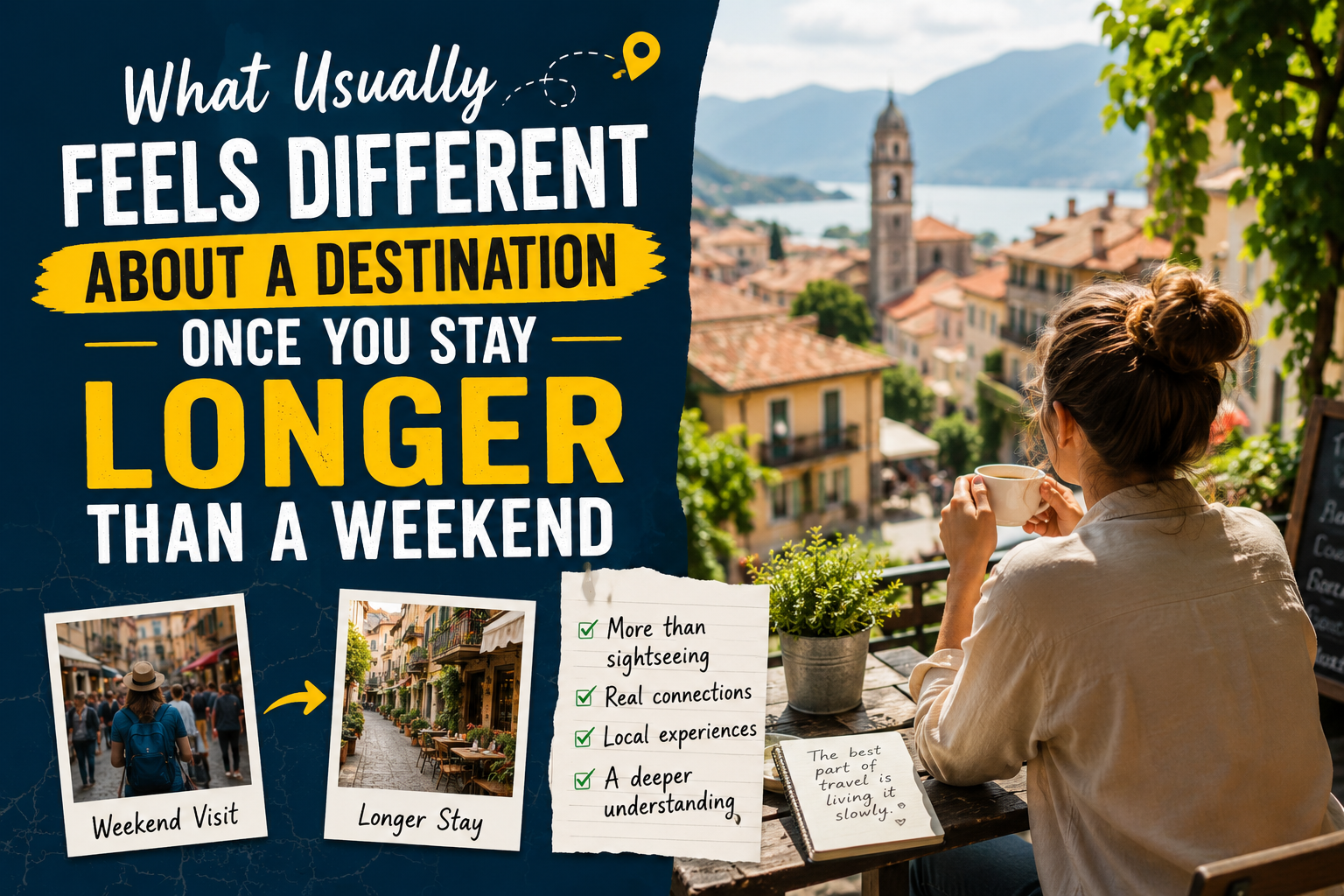
What Usually Feels Different About a Destination Once You Stay Longer Than a Weekend
Most people form an opinion about a destination within two or three days. They visit the main attractions, eat at popular restaurants, take photos, and move on. But something interesting happens when you stay longer than a weekend. The destination starts to reveal a side that tourists rarely see.
The crowds become less important. Daily routines become more noticeable. You stop chasing attractions and start paying attention to ordinary life. This shift is one of the biggest reasons why a slow travel experience often feels richer and more memorable than a quick getaway.
If you’ve ever wondered about the difference between visiting and living somewhere, this guide explains what actually changes when you spend more time in one place and why longer stays often create deeper travel experiences.
Key Takeaways
- Destinations often feel completely different after the first few days.
- A slow travel experience helps travelers notice local culture beyond tourist attractions.
- Long-term travel vs short trip experiences lead to different perspectives and memories.
- Staying longer in a destination reduces travel stress and increases local connection.
- Many travelers find that the most meaningful experiences happen after the sightseeing phase ends.
- Living like a local while traveling often provides a more realistic understanding of a place.
- The routines, neighborhoods, and everyday life of a destination are often what tourists miss about a destination.
Why Does a Destination Feel Different After More Than a Few Days?
The biggest change is simple: you stop acting like a tourist.
During a weekend trip, most people operate on a tight schedule. They want to maximize every hour. Their attention stays focused on landmarks, restaurants, museums, and photo opportunities.
After several days, that pressure starts to disappear.
Instead of asking, “What should I see next?” you begin asking, “How does life actually work here?”
This is where getting to know a place beyond tourism begins.
You notice how people commute. You learn which cafes locals prefer. You start recognizing familiar faces at nearby shops. The destination shifts from being an attraction to being a temporary home.
That change in perspective is often impossible to achieve in only 48 hours.
What Changes When You Stay Longer In a Place?
The destination itself does not change.
Your relationship with it changes.
The first few days are usually filled with excitement and novelty. After that period, your attention moves toward details that most visitors overlook.
You Notice Daily Rhythms
Every city has routines.
In cities like Tokyo, morning commuter patterns tell a different story than the busy nightlife districts tourists usually visit.
In Barcelona, local meal schedules often differ significantly from what visitors expect.
In Bangkok, neighborhoods can feel completely different during weekdays compared to weekends.
When you stay longer, you begin observing these rhythms instead of simply moving through them.
Tourist Areas Become Less Important
Many travelers spend most of a short trip near famous attractions.
Longer stays naturally encourage exploration beyond these zones.
You start visiting residential neighborhoods, local markets, parks, and community spaces. Often, these places create stronger memories than the landmarks that initially attracted you.
Small Details Become Meaningful
The local bakery owner who remembers your order.
The park where residents gather every evening.
The coffee shop where students spend hours studying.
These experiences rarely appear in travel guides, but they often become the highlights of a longer stay.
Slow Travel vs Weekend Trip: What Is the Real Difference?
The difference goes beyond trip length.
It is a difference in mindset.
A weekend trip can absolutely be enjoyable.
However, slow travel vs weekend trip comparisons often reveal that travelers remember people and experiences more clearly than attractions after enough time has passed.
Many experienced travelers can recall conversations, neighborhoods, and local routines years later, while specific tourist attractions often fade from memory.
Why Do Locals Become More Approachable During Longer Stays?
One of the biggest benefits of staying longer in a destination is repeated interaction.
Tourists often meet people once.
Longer-term travelers meet the same people multiple times.
A cashier recognizes them.
A barista remembers their order.
A neighbor says hello.
These small interactions create familiarity.
Research in social psychology has consistently shown that repeated exposure tends to increase comfort and trust between people. The same principle applies while traveling.
As familiarity grows, conversations become more natural.
This often leads to a more realistic understanding of local life than any guided tour can provide.
What Tourists Miss About a Destination
Many destinations are famous for specific landmarks.
Yet locals often spend very little time at those places.
Tourists may know the top ten attractions. Residents know where everyday life happens.
Things Many Visitors Miss
- Neighborhood markets
- Community festivals
- Public libraries
- Local sports culture
- Morning routines
- Residential districts
- Seasonal traditions
- Regional foods rarely found in tourist areas
For example, many visitors to Paris focus heavily on the city’s major attractions. Yet local markets, neighborhood cafes, and everyday street life often provide a more authentic understanding of the city.
The same pattern appears almost everywhere.
The longer you stay, the more likely you are to notice these overlooked aspects.
How Destinations Feel Different After a Week
The first week often marks an important turning point.
By this stage:
- Navigation becomes easier.
- Transportation systems feel familiar.
- Language barriers become less intimidating.
- Decision fatigue decreases.
- Daily routines start forming.
This creates mental space.
Instead of constantly figuring out logistics, you can focus on observation and experience.
Many travelers report that their favorite moments happen after this adjustment period.
The destination starts feeling less like a travel project and more like a living environment.
The Difference Between Visiting and Living Somewhere
A visitor consumes a destination.
A temporary resident participates in it.
That is perhaps the simplest way to explain the difference between visiting and living somewhere.
Visitors often ask:
- What should I see?
- What should I eat?
- What attractions are worth visiting?
People staying longer often ask:
- Where do locals shop?
- Which neighborhood feels right?
- How do residents spend weekends?
- What happens outside tourist zones?
Neither approach is wrong.
They simply produce different experiences.
The second approach tends to create deeper travel experiences because it focuses on understanding rather than consuming.
How Living Like a Local While Traveling Changes Your Perspective
Living like a local while traveling does not mean pretending to be a resident.
It means participating in ordinary life.
Simple examples include:
- Using public transportation regularly.
- Shopping at local grocery stores.
- Visiting neighborhood cafes.
- Cooking meals occasionally.
- Spending time in community spaces.
These activities may sound less exciting than famous attractions.
Yet they often reveal more about a destination’s culture.
For example, visiting a supermarket can teach you about local food habits, prices, consumer behavior, and regional preferences.
A few hours in a neighborhood park may provide more insight into community life than several guided tours.
Why Slow Travel Often Creates Better Memories
Memory is strongly connected to emotion and personal involvement.
During a fast-paced trip, travelers process a large amount of information in a short period.
Attractions can begin blending together.
Longer stays create stronger emotional anchors.
You remember:
- The cafe where you worked every morning.
- The local market vendor who chatted with you.
- The route you walked every evening.
- The neighborhood celebrations you unexpectedly encountered.
These experiences feel personal.
That personal connection often makes memories more durable and meaningful.
A Practical Way to Experience a Destination Beyond Tourism
If you want deeper travel experiences, you do not necessarily need months abroad.
Even adding a few extra days can make a difference.
Simple Steps
- Stay in one neighborhood longer.
- Visit attractions early in the trip.
- Leave unscheduled time each day.
- Use public transportation.
- Return to the same local businesses.
- Walk without a strict destination.
- Spend time observing daily life.
These habits help travelers move beyond tourist travel and experience destinations more naturally.
Quick Tip
Before booking your next trip, compare the cost of a four-day stay versus a seven-day stay. In many destinations, accommodation discounts for weekly bookings can make longer visits surprisingly affordable.
Mid-Trip Reflection: Are You Experiencing the Place or Just Checking Boxes?
Many travelers unintentionally turn vacations into productivity challenges.
They chase lists.
They rush between attractions.
They worry about missing something.
A useful question to ask halfway through any trip is:
“Am I experiencing this destination or simply completing a checklist?”
The answer often determines whether the trip becomes memorable or forgettable.
If you’re interested in building more meaningful travel habits, you may also enjoy reading our guides on slow travel planning, budget-friendly long-term travel, and how to choose the right neighborhood when traveling.
Why Remote Work and Digital Nomad Trends Increased Interest in Slow Travel
The growth of remote work has made longer stays more practical.
Many professionals now spend weeks or months in destinations that previously received only short visits.
This trend has helped popularize slow travel experiences.
Organizations such as the World Tourism Organization have highlighted growing interest in sustainable and experience-focused travel.
Rather than constantly moving, many travelers prefer fewer destinations and deeper engagement.
This approach often reduces transportation stress while increasing cultural understanding.
People Also Ask
What is a slow travel experience?
A slow travel experience focuses on spending more time in fewer places. Instead of rushing between attractions, travelers immerse themselves in local culture, daily life, food, neighborhoods, and community experiences.
How long should you stay in a destination to experience it properly?
There is no perfect number, but many travelers notice meaningful differences after five to seven days. This timeframe allows routines to develop and provides opportunities to explore beyond major tourist attractions.
What do tourists usually miss about a destination?
Tourists often miss local neighborhoods, community traditions, everyday routines, regional foods, and social interactions that occur outside major sightseeing areas. These elements often reveal the true character of a destination.
Is slow travel cheaper than frequent short trips?
In many cases, yes. Longer stays can reduce transportation costs and often qualify for accommodation discounts. Travelers also tend to make fewer rushed spending decisions compared to frequent short trips.
Why does a place feel more authentic after a week?
After a week, travelers become familiar with transportation, local customs, and daily routines. This reduces the focus on logistics and allows greater attention to everyday life, creating a stronger sense of authenticity.
Can you live like a local while traveling?
You can experience aspects of local life by using public transportation, shopping locally, spending time in neighborhoods, and participating in everyday activities. While you remain a visitor, these habits often provide a deeper understanding of a destination.
Conclusion
What changes when you stay longer in a place is not just what you see. It is how you see it.
Weekend trips often show the highlights. Longer stays reveal the reality. You begin noticing routines, relationships, neighborhoods, and everyday moments that rarely appear in travel brochures.
The difference between visiting and living somewhere is not measured only in days. It is measured in attention.
The next time you plan a trip, consider staying a little longer than usual. Give yourself enough time to move beyond tourist travel and experience the destination as more than a collection of attractions.
That extra time may end up teaching you more about the place than any landmark ever could.
If your goal is to create richer memories, stronger cultural understanding, and deeper travel experiences, try slowing down on your next journey. You may find that the most interesting part of a destination begins right after most tourists leave.
Ravinder Kaur is the founder of OpinionHook, an independent travel publication established in 2023. She oversees editorial standards, destination research, travel planning resources, and content quality across the website. OpinionHook focuses on publishing practical travel guides, itineraries, budgeting advice, and destination resources designed to help travelers make informed travel decisions.



One Comment
Comments are closed.