
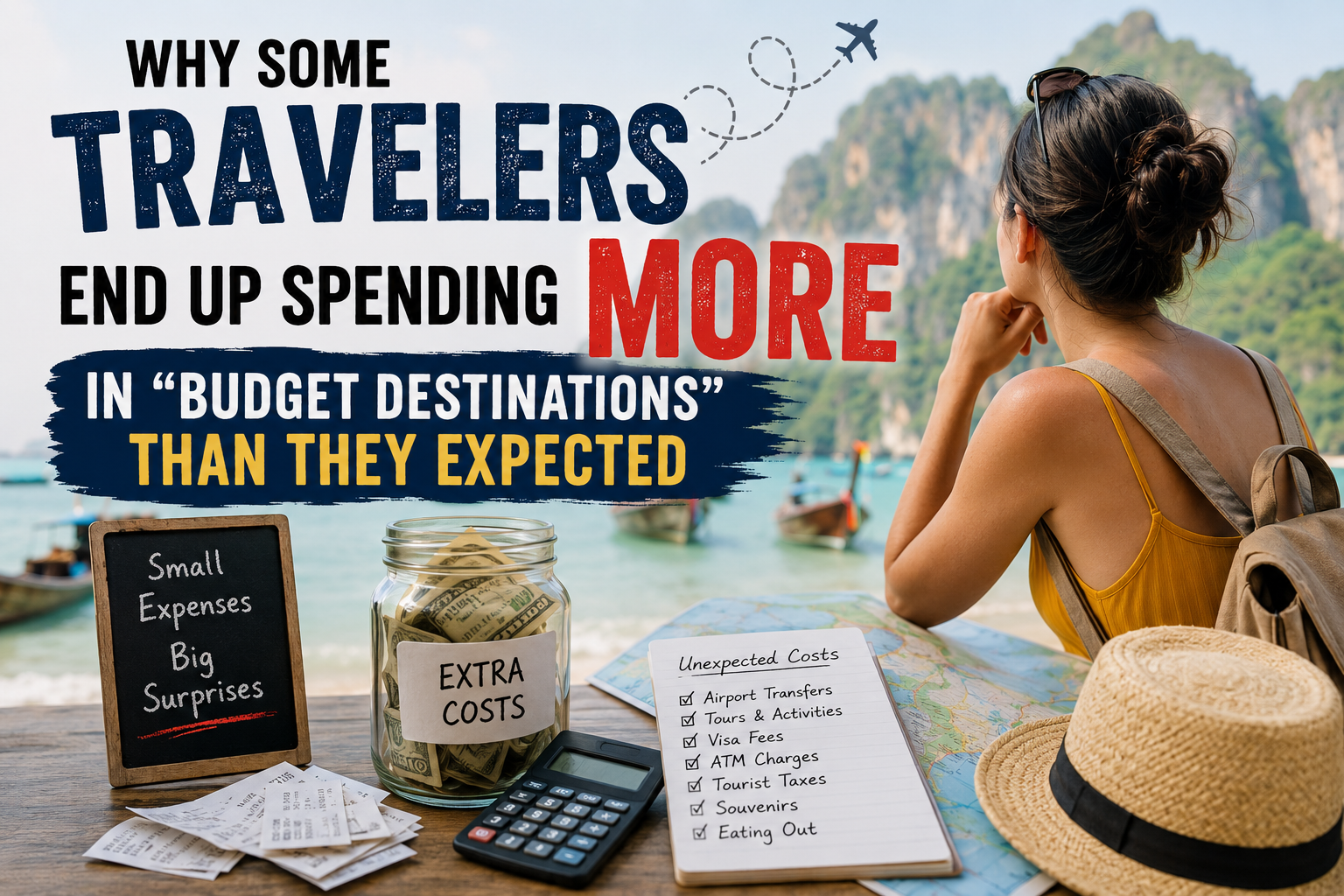
Why Some Travelers End Up Spending More in “Budget Destinations” Than They Expected
Have you ever booked a trip to a country everyone calls “cheap” and somehow come home wondering where all your money went?
You’re not alone.
I’ve noticed that some of the destinations with the cheapest reputations are often the places where travelers lose track of their spending the fastest. Not because hotels are expensive. Not because food costs a fortune. Usually it’s because everything feels affordable, so people stop paying attention.
A $2 coffee doesn’t seem like a big deal. Neither does a $10 tour, a $5 taxi ride, or a $15 beach club entry fee. But after two weeks, all those “small” expenses can add up to hundreds of dollars.
The funny thing is that many travelers prepare more carefully for expensive destinations than cheap ones. That’s often where the problem starts.
Key Takeaways
- Cheap destinations can still lead to expensive trips.
- Small purchases are usually the biggest budget killer.
- Activities often cost more than accommodation.
- Staying longer can erase the savings of choosing a budget destination.
- Tracking spending works better than constantly looking for cheaper deals.
- Most overspending happens because travelers think they are saving money.
Why Do Travelers Spend More in Cheap Destinations?
The simple answer is because cheap prices make people spend more.
That might sound obvious, but it’s something many travelers don’t realize until after the trip.
I’ve seen people spend 20 minutes comparing flight prices to save $30, then casually spend $50 on drinks because everything felt inexpensive once they arrived.
That’s what usually happens.
When you’re visiting somewhere like Thailand, Vietnam, Indonesia, or parts of Eastern Europe, prices often look tiny compared to what you’re used to paying back home. Suddenly you stop asking yourself whether you need something and start asking yourself why not.
And honestly, that’s where budgets start falling apart.
Are Budget Destinations Really Cheap?
Yes. But also no.
The destination itself might be cheap. Your behavior might not be.
That’s an important difference.
For example, a local meal in Vietnam can cost less than a fast-food meal in the United States. That’s genuinely affordable.
But what often fails is when travelers compare local prices to home prices and use that as permission to spend more.
Instead of eating one meal out, they eat three.
Instead of taking public transportation, they grab taxis everywhere.
Instead of booking one excursion, they book five.
The destination is still cheap. The traveler just isn’t traveling cheaply anymore.
In my opinion, this is probably the biggest misunderstanding in budget travel.
The Hidden Costs Nobody Talks About Before the Trip
Most travel blogs focus on cheap hotels and low food prices.
They rarely spend enough time talking about everything else.
And that’s usually where the money disappears.
Transportation Adds Up Fast
Many travelers underestimate transportation costs.
A cheap flight gets all the attention during planning. Then the reality kicks in.
Airport transfers.
Ride-sharing apps.
Domestic flights.
Ferries.
Buses.
Trains.
Suddenly the transportation budget is much bigger than expected.
I’ve met travelers in Southeast Asia who spent more moving around the country than they spent on accommodation.
That’s not unusual.
ATM Fees Are Sneaky
This one catches people all the time.
You withdraw a little cash.
Then a little more.
Then a little more.
Each withdrawal comes with fees.
Individually they don’t look terrible. Together they become annoying.
What usually works is withdrawing larger amounts less often. What often fails is treating the ATM like your personal wallet every other day.
Tourist Taxes and Entry Fees
Nobody gets excited about budgeting for tourist taxes.
That’s probably why so many people forget them.
Some destinations charge city taxes. Others have environmental fees, visa fees, national park fees, or tourist permits.
None of these costs are necessarily huge.
But they all count.
Social Media Makes Cheap Destinations More Expensive
This might be an unpopular opinion, but social media has made budget travel harder.
Not because the information is bad.
Because the temptation is everywhere.
You open Instagram.
Someone is drinking coffee at a famous café.
You open TikTok.
Someone is staying at a beautiful villa.
YouTube recommends a luxury beach club.
Now your simple budget trip suddenly includes a list of things you weren’t planning to pay for.
I’ve noticed that many travelers no longer compare themselves to locals. They compare themselves to content creators.
That’s a very expensive habit.
Why Food Budgets Often Get Out of Control
Food is where people lose discipline without realizing it.
And honestly, I understand why.
If dinner costs $4, ordering dessert doesn’t seem like a big deal.
Neither does grabbing an extra coffee.
Or stopping for snacks.
Or trying another restaurant because everyone online recommended it.
One meal isn’t expensive.
Ten extra meals over two weeks can be.
What usually works is having a rough daily food budget.
What often fails is assuming food is cheap so spending doesn’t matter.
Budget Destination Travel Mistakes That Cost the Most Money
Staying Longer Than Planned
This sounds backwards, but staying longer is often what turns an affordable trip into an expensive one.
I’ve seen travelers arrive for one week and stay three.
It feels reasonable because daily costs seem low.
Then they realize they’ve doubled their accommodation, food, transportation, and entertainment expenses.
The destination didn’t become expensive.
The trip simply became much longer.
Saying Yes to Every Activity
This is probably the most common mistake.
Budget travelers spend weeks researching cheap hotels.
Then they arrive and book:
- Boat tours
- Cooking classes
- Diving trips
- Guided hikes
- Day excursions
- Adventure activities
Activities are usually where the real money goes.
In many destinations, I’ve found that tours cost far more than food and accommodation combined.
Quick Reality Check
If you’re planning a trip right now, try this simple exercise.
Look at your budget.
Now add up every activity you want to do.
Most people are surprised by the result.
It’s one of the easiest ways to spot potential overspending before it happens.
You might also want to check our guides on budget travel planning, saving money on accommodation, and avoiding common tourist mistakes before finalizing your trip.
How to Actually Save Money Traveling
A lot of travel advice focuses on finding cheaper destinations.
Personally, I think that’s the wrong place to start.
The better question is: how can you spend smarter?
Track Your Spending
This isn’t exciting advice.
But it works.
The travelers I know who stay within budget almost always track their expenses.
The travelers who go over budget usually don’t.
It’s that simple.
Slow Down
One thing I’ve learned is that moving around constantly gets expensive.
Every new city comes with transportation costs, booking fees, and unexpected spending.
Staying longer in one place usually saves money.
It’s also less stressful.
Pick Experiences Carefully
Not every activity is worth the price.
Some become unforgettable memories.
Others feel overpriced five minutes after they end.
My personal rule is simple.
I’d rather spend money on one great experience than five average ones.
That approach has saved me a lot of money over the years.
Final Thoughts
Cheap destinations aren’t scams.
Most of them genuinely offer incredible value.
The problem is that many travelers arrive expecting low prices to automatically create a low-cost trip.
That’s rarely how it works.
In my experience, the people who save the most money aren’t necessarily the ones visiting the cheapest countries. They’re the ones paying attention to where their money goes.
A cheap destination can absolutely help your budget.
But only if you don’t let “everything is cheap” become an excuse to spend without thinking.
Before your next trip, build a realistic budget, leave room for surprises, and keep an eye on the small expenses. Those tiny purchases are usually the ones that do the most damage.
And if I had to pick one lesson from years of watching travelers overspend, it’s this:
A destination doesn’t decide your budget.
Your habits do.

Ravinder Kaur is the founder of OpinionHook, an independent travel publication established in 2023. She oversees editorial standards, destination research, travel planning resources, and content quality across the website. OpinionHook focuses on publishing practical travel guides, itineraries, budgeting advice, and destination resources designed to help travelers make informed travel decisions.



One Comment
Comments are closed.