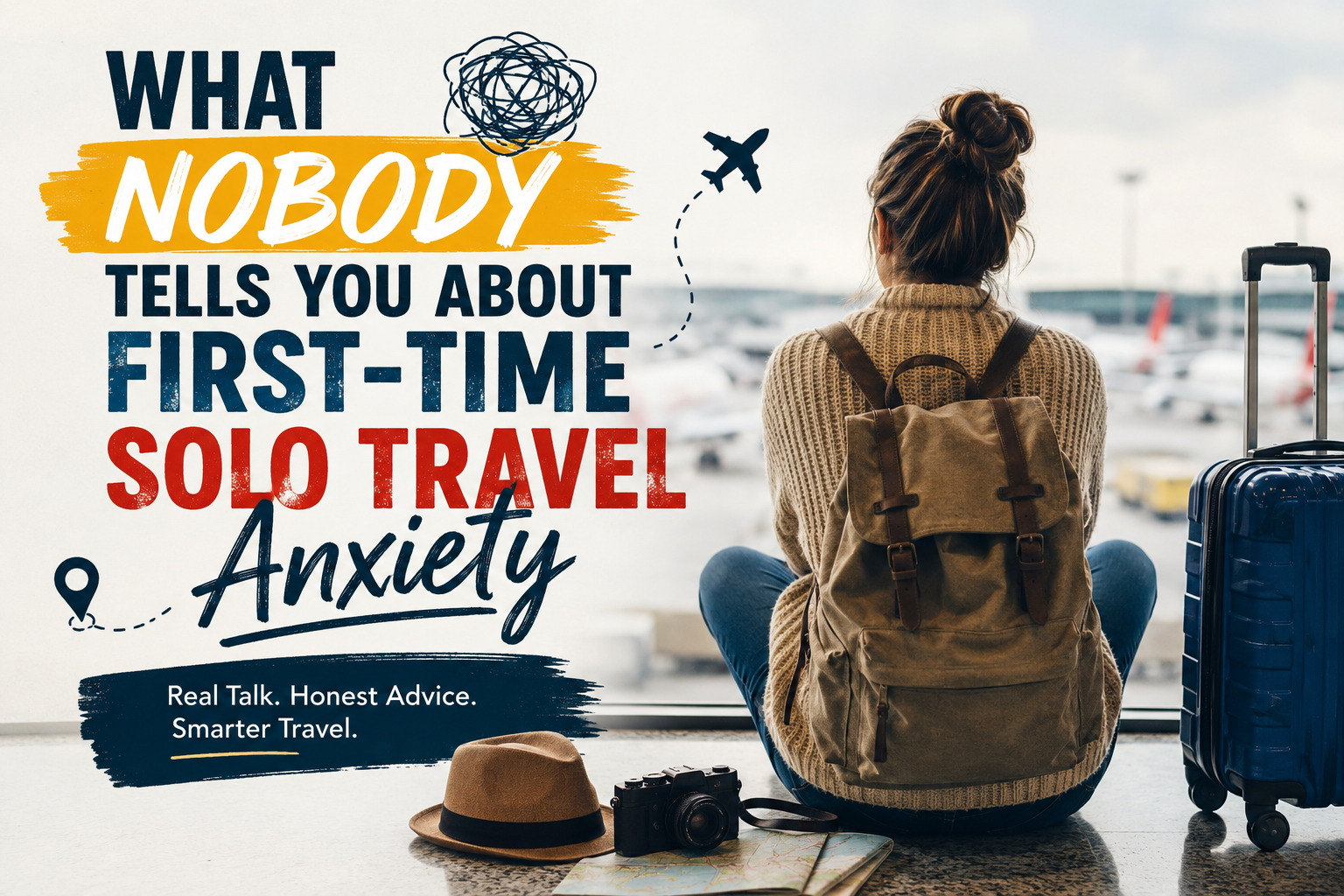
First-Time Solo Travel Anxiety: How to Cope Before You Go
Feeling anxious before your first solo trip is very common, and it does not mean you are making a mistake. The nerves usually come from uncertainty: new places, new systems and nobody to share decisions with. The best way to cope is to prepare the practical things you can control, make a simple plan for the first day, and accept that some nervousness will stay until the trip is under way.
This guide explains why solo travel anxiety happens, what the first days can feel like, and what actually helps before you go. It includes a short checklist for Indian travellers, a section on when anxiety might need real support, and answers to common questions. It is general information and not a substitute for medical advice.
Key takeaways
- Pre-trip nerves are normal. You can be excited and anxious at the same time.
- Most worries come from not knowing what will happen, so reducing the unknowns helps more than trying to feel brave.
- Plan your first 24 hours in detail and keep the rest of the trip flexible.
- Choose an easy first destination with good transport, plenty of places to stay and reliable internet.
- Separate feelings from real risk. Dining alone feels scary but is low risk. Skipping travel insurance feels fine but is a real risk.
- If anxiety is constant or stops you from doing everyday things, speak to a doctor or counsellor. In India, Tele-MANAS offers a free helpline on 14416.
Why does first-time solo travel anxiety feel so strong?
When you travel with family, friends or a group, decisions are shared. When you travel alone for the first time, every choice is yours: which train, which hotel, what to do if something goes wrong. Your mind tends to treat unfamiliar situations as possible threats, whether you are flying to another continent or taking a short domestic trip.
The result is that you can feel thrilled and scared in the same hour. Both feelings are real, and neither cancels the other. For many people the biggest anxiety is not about the destination at all. It is about not knowing how they will cope.
Is it normal to feel anxious before solo travel?
Yes. Many people feel nervous before any big change, and a first solo trip is a big change. Common worries include:
- Getting lost
- Safety
- Feeling lonely
- Eating alone
- Language problems
- Making mistakes with transport or money
- Falling ill away from home
For Indian travellers, there can be extra pressure. Family members may worry, relatives may ask who you are travelling with, and visa or immigration questions can add stress. That does not mean you should not go. It means you should prepare the practical things and share your plan with people you trust.
Common fears and what helps
| Fear before the trip | What helps |
|---|---|
| Getting lost | Offline maps, a saved hotel address in the local language, and a charged phone with a power bank |
| Not meeting anyone | Stay in social accommodation or join a walking tour on day two or three, if you want company |
| Language barriers | A translation app with the language downloaded for offline use |
| Safety concerns | Choose a well-reviewed area to stay, share your plan and follow local advice. See our solo travel tips |
| Eating alone | Pick a cafe with counter seating or take a book. It gets easier with practice |
| Falling ill | Buy travel insurance and keep policy details saved offline |
| Feeling lonely | Plan a call home at a set time and leave room for social moments |
What to expect in the first days
Many travellers say the first day or two are the hardest. You may feel:
- Information overload: new streets, transport systems and signs demand attention. Feeling tired is normal
- Emotional ups and downs: excited in the morning, doubtful in the afternoon, happy again at dinner
- Growing confidence: after you handle a few small tasks on your own, such as buying a ticket or fixing a booking problem, confidence usually grows
This is a general pattern, not a rule. Everyone adapts at a different speed, and it is fine if it takes longer.
How to deal with anxiety when travelling alone
Start with an easy destination
Your first solo trip does not need to be a remote village or a five-country route. Choose somewhere with good public transport, many accommodation options and decent internet. Our lists of the easiest destinations for first-time solo travellers and best solo travel destinations for beginners can help you pick.
Plan the first 24 hours
Uncertainty feeds anxiety, so remove some of it. A simple first-day plan might be:
- Arrive and go straight to your accommodation
- Check in and rest
- Eat a meal nearby
- Take a short walk to learn the area
- Return early and sleep
You do not have to plan every day like this. Just make the first day predictable.
Save the important things offline
Before you leave, save these on your phone and keep paper copies of the most important ones:
- Offline maps of your destination
- Hotel address and booking confirmation
- Flight details and visa approval, if any
- Travel insurance policy and helpline number
- Emergency contacts, including family and your bank
- The address and phone number of the Indian embassy or consulate in the country
Having a backup makes it easier to stay calm if something goes wrong.
Focus on the next step only
When your mind jumps to worst-case scenarios, bring it back to the next hour. Ask yourself: what do I need to do right now? Break the trip into small tasks and do them one at a time.
Why anxiety often peaks just before departure
Many people feel the worst nerves in the days before they leave. This is when the trip becomes real: packing starts, the departure date is close and friends and family begin asking questions. Thoughts like “maybe I should not go” or “what if something goes wrong” are common here. This is a pattern many travellers describe, not a measured statistic, but it is worth knowing so that you do not treat a bad evening as a signal to cancel.
Action often reduces anxiety more than thinking in circles. Finishing the packing list, confirming your first-night booking and doing a final document check can all help.
The difference between fear and real risk
Fear is a feeling. Risk is the chance that something harmful happens. They do not always match.
- Eating alone in a restaurant may feel terrifying but carries very little risk
- Walking down an unlit street in an unfamiliar area at night may feel fine but carries more risk
- Skipping travel insurance may not feel scary but can be costly if you fall ill
A useful habit is to list your worries, then mark each as feeling or real risk. Deal with real risks by planning. Deal with feelings by understanding that they will pass. Before you travel, read the official travel advice for your destination and check the validity rules for your passport in our guide to the passport six-month rule.
A mindset shift that helps
If your goal is for everything to go perfectly, every small problem feels like failure. A better goal is to learn how to travel independently. Missing a train, taking a wrong turn or feeling awkward alone then become part of the learning. This takes pressure off and makes it easier to enjoy the trip.
What experienced solo travellers often say
These are common themes in travel writing and advice, not a study:
- Loneliness comes and goes. Being alone is not the same as feeling lonely
- Confidence comes from doing. Reading helps, but real confidence builds after you handle things yourself
- Nobody is watching as closely as you think. Most people are busy with their own day
Practical habits for anxious beginners
- Stay connected. Share your itinerary with someone you trust and agree on check-in times. Keep it light so it does not become a source of stress
- Do not overload your schedule. Leave space for rest
- Keep familiar routines. A morning chai or coffee, an evening walk, reading before bed or journaling can help your mind settle
- Limit horror-story scrolling. Reading dramatic stories constantly can raise anxiety. Use official travel advice and trusted guides instead
- Write three wins each evening. Noting what you handled well builds confidence
For more planning help, read our guide on solo travel planning mistakes first-timers can avoid and our overview of first-time international travel tips. If you are not sure whether to go alone at all, see solo travel vs group travel.
What if something does go wrong?
Knowing your fallback plan is one of the best ways to calm worry. Most problems on a trip are small and fixable: a missed bus, a lost bank card, a hotel booking that does not appear. A few steps cover most of them:
- **Lost or stolen passport:** report it to the local police and contact the nearest Indian embassy or consulate. Keep a scan of your passport and visa in your email or cloud storage
- **Lost card or money:** call your bank’s international number, block the card, and keep a second payment method in a different bag
- **Illness or injury:** contact your insurer’s helpline first, as many policies need prior approval for treatment or evacuation
- **Problem with a consulate service:** India’s Ministry of External Affairs runs MADAD, an online consular grievance system, where you can register and file a complaint with the relevant mission. It is for grievances, not for emergencies, so in an urgent situation contact the local emergency number and the Indian mission directly
Write down these contacts before you leave and keep them offline. Having the list ready makes it easier to stay calm if you ever need it.
When anxiety needs more than tips
Ordinary pre-trip nerves are one thing. The NHS says anxiety may be more of a problem if you feel anxious most of the time and it affects your everyday life. If that sounds like you, talk to a doctor, counsellor or a mental health professional before or after your trip. The NHS also lists self-help ideas such as calming breathing, regular exercise, enough sleep and avoiding too much caffeine, and it advises against avoiding every situation that makes you anxious.
In India, Tele-MANAS is a government mental health helpline. It is reported to be free and available 24 hours a day on 14416 or 1800-891-4416 in around 20 languages. Please check the official Tele-MANAS website for the current details. If you are in immediate danger or think you might harm yourself, call your local emergency number straight away.
FAQ
Is it normal to feel anxious before solo travel?
Yes. Nervousness before a first solo trip is very common. It usually comes from uncertainty and extra responsibility, and it often eases once you are on your way.
How do I stop being nervous about travelling alone?
You may not stop completely, but you can reduce it. Pick an easy destination, plan your first day, save key documents offline and break the trip into small steps.
What should I expect on my first solo trip?
A mix of excitement, tiredness and doubt, especially in the first days. Many people feel more settled once they have handled a few small tasks.
Is solo travel safe for beginners?
It can be, if you choose a suitable destination, follow local advice, take insurance and use common-sense precautions. No trip can be guaranteed safe, so read official travel advice for your destination.
What if I feel lonely while travelling alone?
Loneliness is common and usually passes. Stay in social accommodation, join a tour or class, or plan regular calls home. If low mood continues, speak to someone you trust or a professional.
How this guide was checked
I checked the NHS self-help points and the Tele-MANAS helpline details on 10 October 2026. The Tele-MANAS numbers came from a secondary page, so please confirm them on the official site. The rest of this guide is practical travel advice and common patterns, not clinical guidance or research findings. It is not medical advice.
Sources
- NHS: Generalised anxiety disorder overview
- IIT Kanpur counselling service: Tele MANAS helpline details
- MADAD: consular grievance system of India’s Ministry of External Affairs (Embassy of India, Budapest)
Related Guides
- Solo Travel Tips: What Experienced Travelers Notice First
- Easiest Destinations for First-Time Solo Travelers: What to Look For
- Solo Travel vs Group Travel: Which Is Better in 2026?
- Solo Travel Planning Mistakes: How First-Timers Can Avoid Them
Browse all of our Solo Travel guides.

Varinder Kaur is from Amritsar, India. She has traveled to well-known places across India, including Darjeeling, and to a few countries abroad, and shares travel experiences and practical tips for travelers through OpinionHook.


2 Comments
Comments are closed.