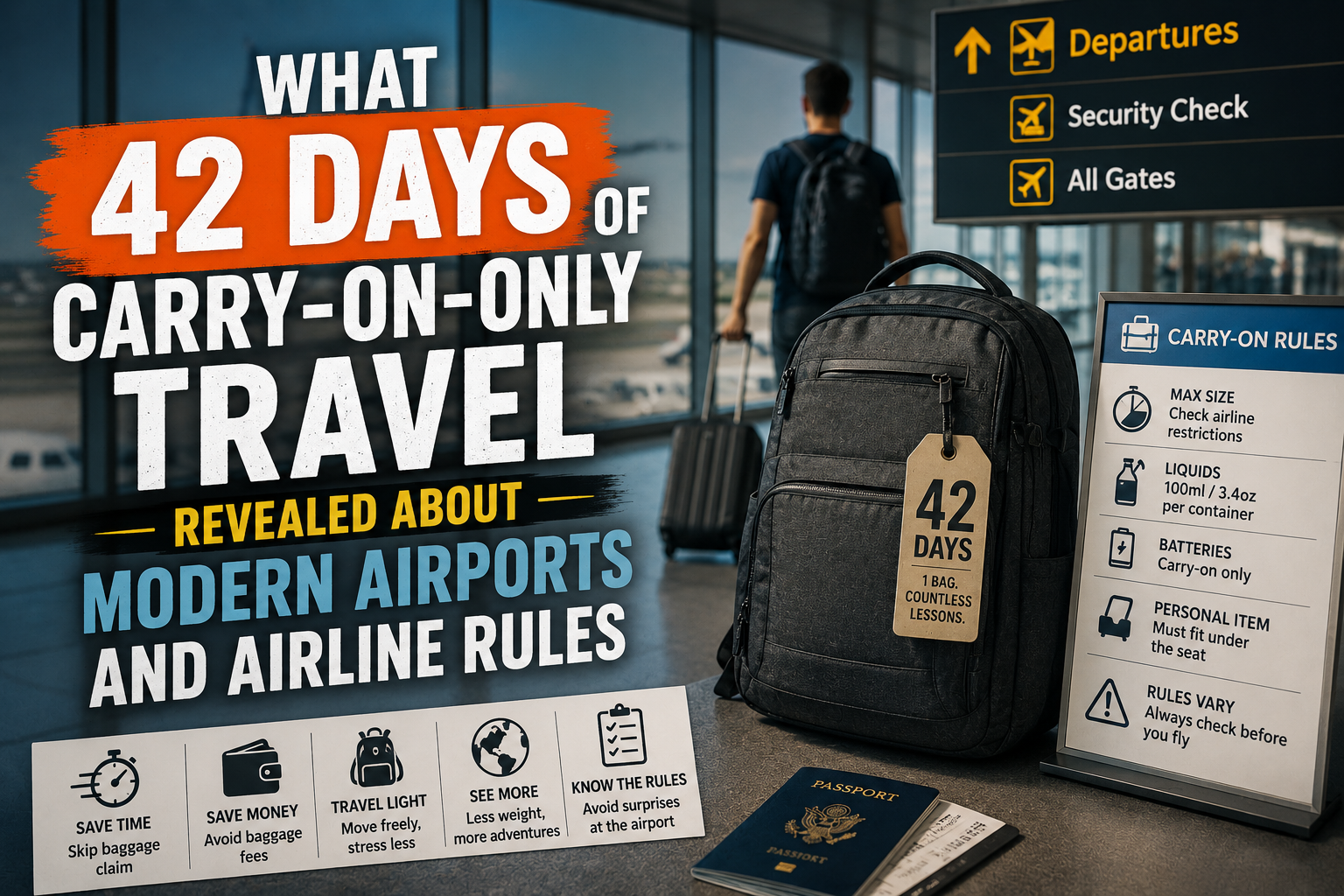
What 42 Days of Carry-On-Only Travel Revealed About Modern Airports and Airline Rules
I used to laugh at people who bragged about traveling for weeks with just one carry-on.
Honestly, I thought it sounded miserable.
How do you survive that long with so few clothes? What if the weather changes? What if you need extra shoes? What if your outfits repeat too much?
Then I did it myself.
Forty-two days. Different countries. Multiple airlines. Trains. Budget airports. Long layovers. One carry-on backpack and a small personal item.
And somewhere around week three, I realized something slightly annoying:
Most of the stuff I used to pack was completely unnecessary.
Not “maybe useful.” Not “good to have.”
Actually unnecessary.
The trip also revealed something bigger. Airports and airline rules quietly changed a lot over the last few years, especially after travel exploded again globally. And many travelers still pack like nothing changed.
That’s why airports feel more stressful for some people now. The system rewards travelers who move light, stay flexible, and understand the rules before arriving.
The people struggling most were usually dragging giant suitcases, reorganizing liquids at security, arguing about bag sizes, or paying surprise baggage fees at the gate.
And honestly, after doing carry-on only travel for over a month, I genuinely think most people overpack because of anxiety, not necessity.
Quick Summary
Traveling carry-on only for 42 days showed me that modern airports work much better when you pack lighter. It also exposed how inconsistent airline carry-on rules became between airlines and airports.
Some airlines barely checked bags. Others measured everything aggressively. Some airports had modern scanners where electronics stayed inside bags. Others still acted like every laptop was a security threat from 2008.
The biggest lesson was simple though:
You probably need fewer clothes than you think.
And personally, I think a lot of travelers confuse “being prepared” with “bringing your entire bedroom.”
Key Takeaways
- Carry-on only travel gets easier after the first few days
- Airline carry-on restrictions vary more than most people expect
- Budget airlines became stricter about bag size and weight
- Most travelers overpack shoes and “just in case” outfits
- Airports reward lighter, faster-moving travelers now
- Cheap luggage causes more problems than people realize
- Long-term carry-on travel saves serious time and stress
- Simple packing systems work better than overcomplicated hacks
Why Carry-On-Only Travel Feels More Relevant Now
Modern travel feels faster and more chaotic than before.
Airports are crowded. Flights are full. Airlines are stricter. Layovers are tighter. And baggage fees quietly became ridiculous on some routes.
That’s why carry-on only travel suddenly makes a lot more sense now than it did years ago.
The biggest difference you notice immediately is freedom.
When you skip checked luggage:
- You leave airports faster
- You stop worrying about lost bags
- Tight connections become easier
- Public transportation feels manageable
- Hotel check-ins become less exhausting
After landing at Heathrow Airport and walking straight past baggage claim while hundreds of people waited around conveyor belts, I finally understood why experienced travelers pack light.
It just removes friction.
And honestly, once you experience that a few times, checked luggage starts feeling weirdly outdated for shorter and medium-length trips.
What You Can Carry on a Plane in 2024 Is Confusing on Purpose
This is probably the most frustrating part of modern travel.
Most travelers assume airline rules are mostly universal.
They are not.
Not even close.
One airline allows 10kg carry-ons. Another allows 7kg. One includes a personal item separately. Another combines everything into one total allowance.
And budget airlines? Some of them check bags like they’re hunting for hidden treasure.
I watched a couple almost get charged extra because their suitcase wheels slightly pushed past the measurement cage. Slightly.
That’s when I realized airline carry-on restrictions are no longer casual guidelines. For many airlines, they became revenue tools.
Companies like Ryanair and Wizz Air became especially strict about bag dimensions over the last few years.
And honestly, I kind of understand why. Travelers abused flexible baggage rules for years. Airlines responded by tightening everything.
Still annoying though.
What Actually Worked During 42 Days of Carry-On-Only Travel
A lot of online packing advice sounds smart until you’re dragging your bag through three airports in one week.
Then reality kicks in.
Here’s what genuinely worked.
Wearing the Bulkiest Clothes During Flights
This one matters way more than people think.
Wearing heavier sneakers, hoodies, or jackets during flights saves huge amounts of bag space and weight.
And yes, sometimes you feel slightly ridiculous boarding a plane wearing your heaviest outfit in warm weather.
But honestly? Better slightly warm than paying oversized baggage fees.
Repeating Outfits Without Caring
This was surprisingly freeing.
Social media made people feel like they need a new outfit for every travel photo. Real travelers stop caring about that pretty quickly.
Nobody remembers your third airport outfit.
Most people barely remember their own.
Neutral basics worked best because everything mixed together easily. Black shirts. Relaxed pants. Lightweight layers. Nothing exciting. But very practical.
And honestly, practical starts looking stylish once you travel long enough.
Doing Laundry More Often
This sounds obvious, but many people still pack as if laundry completely disappeared outside their home country.
Laundry exists almost everywhere.
That realization changes everything.
Instead of packing two weeks of clothes, you pack one week and wash things regularly.
That’s it.
Smaller Toiletry Kits
This was probably the easiest adjustment.
Most people carry way too many toiletries. Especially skincare products they never even use consistently at home.
Tiny toothpaste. Solid deodorant. Small sunscreen. Basic skincare.
Done.
Airport security becomes much less annoying once liquids stop controlling your life.
What Usually Fails With Carry-On-Only Travel
Some minimalist travel advice honestly feels written by people trying to win an internet challenge instead of enjoy their trip.
Not every “travel hack” is useful.
Overcomplicated Packing Systems
Some travelers turn packing into a military operation.
Color-coded pouches. Compression systems. Twenty tiny organizers. Folding methods that look like yoga positions.
Honestly, simple usually works better.
The more complicated your system becomes, the more annoying repacking gets after every hotel stay.
Cheap Luggage
Bad luggage becomes miserable very fast.
Broken zippers. Weak straps. Bad weight distribution. Tiny wheels that hate sidewalks.
A good backpack matters more than most travel gadgets combined.
Personally, I think people spend too much money on random travel accessories and not enough on the actual bag they carry every day.
Packing “Just in Case” Clothes
This is probably the biggest mistake people make.
Extra shoes. Fancy outfits for imaginary dinners. Backup jeans. Heavy jackets for weather forecasts that changed three days ago.
After six weeks, I noticed something funny:
I kept wearing the same favorite clothes repeatedly.
Most travelers do.
The “just in case” clothes usually stay untouched at the bottom of the bag the entire trip.
Airport Rules Every Traveler Should Know in 2024
Modern airport rules became weirdly inconsistent.
That’s the real issue.
Some airports upgraded security scanners and now let passengers keep liquids and electronics inside bags. Others still make you unpack half your belongings into plastic trays.
The Transportation Security Administration continues updating technology in some airports, but globally the experience still varies a lot.
And battery rules became stricter too.
Power banks and lithium batteries usually need to stay in carry-on luggage now, not checked baggage. Airlines take battery fire risks much more seriously today.
Honestly, the travelers moving fastest through security were usually not the ones with expensive gear.
They were the calm ones.
The prepared ones.
The people who already knew the rules before reaching the scanner.
Carry-On Only Travel Quietly Changes Your Travel Personality
This surprised me more than anything else.
Traveling lighter changes how you move through airports mentally.
You stop panicking about baggage claim. You stop stressing over lost luggage. You stop dreading staircases and train platforms.
You become more flexible.
And honestly, airports feel less exhausting when you’re not dragging half your house behind you.
I noticed heavier packers looked stressed before trips even started. Giant suitcases. Multiple bags. Sweating through terminals.
Meanwhile lighter travelers moved through the exact same airports looking far more relaxed.
That difference becomes impossible not to notice after weeks of traveling.
The Airline Carry-On Rules That Catch People Most Often
Some carry-on rules surprise travelers constantly.
Weight Limits
This one causes huge problems now.
A backpack that looks small can still exceed airline weight limits once electronics get added.
Laptops, cameras, chargers, and power banks add weight very quickly.
Personal Item Rules
Many airlines now define exact personal item dimensions.
That means oversized tote bags and stuffed backpacks suddenly become risky during boarding.
Liquid Rules
Even in 2024, many airports still follow the old 100ml liquid rule for carry-ons.
Honestly, I think travelers keep expecting these rules to disappear globally, but progress is happening slowly.
Overhead Bin Competition
Flights are fuller now.
That means overhead space disappears fast.
People boarding late sometimes get forced into gate-checking bags even if they technically followed carry-on rules correctly.
And yes, that’s incredibly annoying.
A Practical Tip That Actually Helped Constantly
Take photos of your packed bag before leaving.
Seriously.
After multiple hotel stays, airport security checks, and rushed repacking moments, having a quick visual reference saves time and helps you notice missing items immediately.
Tiny habits like this help more than most viral travel gadgets.
You can also check related guides like:
- “Best Carry-On Backpacks for International Travel”
- “How to Pack for Multiple Climates”
- “Airport Security Mistakes That Slow Travelers Down”
Those topics become much more useful once you start traveling lighter regularly.
What Long-Term Carry-On Travel Really Teaches You
The biggest lesson has nothing to do with luggage.
It’s about how little most people actually need while traveling.
That doesn’t mean everyone should suddenly become an extreme minimalist with one shirt and a toothbrush. Some minimalist travel content online honestly feels performative.
But carry-on only travel does expose how often people pack based on fear instead of reality.
Fear of not having enough.
Fear of outfit repeating.
Fear of inconvenience.
Fear of uncertainty.
And honestly, airports quietly punish overpacking now.
Heavy luggage slows everything down.
Meanwhile lighter travelers move through the exact same systems far more smoothly.
That’s not an accident anymore. Modern airports are basically designed around speed and efficiency now.
People Also Ask
How do you travel with just a carry-on for weeks?
Most travelers succeed by packing fewer clothes, doing laundry regularly, repeating outfits, and avoiding unnecessary “just in case” items. Neutral basics and lightweight layers make long-term carry-on travel much easier.
Are airline carry-on rules stricter now?
Yes. Many airlines became much stricter about bag size and weight limits, especially budget carriers. Airlines now check dimensions more aggressively because baggage fees became an important source of revenue.
What can you carry on a plane in 2024?
Most airlines allow clothes, electronics, toiletries under liquid limits, medications, and personal items in carry-ons. Rules vary by airline and airport, especially regarding batteries and liquid screening.
Is carry-on only travel worth it?
For many travelers, yes. It saves time, reduces baggage fees, lowers stress, and makes moving through airports easier. It works especially well for multi-city trips and flexible travel plans.
Final Thoughts
Forty-two days of carry-on-only travel completely changed how I think about airports, packing, and honestly even shopping.
I realized most travel stress starts before the trip even begins. People overpack trying to prepare for every possible scenario, then spend the entire trip dragging unnecessary stuff around.
And the funny part is they usually wear the same few outfits anyway.
Personally, I think carry-on only travel works best when you stop trying to optimize everything perfectly. The goal is not becoming some ultra-minimalist travel robot.
The goal is making travel easier.
That’s it.
If you’re planning a long trip soon, try cutting your packing list by one-third before leaving. Not half. Just one-third.
There’s a very good chance you won’t miss most of it.
And once you move through airports without baggage claim stress, oversized luggage fees, or giant suitcases slowing you down, it becomes very difficult to go back to overpacking again.

Ravinder Kaur is the founder of OpinionHook, an independent travel publication established in 2023. She oversees editorial standards, destination research, travel planning resources, and content quality across the website. OpinionHook focuses on publishing practical travel guides, itineraries, budgeting advice, and destination resources designed to help travelers make informed travel decisions.