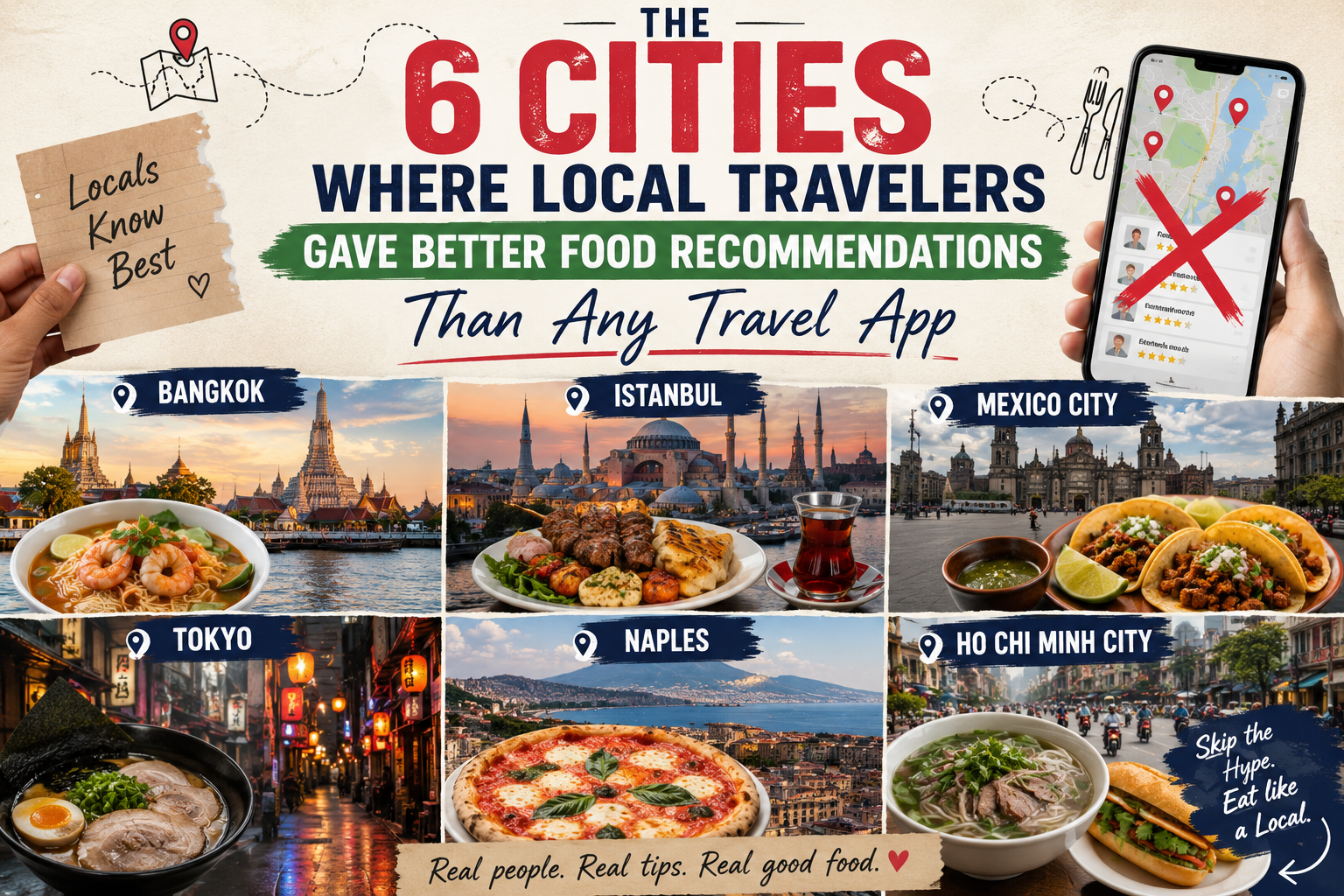
The 6 Cities Where Local Travelers Gave Better Food Recommendations Than Any Travel App
You can spend hours scrolling through travel apps looking for the “best local restaurant” in a city. Then you arrive, wait in a huge tourist line, overpay for average food, and realize the place mostly survives because of social media hype.
I’ve had that happen more than once.
At some point, I stopped trusting travel apps completely for food recommendations. Not because they’re useless, but because they often push the same viral places over and over. The food might look good online, but it doesn’t always feel authentic once you sit down.
The best meals I’ve had while traveling almost always came from locals. Taxi drivers. Hostel owners. Street vendors. Random people sitting next to me on trains. Those recommendations usually led to smaller places with better flavors, fair prices, and fewer tourists holding cameras over their plates.
Honestly, I trust locals more than algorithms now.
Some travel apps are still useful for maps and opening hours. But when it comes to finding truly memorable food, local advice wins most of the time.
These are the six cities where local travelers gave me better food recommendations than any travel app ever did.
Key Takeaways
- Locals often know better food spots than highly ranked travel apps.
- Tourist-heavy restaurants are not always the best places to eat.
- Smaller local restaurants usually offer more authentic food experiences.
- Asking residents simple questions often leads to hidden food gems recommended by locals.
- Food culture feels more personal when recommendations come from real people.
- Some of the best foodie cities off the tourist trail reward curiosity more than planning.
Why Locals Usually Give Better Food Tips Than Travel Apps
Travel apps rely heavily on ratings, trends, and visibility. Locals rely on habit.
That difference matters a lot.
Apps often promote:
- Viral restaurants
- Influencer-friendly cafés
- Tourist-heavy food streets
- Sponsored listings
- Places with strong online marketing
Locals usually recommend places where they actually eat regularly.
That’s why local food recommendations by city often feel more authentic. The food tends to be fresher, less expensive, and less focused on presentation for social media.
One thing I’ve noticed repeatedly is this: the best food spots often have terrible online visibility.
Some don’t even have updated Google listings.
And honestly, that’s sometimes a very good sign.
1. Bangkok – The Street Food Advice Was Better Than Every App
Bangkok locals completely changed how I searched for food
Bangkok taught me very quickly that top-rated app recommendations can miss the point entirely.
The city has thousands of food options. Apps usually send tourists to the same famous places around areas like Sukhumvit or Khao San Road. Some are genuinely good. Others survive mostly because tourists keep showing up.
The best meal I had in Bangkok came from a security guard outside a shopping mall.
I asked where he usually eats after work. He pointed me toward a small late-night noodle stall hidden behind a side street near a residential block. No fancy sign. Plastic chairs. Handwritten menu.
The food was incredible.
The broth tasted richer than anything I found through travel apps, and the total cost was less than a coffee at some tourist cafés.
What usually works in Bangkok
- Asking hotel staff where they personally eat
- Looking for crowded local food stalls
- Following office workers during lunch hours
- Avoiding restaurants with giant photo menus in tourist zones
What often fails
Restaurants that became TikTok-famous.
Some viral spots are still good, but many feel rushed now. Long queues, inflated prices, and food prepared for speed instead of quality.
That’s something travel apps rarely tell you.
2. Istanbul – A Taxi Driver Gave Better Food Advice Than Five Travel Blogs
The best kebab I had wasn’t online anywhere
Istanbul is full of food recommendations online. The problem is that many articles repeat the same places over and over.
One evening, I asked a taxi driver where he eats with friends after work. He laughed at the restaurant I planned to visit because apparently locals almost never go there anymore.
Instead, he suggested a small grill restaurant far from the tourist-heavy areas near Sultanahmet.
That dinner completely changed my view on travel app vs local advice for food.
The meat was better seasoned, portions were bigger, and nobody inside was filming their meal for social media. It felt relaxed and real.
Why Istanbul rewards local recommendations
The food culture there is deeply local.
A lot of smaller restaurants build loyal neighborhood customers instead of chasing tourists online. That means some amazing food spots barely appear on travel apps at all.
My personal opinion
If a restaurant in Istanbul has employees aggressively inviting tourists inside, I usually avoid it now.
That sounds harsh, but the quieter family-run places almost always gave me better meals.
3. Mexico City – Locals Knew the Taco Spots Apps Ignored
The best tacos were nowhere near the tourist center
Apps kept recommending polished taco restaurants with modern interiors and English menus.
The locals recommended street stands.
Big difference.
One local student I met near Chapultepec Castle told me the easiest way to find great tacos was simple: look for lines filled with local families.
That advice worked repeatedly.
Some of the best tacos I had came from tiny roadside setups with almost no seating. The food tasted fresher, cheaper, and more balanced than many trendy restaurants aimed at tourists.
What often fails
Depending fully on food ranking apps.
Popular apps sometimes reward aesthetics more than flavor. That happens a lot in modern food cities.
4. Tokyo – Small Local Shops Beat Famous Tourist Restaurants
Some of Tokyo’s best food spots barely advertise themselves
Tokyo has one of the best food scenes in the world. It also has a huge tourism industry now, which changes how many visitors search for restaurants.
Apps push famous ramen shops with two-hour lines. Locals often go elsewhere.
One of the best meals I had in Tokyo came from a tiny ramen shop recommended by a convenience store employee. The place had eight seats, no English menu, and almost no tourists.
It was outstanding.
The owner clearly focused on regular customers instead of internet popularity.
Why local food advice matters so much in Tokyo
Tokyo rewards small neighborhood dining.
Many restaurants specialize in one dish only:
- Ramen
- Tempura
- Yakitori
- Curry
- Sushi
Locals know which neighborhoods do certain foods best. Travel apps rarely explain those small details properly.
One thing I learned quickly
Long lines do not always mean better food in Tokyo.
Sometimes it just means the place became famous online.
5. Naples – The Best Pizza Recommendations Came From Grandparents
Naples locals care deeply about food quality
This city takes pizza personally.
You can absolutely find famous pizza spots through apps in Naples. Some deserve the hype. But local residents often know smaller neighborhood pizzerias tourists skip completely.
One older local man near Via Toledo told me tourists focus too much on famous names instead of freshness.
He was right.
The smaller pizzeria he suggested had fewer tourists, shorter waits, and honestly better texture than one highly ranked place I tried earlier.
Why Naples stands out
Food culture there feels emotional.
People debate dough texture, sauce balance, cheese quality, and oven methods like sports fans arguing about football teams.
That passion usually leads to honest recommendations.
What often works best
Neighborhood restaurants filled with local families.
That’s usually a safer sign than online ratings alone.
6. Ho Chi Minh City – Street Food Locals Changed Everything
Local advice helped me avoid tourist food traps completely
This city completely changed how I approach street food.
At first, I relied heavily on apps because I felt unsure about where to eat safely. But local recommendations ended up being much more reliable than random internet rankings.
One hostel employee drew a list of food stalls on paper for me. Not a single place was trending online.
Every meal was excellent.
Fresh pho in the morning. Grilled pork rice at lunch. Late-night bánh mì from a tiny roadside stand packed with locals on scooters.
Why travel apps struggle here sometimes
Street food moves fast.
Some vendors become popular. Others disappear. Opening hours constantly change. Local knowledge matters more than fixed app reviews.
My honest opinion
Some of the best food in Vietnam looks almost suspiciously simple at first.
Plastic stools. Tiny kitchens. No decoration.
But the flavor is usually incredible.
How to Find Authentic Food Without Travel Apps
The best local food tips usually come from simple conversations
People often overcomplicate food research while traveling.
Honestly, asking locals directly still works better than most apps.
Here’s what consistently helped me:
Ask workers, not influencers
Good people to ask:
- Taxi drivers
- Baristas
- Hotel staff
- Market vendors
- Students
- Tour guides
These people usually know where locals actually eat.
Avoid restaurants designed only for tourists
Warning signs include:
- Giant menu photos outside
- Employees aggressively inviting people in
- Menus translated into eight languages
- Empty restaurants beside busy tourist attractions
Follow local crowds
Busy restaurants filled with residents are usually a strong sign.
Especially during lunch hours.
Why Real Local Food Advice Feels More Memorable
Food experiences become more personal
A local recommendation changes the experience itself.
You remember:
- The conversation
- The directions
- The hidden street
- The unexpected atmosphere
It feels less transactional.
That’s probably why those meals stay in memory longer than perfectly rated app recommendations.
Travel becomes more human when people help shape the experience.
A Small Tip That Works Almost Everywhere
If you want real local food advice for travelers, ask this exact question:
“Where would you eat tonight if your friend visited this city for the first time?”
That question usually works much better than asking for the “best restaurant.”
People answer more honestly.
And honestly, some of my favorite meals around the world started with that one sentence.
Related Travel Reads You May Like
If you enjoy local experiences while traveling, you may also like:
- [The Conversation With a Taxi Driver in Istanbul That Changed an Entire Europe Travel Route]
- [Best Time to Visit Thailand Without Heavy Crowds]
- [Smart Travel Hacks That Actually Save Money for First-Time International Travelers from India]
- [Why Did I Stop Following These 3 Fashion Trends for Actual Travel Days?]
These guides focus on practical travel experiences instead of overly polished tourist advice.
People Also Ask
Why do locals give better food recommendations than travel apps?
Locals usually recommend places they genuinely eat at regularly. Travel apps often prioritize popularity, marketing, and online visibility, which can push tourist-focused restaurants higher than authentic local spots.
How do travelers find authentic local food?
Talking directly to residents helps the most. Taxi drivers, hotel workers, market vendors, and students often give better food advice than apps because they know current local favorites and hidden food gems.
Are highly rated restaurants always the best for travelers?
Not always. Some highly rated restaurants become popular mainly because of social media exposure. Smaller local places with fewer reviews often provide more authentic food and better prices.
What are the best foodie cities off the tourist trail?
Cities like Ho Chi Minh City, Naples, and parts of Mexico City often reward travelers who explore beyond major tourist food districts.
Is it safe to trust local street food recommendations?
Usually yes, especially when the food stall has high customer turnover and many local customers. Busy vendors often indicate fresher ingredients and reliable food quality.
Final Thoughts
Travel apps are useful. I still use them sometimes.
But when it comes to food, locals usually know better.
Not because apps are completely wrong. They just can’t fully understand neighborhood habits, family-run restaurants, changing street food scenes, or the places people quietly love without posting online.
Some of the best meals I’ve ever had came from random conversations, not five-star rankings.
And honestly, that’s part of what makes travel exciting in the first place.
So next time you visit a new city, close the app for a while. Talk to people. Ask questions. Walk into smaller streets. Follow local crowds instead of internet trends.
You’ll probably eat better because of it.

Ravinder Kaur is the founder of OpinionHook, an independent travel publication established in 2023. She oversees editorial standards, destination research, travel planning resources, and content quality across the website. OpinionHook focuses on publishing practical travel guides, itineraries, budgeting advice, and destination resources designed to help travelers make informed travel decisions.