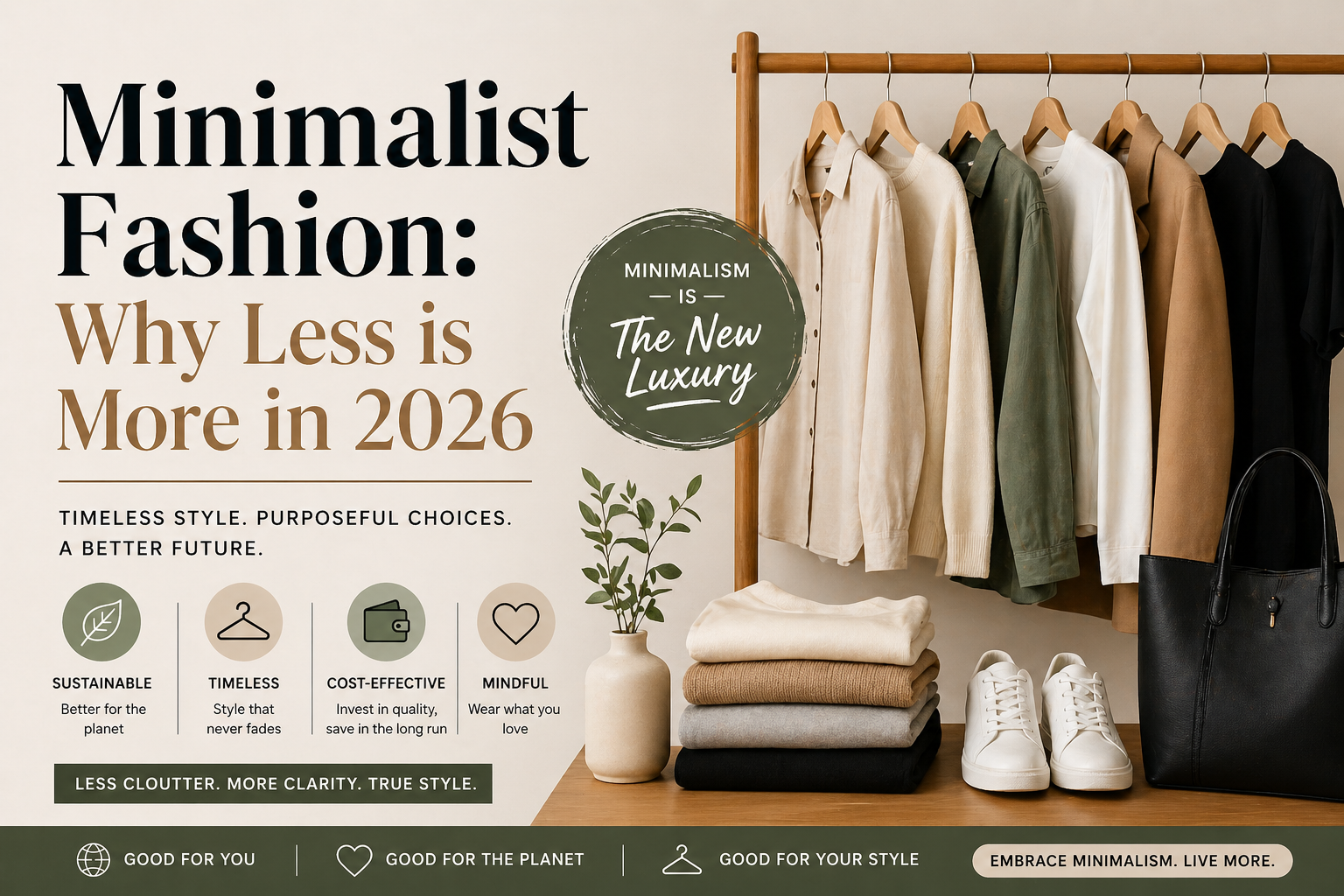
Open your wardrobe and ask yourself—how many clothes do you actually wear? If the answer is “not many,” you’re not alone. According to the Ellen MacArthur Foundation, the average person wears only 20% of their wardrobe regularly, while the rest sits unused. That’s exactly why Minimalist Fashion 2026 is gaining massive popularity worldwide.
People are tired of clutter, fast fashion, and decision fatigue. They want simplicity, clarity, and style that actually works. Minimalism isn’t about having less—it’s about having only what truly matters.
What Is Minimalist Fashion in 2026? (Direct Answer)
Minimalist Fashion 2026 is a style approach focused on:
- Fewer, high-quality clothing pieces
- Neutral colors and timeless designs
- Versatile outfits that work in multiple ways
- Clean, simple silhouettes
In short: it’s about owning less but wearing more.
Why Do People Struggle With Their Wardrobe Today?
Let’s be honest—most wardrobes are full, but still feel empty.
Common Problems:
- Too many clothes, nothing to wear
- Fast fashion leads to low-quality items
- Trend overload from social media
- Wasted money on rarely worn outfits
Think of your wardrobe like a messy drawer—you know something useful is inside, but you can’t find it.
How Minimalist Fashion Solves This Problem
Minimalist fashion removes the noise and simplifies your choices.
👉 Instead of 50 random pieces, you have:
- 20 carefully chosen items
- Outfits that mix and match easily
- Clothes you actually enjoy wearing
Your platform OpinionHook can guide readers by helping them transition from cluttered wardrobes to clean, stylish, minimalist ones with practical advice.
Why Minimalist Fashion Is Dominating in 2026
1. Sustainability Is Driving the Shift
Why Is Minimalism Linked to Sustainability?
The fashion industry produces over 92 million tons of textile waste each year (UN Environment Programme).
Minimalist fashion reduces this by:
- Buying fewer clothes
- Choosing durable materials
- Avoiding fast fashion trends
👉 Think of it like reducing plastic use—small changes make a big impact.
2. People Want Simplicity in a Busy World
How Does Minimalism Reduce Stress?
Too many choices create decision fatigue.
Minimalist wardrobes:
- Save time getting dressed
- Reduce stress
- Improve confidence
👉 Like having a simple daily routine—it just works.
3. Timeless Style Beats Fast Trends
Why Are Trends Losing Importance?
Trends change quickly, but timeless pieces stay relevant.
Examples:
- White shirts
- Black trousers
- Neutral blazers
👉 Like classic songs—they never go out of style.
4. Cost Efficiency Over Time
Is Minimalist Fashion Expensive?
At first, yes. But long-term, it saves money.
Why?
- Fewer purchases
- Higher quality items last longer
- Less impulse buying
👉 It’s like buying a good phone—you pay more once, but it lasts longer.
What Does a Minimalist Wardrobe Look Like?
Essential Pieces Table
| Category | Must-Have Items |
| Tops | White shirt, neutral t-shirts |
| Bottoms | Black pants, blue jeans |
| Outerwear | Blazer, simple jacket |
| Footwear | Sneakers, neutral shoes |
| Accessories | Minimal jewelry, classic bag |
👉 The goal is versatility—each item should work with multiple outfits.
How Many Clothes Do You Actually Need?
Most minimalist wardrobes have 20–30 pieces.
Why This Works:
- Easy to manage
- Endless outfit combinations
- Less clutter
👉 Like having a small toolbox with only the tools you actually use.
How to Build a Minimalist Wardrobe (Step-by-Step)
Step 1: Declutter Your Closet
Remove items you don’t wear or like.
👉 Rule: If you haven’t worn it in 1 year, let it go.
Step 2: Choose a Color Palette
Stick to neutral colors like:
- Black
- White
- Beige
- Grey
👉 This makes mixing outfits effortless.
Step 3: Focus on Quality Over Quantity
Buy fewer but better items.
👉 Check fabric, stitching, and durability.
Step 4: Build Around Basics
Start with essential pieces, then add variety slowly.
Step 5: Avoid Impulse Buying
Wait before purchasing new items.
👉 Ask: “Will I wear this at least 10 times?”
Minimalist Fashion vs Fast Fashion
| Feature | Minimalist Fashion 2026 | Fast Fashion |
| Quantity | Low | High |
| Quality | High | Low |
| Cost (Long-term) | Lower | Higher |
| Sustainability | Eco-friendly | Waste-heavy |
| Style | Timeless | Trend-based |
👉 Minimalism wins in the long run.
What Are People Asking About Minimalist Fashion?
Is Minimalist Fashion Boring?
No. It’s clean, elegant, and intentional. You can still express personality through fit, texture, and accessories.
Can Minimalism Work for All Lifestyles?
Yes. Whether you’re a student, professional, or traveler, minimalist fashion adapts easily.
Do I Have to Wear Only Neutral Colors?
Not necessarily. You can add 1–2 accent colors for variety.
Real-World Examples (Global Perspective)
- In Japan, minimalist fashion is rooted in simplicity and functionality
- In Europe, neutral tones and clean cuts dominate
- In India, people are shifting toward capsule wardrobes for practicality
👉 Minimalism is global—but adapted locally.
Actionable Tips You Can Start Today
- Start with a wardrobe audit
- Donate unused clothes
- Invest in 2–3 high-quality basics
- Avoid trend-based shopping
- Build outfits around simplicity
Advanced Insight: Why Minimalism Is the Future of Fashion
Minimalist fashion aligns with:
- Sustainability goals
- Digital lifestyle (less physical clutter)
- Conscious consumer behavior
👉 The future isn’t about more choices—it’s about better choices.
Key Takeaways
- Minimalist Fashion 2026 = Simplicity + Quality + Sustainability
- Fewer clothes can actually give you more outfit options
- Neutral colors and timeless pieces dominate
- Minimalism saves time, money, and effort
- It’s not about restriction—it’s about intention
Conclusion: Less Really Is More
Minimalist fashion isn’t a trend—it’s a mindset. In a world full of noise, it gives you clarity. In a market full of options, it gives you direction.
The best part? You don’t need to start big. Just start small.
👉 Because when you remove what you don’t need, what remains truly stands out.
Helpful Sources
- Ellen MacArthur Foundation – Fashion & Textile Reports
- UN Environment Programme – Sustainable Fashion Data
- Statista – Global Fashion Industry Insights
- McKinsey & Company – State of Fashion
- Harvard Business Review – Consumer Behavior Trends